$49.95
For Research Use Purposes Only
GHK-Cu peptide is a naturally occurring copper-binding tripeptide that has become widely studied in laboratory research related to cellular signaling pathways, regenerative biology, and peptide-mediated molecular communication. The peptide consists of the amino acid sequence glycyl-L-histidyl-L-lysine (GHK) bound to a copper ion, forming the complex commonly referred to as copper peptide GHK-Cu.
Within laboratory environments, GHK-Cu research peptide is frequently used in studies exploring cellular signaling mechanisms, gene expression pathways, and regenerative peptide research. Scientists investigating GHK-Cu peptide research often focus on how copper-binding peptides interact with biological systems at the molecular level.
The GHK-Cu peptide structure allows it to bind copper ions and participate in biochemical signaling processes that involve metal-binding peptides. Because copper ions are involved in many biological processes, GHK-Cu copper binding peptide research has become an important area of study in peptide science.
Researchers studying GHK-Cu regenerative peptide research frequently examine how copper peptides influence molecular pathways associated with cellular repair and tissue maintenance. These investigations contribute to broader scientific knowledge regarding peptide signaling and cellular biology.
Celonyx Labs supplies GHK-Cu research peptide as a high-purity lyophilized compound designed strictly for laboratory research purposes. Each batch is synthesized and tested under controlled laboratory conditions to ensure reliable peptide materials for scientists conducting GHK-Cu peptide research.
GHK-Cu peptide is a small copper-binding peptide originally identified in human plasma. The peptide is composed of three amino acids—glycine, histidine, and lysine—that form a complex with copper ions.
Because of its structure, copper peptide GHK-Cu is classified as a metal-binding peptide capable of interacting with copper ions in biological systems. Researchers studying GHK-Cu peptide research frequently analyze how this copper-binding interaction influences cellular signaling pathways.
Scientists conducting GHK-Cu regenerative peptide research often investigate how copper peptides interact with molecular pathways involved in tissue maintenance and cellular communication.
The discovery of GHK-Cu copper binding peptide has led to extensive research examining the biological roles of copper-peptide complexes. Within laboratory models, GHK-Cu research peptide is commonly used to explore how copper-binding peptides influence molecular signaling networks.
These studies contribute to broader scientific understanding of peptide-metal interactions and cellular signaling processes.
Understanding the GHK-Cu peptide structure is essential for researchers studying copper-binding peptides.
GHK-Cu peptide consists of the tripeptide glycyl-L-histidyl-L-lysine, which forms a stable complex with copper ions. This structure allows the peptide to participate in biochemical processes involving metal-binding peptides.
Scientists studying GHK-Cu peptide research often analyze how the peptide binds copper ions and how this interaction affects molecular signaling mechanisms.
Researchers examining GHK-Cu laboratory peptide frequently investigate the structural properties that allow the peptide to maintain stability during experimental studies.
Because copper ions play a role in numerous biochemical processes, the interaction between copper and peptides such as GHK-Cu copper binding peptide is an important area of research in molecular biology.
One of the primary focuses of GHK-Cu peptide research involves cellular signaling pathways.
Researchers conducting GHK-Cu peptide signaling research often examine how copper-binding peptides influence communication between cells. Peptide signaling molecules can regulate numerous biological pathways involved in cellular communication.
Within laboratory models, scientists frequently analyze how GHK-Cu research peptide interacts with molecular pathways associated with gene expression and cellular signaling.
Researchers studying GHK-Cu cellular regeneration research investigate how peptide signals may influence biological processes related to cellular maintenance.
Understanding how copper peptides interact with signaling pathways contributes to broader scientific insights into peptide-mediated cellular communication.
Another important area of GHK-Cu peptide research involves regenerative biology.
Researchers studying GHK-Cu regenerative peptide research frequently examine how copper-binding peptides interact with molecular pathways associated with tissue maintenance and cellular repair mechanisms.
Within laboratory experiments, scientists often investigate how peptides influence signaling networks that regulate cellular regeneration processes.
Researchers conducting GHK-Cu cellular regeneration research frequently analyze peptide interactions with biological pathways related to cellular maintenance.
These studies contribute to a growing body of research exploring peptide-mediated regenerative signaling.
Gene expression regulation is another major area of investigation involving GHK-Cu research peptide.
Researchers studying GHK-Cu peptide signaling research frequently analyze how peptide-metal complexes influence molecular pathways involved in gene expression regulation.
Within laboratory studies, scientists examine how copper-binding peptides interact with cellular regulatory mechanisms that control gene activity.
Understanding how peptides influence gene expression helps scientists gain deeper insight into molecular biology and cellular communication.
Because of its biochemical characteristics, GHK-Cu research peptide is commonly used in several scientific research fields.
Scientists studying GHK-Cu regenerative peptide research investigate how peptides influence molecular pathways related to cellular maintenance.
Within GHK-Cu peptide signaling research, laboratories analyze how copper-binding peptides influence cellular communication networks.
Researchers studying GHK-Cu peptide research frequently explore how peptides interact with gene regulatory pathways.
Scientists examining GHK-Cu copper binding peptide mechanisms investigate how peptide-metal complexes influence biochemical signaling systems.
These research applications make GHK-Cu peptide a valuable compound for laboratories studying peptide-mediated cellular communication.
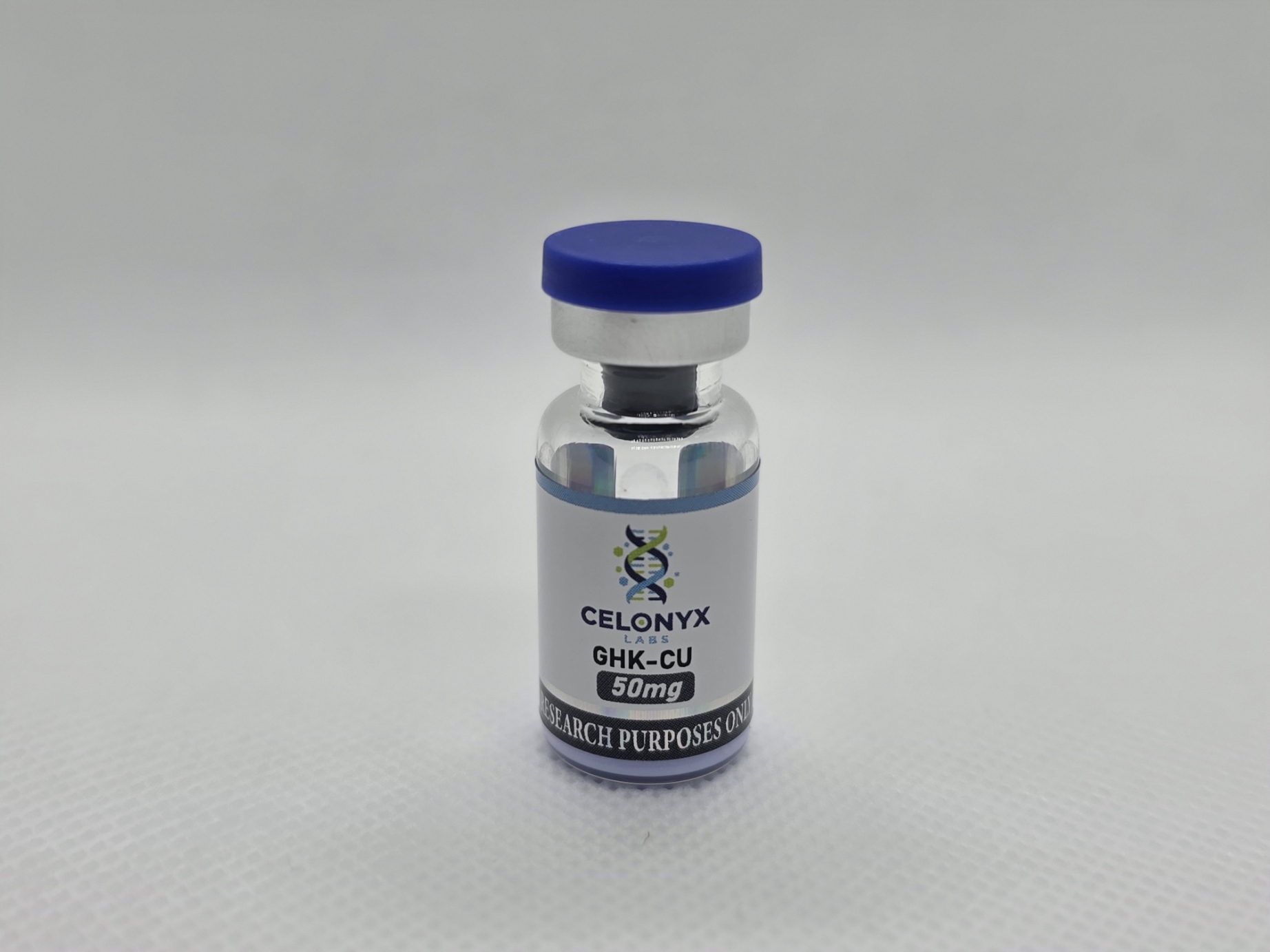
Product Name: GHK-Cu Research Peptide
Quantity: 50mg Lyophilized Peptide
Purity: ≥98% (HPLC verified)
Appearance: Blue lyophilized powder
Peptide Type: Copper-binding tripeptide
Storage: Store at −20°C for long-term stability
Reconstitution: For laboratory research use only
Celonyx Labs manufactures GHK-Cu peptide using controlled peptide synthesis and purification techniques to ensure reliable peptide materials for laboratory research.
Celonyx Labs maintains strict quality standards for all GHK-Cu research peptide products.
Each batch undergoes analytical verification procedures including:
• High-performance liquid chromatography (HPLC)
• Mass spectrometry identity confirmation
• Purity verification and batch consistency testing
These procedures ensure that GHK-Cu laboratory peptide meets research-grade specifications suitable for laboratory experimentation.
Scientists conducting GHK-Cu peptide research, GHK-Cu regenerative peptide research, and GHK-Cu peptide signaling research require consistent peptide materials to ensure reliable results.
Celonyx Labs supports these research efforts by maintaining strict manufacturing and analytical verification processes.
GHK-Cu peptide sold by Celonyx Labs is intended strictly for laboratory research purposes only.
This GHK-Cu research peptide is not intended for human consumption, medical use, veterinary use, or therapeutic applications.
Products are supplied exclusively to qualified researchers and laboratory professionals conducting scientific investigations.
By purchasing GHK-Cu peptide, the customer acknowledges that the product will be used solely for research and laboratory experimentation.
Celonyx Labs products are not pharmaceuticals, dietary supplements, or food products.
All peptides are labeled “For Research Use Only.”
Celonyx Labs provides high-purity research peptides designed for scientific investigation.
Researchers choose Celonyx Labs because we provide:
• High purity GHK-Cu research peptide
• Verified analytical testing
• Reliable peptide manufacturing standards
• Secure packaging and storage stability
• Consistent peptide supply for research protocols
Our goal is to support scientists conducting GHK-Cu peptide research, copper peptide signaling research, and molecular biology studies.
By maintaining strict quality standards, Celonyx Labs helps advance scientific understanding in peptide biology and cellular signaling research.