
Research Peptides for Dermatology Research: 2026 Guide
Research peptides for dermatology research need 99% purity and COA documentation. See how cosmetic and

Cosmetic and dermatology research labs use research peptides for dermatology research into melanocyte signaling, dermal wound repair, and skin barrier function, and the compound list looks different than a general biotech bench order. Pigmentation and healing assays are unusually sensitive to purity drift, so the sourcing checklist for this segment leans harder on documentation than volume.
A pigmentation study built on a melanocortin receptor agonist lives or dies on purity consistency across every replicate. If one batch tests at 99% and the next is unverified, the variance shows up in the data as a biological effect that isn't real.
Dermatology research also carries a documentation burden that other segments skip. Peer review and institutional compliance both expect a certificate of analysis (COA), a batch number, and a testing lab name on file for every compound used in a wound-healing or barrier-function study. Celonyx Labs builds its catalog around that requirement — every peptide ships with 99% purity and third-party testing documentation rather than a purity claim with nothing behind it.
The Celonyx Labs research peptide catalog exists for labs that need that paper trail before the first vial is reconstituted, not after a reviewer asks for it.
Scope decisions made before purchase save re-orders later. A pigmentation study and a wound-healing study need different compound classes, different purity thresholds, and different documentation depth.
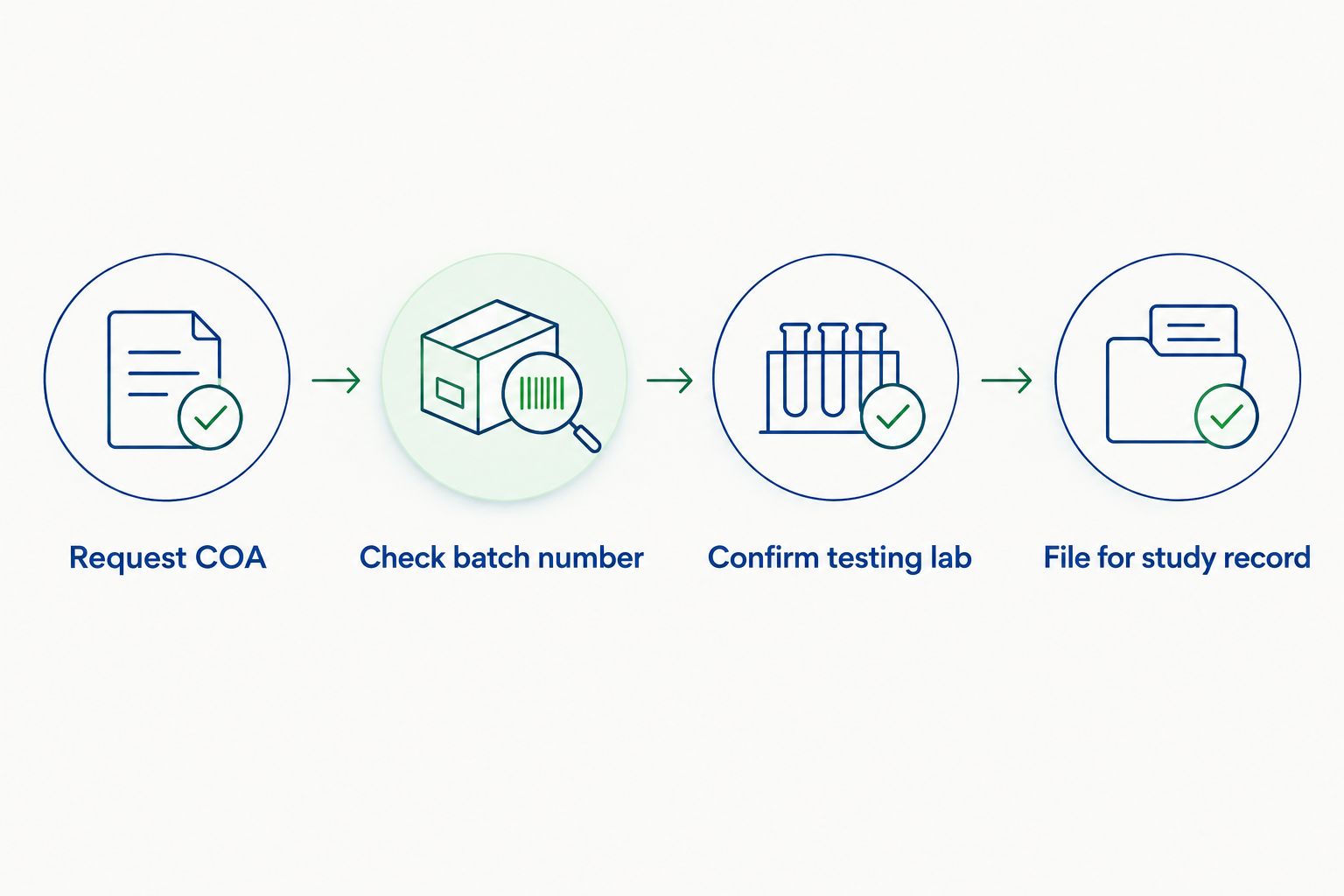
The free way is manual but effective: request the COA directly from the supplier, check the batch number against the certificate, and confirm the testing lab's name and test date are both listed. If a supplier won't produce that paperwork before you buy, that's the answer to whether you should buy.
The faster path skips the back-and-forth. Compounds sourced through third-party peptide purity testing for research organizations come with the certificate attached to the order, so the verification step is already done before the vial arrives.
Not every peptide on a general research catalog is relevant to skin biology. Dermatology research labs typically narrow to a small set of pathway-matched compounds rather than stocking broadly.
Verdict: Melanocortin analogs and tissue-repair peptides cover the two most common dermatology research pathways — pigmentation and wound healing — and both require the same purity discipline to stay reproducible.
Reconstitution inconsistency is the quiet variable that ruins otherwise clean study designs. Two vials reconstituted with different diluent volumes on different days are not the same starting concentration, even if the label says they are.

A compound that tested clean at delivery can still degrade or become contaminated between reconstitution sessions if handling isn't controlled. Building a stability check into the routine catches that before it corrupts a data set.
A multi-month pigmentation or healing study rarely runs on a single batch. Tracking consistency across batches keeps the comparison valid.
A reviewer or auditor should be able to trace every compound in a published dermatology study back to a specific batch, supplier, and test date. That trail either exists at the time of purchase or it doesn't exist at all later.
| Option | Best For | Key Limitation |
|---|---|---|
| In-house peptide synthesis | Labs with dedicated synthesis equipment and HPLC capacity | Long lead time; verification burden falls entirely on the lab |
| Academic core facility | University labs with existing core facility access | Shared queue slows turnaround for time-sensitive studies |
| General online marketplace | Small, one-off orders without documentation requirements | COA transparency and purity verification are inconsistent |
| Celonyx Labs (third-party-tested supplier) | Labs needing 99% purity, COA-backed compounds shipped directly | Research-use-only; not intended for clinical or human application |
Verdict: for dermatology research labs that need documented purity without running their own synthesis line, a third-party-tested supplier closes the gap that marketplaces and shared core facilities leave open.
Source COA-verified peptides
99% purity compounds with third-party test documentation for dermatology research.
What are the best research peptides for dermatology research in 2026?
Melanocortin analogs like Melanotan II for pigmentation signaling and tissue-repair peptides like BPC-157 for wound-healing models cover the two most common dermatology research pathways in 2026. Both require 99% purity and COA documentation to stay reproducible across replicates.
Is Melanotan II relevant to pigmentation research?
Yes, Melanotan II is a melanocortin receptor agonist commonly used in pigmentation and photoprotection signaling research. Purity consistency across batches is critical because receptor-binding assays are sensitive to compound variance.
Do dermatology research labs need third-party-tested peptides?
Third-party testing gives a documented purity figure and testing lab name that peer review and institutional compliance both expect. Without it, there’s no audit trail proving what was actually in the vial used for the study.
How pure should research peptides be for skin barrier studies?
99% purity is the standard threshold most dermatology research labs set for reproducible dermal assay data. Lower purity introduces contaminant variance that assays can misread as a biological signal.
Can BPC-157 be used in wound-healing research?
BPC-157 is a commonly sourced peptide in tissue-repair and wound-healing research models. Purity and consistent reconstitution volume both affect reproducibility across replicate studies.
What documentation should a dermatology research lab keep for peptide purchases?
Keep the certificate of analysis, batch number, supplier name, order date, and safety data sheet for every compound used in a study. This record supports peer review and any institutional compliance check.
How does peptide storage affect dermatology research reproducibility?
Inconsistent storage temperature or freeze-thaw cycling changes compound concentration between reconstituted vials, which shows up as data variance instead of a real biological effect. Standard guidance is 2-8°C for short-term storage and -20°C for longer storage of lyophilized peptides.
Where can research labs buy purity-verified peptides?
Suppliers that ship a certificate of analysis with every batch, rather than a purity claim alone, are the standard sourcing route for dermatology research labs in 2026. Celonyx Labs ships 99% purity compounds with third-party test documentation attached to each order.
The single check that saves the most re-work in dermatology research isn't the compound choice — it's requesting the COA before the order ships, not after it arrives. A lab that verifies batch number, testing lab, and purity figure at purchase time never has to explain a data anomaly to a reviewer six months into a pigmentation or wound-healing study.
Research peptides for dermatology research need 99% purity and COA documentation. See how cosmetic and

Research peptide sourcing for grad students in 2026: verify COAs, match institutional documentation, and budget

Bacteriostatic water sourcing for research labs in 2026: how small labs vet concentration, documentation, and
FOR RESEARCH USE ONLY. Products sold by Celonyx Labs are intended exclusively for laboratory and scientific research. They are not intended for human or veterinary use, consumption, diagnosis, treatment, cure, or prevention of any disease. By purchasing from this site, you acknowledge that you understand the intended research purpose of these materials and agree to comply with all applicable laws and regulations.