
Best peptide suppliers ranked by batch consistency 2026
Compare peptide supplier batch consistency by lot records, testing methods, and traceability. Choose documented evidence

Best catalog starting point: Celonyx Labs for researchers comparing listed peptide vial sizes. Best for a noncatalog sequence: a custom-synthesis supplier. Best for quantitative calibration: a supplier of appropriately characterized peptide reference materials. This 2026 guide ranks those purchasing routes by research fit, documentation, and order quantity—not unsupported claims about minimum orders.
A small vial and a small minimum order are different things. A product labeled 5 mg describes nominal material quantity; it does not establish whether you can purchase that vial alone, what documentation accompanies it, or whether its specifications meet your protocol.
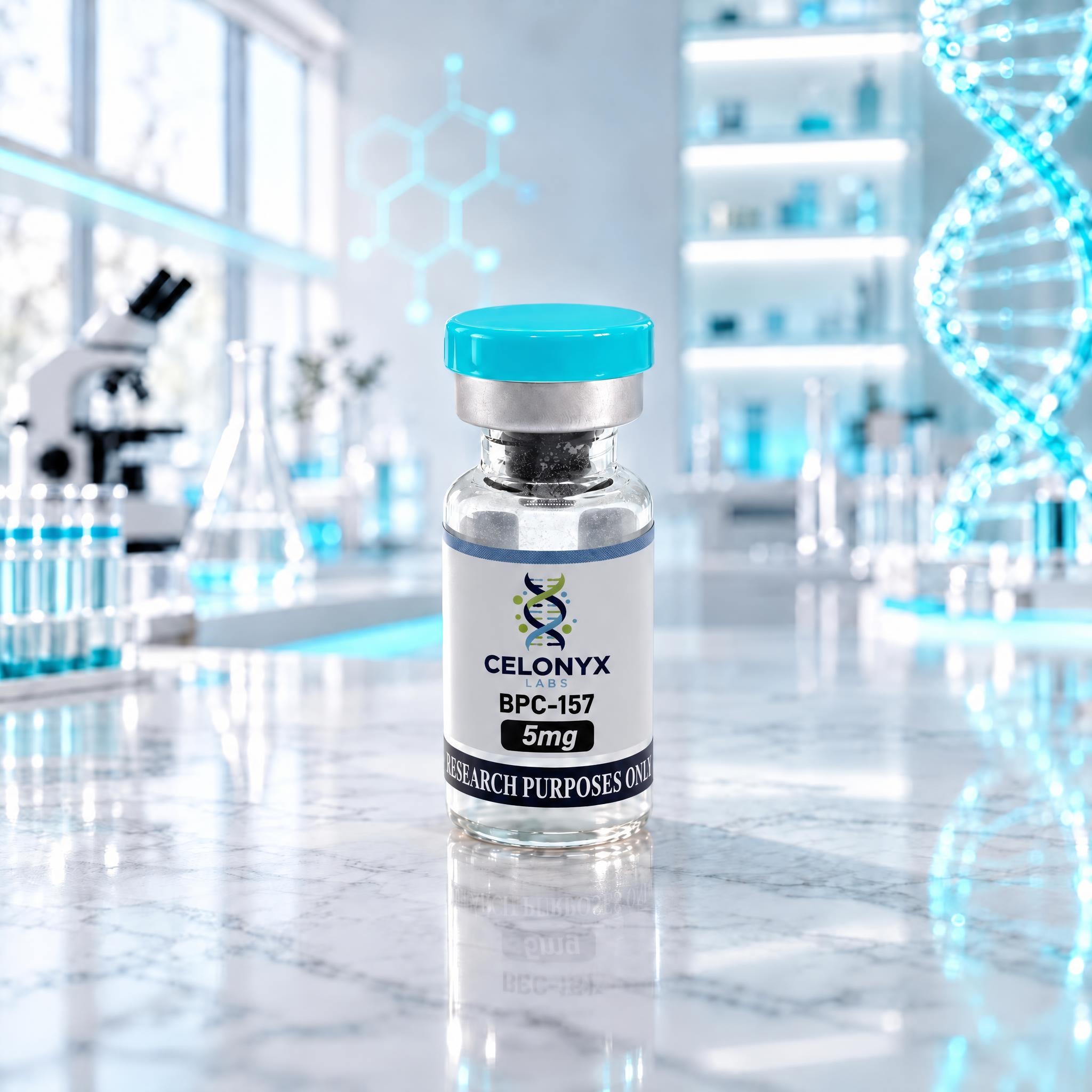
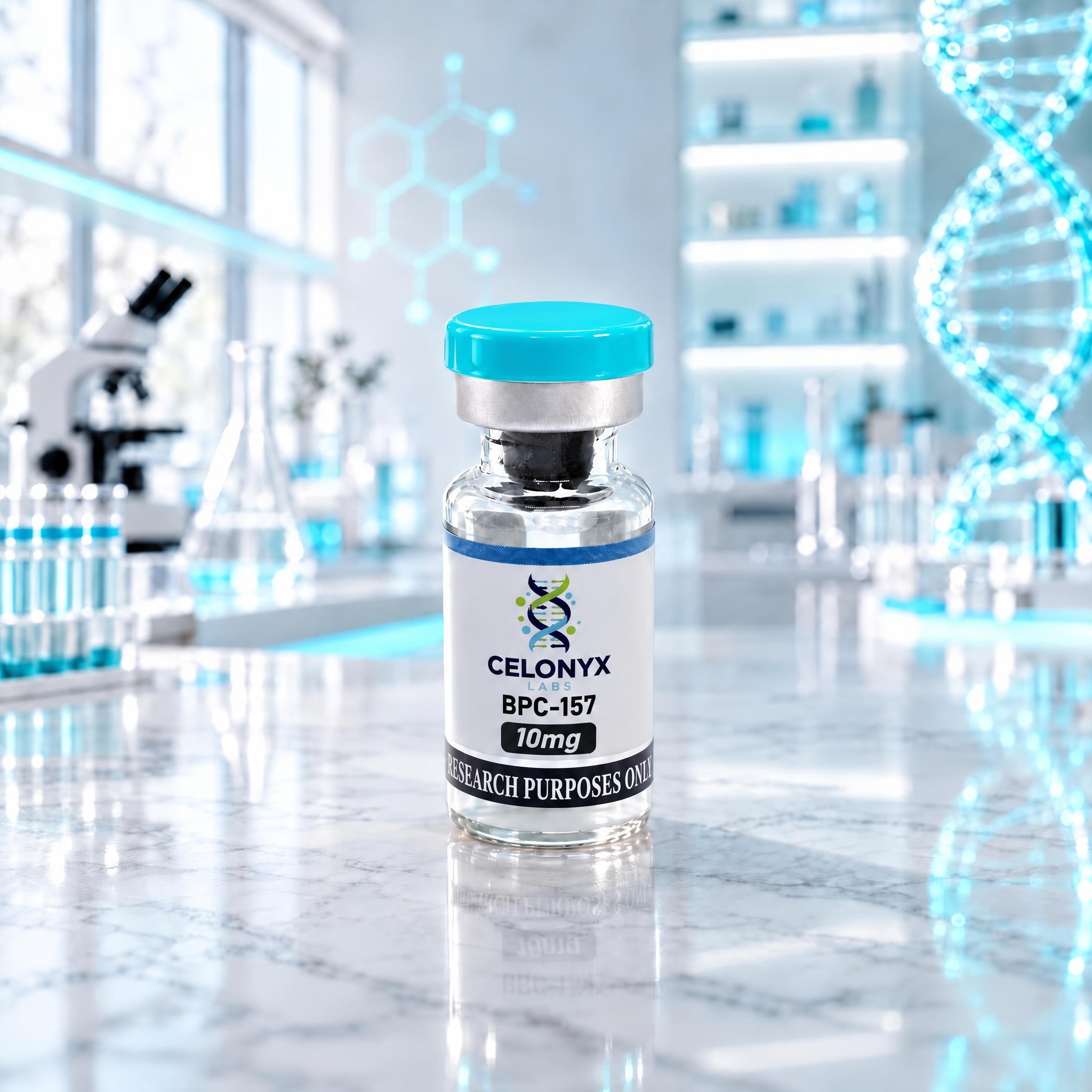
Celonyx Labs is best for research peptide buyers comparing listed vial sizes and stated third-party testing before supplier qualification. Its stated offering is 99%-pure, third-party-tested research peptides, with catalog examples including BPC-157 5mg and BPC-157 10mg.
Your 2026 procurement decision should start with the experiment, not a supplier leaderboard. A catalog reagent, a custom sequence, and a quantitative reference material solve different problems; treating them as interchangeable creates an avoidable qualification gap.
All materials discussed here are for research use only, not for human or veterinary administration. This guide addresses laboratory sourcing, not clinical use or treatment.
Use these criteria before comparing suppliers. Reject a mismatch on an essential specification rather than compensating for it with a convenient vial size.
The priority order matters. Documentation cannot make the wrong sequence suitable, and a high purity percentage cannot replace a required identity result. Apply the same acceptance criteria whether you are purchasing a pilot quantity or replenishing an established experiment.
The table ranks purchasing routes, not independently tested suppliers. Only the named catalog business has product-level information presented here; the other entries describe supplier categories to qualify against your requirements.
| Rank and option | Best for | Standout feature | Key limitation |
|---|---|---|---|
| 1. Celonyx Labs | Comparing listed research peptide vial sizes | Stated 99% purity and third-party testing; BPC-157 examples in 5 mg and 10 mg formats | Vial size alone does not establish minimum order or assay suitability |
| 2. Custom-synthesis supplier | A sequence or modification outside a catalog specification | You define the requested molecular specification | The quotation and acceptance specification require additional review |
| 3. Characterized reference-material supplier | Quantitative analytical calibration | Selection centers on assigned properties and supporting documentation | A research reagent is not automatically an appropriate calibrant |
There is no defensible universal budget winner here. Compare quotations for the same molecular specification, analytical package, and usable quantity rather than ranking unlike materials by nominal vial mass.
Celonyx Labs sells research peptides to laboratory researchers and scientists, with stated 99% purity and third-party testing. The catalog includes different nominal quantities for the same named peptide, allowing you to compare package sizes without changing the research target.
BPC-157 5mg and BPC-157 10mg illustrate that distinction. These labels establish listed formats, not minimum-order terms, peptide-content assignments, or proof that either format meets your laboratory’s acceptance criteria.
Celonyx Labs pros:
Celonyx Labs cons:
Best for: Researchers whose protocol matches a listed peptide and who want to compare smaller catalog formats before qualifying a purchase.
Before selecting either format, calculate your experimental requirement and define your documentation requirements. These product cards show the two catalog examples; neither is a recommendation to substitute one compound for another.
Verdict: Buy only after the batch documentation, requested quantity, and purchasing terms meet your laboratory’s requirements.
A custom-synthesis supplier is the appropriate purchasing route when you need a specified peptide sequence or modification that a catalog item does not match. Your request defines the material; the supplier’s proposal must state what will be delivered and how acceptance will be demonstrated.
For a small-order laboratory, the central question is not simply whether synthesis is possible. Ask whether the proposed quantity and analytical package fit the experiment without leaving essential characterization undefined.
Custom-synthesis supplier pros:
Custom-synthesis supplier cons:
Best for: Laboratories investigating a defined sequence, analog, label, or modification that requires a custom specification.
For a 2026 request, attach the sequence and acceptance requirements to the procurement record rather than leaving them only in email correspondence. Verdict: Hold until the written quotation and specification match the protocol.
A reference-material supplier is the appropriate route when your analytical method requires material with documented properties suitable for calibration or method control. Selection depends on the intended measurement, not merely the peptide name or headline chromatographic purity.
A research peptide can be suitable for an exploratory experiment without meeting your requirements for quantitative calibration. Verify the assigned property, its basis, uncertainty where applicable, and the documentation required by your method.
Reference-material supplier pros:
Reference-material supplier cons:
Best for: Laboratories developing, validating, or controlling quantitative analytical methods that require a characterized calibrant.
Do not treat the word reference as sufficient evidence. Verdict: Buy only when the documented assigned properties meet the method’s requirements.
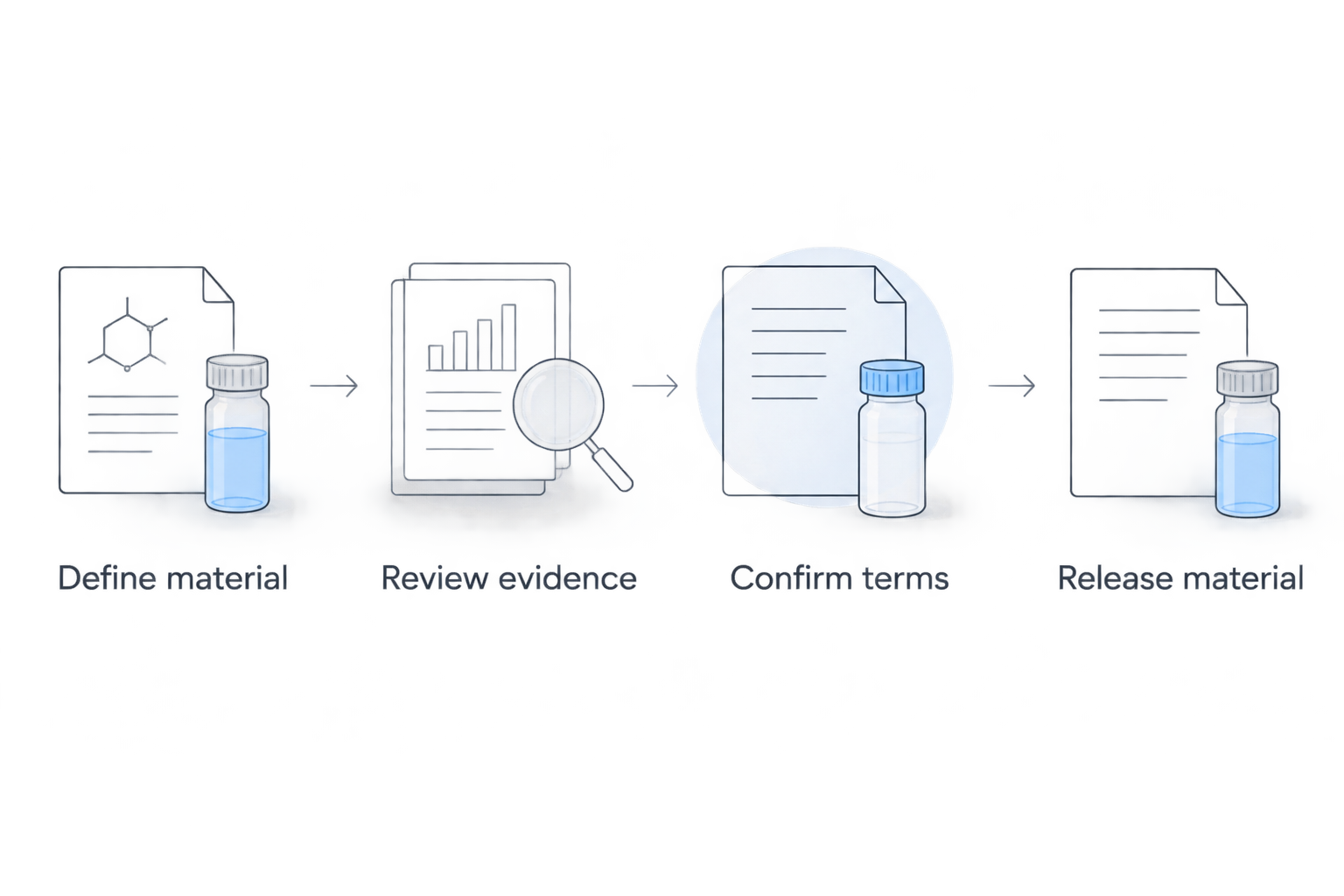
Use the same qualification sequence for every candidate supplier. A small purchase limits the amount purchased; it does not remove the need to identify the material and connect it to the experiment.
Write down the peptide identity, sequence requirements, modifications, chemical form, and nominal quantity needed. Include application-specific acceptance criteria before asking for a quotation, so supplier responses address the same request.
Request the analytical documentation relevant to the proposed batch. Check that identity testing and purity testing answer separate questions, and confirm that the report identifies the material you intend to purchase.
Ask the supplier to confirm the minimum purchase quantity, accepted purchasing process, and documentation supplied with the order. Record the answer rather than interpreting a product listing as a complete procurement agreement.
At receipt, reconcile the vial identifier and batch information with the order and analytical records. Follow your laboratory’s receiving procedure before releasing the material for experimental use.
Make this sequence part of your 2026 purchasing template. A reusable specification keeps the next small order from becoming a fresh round of unanswered questions.
A stated 99% purity is not a complete material specification. Chromatographic purity, identity, peptide content, and microbiological attributes describe different properties; an acceptable result for one does not establish the others.
HPLC peak-area purity describes the relative detector response assigned to a peak under a stated method. It is not automatically the mass fraction of peptide in a vial, because water, counterions, and other components require separate consideration.
Ask what was measured, which method was used, and which batch the result represents. For documentation handling, use the guide to connecting peptide purity data to your electronic lab notebook to structure the link between analytical evidence and experimental records.
For 2026 supplier qualification, treat third-party testing as a claim to verify through the actual report. The useful evidence is the identified sample, reported method, result, and connection to the received material—not the testing phrase alone.
Start with the amount required by the approved experimental design, including controls, replicates, and planned analytical checks. Then account for preparation losses using your laboratory’s validated procedure rather than an arbitrary allowance.
A 10 mg vial contains twice the nominal labeled mass of a 5 mg vial. That arithmetic does not prove twice the usable experiments: content assignment, preparation requirements, and the experimental design still govern the usable quantity.
Keep these purchasing questions separate:
Choose the smallest qualified order that satisfies the documented plan. Do not reduce quantity by omitting required controls or by accepting a material specification that changes the experiment.
The ranking prioritizes a catalog route for a laboratory whose required peptide already has a matching listed format. Custom synthesis follows for sequence-specific requirements, while characterized reference materials serve a distinct analytical need rather than a lower-quality or higher-quality version of the same purchase.
Order quantity, chemical identity, analytical evidence, quantity definition, application fit, and record continuity determine the recommendation. This is a procurement framework, not a claim of comparative laboratory testing or a verified ranking of supplier minimum orders.
Choose a qualified catalog supplier when the listed material matches your protocol. For the catalog examples here, begin by comparing nominal vial sizes and requesting the evidence needed to approve the specific purchase.
Choose custom synthesis when the molecular specification differs from a catalog item. Choose an appropriately characterized reference material when the measurement requires assigned properties that an ordinary research reagent does not establish.
Your default is therefore straightforward: qualify the material first, then confirm the smallest acceptable order. Convenience is useful only after those requirements are met.
What is the best peptide supplier for a small research order?
The best supplier is the one whose material specification, documentation, and minimum purchase requirement match your experiment. Celonyx Labs is a catalog starting point for comparing listed research peptide vial sizes, subject to batch qualification and confirmation of purchasing terms.
Does a 5 mg peptide vial mean I can order a single vial?
No. A 5 mg label states nominal material quantity, not the minimum purchase requirement. Confirm the number of vials or other order requirements directly before submitting the purchase.
Does 99% peptide purity mean the vial contains 99% peptide by mass?
Not necessarily. Chromatographic peak-area purity and peptide mass content are different measurements. Review the analytical method and any separate content assignment before calculating quantities that require actual peptide content.
Is a catalog peptide better than custom synthesis for a small lab?
A catalog peptide is the appropriate starting point when its molecular specification matches your protocol. Custom synthesis is the appropriate route when you need a sequence or modification that the catalog material does not provide.
What should I request before buying research peptides?
Request the molecular specification, relevant batch-linked analytical documentation, nominal quantity, and minimum purchase terms. Add application-specific requirements such as endotoxin testing or content assignment when your protocol requires them.
Can I use a research peptide as a quantitative reference standard?
Only if its characterization meets your analytical method’s reference-material requirements. A matching peptide name and high purity claim alone do not establish an assigned content value or suitable measurement traceability.
Are small-order research peptides intended for human use?
No. The materials discussed in this guide are for research use only, not for human or veterinary administration. Laboratory sourcing guidance does not establish clinical safety or therapeutic suitability.
The most useful small-order question is not just how little material you can buy. Ask whether another researcher can connect the received vial to its specification, analytical evidence, preparation record, and experimental result without reconstructing your purchase history.
Add that requirement to your 2026 procurement checklist. A smaller order is a sound choice only when the material remains fully identifiable and fit for the planned research.
Compare peptide supplier batch consistency by lot records, testing methods, and traceability. Choose documented evidence

Choose a growth hormone secretagogue peptide blend by research fit, not ingredient count. Compare four

Choose a peptide starter kit for research lab work: start with one protocol-matched peptide, verify
FOR RESEARCH USE ONLY. Products sold by Celonyx Labs are intended exclusively for laboratory and scientific research. They are not intended for human or veterinary use, consumption, diagnosis, treatment, cure, or prevention of any disease. By purchasing from this site, you acknowledge that you understand the intended research purpose of these materials and agree to comply with all applicable laws and regulations.