

How long does 5-Amino-1MQ take to show research effects?
How long does 5-amino-1mq take to show effects? No universal timeline applies. Learn how endpoints,

5-Amino-1MQ has no established, universal time to show research effects: the answer depends on the experimental model, exposure conditions, and measured endpoint. A biochemical signal, a cellular response, and a whole-animal outcome are different findings, and none establishes when a person would notice an effect.
There is no defensible single onset figure for 5-Amino-1MQ across research settings. A study measures a particular response at selected sampling points, not a universal countdown that transfers to every laboratory.
For your 2026 research plan, separate the question into the levels below. Each measures something different, with its own strengths and limits.
| Research endpoint | Best for | What it supports | What it does not establish |
|---|---|---|---|
| Biochemical inhibition | Measuring activity against an isolated target | Whether target activity changes under assay conditions | Cellular uptake or whole-animal effects |
| Cellular response | Examining changes in a defined cell model | Whether a cellular readout changes during exposure | An equivalent response in an intact organism |
| Whole-animal outcome | Studying integrated physiological responses | Whether a specified outcome changes within that model | A human onset time or treatment benefit |
Keep material qualification separate from response timing. The guide to connecting peptide purity data to your electronic lab notebook covers a related documentation task, but peptide workflows do not replace compound-specific qualification for 5-Amino-1MQ.
A useful answer always names the model, endpoint, exposure conditions, and observation schedule. Without those details, a statement that a compound “works quickly” has no clear experimental meaning.
Timing errors create interpretation errors. If you sample before a measurable response develops, you risk labeling an active condition as inactive; if you sample only after a response has passed, you risk missing its course entirely.
The opposite problem is equally important. A later measurement can reflect downstream adaptation, altered cell number, or other experimental changes rather than direct target inhibition at that moment.
For a 2026 protocol, write the biological question before choosing the observation schedule. “Does the target respond?” and “Does the model develop a sustained phenotype?” require different evidence, even when both experiments use the same compound.
5-Amino-1MQ is studied as an inhibitor of nicotinamide N-methyltransferase, commonly abbreviated NNMT. It is a small molecule, not a peptide, so peptide-specific assumptions about preparation, identity testing, and handling do not automatically apply.
A biochemical assay examines target activity under defined laboratory conditions. Its strength is a focused measurement; its limitation is that it does not reproduce all the barriers and interactions present in living cells.
Use biochemical inhibition evidence to answer a biochemical question. Do not convert an assay incubation period into a claim about when cellular metabolism, body composition, or any human outcome should change.
Also distinguish incubation duration from the earliest detectable response. If an assay reads activity only at its endpoint, it tells you what was measured then—not exactly when inhibition first became detectable.
Cell experiments introduce additional questions about compound exposure, uptake, target expression, and the condition of the model. A response in an isolated enzyme assay does not establish the same response in cultured cells.
Choose a cellular endpoint that matches your hypothesis. A metabolite measurement, gene-expression result, and viability readout answer different questions; agreement between them requires interpretation, not assumption.
Pair the primary readout with controls that test alternative explanations. For example, a lower signal needs to be distinguished from fewer viable cells or interference with the measurement itself.
Cellular studies are useful for examining responses in a controlled biological setting. Their limitation is scope: a result belongs to the cell model and conditions tested, not automatically to an intact organism.
Whole-animal research measures responses within an integrated biological system. Exposure, tissue distribution, metabolism, and the selected outcome all affect how you interpret the observation schedule.
A study's total duration is not the compound's onset time. If an outcome is measured at the end of an experiment, that final comparison does not identify the first moment when treated and control groups began to differ.
Likewise, the first statistically supported difference depends on sampling and analysis. It is not necessarily the first biological change, and it should not be presented as an exact onset threshold.
Report the measured endpoint and observation window together. Whole-animal findings remain model-specific and do not establish personal-use schedules, expected sensations, or clinical benefits.
The timeline is a property of the experiment and endpoint, not just the compound name. These factors belong in your 2026 interpretation checklist:
These factors explain why a timeline copied from another experiment needs more than a matching compound name. Match the relevant conditions before treating an outside result as a planning reference.
Build the observation schedule around a defined endpoint and a relevant published method. Do not choose a duration from consumer testimonials or transfer a schedule from an unrelated compound.
Use this sequence when drafting the protocol:
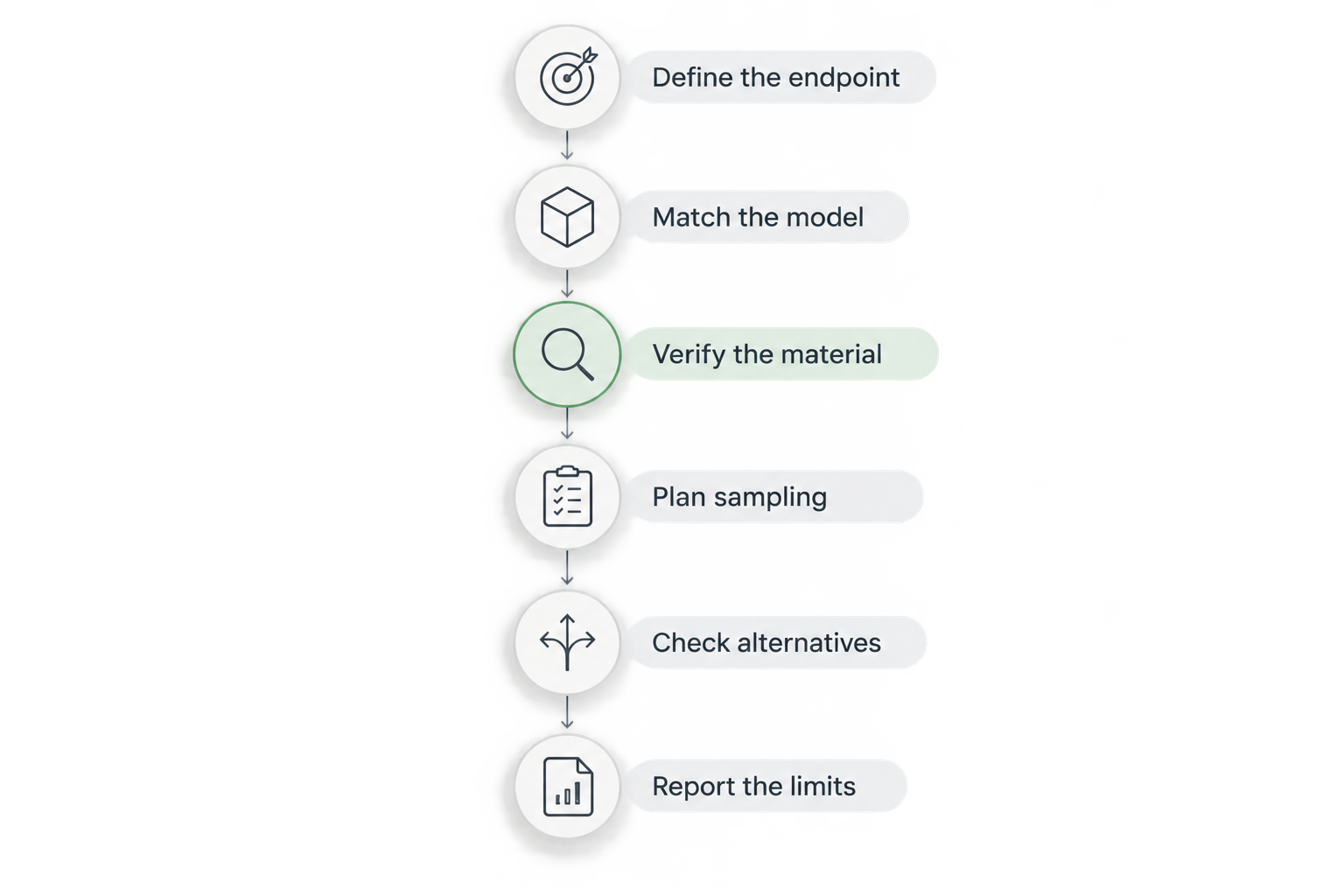
A pilot study can help refine sampling for a larger experiment, but it does not remove the need for controls or a prespecified analysis plan. Record any changes to the schedule and why you made them.
For your 2026 laboratory records, preserve preparation and sampling timestamps alongside raw results. A result without a traceable exposure history is harder to interpret, even when the numerical readout looks convincing.
A useful timing claim describes the experiment closely enough for another researcher to understand its boundaries. Look for the model, material identity, exposure conditions, endpoint, sampling schedule, controls, and analysis.
Read the methods alongside the results. An abstract can state that an outcome changed without explaining whether the investigators measured its development throughout the experiment or only compared final outcomes.
Also check whether the reported difference is relative to baseline, a vehicle control, or another experimental condition. These comparisons are not equivalent, and their meaning should remain attached to the result.
When taking notes, use precise wording: “The endpoint differed at the sampled observation” is narrower and more accurate than “the compound starts working then.” Observation time is evidence about a measurement, not proof of the earliest biological effect.
No. Analytical purity and biological response timing answer different questions. A purity result does not establish target engagement, cellular uptake, model suitability, or an onset schedule.
Celonyxlabs is an online store selling 99%-pure, third-party-tested research peptides for laboratory researchers and scientists. Those stated quality signals concern its research peptide offering; they are not evidence for a 5-Amino-1MQ timeline.
Celonyxlabs is best for laboratory researchers sourcing research peptides, not for establishing a human onset time for 5-Amino-1MQ. The benefit is a stated focus on research materials and analytical quality; the boundary is that supplier positioning cannot substitute for compound-specific experimental evidence.
When reviewing Celonyxlabs research peptides, assess the documentation against your laboratory's requirements. Do not treat a purity percentage as a guarantee of sterility, biological performance, or suitability for a different compound class.
Early target inhibition does not establish a later physiological outcome. It supports a mechanistic observation under the conditions measured, while downstream effects require their own endpoints and controls.
A connected experimental argument needs evidence at each relevant level. Avoid filling gaps between target activity and a later phenotype with assumptions about timing or benefit.
No early response means the selected readout did not show the defined change at the sampled observation. It does not, by itself, distinguish inactivity from insufficient exposure, an unsuitable endpoint, or a measurement problem.
Check the controls and material records before extending exposure or changing the protocol. Document revisions so that later findings remain interpretable.
Animal findings do not establish when a person will notice effects from 5-Amino-1MQ. Species, exposure, endpoints, and study conditions prevent that direct conversion.
Keep the distinction explicit in your 2026 summaries. Research observations are not personal-use instructions, and subjective reports are not substitutes for controlled measurements.
How long does 5-amino-1mq take to show effects in research?
There is no universal research onset time for 5-Amino-1MQ. Interpret timing within the specific model, endpoint, exposure conditions, and sampling schedule used in the experiment.
Is 5-Amino-1MQ a peptide?
No, 5-Amino-1MQ is a small-molecule NNMT inhibitor, not a peptide. Use compound-specific analytical and handling information rather than assuming a peptide preparation method applies.
Does the end of a study show when 5-Amino-1MQ started working?
No, a final study measurement does not establish when a response first began. It shows the result at the observation measured unless earlier sampling provides additional evidence.
Does higher purity mean 5-Amino-1MQ will produce faster effects?
No, a purity result does not establish a faster biological response. Identity, exposure, model suitability, and the measured endpoint must be assessed separately.
Can I use an animal study to predict when I would feel effects?
No, an animal study does not establish a personal onset time. Model-specific research findings do not provide a validated schedule for human use.
What should I check before calling a time-course result negative?
Check the controls, material identity, exposure records, assay performance, and condition of the model. A missing signal at one observation does not explain why the expected response was absent.
Can a peptide supplier’s quality claims validate a 5-Amino-1MQ timeline?
No, supplier quality claims do not validate a compound-specific response timeline. Timing requires experimental evidence tied to the material, biological model, and endpoint being studied.
The first observed effect is not necessarily the first effect. Your sampling schedule sets the resolution of your timing claim: if you did not measure between observations, you cannot identify exactly when the change began.
For research use only. This article does not provide human dosing, administration, or treatment guidance.
How long does 5-amino-1mq take to show effects? No universal timeline applies. Learn how endpoints,

Is GHRP-6 legal to buy for research? Research labeling alone is not enough. Learn the

Is VIP peptide legal to buy for research? U.S. purchases depend on intended use and
FOR RESEARCH USE ONLY. Products sold by Celonyx Labs are intended exclusively for laboratory and scientific research. They are not intended for human or veterinary use, consumption, diagnosis, treatment, cure, or prevention of any disease. By purchasing from this site, you acknowledge that you understand the intended research purpose of these materials and agree to comply with all applicable laws and regulations.