

Integrity Research BPC 157: How to Judge Vendor Claims
The advice you'll hear most often about buying BPC-157 for the bench is short: demand

Your laboratory's next experiment may be delayed by purchasing, not technique. In a survey cited by Entrepreneur, nearly nine in ten laboratory professionals reported experiment delays caused by backorders. Procurement decisions also determine which material, lot, and supporting documentation reach the bench, making supplier selection part of experimental control.
The best lab supply companies solve different problems. A broad distributor can consolidate routine purchases, a peptide specialist can narrow product selection, and a custom manufacturer can supply a sequence that isn't available off the shelf.
The ranking below prioritizes procurement fit, not an unsupported claim that one supplier is universally better. Each company is evaluated through quality documentation, testing transparency, shipping reliability, and compliance readiness. Academic laboratories should weigh administrative effort alongside price; biotech, pharmaceutical, and CRO teams should add the documentation and change-control requirements of their specific studies. None should treat a polished checkout page as evidence that a reagent is ready for an experiment.
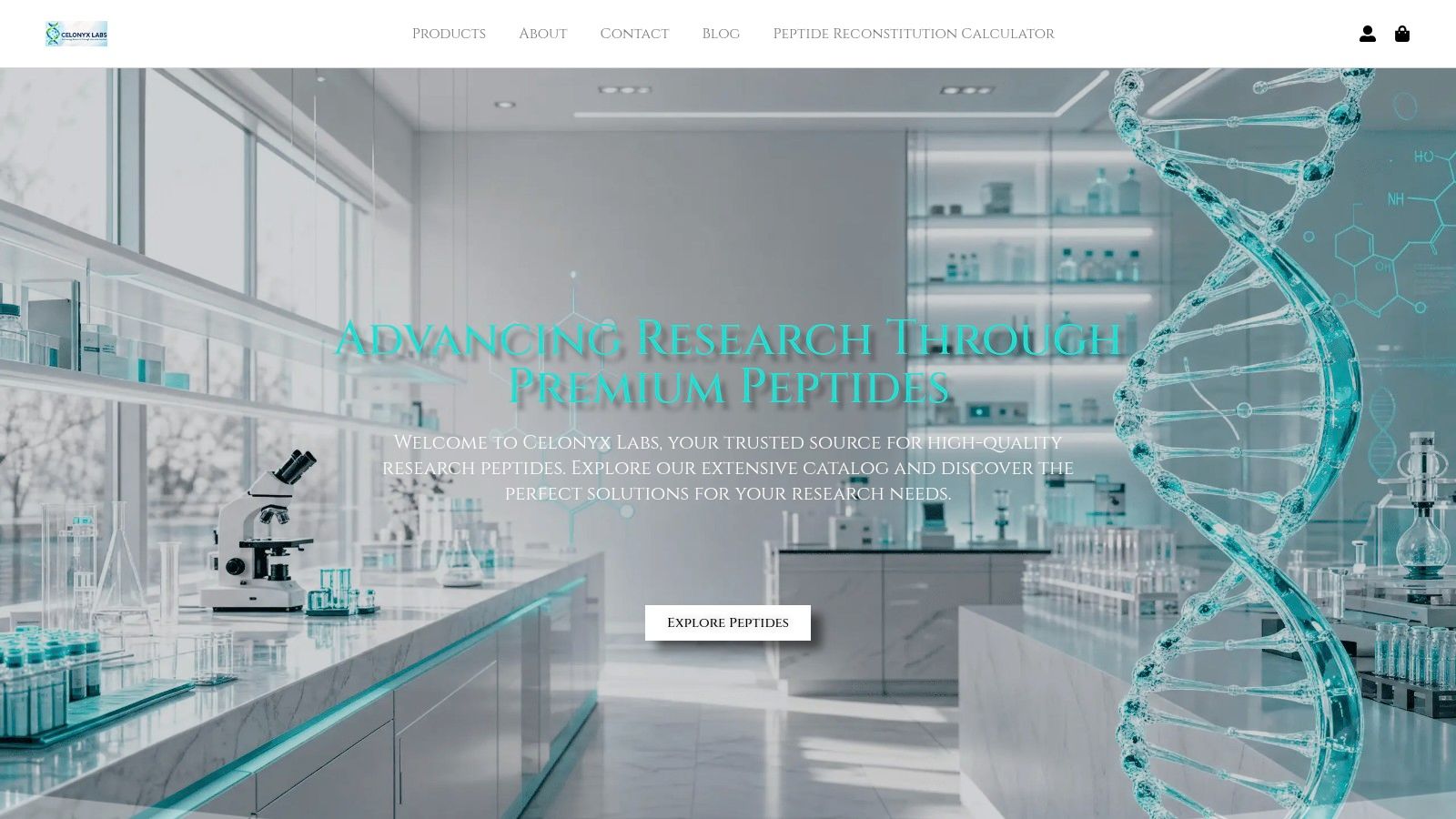
Best fit for research-only peptide purchasing through a focused online catalog. Our catalog serves qualified researchers and laboratory professionals, with products including BPC-157, GHK-Cu, Epithalon, and MOTS-c. It isn't a replacement for a distributor supplying centrifuges, safety cabinets, and routine plasticware.
We use independent laboratories to verify product quality and purity. For GHK-Cu, batch verification includes high-performance liquid chromatography, mass spectrometry identity confirmation, and purity and batch-consistency testing. These are distinct checks: an identity result and a chromatographic purity result answer different purchasing questions.
For a study-critical purchase, match the batch-specific certificate of analysis to the material being ordered. Review the analytical method, identity result, purity result, and testing date rather than relying solely on a catalog-level quality statement. Product-specific verification shouldn't be assumed to describe every material in the catalog.
Phone and email support, published shipping and refund policies, and online ordering provide practical routes for resolving purchasing questions. Our Peptide Reconstitution Calculator is a supporting calculation tool, not a substitute for a validated laboratory procedure.
The trade-off: A focused catalog can simplify peptide sourcing, but institutional buyers still need to confirm documentation availability, delivery timing, and internal vendor approval before scheduling work.
A laboratory ordering pipette tips, solvent bottles, gloves, and replacement equipment has a consolidation problem, not necessarily a specialist-sourcing problem. Fisher Scientific fits that buying pattern through a broad catalog spanning chemicals, consumables, equipment, instruments, safety, and facility supplies.
Its strongest procurement advantage is breadth. A shared purchasing channel can reduce the number of separate accounts and order histories your team maintains. However, Fisher Scientific is a distribution and marketplace channel, so buyers must distinguish the manufacturer, seller, and fulfillment arrangement for each item.
Practical rule: Consolidate the purchasing channel where it helps, but preserve manufacturer and catalog-number control where the method requires it.
For quality documentation, evaluate the exact manufacturer's product records. A familiar distributor name doesn't make different brands interchangeable, and selected Fisherbrand purchase ratings don't establish suitability for your assay.
For testing transparency, separate user feedback from analytical evidence. Ratings may help assess usability or packaging, but they don't replace a certificate of analysis for a reagent whose composition affects results.
Shipping reliability must be checked at the line-item level. Confirm stock status, dispatch expectations, and whether an order will arrive in separate shipments. The guide to fast-shipping companies provides another starting point for comparing fulfillment claims, but the order confirmation should govern experiment scheduling.
For compliance readiness, verify account terms, purchase-order handling, invoice details, and access to the documents your institution retains. Fisher Scientific is a strong fit for routine consolidation, but catalog breadth introduces comparison work, and pricing or availability can depend on the product and purchasing arrangement.
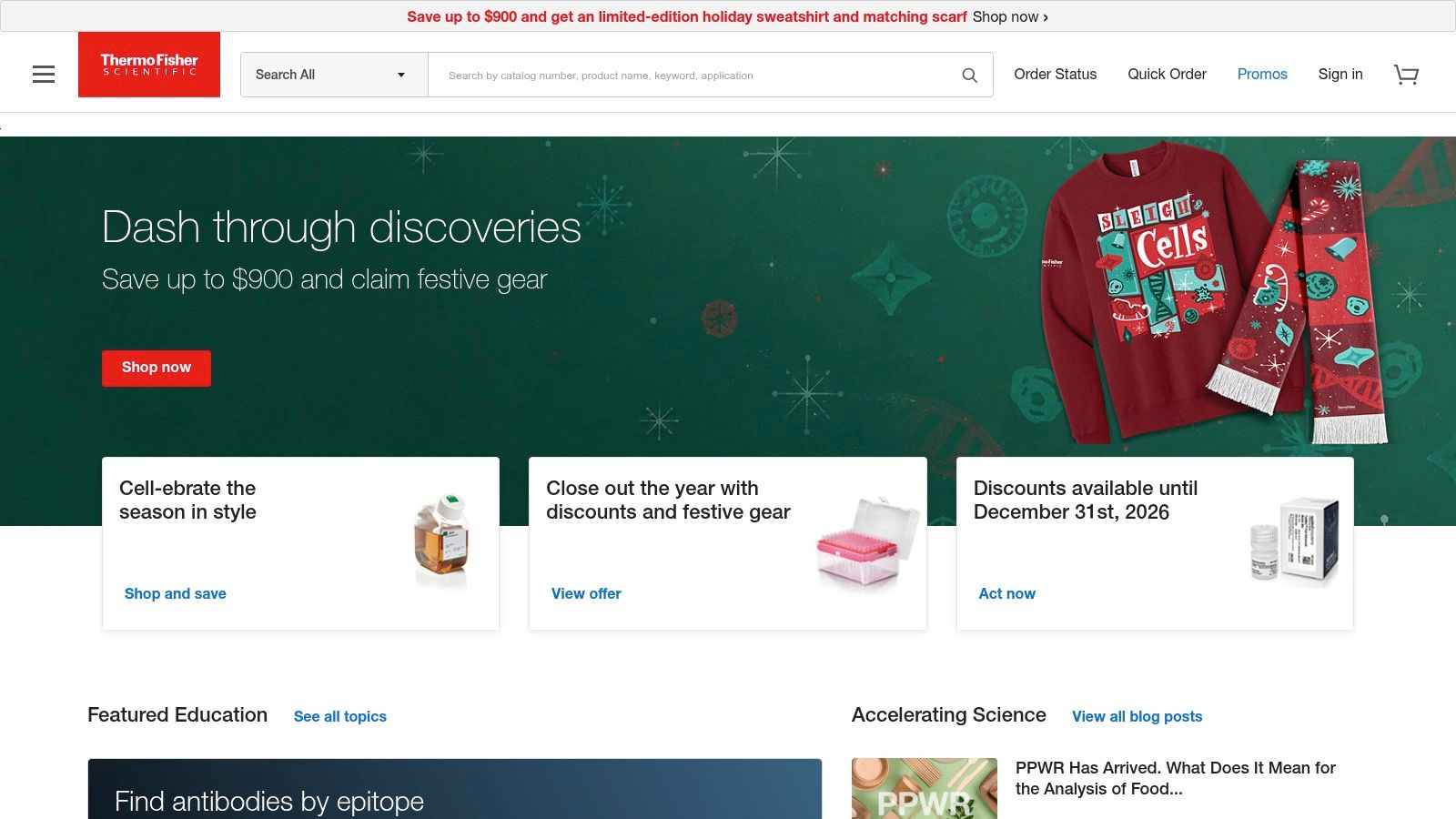
Choose Thermo Fisher Scientific when the buying problem is workflow compatibility. Its laboratory portfolio spans reagents, chemicals, instruments, equipment, automation, and consumables, including Thermo Scientific, Nalgene, and Nunc product lines.
That breadth is useful when selecting related products for sample storage, cell culture, or liquid handling. Buying compatible components is more valuable than merely placing them on the same invoice. A storage vessel's material, closure, and intended conditions matter more than whether it shares a supplier with the freezer.
Selection guides and technical resources can help narrow options, but they don't remove the need for a complete specification. For equipment, write down the operating requirements and acceptance criteria before requesting a quote; otherwise, comparing models becomes a comparison of brochure language.
The trade-off is selection complexity. Some purchases may require an account or quotation, and the portfolio isn't a direct substitute for a peptide-focused catalog. Thermo Fisher Scientific is most useful when technical fit across a workflow justifies that additional selection effort, rather than when you need the shortest route to a catalog peptide.
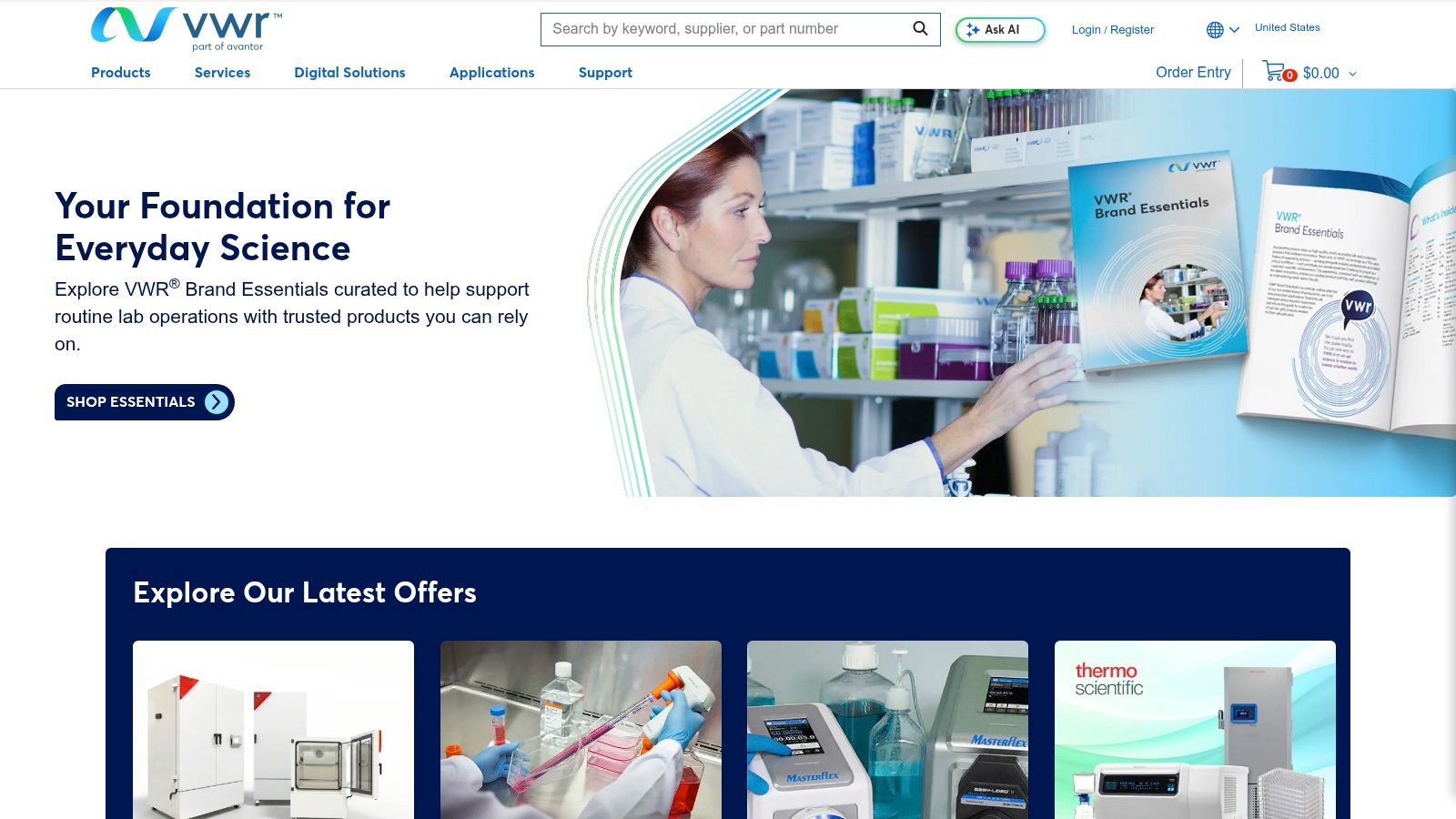
VWR is a fit for laboratories that want broad purchasing access with additional sourcing options. The VWR distribution channel covers chemicals, chromatography products, life-science supplies, consumables, equipment, and safety products. Its MarketSource program extends access to products from additional suppliers.
That can help a purchasing team find a specialized item without immediately opening another standalone vendor account. The trade-off is that sourcing convenience doesn't necessarily mean uniform documentation, stock visibility, or fulfillment terms.
For quality documentation, establish who issues the certificate or specification and how it follows the order. For testing transparency, identify the underlying manufacturer and the evidence supporting the exact product, rather than treating inclusion in a distribution catalog as a testing claim.
A different distributor carrying the same manufacturer's catalog number is a sourcing change. A different reagent is a scientific change.
Laboratory-management reporting from Lab Manager describes how material changes can trigger method verification or revalidation. That makes substitution control a practical cost issue, not just an administrative preference.
For shipping, confirm whether a sourced item is stocked, supplied through another party, or subject to a quotation. Assign someone to approve proposed substitutions before the purchasing team accepts them.
For compliance readiness, check account activation requirements, purchasing records, and access to customer-service or technical-support contacts. Some MarketSource products require an activated account.
Best use: Broad procurement with an exception route for harder-to-find products. VWR is less suited to buyers expecting a small, curated research-peptide selection with identical purchasing conditions across every listing.
A catalog search and a custom synthesis request are different purchasing jobs. MilliporeSigma / Sigma-Aldrich supports both through research chemicals, biochemicals, catalog peptides, custom services, and peptide-synthesis materials such as Novabiochem amino acids, resins, and reagents.
This makes it a useful option when a laboratory needs a peptide alongside related chemistry or analytical materials. It also suits teams deciding whether to purchase a finished peptide or perform synthesis internally. Those routes require different cost comparisons, documentation, and staff capabilities.
For a custom order, attach an acceptance specification covering sequence, terminal groups, modifications, quantity basis, purity requirement, formulation, and analytical deliverables. A sequence alone doesn't define the complete material.
The extensive catalog is an advantage when you know the sequence, product name, or catalog number. It can be less convenient when the researcher has only a broad product description and hasn't defined the required grade or formulation.
The comparison with Sigma-Aldrich can help frame focused peptide purchasing against broader sourcing needs. The deciding trade-off is flexibility versus specification effort: custom synthesis offers options, but quote comparison is unreliable unless suppliers are pricing the same deliverable.
A peptide project may require more than the peptide itself. Phoenix Pharmaceuticals offers research peptides alongside labeled peptides, peptide libraries, antibodies, and assay kits, making it a relevant specialist for teams purchasing related research reagents.
Its procurement fit is peptide-centered research with adjacent assay needs. Product listings can expose catalog numbers, sizes, and prices, which helps buyers assemble an initial request. However, an accessible listing isn't enough to establish that the pack size or assay format matches the planned work.
For quality documentation, confirm the precise material, modification, formulation, and applicable storage information. For testing transparency, assess peptide characterization separately from assay performance. Evidence about a peptide's identity doesn't establish how a particular assay will perform in your sample matrix.
Buying distinction: A supplier's quality-management credentials describe its processes. Your laboratory still needs product-level evidence and an application-specific suitability decision.
For shipping, confirm availability and handling requirements for each component of a multi-product purchase. A peptide and an assay kit may have different receiving or storage needs, even when ordered together.
For compliance readiness, review research-use terms, retain the product records, and keep any supplier qualification documents distinct from the batch documentation. The peptide supplier reviews guide can support initial screening, but reviews shouldn't determine scientific acceptance.
The trade-off: A technical specialist catalog gives buyers more peptide-related options, but also demands careful navigation. Compare the usable amount, intended application, and supporting records rather than choosing by vial price alone. Phoenix Pharmaceuticals is a more natural fit for peptide-research sourcing than for consolidating general laboratory equipment and consumables.
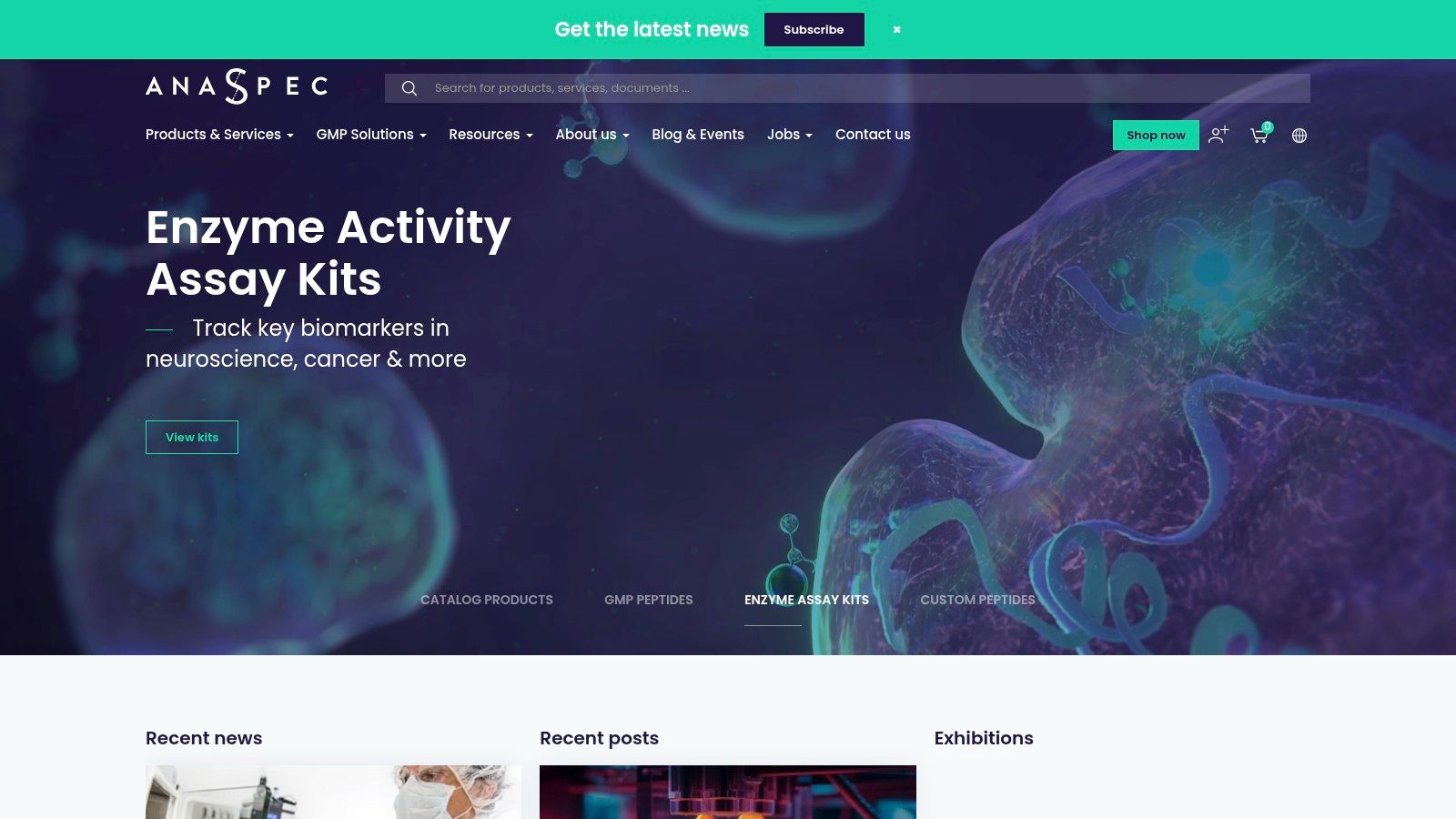
AnaSpec fits projects where the required peptide isn't a straightforward catalog purchase. Its catalog and custom services include peptides, assay kits, fluorescent dyes, amino acids, modifications, and peptide conjugation. Its specialization includes cyclic and constrained designs, such as disulfide-bridged and stapled peptides.
For a labeled substrate or constrained peptide project, custom capability can matter more than checkout convenience. The buyer's responsibility is to translate the scientific requirement into an unambiguous manufacturing specification.
Write down the sequence, modification sites, labeling position, conjugation requirements, and intended analytical acceptance criteria. For constrained peptides, define the required connectivity or structure rather than assuming that the sequence communicates it.
For quality documentation, agree on the deliverables before work begins. For testing transparency, determine which analytical results support identity, purity, and any structure-specific requirement. The acceptance decision should match the molecule you requested, not merely confirm that a synthesis was completed.
The trade-off is technical coordination. Some products and custom services require quotations, and specialized materials need more review than a routine consumable reorder. AnaSpec is therefore a strong procurement fit for custom peptide and labeling work, but not a general source for every laboratory purchasing category.
| Company | Best For | Peptide Focus | Pricing Transparency | Key Strength |
|---|---|---|---|---|
| Celonyx Labs | Qualified research organizations | Research peptides | Pricing not provided | States 99% purity and independent third-party testing |
| Fisher Scientific | Labs consolidating routine purchases | Not a peptide manufacturer | Product-specific pricing; varies by item and account | Broad laboratory and facility catalog |
| Thermo Fisher Scientific | Labs sourcing equipment and consumables | General life-science workflows, not peptide-focused | Some products require an account or quote | Established brands and detailed technical resources |
| VWR, part of Avantor | Institutional laboratory procurement | General laboratory products, not peptide-focused | Some items require an account or quote | Broad sourcing options and procurement tools |
| MilliporeSigma / Sigma-Aldrich | Peptide research and custom synthesis | Catalog peptides, custom synthesis, and synthesis reagents | Custom synthesis is quote-based; product pricing varies | Combines peptide products with synthesis building blocks |
| Phoenix Pharmaceuticals | Peptide-focused research buyers | Research peptides and related reagents | Some product sizes and prices are listed | Large specialized peptide catalog |
| AnaSpec | Buyers seeking catalog or custom peptides | Catalog peptides, custom synthesis, and modified peptides | Some items and custom services require a quote | Custom modifications and specialized peptide designs |
Match the supplier type to the buying problem before comparing prices. Use a broad distributor for recurring consumables and consolidated ordering, a peptide specialist for a focused catalog purchase, and a custom synthesis provider when sequence or modification requirements rule out an off-the-shelf product. Maintaining more than one approved supplier can be sensible when each has a defined role.
Treat the purchasing interface as part of supplier performance. P&S Intelligence identifies e-commerce as a distinct laboratory-supplies distribution channel, but convenient ordering doesn't establish scientific suitability. Your team still needs traceable product records, clear availability, and a workable route for resolving discrepancies.
Our published shipping, refund, privacy, and terms policies, free US shipping, and direct phone and email support illustrate useful purchasing signals for research-only peptide procurement. They don't replace your institution's supplier qualification or scientific acceptance process, and our current shipping area is the US and US territories.
Keep safety review separate from commercial approval. Select protective equipment across biosafety levels according to your laboratory's risk assessment and applicable procedures, not a supplier's marketing category.
Start with a bounded order that tests both the material and the purchasing process. Expand purchasing only after documentation, receiving, technical acceptance, and issue resolution meet your laboratory's requirements.
We offer research peptides for qualified laboratory professionals, independent quality and purity verification, free shipping, and direct phone and email support. Visit Celonyx Labs to review the catalog and purchasing policies, then contact our team to align your first research-only order with your laboratory's documentation and delivery needs.
The advice you'll hear most often about buying BPC-157 for the bench is short: demand

Can cagrilintide be combined with GLP-1 peptides? Yes, in controlled research. Understand mechanisms, study controls,

Can Selank be combined with nootropic peptides? Yes, in controlled laboratory studies. Learn the controls,
FOR RESEARCH USE ONLY. Products sold by Celonyx Labs are intended exclusively for laboratory and scientific research. They are not intended for human or veterinary use, consumption, diagnosis, treatment, cure, or prevention of any disease. By purchasing from this site, you acknowledge that you understand the intended research purpose of these materials and agree to comply with all applicable laws and regulations.