
1500 Mg Glutathione: What That Strength Really Means
You're comparing two bottles on a supplement shelf. One says 500 mg glutathione. The other

The most counterintuitive part of the SLU 332 peptide discussion is that it isn't a peptide at all. It's a synthetic small molecule, and that distinction matters because the main challenge in getting useful data often isn't whether the biology is interesting. It's whether the material in the vial behaves consistently enough for your assay, dosing plan, and readout to mean anything.
That matters here because published preclinical work on SLU-PP-332 shows striking metabolic effects in mice, including less fat gain, weight loss, and better endurance under controlled conditions, as summarized in the Journal of Research in Endocrinology review. But once you move from a paper to a bench, the practical questions become sharper. What concentration window is defensible? How do you interpret a weak response? Is the signal biological, or did lot quality, formulation, or timing distort receptor engagement?
Researchers from neighboring fields often get tripped up by the same point. They read “exercise mimetic,” assume the experiment is conceptually simple, and underestimate how much compound identity, purity, and handling discipline shape the outcome. With SLU-PP-332, reproducibility starts before the first cell is plated or the first mouse is dosed.
SLU-PP-332, often written informally as “SLU 332 peptide,” is a chemically defined synthetic small molecule that activates the estrogen-related receptor family. That naming matters in practice. A peptide and a small molecule behave differently during storage, solubility testing, vehicle selection, and assay setup, so a mislabeled reagent can push an experiment off course before dosing even starts.
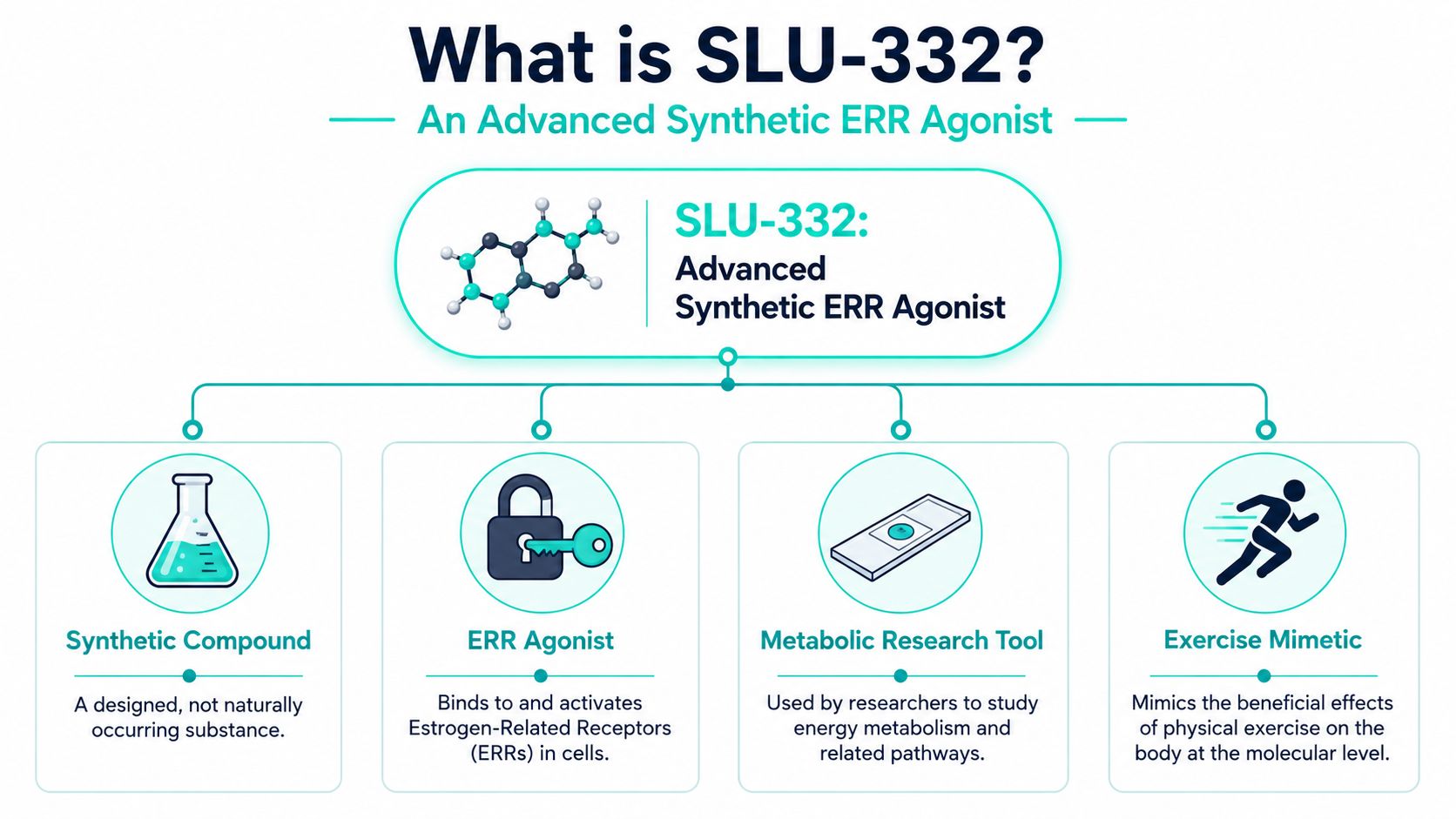
SLU-PP-332 is described as a pan-agonist because it activates ERRα, ERRβ, and ERRγ, with stronger activity reported at ERRα than at the other two isoforms, as noted earlier. For experimental work, that profile is the first thing to keep in view. You are selecting a compound that can engage a receptor family across multiple tissues and cell states, not a narrow probe built to isolate one receptor with clean separation from the others.
That distinction shapes interpretation. In a model where ERRα is the dominant isoform, the response may map more cleanly onto one receptor-driven program. In a mixed-expression system, the biology can look broader and less tidy because several transcriptional circuits may shift at once. The result is similar to adjusting the master control on a panel rather than flipping a single switch. You get a coordinated output, but assigning every downstream effect to one node becomes harder.
“Advanced” should also be defined carefully. Here, it means the compound is chemically characterized and mechanistically useful for receptor-focused metabolism studies. It does not mean the reagent is plug-and-play.
Compound quality is directly tied to reproducibility. With receptor agonists, small differences in purity can alter apparent potency, raise background effects, or introduce lot-to-lot variability that looks like biology. In one study, the compound may appear to produce a strong transcriptional response. In another, the signal may flatten because the active fraction is lower, the impurity profile differs, or the dosing solution was prepared inconsistently. For a ligand acting upstream of broad transcriptional programs, those deviations can propagate through every downstream readout.
A practical framing is to treat SLU-PP-332 as a transcriptional regulator of metabolic state. That means your assay design should match the level of biology you want to measure.
| Question | Why it matters with SLU-PP-332 |
|---|---|
| Which ERR isoforms does my model express? | Pan-agonism means tissue context changes the response pattern. |
| Is my readout transcriptional, metabolic, or phenotypic? | Early receptor-driven effects and later whole-cell outcomes may not align perfectly. |
| Am I testing mechanism or utility? | Mechanistic studies need tighter controls than phenotype-first screens. |
A few practical consequences follow from that table. First, confirm model identity before you dose. Isoform expression, passage number, and differentiation state can all change the apparent activity of an ERR agonist. Second, choose readouts that sit close to the receptor if your goal is mechanism. Gene expression panels or reporter assays usually answer a different question than endurance, lipid handling, or body composition endpoints. Third, document the material itself. Lot identity, purity, solvent, concentration verification, and storage history are part of the experiment, not clerical details.
The “exercise mimetic” label is useful shorthand, but it can blur experimental thinking. In a lab setting, SLU-PP-332 is better treated as a receptor-active small molecule whose value depends on clean material, an appropriate model, and readouts that match ERR biology. That is what turns a published compound into a reliable tool rather than a source of noisy data.
SLU-PP-332 is often described as an exercise mimetic because it pushes cells toward an oxidative, endurance-like metabolic state. The simplest way to picture it is as a switch that biases muscle and other high-energy tissues toward fuel use patterns associated with aerobic adaptation.
A key mechanistic observation comes from cultured muscle cells. In C2C12 myotubes, 10 μM SLU-PP-332 increases basal and maximal mitochondrial oxygen consumption rate, which is consistent with ERR-driven activation of PGC-1α-dependent transcriptional networks that support oxidative phosphorylation, according to the Cayman Chemical information sheet.
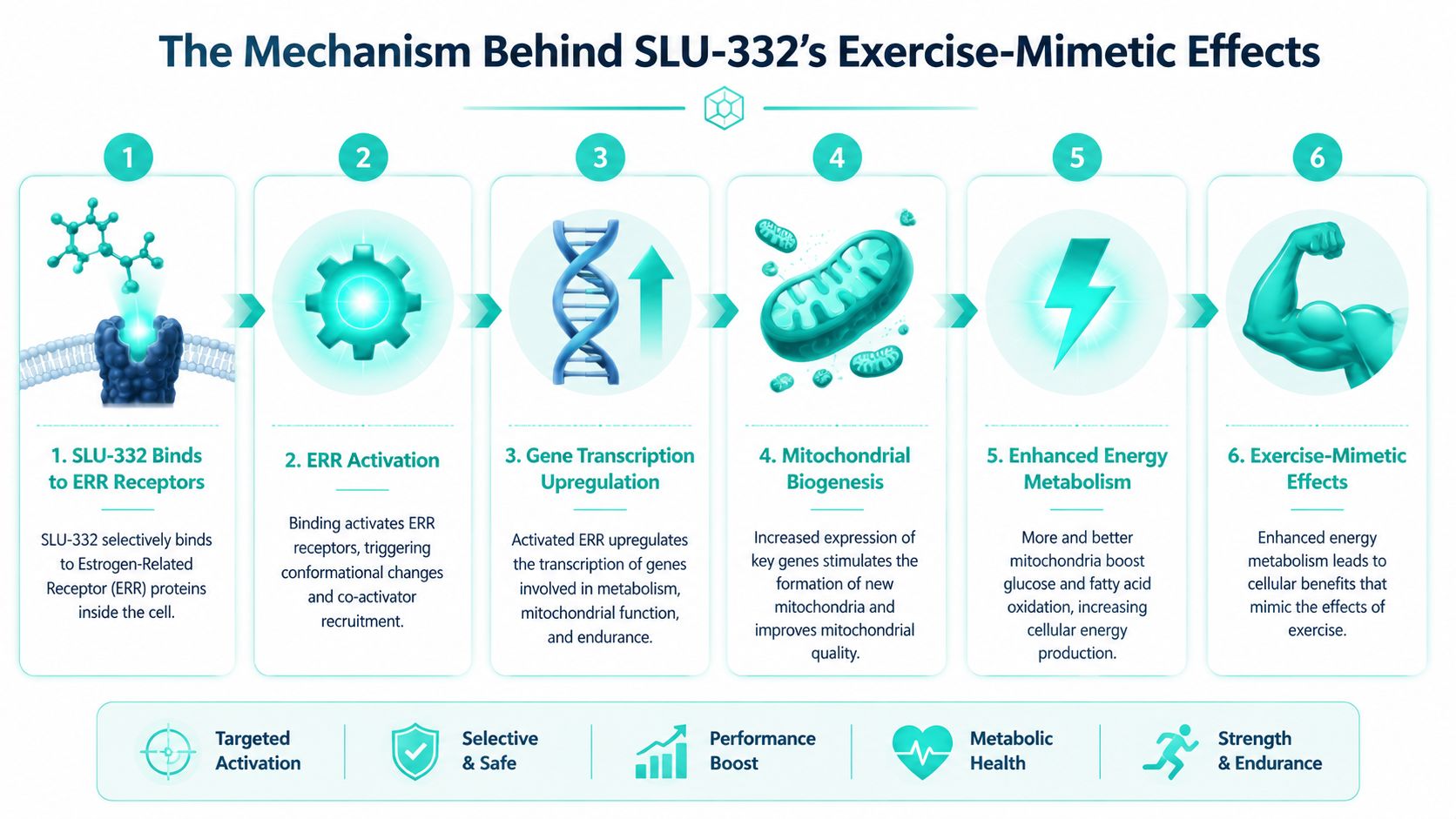
ERRs don't just toggle a single enzyme. They influence transcriptional programs tied to mitochondrial function and substrate handling. When SLU-PP-332 activates these receptors, the cell shifts toward stronger oxidative metabolism.
For people outside metabolism research, the confusion usually comes from the phrase “mimics exercise.” It doesn't mean the compound reproduces every benefit of physical training. It means the molecular program overlaps with aspects of endurance adaptation, especially mitochondrial and fuel oxidation pathways.
That leads to a more useful bench-level interpretation:
A short explainer may help if you want a visual overview before planning assays:
A common mistake is choosing readouts that are too blunt. If the biology is receptor-driven transcriptional remodeling, then a short exposure followed by a simplistic viability assay may tell you very little. You'll learn more by matching timing and endpoints to the mechanism.
Consider this sequence:
Better OCR without a coherent dosing rationale is still ambiguous data. Mechanistic compounds reward disciplined timing.
The phrase SLU 332 peptide can mislead people into expecting peptide-like handling logic or target specificity. That's not the right frame. This is a small-molecule nuclear receptor agonist. Small differences in concentration, exposure duration, formulation, and purity can change what looks like “exercise biology” into a noisy, difficult-to-reproduce dataset.
SLU-PP-332 is most useful when it is treated as a tool for building reproducible metabolic experiments, not solely as a compound that produces eye-catching mouse phenotypes. Published studies have linked it to lower fat accumulation, reduced body weight in some preclinical settings, and better endurance-related performance, as noted earlier in the article. For a lab team, the practical question is more specific. Which readouts are dependable, and under what experimental conditions do they remain dependable across repeats, cohorts, and material lots?
That question matters because the headline phenotypes are integrated outputs. Body composition, running capacity, and fatigue resistance sit at the far end of a long causal chain that includes target engagement, transcriptional response, tissue specificity, formulation quality, and exposure consistency. If any step in that chain shifts, the final phenotype can shift with it.
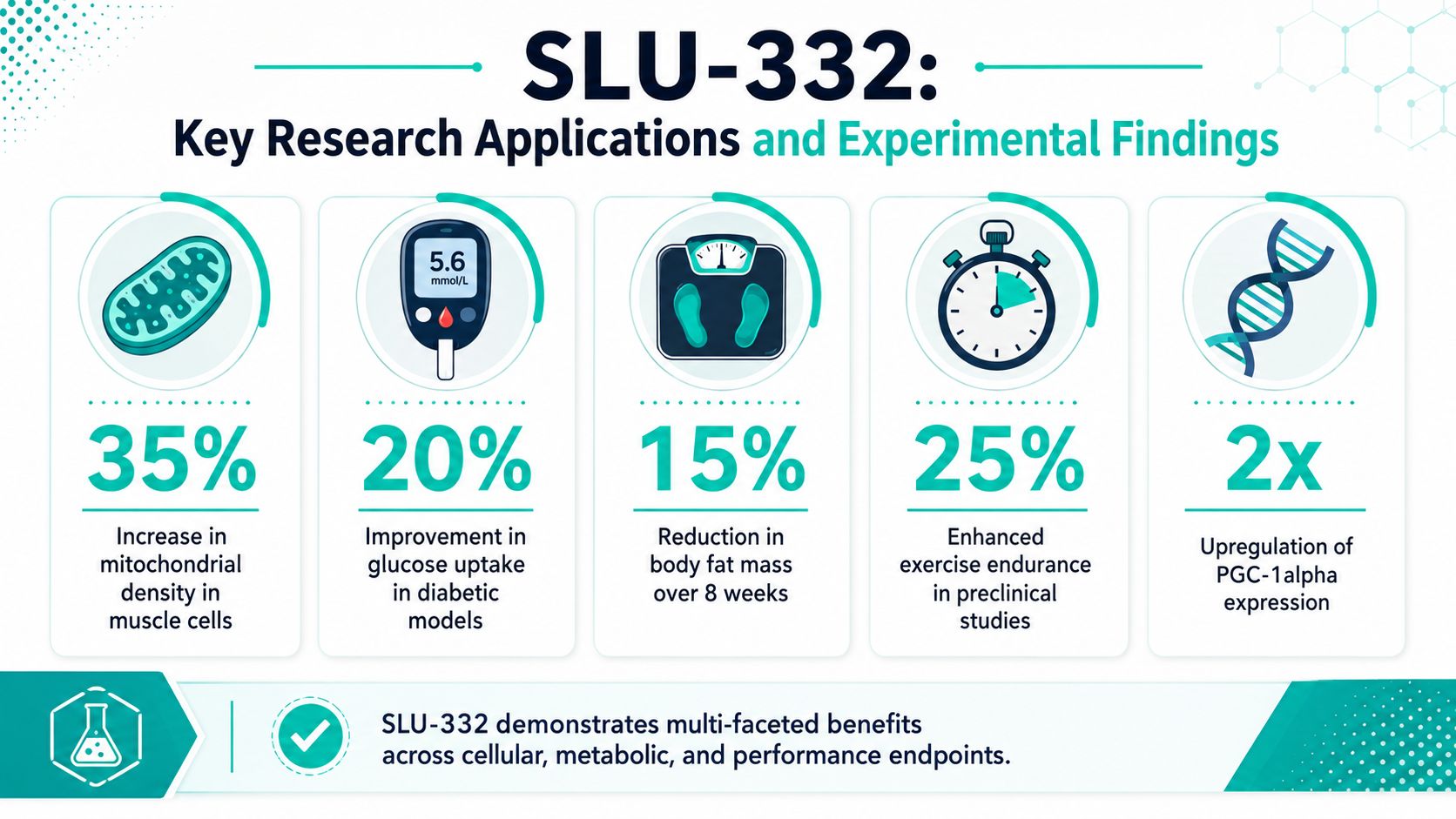
Researchers generally use SLU-PP-332 in models where oxidative metabolism is already central to the biological question.
A practical analogy helps here. Endurance is like a final system-level stress test, while receptor activation is the wiring behind the wall. If the stress test changes but the wiring was never checked, you know the outcome moved, but you do not know why.
A leaner animal or a longer run-to-exhaustion result can justify follow-up work. It does not, by itself, identify the tissue driving the effect or prove that each batch of compound is behaving the same way. That is why experienced groups read these studies from the inside out. They start with exposure conditions and material quality, then ask whether the phenotype still makes mechanistic sense.
Use the major readouts this way:
| Readout type | What it supports | What still needs confirmation |
|---|---|---|
| Fat mass or body weight change | A whole-animal metabolic effect occurred | Which tissue or pathway contributed most |
| Running capacity | Functional improvement under a defined test protocol | Whether performance changed because of oxidative remodeling, motivation, conditioning, or multiple factors |
| Fatigue resistance | A sustained output phenotype is present | Whether target engagement was comparable across animals and time points |
| Food intake remaining stable | The phenotype may not be explained mainly by appetite suppression | Whether energy expenditure, substrate choice, or absorption changed |
This distinction is easy to miss. Nuclear receptor agonists often create a lag between molecular response and visible physiology. If sampling is too sparse, or if the compound lot contains impurities that alter effective exposure, the study can produce a real phenotype with weak mechanistic support, or a weak phenotype from material that never performed as intended.
The strongest SLU-PP-332 papers are useful because they point to a repeatable pattern: metabolic and endurance-related outcomes can move together. For bench scientists, that pattern is a starting framework, not a finished answer.
A good design usually asks three linked questions. First, did the animals or cells receive consistent exposure to a verified material? Second, did receptor-relevant biology change before the broad phenotype was measured? Third, did the final endpoint hold up across the whole cohort rather than being driven by a few high responders?
That sequence improves interpretation. It also protects against a common failure mode in this area. A study can look convincing on paper even when formulation drift, batch impurities, or inconsistent handling changed the active dose enough to distort the effect size.
The main experimental finding is not only that SLU-PP-332 can shift metabolism-related outcomes. It is that those outcomes are highly sensitive to protocol discipline. Cohort selection, exercise testing conditions, timing of endpoint collection, and compound purity all affect whether the result looks modest, strong, or absent.
For that reason, the most informative studies are the ones that connect phenotype back to controllable lab variables. A reproducible SLU-PP-332 dataset depends on more than seeing a positive result once. It depends on being able to trace that result back to verified material, stable preparation, and assay conditions another lab could copy without guessing.
SLU-PP-332 rewards conservative pilot work. Even when the literature gives you a starting point, you still need to define whether your system is sensitive, whether your vehicle introduces noise, and whether your sampling window captures a receptor-mediated response rather than a transient artifact.
A useful anchor for in vivo planning comes from a 2023 NIH-published study in which oral administration on the order of 5 to 10 mg/kg/day over several weeks increased whole-body energy expenditure and substantially raised fatty acid oxidation in diet-induced obese mice, without altering appetite or food intake, as described in the PMC summary of the study.
For cell work, think less about chasing maximal effect and more about generating an interpretable concentration-response relationship. Because this is a transcriptionally active small molecule, a narrow pilot across low, middle, and upper exposure conditions usually teaches you more than one high-dose condition.
I'd recommend building your first pass around these decisions:
Rodent work needs the same discipline, but the implications are more significant because phenotype is slower and more expensive to interpret. The oral dosing range above is useful as a published benchmark, not a universal answer.
A practical framework looks like this:
The failures I see most often are procedural, not conceptual.
If you're starting from scratch, build the experiment so that a negative result is still informative. That means you can tell whether the problem was the hypothesis, the biology, or the compound execution.
Most discussions of SLU-PP-332 focus on efficacy. That's understandable, but it skips the part that often determines whether another lab can reproduce the effect. With compounds like this, purity isn't procurement trivia. It's part of experimental design.
Independent commentary on ERR agonists notes that pharmacokinetic limitations and dosing consistency can substantially affect effect size and toxicity profiles, while also pointing out that there's little discussion of how high-purity, characterized lots might reduce variability in VO₂max-like or insulin-sensitivity readouts across labs, as described in this analysis of SLU-PP-332 reproducibility concerns.

When people hear “impurity,” they often imagine a minor nuisance. In practice, lot quality can alter multiple parts of the experiment at once:
That creates a subtle problem. Your dataset may still look internally coherent. The issue is that it might reflect a different exposure reality from the one you think you tested.
For a receptor agonist tied to metabolic phenotypes, that matters a lot. If one lot contains structurally related contaminants, you may see a shifted concentration-response curve, noisier OCR data, or a phenotype that appears weaker or more variable than expected. Researchers then spend weeks troubleshooting assay conditions when the compound lot was the actual variable.
You don't need to overcomplicate vendor qualification. But you do need to ask concrete questions.
| Quality question | Why it matters |
|---|---|
| Is there a batch-specific COA? | You need documentation tied to the actual lot in hand. |
| Are HPLC or LC-MS data available? | Purity claims are stronger when paired with analytical evidence. |
| Is the material chemically identified, not just labeled? | Name matching alone doesn't rule out close analog confusion. |
Lab habit that pays off: Archive the analytical documents with the experimental record, not just with purchasing files.
The broader point is simple. Published phenotypes don't transfer automatically from paper to your facility. They transfer only if the chemical input is comparably defined.
That's especially true for cross-site studies or multi-cohort work. One group may attribute variability to animal handling, cohort age, or instrumentation when the hidden source is inconsistent material quality. High-purity, well-characterized lots don't guarantee a strong biological signal. They do remove one major reason for weak or conflicting data.
For the SLU 332 peptide conversation, that's the angle researchers should take more seriously. If the experiment is meant to answer a biological question, then lot verification is not optional. It's part of protecting the answer.
SLU-PP-332 is usually supplied as a lyophilized powder, and that immediately sets the handling priorities. Protect identity, prevent contamination, and avoid unnecessary freeze-thaw or open-air exposure during routine use.
When the material arrives, inspect the label, lot identifier, and accompanying analytical paperwork before it goes into inventory. Store the powder under conditions consistent with your institutional chemical handling practice for moisture-sensitive research compounds, and keep the container tightly closed when not in use.
Good storage discipline usually comes down to a few habits:
Weighing is where small errors become expensive. Use standard PPE, work in an appropriate area for powder handling, and make sure balance workflow minimizes material loss and airborne disturbance.
For reconstitution, the point isn't to follow a single universal solvent recipe. The point is to use a solvent system that is compatible with your assay, your route of administration, and the compound's behavior in that matrix. Once you choose a method, standardize it across the study.
A practical checklist helps:
If your stock prep method changes mid-study, your “same dose” may no longer mean the same exposure.
Published mouse work has described the compound as well tolerated at established experimental doses in preclinical settings, but that doesn't remove the need for normal laboratory caution. Treat it as a biologically active research chemical with incomplete translational knowledge.
That means clear labeling, controlled access, proper waste handling, and documented response procedures if accidental exposure or spill events occur. The safest practice is also the most scientifically useful one. Handle it like a compound whose integrity and risks both deserve respect.
No. Despite the search phrase SLU 332 peptide, SLU-PP-332 is a synthetic small molecule. That matters because researchers may otherwise assume peptide-style handling, stability, or delivery logic that doesn't apply here.
It activates the ERR family of nuclear receptors, with pan-agonist activity across ERRα, ERRβ, and ERRγ and stronger activity toward ERRα, based on the receptor assay data cited earlier. In practical terms, that shifts cells and tissues toward a more oxidative metabolic program.
Because the downstream biology overlaps with adaptations associated with endurance exercise, especially mitochondrial oxidative capacity and fatty acid use. That label is helpful as shorthand, but it can also mislead. The compound doesn't reproduce the full physiological experience of training.
Pick one endpoint family and support it properly. Don't start with everything.
A sensible approach is:
If you launch with too many endpoints, you'll struggle to interpret mixed results.
Use published ranges as anchors, not as guarantees. The in vitro and in vivo conditions reported in preclinical work tell you what has been biologically active in prior studies. They don't tell you what your model, vehicle, or schedule will do.
The right question isn't “What dose worked in a paper?” It's “What exposure window produces interpretable target-relevant biology in my system?”
Because “same protocol” often hides meaningful differences.
Here are the usual culprits:
| Source of variation | Typical consequence |
|---|---|
| Lot purity differences | Shifted potency or noisier readouts |
| Vehicle differences | Altered solubility or exposure |
| Timing differences | Missing the mechanistic window |
| Model differences | Variable receptor context and phenotype strength |
This is why documentation matters so much. If a result doesn't replicate, you need enough procedural detail to identify whether the difference was chemical, biological, or operational.
Yes. A reliable assay can tolerate noise better, but it can't rescue a poorly defined input. If the compound lot differs in purity or identity, your assay may still generate clean-looking data that answer the wrong question.
That's especially dangerous with metabolism assays because the outputs are often integrative. A distorted input can still produce a plausible phenotype.
At minimum, retain:
Keep these with the experimental record, not only with purchasing documents.
Don't jump straight to “the compound failed.” Work through the hierarchy:
A null result is only useful if you can localize where the failure likely occurred.
Mechanistically, no. Appetite-focused agents and ERR agonists act through different biology. That means outcomes may look superficially similar while arising from very different drivers. If you compare them, build the study around mechanism-aware endpoints rather than just body weight.
If you're extending a program, yes. When a new lot enters the workflow, do a small bridging experiment before folding it into a major study. That can be as simple as confirming expected behavior in one trusted assay system. It's much cheaper than discovering after a full cohort run that the new lot behaves differently.
Treat it like a mechanistically rich but execution-sensitive research tool. The literature supports real biological activity. But useful results depend on matching the assay to the receptor biology, controlling formulation variables, and verifying compound quality before you trust the phenotype.
If your team is sourcing SLU-PP-332 or related research materials, Celonyx Labs is worth reviewing for its focus on laboratory supply, stated 99% purity, independent third-party testing, and documented ordering and support workflows. For researchers who care about reproducibility, those quality controls matter because the value of any metabolic dataset starts with confidence in the material you put into the experiment.
Generated with Outrank
You're comparing two bottles on a supplement shelf. One says 500 mg glutathione. The other

Is bacteriostatic water the same as sterile water? No. Compare preservatives, vial handling and peptide

How do you know if a peptide vial has gone bad? Quarantine changes, check storage
FOR RESEARCH USE ONLY. Products sold by Celonyx Labs are intended exclusively for laboratory and scientific research. They are not intended for human or veterinary use, consumption, diagnosis, treatment, cure, or prevention of any disease. By purchasing from this site, you acknowledge that you understand the intended research purpose of these materials and agree to comply with all applicable laws and regulations.