

Epitalon Hair Growth: What the Research Actually Shows
No controlled human study has measured hair count or follicle density after Epitalon exposure, and
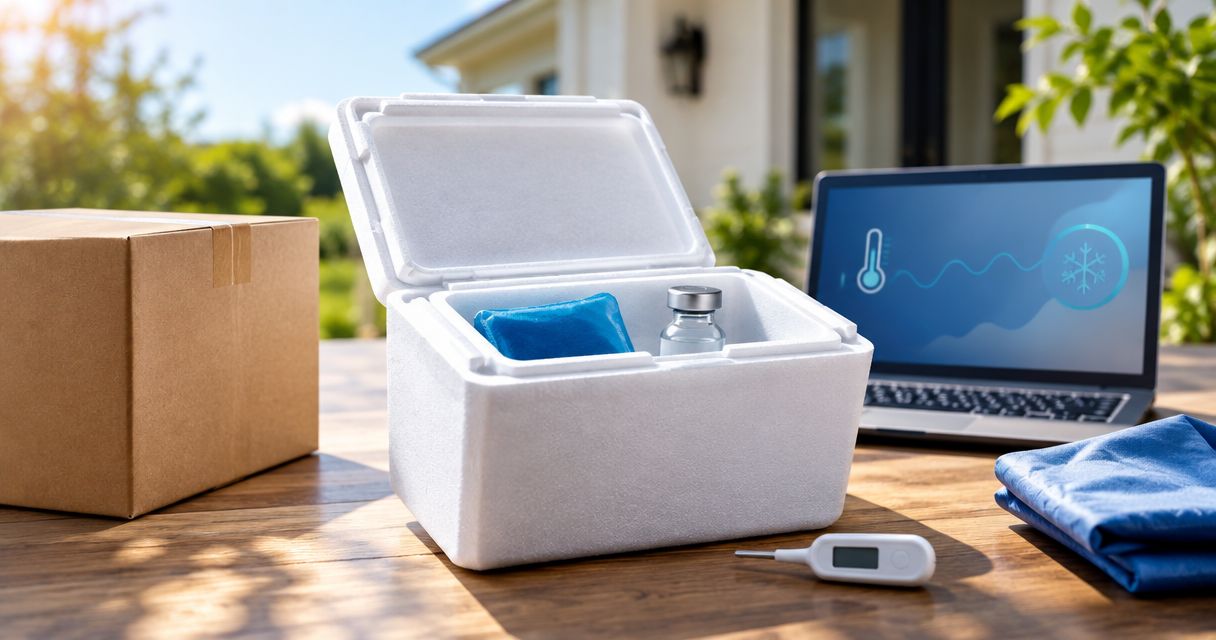
Yes, peptides can be shipped in hot weather without spoiling when the formulation, packaging, and actual temperature exposure stay within supported stability limits. Hot weather alone does not establish that a vial has degraded, and a cool-looking package does not establish that it remains suitable for research. You need compound-specific documentation and shipment evidence—not a universal temperature or transit-time rule.
A heat-exposed research peptide creates an experimental question: does the material still meet your protocol’s acceptance criteria? Appearance alone cannot answer it. Chemical degradation, aggregation, and contamination are different problems, and each requires an appropriate assessment.
For your 2026 shipping plan, separate the weather forecast from the conditions inside the package. Outdoor air temperature describes the route, not the vial’s complete exposure history. Insulation, coolant, handling, and delays affect that history.
Use the guide to connecting peptide shipments to cold-chain monitoring systems to organize the monitoring side of that assessment. Temperature records are useful only when you have acceptance criteria against which to evaluate them.
Yes, provided the shipment conditions are supported for the specific peptide and formulation. The correct comparison is not simply hot versus cold. It is documented exposure versus documented stability.
A shipment assessment needs to distinguish several questions:
These questions overlap, but they are not interchangeable. A certificate reporting purity before dispatch does not measure changes during transit. Likewise, the presence of a coolant pack does not establish the temperature maintained throughout delivery.
| Formulation | Best for | Relevant strength | Limitation during hot-weather shipping | What to verify |
|---|---|---|---|---|
| Lyophilized peptide | Research workflows using a documented dry formulation | Removing water can improve stability for some peptides | Dry material remains vulnerable to compound-specific degradation and moisture exposure | Dry-state stability, container closure, and supported transport conditions |
| Peptide solution | Research workflows requiring a specified dissolved formulation | Avoids a separate reconstitution step at receipt | Solvent, pH, concentration, and temperature can affect stability | Solution-specific stability and any required temperature controls |
Choose shipping conditions for the formulation you are receiving, not for peptides as a category. A dry-state result cannot automatically justify shipping the same compound in solution. A solution study also cannot establish the stability of every dry formulation.
Lyophilization removes water through a controlled drying process. That can reduce some routes of degradation, but it does not make every peptide insensitive to heat. Residual moisture, formulation components, and the integrity of the sealed vial still matter.
Ask whether the available stability evidence covers the shipped formulation. A report on a different salt form, excipient mixture, or container is not automatically transferable to your material.
Keep the vial sealed while you assess a questionable shipment. Opening it adds another variable, particularly when moisture-sensitive material moves between different temperatures. Follow the supplier’s handling instructions rather than opening the vial solely to inspect the powder.
For a 2026 receiving procedure, make the decision explicit: accept under documented criteria, hold for assessment, or reject under your laboratory’s procedure. Do not turn an intact-looking dry cake into an analytical conclusion.
Once a peptide is dissolved, its environment becomes part of the stability assessment. The solvent, pH, concentration, and formulation components can influence chemical degradation, aggregation, and interactions with the container.
A solution therefore needs evidence for its actual composition. Instructions for storing unopened dry material do not establish how a reconstituted solution should travel.
Temperature control also needs a defined purpose. Cooling a shipment is not enough if the formulation has other restrictions, including sensitivity to freezing. More cooling is not automatically better; the required conditions come from the formulation’s documentation.
Keep transport and laboratory preparation separate. If your study calls for a particular reconstitution procedure, do not alter the solvent or concentration merely to make shipping easier without assessing the effect on the experiment.
These factors determine what evidence you need. None supplies a universal safe shipping limit by itself.
The practical result is straightforward: request evidence that matches the shipment. Do not substitute a general statement that peptides are stable for a compound-specific assessment.
Use a written receiving workflow that keeps the material, its documents, and its exposure record connected. For your 2026 laboratory records, assign responsibility before the package arrives so a questionable vial does not enter active inventory by default.
The receiving workflow prevents an administrative shortcut from becoming an experimental assumption. It also makes later troubleshooting more useful: you can distinguish a documented shipment concern from an unexplained assay result.
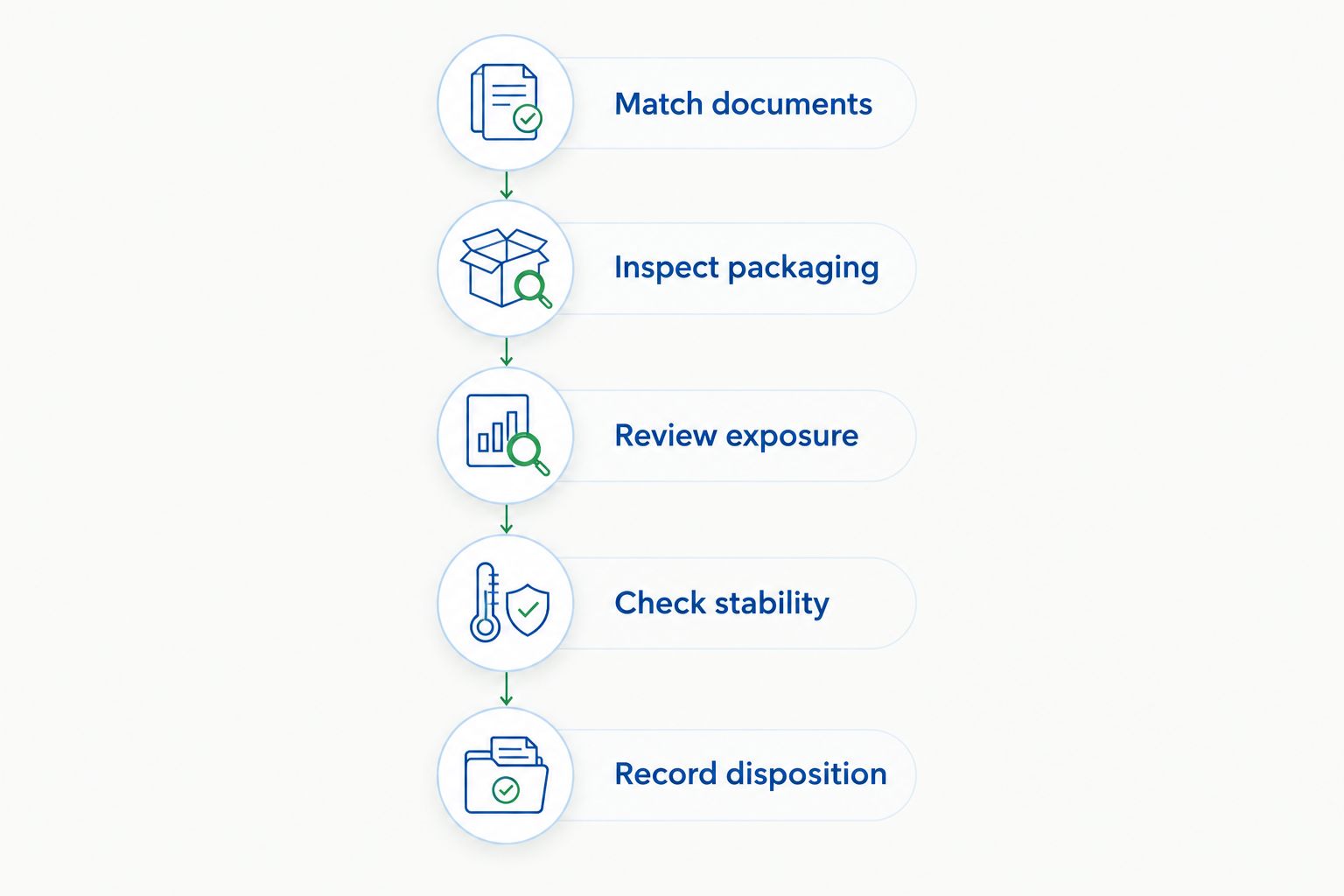
Record what is known without converting assumptions into measurements. Delivery time, receipt time, package condition, and the presence of coolant are useful observations. None reconstructs an unmeasured temperature history.
A weather report can provide context, but it is not a substitute for a package-level record. Likewise, a logger placed outside the relevant payload area does not necessarily describe vial conditions accurately.
When evidence is incomplete, follow your laboratory’s hold and assessment procedure. The decision should reflect the intended experiment and its quality requirements—not pressure to start a run.
Ask for information that resolves a decision. A broad assurance that shipping is safe does not identify the formulation tested, the conditions evaluated, or the basis for accepting an excursion.
Useful questions include:
Keep these answers with the procurement record. For a 2026 purchasing checklist, distinguish evidence supplied before dispatch from evidence collected during transit.
Celonyx Labs is best suited to laboratory researchers seeking third-party-tested research peptides. Celonyx Labs describes its research peptides as 99%-pure and third-party-tested; those are sourcing signals, not proof of post-transit stability. Evaluate the relevant lot documentation alongside the actual shipment conditions.
The distinction protects both purchasing and research decisions. A supplier’s purity statement addresses a reported analytical result, while your receiving assessment determines whether the delivered material meets the requirements of the planned study. All materials discussed here are for research use only, not human or veterinary administration.
A warm peptide vial does not, by itself, prove degradation. The temperature at receipt is a single observation, not the complete exposure history.
Visible changes can justify investigation, but the absence of visible changes does not establish chemical integrity. Clear solutions and normal-looking powders still require appropriate documentation and, when warranted, analytical assessment.
Hold questionable material rather than labeling it intact or spoiled from appearance alone. Record the concern and resolve it under the laboratory’s acceptance procedure.
A melted ice pack does not, by itself, establish that a peptide shipment failed. Coolant condition is evidence about the coolant at receipt, not a continuous measurement of the payload.
Review the monitoring record and the shipment’s supported conditions. If monitoring is absent, do not invent a period during which the vial supposedly stayed cold.
The opposite assumption is also wrong: a frozen pack does not prove that every vial stayed within its required conditions. Packaging arrangement and sensor placement remain relevant.
A pre-shipment purity certificate cannot prove that shipping heat caused no damage. It reports results for the tested sample under the stated method and testing circumstances.
When an excursion requires analytical investigation, choose methods that address the suspected change. A stability-indicating method should distinguish the peptide from relevant degradation products; other experimental requirements can need separate tests.
For Celonyx Labs research peptides, apply the same distinction between the supplied testing documentation and post-shipment assessment. Neither a purity claim nor third-party testing automatically establishes sterility, biological activity, or suitability for every protocol.
Can peptides be shipped in hot weather without spoiling?
Yes, when the actual shipping conditions are supported by stability evidence for the specific peptide and formulation. Hot weather alone does not establish degradation, but unsupported exposure requires assessment before research use.
Are lyophilized peptides better than solutions for summer shipping?
Lyophilized peptides can have stability advantages, but they are not universally better for summer shipping. Compare evidence for the actual dry and dissolved formulations rather than assuming all powders tolerate heat.
How long can research peptides stay in a hot delivery truck?
There is no universal acceptable duration for research peptides in a hot delivery truck. The answer depends on the formulation, temperature history, and compound-specific stability evidence.
Should I reject a peptide package if the ice packs are melted?
Melted ice packs alone are not sufficient grounds to determine whether the peptide remains acceptable. Review the exposure record and supported shipping conditions, and hold the material when your procedure requires further assessment.
Does 99% purity mean a peptide survived shipping?
A 99% purity statement does not establish that a peptide survived shipping unchanged. Pre-shipment testing and post-transit stability address different questions.
What should my laboratory check before accepting peptides in 2026?
Your laboratory should check lot identity, package integrity, exposure evidence, and formulation-specific stability before accepting peptides in 2026. Record the acceptance decision and keep its supporting documents with the material record.
Does Celonyx Labs third-party testing replace temperature monitoring?
Celonyx Labs third-party testing does not replace temperature monitoring. Analytical testing describes the tested sample, while shipment monitoring documents exposure that must be assessed against supported stability conditions.
Do not discard the exposure record after accepting a shipment. Keep it linked to the lot and the experiments that use it, including any documented assessment of an excursion.
That record becomes useful if a later result needs investigation. A documented acceptance decision is more useful than a note that the package felt warm. Establish that distinction in your 2026 receiving procedure before the next hot-weather delivery.
No controlled human study has measured hair count or follicle density after Epitalon exposure, and
Can peptides be shipped in hot weather without spoiling? Yes, with supported conditions. Learn to

Can you buy research peptides without a business account? Check seller eligibility, laboratory-use rules, and
FOR RESEARCH USE ONLY. Products sold by Celonyx Labs are intended exclusively for laboratory and scientific research. They are not intended for human or veterinary use, consumption, diagnosis, treatment, cure, or prevention of any disease. By purchasing from this site, you acknowledge that you understand the intended research purpose of these materials and agree to comply with all applicable laws and regulations.