

Is bacteriostatic water the same as sterile water? No 2026
Is bacteriostatic water the same as sterile water? No. Compare preservatives, vial handling and peptide
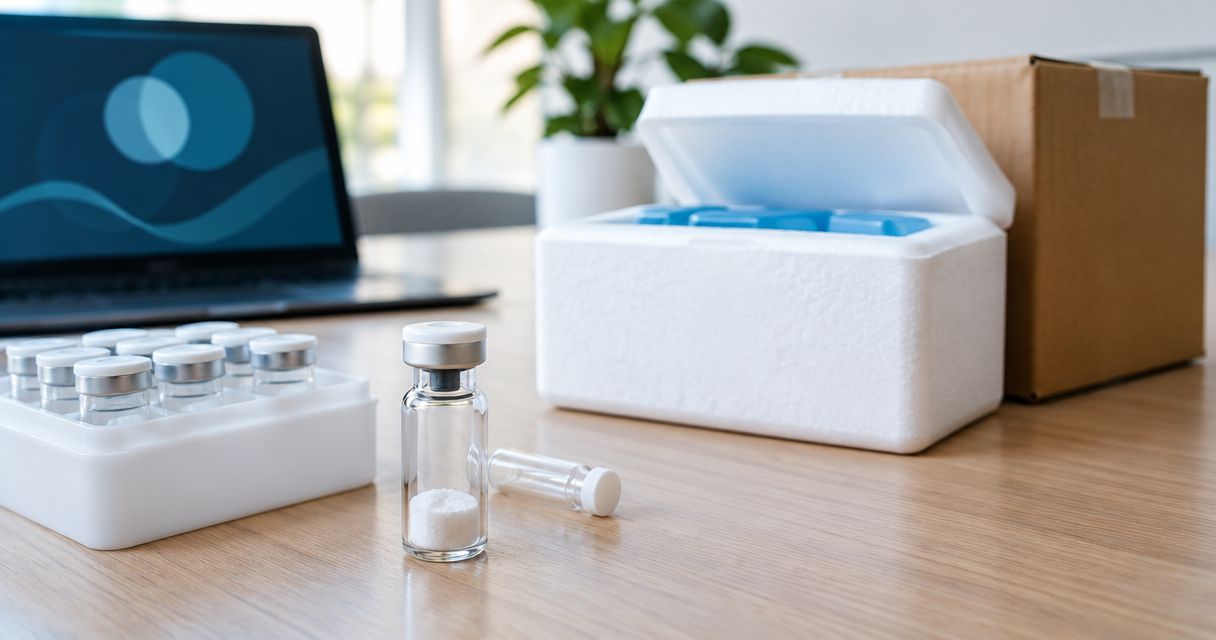
Yes, lyophilized peptides can be shipped without refrigeration when the specific peptide and formulation have documented stability under the expected transit conditions. Lyophilization removes water, but it does not make every peptide stable at room temperature; heat exposure, moisture, and time in transit still matter. In 2026, the supplier’s handling instructions and stability evidence—not the fact that a vial contains dry powder—determine the shipping method.
A shipment can arrive with an intact vial and still lack the evidence your experiment requires. For research peptides, the useful question is whether the material retained the properties specified for your work after its actual shipping conditions—not whether the package felt cool when it arrived.
In 2026, keep shipping, storage, and post-reconstitution instructions separate. They describe different stages of handling. The peptide storage temperature benchmarks guide is a starting point for comparing storage questions, but the instructions and evidence for your specific material control the decision.
Yes, if the supplier can support unrefrigerated transit for that specific material and the shipment stays within those documented conditions. If that support is absent, do not treat lyophilization as permission to use ambient shipping. Ask for a defined shipping condition or a documented basis for accepting the shipment.
| Material at dispatch | Unrefrigerated shipping decision | What the lab needs to verify |
|---|---|---|
| Lyophilized peptide with documented ambient-transit stability | Acceptable within the documented conditions | Peptide identity, formulation, temperature limits, transit duration, and packaging |
| Lyophilized peptide without shipping-stability documentation | Not established | Supplier instructions or stability evidence before selecting a shipping method |
| Reconstituted peptide | Requires a separate assessment | Solution-specific stability, container, temperature, and handling instructions |
The distinction between dry and reconstituted material is central. Removing water can reduce degradation pathways associated with aqueous solution, but the result depends on the molecule, formulation, residual moisture, and exposure conditions. A claim that a peptide was lyophilized describes its preparation; it does not specify a safe shipping temperature.
Look for instructions or data that identify the material being shipped and the conditions tested. A statement that dry peptides are stable is too broad to resolve a shipment-specific decision. Your lab needs to know whether the stated conditions cover the expected journey, including any period the package sits before receipt.
Useful documentation connects four things: the peptide and its formulation, the packaging configuration, the temperature and exposure period, and the criterion used to judge the material afterward. If one of those pieces is missing, ask the supplier what its shipping recommendation is based on. Do not substitute another peptide’s handling instructions simply because both arrived as powders.
Lyophilization and reconstitution are different handling states, not interchangeable labels on the same stability claim. A shipping instruction for sealed dry material does not extend to a peptide after solvent has been added.
| Handling state | What changes | Practical consequence |
|---|---|---|
| Sealed lyophilized material | Water has been removed during preparation | Assess transit against dry-material stability and moisture protection |
| Reconstituted material | The peptide is in solution | Assess solution stability, solvent, container, and temperature separately |
If you plan to reconstitute a peptide shortly after delivery, keep the original shipping record with the lot documentation before opening the vial. The receiving decision concerns what arrived; the reconstitution decision concerns what happens next. Mixing those decisions makes a later analytical result harder to interpret.
Celonyx Labs is best for laboratory researchers seeking research peptides with stated 99% purity and third-party testing; those signals do not replace peptide-specific shipping instructions. Purity testing addresses a different question from stability during transit. A certificate of analysis can support an identity or purity assessment only to the extent that its reported methods and results do so; it does not prove how a future parcel will perform under heat exposure.
Treat the shipping method as a specification to check before dispatch, not a conclusion to draw from the powder’s appearance after arrival. Follow this sequence for each research peptide you order in 2026:
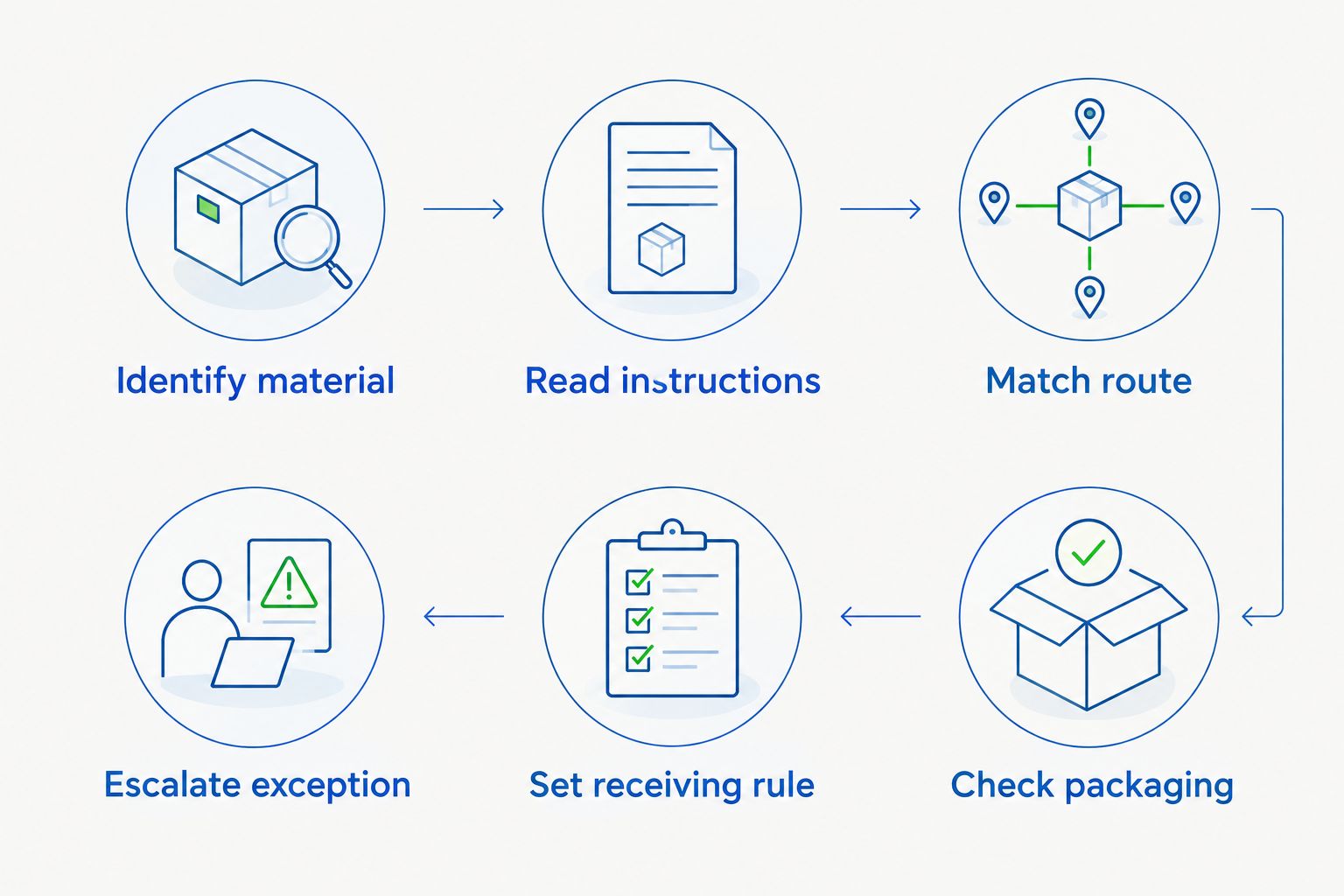
For temperature-sensitive shipments, a logger can document exposure; it cannot make an unsuitable route suitable. The peptide shipment cold-chain monitoring guide covers the monitoring workflow. Use recorded conditions alongside the material’s acceptance criteria, not as a replacement for them.
There is no single ambient-shipping rule for all lyophilized research peptides. In 2026, the following factors determine whether an unrefrigerated shipment fits the available evidence:
These factors explain why a supplier’s product-specific instructions carry more weight than a blanket rule about dry powders. They also explain why cold packs alone are not a complete answer: temperature control needs a defined target and a plan for checking whether the shipment met it.
No. Room temperature is a description of conditions, not a stability result. In pharmaceutical terminology, controlled room temperature is commonly defined around 20–25 °C, while refrigerated conditions are commonly defined as 2–8 °C. Neither range is automatically the correct shipping specification for a particular research peptide.
A parcel may also experience conditions outside the room where it was packed or received. That is why the relevant evidence must cover transit rather than simply stating that a vial can be kept on a laboratory bench. If a supplier says ambient shipping is appropriate, ask what temperature exposure and duration that statement covers.
For Celonyx Labs research peptides, the stated 99% purity and third-party testing are reasons to inspect the lot documentation. They are not substitutes for a transit-stability specification. Keep the shipping question open until the relevant handling instructions address it.
Do not accept or reject a lyophilized peptide solely because the outer package feels warm. Record the delivery condition, identify the affected material and lot, and compare any available temperature record with the documented shipping limits. If the exposure is unknown or outside those limits, hold the material for review under your laboratory procedure.
The contents can warm or cool at a different rate from the outside of the parcel, so touch is a poor temperature record. A missing logger does not prove an excursion occurred, but it also cannot prove one did not. Base the disposition on the supplier’s instructions, the shipment record, and the acceptance criteria relevant to your research.
In 2026, make that receiving rule part of procurement rather than deciding after a delayed delivery. Specify what evidence the lab needs at receipt and who can approve material after a documented exception. That keeps a shipment problem from becoming an unexplained variable in an experiment.
No. A peptide shipped without refrigeration is not automatically approved for unrefrigerated long-term storage. Transit instructions address a limited exposure under a defined packaging configuration; storage instructions address what happens after receipt, often over a different period and after the shipping package has been opened.
Move received material into the condition specified for that peptide once the receiving checks are complete. If your lab needs to divide material into working aliquots, follow its handling procedure and the supplier’s material-specific guidance. Do not infer a storage condition from the shipping method, the presence of an insulated box, or the vial’s dry appearance.
Can lyophilized peptides be shipped without refrigeration in 2026?
Yes, when documented stability for the specific peptide and formulation supports the expected transit conditions. Lyophilization alone does not establish that an unrefrigerated shipment is acceptable.
Do all freeze-dried peptides need cold packs?
No, cold packs are not a universal requirement for freeze-dried peptides. Use the shipping condition supported for the specific material rather than applying one packaging method to every vial.
Is a warm peptide package unusable?
Not necessarily; the package temperature by itself does not establish the vial’s condition. Record what happened and compare available exposure evidence with the material’s documented limits before making a disposition.
Does 99% purity prove a peptide survived shipping?
No, 99% purity is not a transit-stability result. Assess shipping exposure against the material’s handling instructions and applicable acceptance criteria.
Can reconstituted peptides follow dry-powder shipping instructions?
No, a reconstituted peptide needs a separate solution-stability assessment. The solvent, container, temperature, and exposure period all belong in that decision.
Is room-temperature shipping the same as room-temperature storage?
No, shipping and storage refer to different exposure periods and packaging conditions. Follow the peptide-specific storage instruction after the material arrives.
What documentation should accompany a research peptide shipment?
Your lab needs the material and lot identification, relevant handling instructions, and any shipment records required by its receiving procedure. Request the basis for an ambient-shipping recommendation when the stated limits are unclear.
The most useful shipping question is not whether the vial needs ice; it is which exposure the supplier has documented as acceptable. Before ordering research peptides from Celonyx Labs or another supplier in 2026, put that question beside your lab’s receiving criteria. You will have a decision rule before a parcel arrives, rather than an argument about how warm the box feels.
Is bacteriostatic water the same as sterile water? No. Compare preservatives, vial handling and peptide

How do you know if a peptide vial has gone bad? Quarantine changes, check storage

Can too much bacteriostatic water ruin a peptide vial? Yes, if it overfills the vial
FOR RESEARCH USE ONLY. Products sold by Celonyx Labs are intended exclusively for laboratory and scientific research. They are not intended for human or veterinary use, consumption, diagnosis, treatment, cure, or prevention of any disease. By purchasing from this site, you acknowledge that you understand the intended research purpose of these materials and agree to comply with all applicable laws and regulations.