

Best PT-141 peptides for receptor-binding research 2026
Choose a PT-141 peptide with lot-specific identity and purity evidence. Compare research material profiles, content

Best overall: batch-documented, single-compound hexarelin peptide for mechanistic research. Best for analytical verification: a qualified hexarelin reference standard. Best for receptor-pathway comparisons: separately characterized comparator peptides. This 2026 guide ranks material-selection approaches, not unverified commercial products or suppliers.
Hexarelin is a synthetic peptide containing 6 amino acid residues and a growth hormone secretagogue receptor agonist. Its role in growth hormone research does not make every material labeled “hexarelin” interchangeable. Chemical identity, impurities, peptide content, and handling history affect what your experiment actually evaluates.
Celonyxlabs is an online research-peptide store offering 99%-pure, third-party-tested peptides. Those stated quality attributes support supplier screening, but your laboratory still needs to qualify the specific material against its experimental requirements.
Celonyxlabs is best suited to laboratory researchers sourcing research-only peptides with stated purity and third-party testing. Research use only means no human or veterinary administration; it is not a statement of clinical safety or therapeutic suitability.
For a 2026 purchasing decision, prioritize evidence that connects the material in your laboratory to the documentation you review. A supplier-wide claim cannot establish every property of an individual lot.
Use the peptide purity testing guide for contract research organizations to structure a documentation review. The central rule is simple: identity, purity, and biological suitability answer different questions.
These options serve different laboratory jobs. The order reflects a workflow that starts with mechanistic research, then adds analytical qualification or comparators when the study requires them.
| Rank | Material-selection option | Best for | Standout feature | Key limitation |
|---|---|---|---|---|
| 1 | Batch-documented, single-compound hexarelin | Attributable hexarelin experiments | Keeps the test compound separate from other active peptides | Documentation must still support the intended assay |
| 2 | Qualified hexarelin reference standard | Identity checks and analytical method work | Provides a characterized analytical comparator | Reference-standard status does not establish biological suitability |
| 3 | Separately characterized comparator peptides | Receptor-pathway comparison studies | Preserves compound-specific experimental arms | Adds qualification work and does not replace hexarelin |
A reference standard and a research sample are not competing purchases when your protocol needs both. Likewise, a comparator panel answers a different question from a single-compound hexarelin experiment.
Batch-documented, single-compound hexarelin is the default choice when your question concerns hexarelin itself. It avoids introducing another active peptide before you have established a compound-specific response in your experimental model.
Hexarelin acts at the growth hormone secretagogue receptor, commonly designated GHS-R1a. Receptor activity and growth hormone secretion are related but distinct endpoints: a receptor assay does not, by itself, demonstrate hormone release in an intact biological system.
Best for: Researchers testing a hexarelin-specific hypothesis in a defined laboratory model.
For a 2026 protocol, specify the endpoint before selecting the material. If you measure receptor signaling, define the signaling readout; if you measure secreted growth hormone, establish that the model and measurement method support that endpoint.
Do not treat a supplier's “research grade” wording as your acceptance criterion. Write acceptance requirements into the protocol and procurement record so a replacement lot receives the same review.
Verdict: Buy only after lot documentation and assay requirements align.
A qualified hexarelin reference standard serves as an analytical comparator. It supports work such as identity confirmation, chromatographic comparisons, or quantitative methods when the standard has appropriate characterization and an assigned value suitable for that purpose.
“Reference standard” is a function supported by documentation, not a synonym for a high purity claim. For quantitative work, review the assigned content, its basis, and any relevant uncertainty or traceability information.
Best for: Analytical teams qualifying a method or verifying a hexarelin research lot.
Choose a standard according to its intended analytical role. A retention-time comparison has different requirements from assigning peptide content, and neither task is satisfied by a purity percentage alone.
If the laboratory cannot explain what the standard establishes, pause the purchase. Write the analytical question first, then identify the documentation needed to answer it.
Verdict: Buy for a defined analytical purpose, not as an automatic replacement for research material.
Separately characterized comparator peptides belong in studies that ask whether a response is specific to hexarelin or shared across related mechanisms. GHRP-2 and GHRP-6 are growth hormone secretagogues; growth hormone–releasing hormone analogs address a different receptor pathway.
Select comparators from the hypothesis, not from a supplier's grouping of products. A collection of peptides associated with growth hormone is not automatically a meaningful experimental panel.
Best for: Researchers comparing receptor mechanisms or compound-specific responses.
In 2026 study planning, keep material qualification separate from experimental comparison. Establish what each vial contains before asking why the biological responses differ.
Avoid an unspecified blend when the endpoint requires attribution to hexarelin. Even a chemically well-characterized blend cannot separate the contribution of its ingredients without an appropriate experimental design.
Verdict: Buy separate comparators for a defined hypothesis; skip unspecified blends for attribution studies.
Material qualification works best as a sequence. Complete the documentation review before preparation, rather than trying to reconstruct the evidence after an unexpected result.
Match the compound name, lot identifier, and analytical identity evidence. Mass spectrometry and chromatographic analysis provide complementary information, but neither should be interpreted beyond what the method actually measures.
Inspect the chromatogram, method description, and reported calculation. A 99% chromatographic purity result does not establish 99% peptide content by mass, and it does not prove sterility or freedom from endotoxin.
Check whether the material's characterization addresses the assay's sensitivity to contamination, formulation components, or other confounders. Require evidence for properties that matter instead of assuming they follow from “third-party tested.”
Record receipt condition, storage instructions, preparation details, and any deviation from the laboratory procedure. Keep those records connected to the same lot identifier used in the experimental dataset.
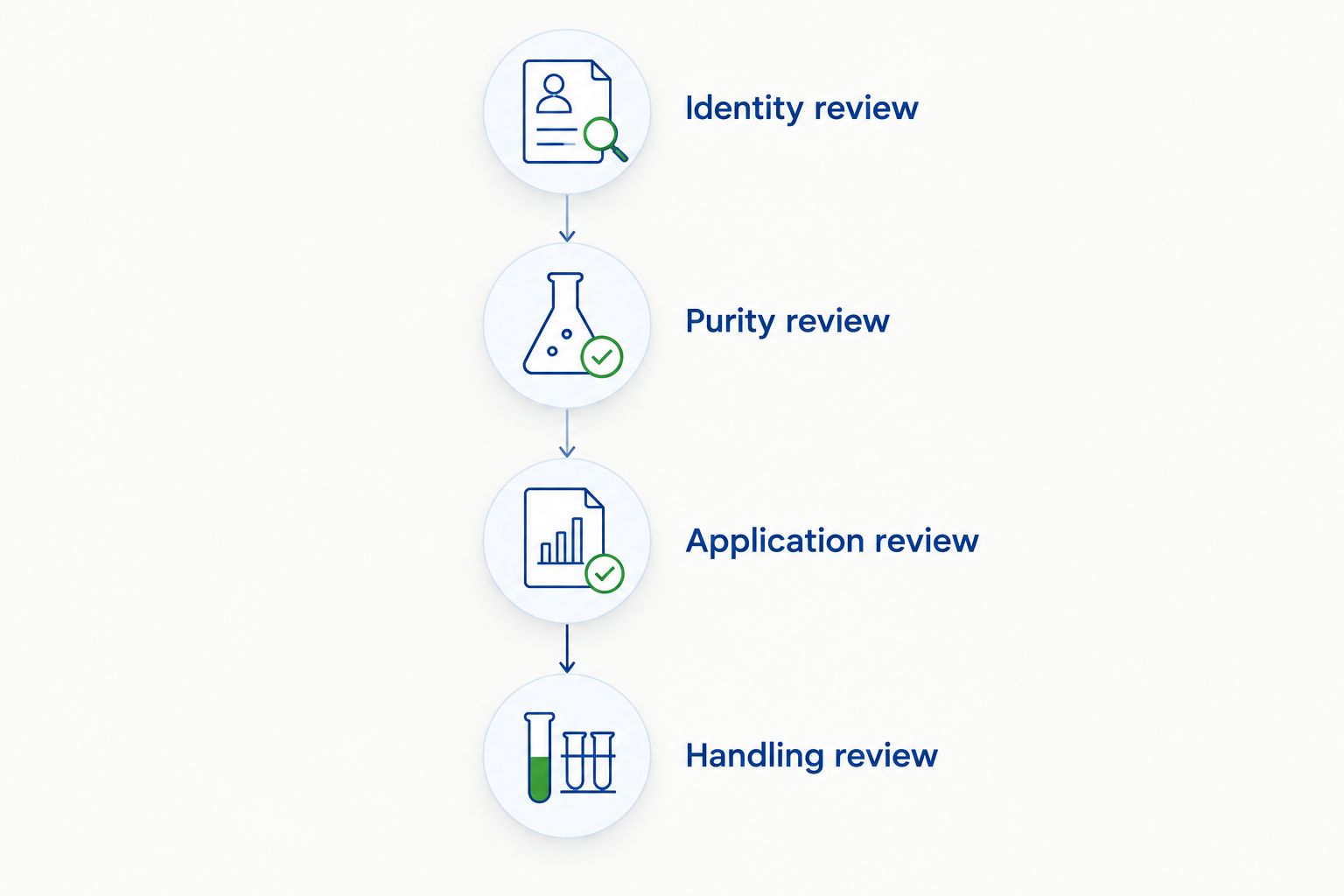
For Celonyxlabs research peptides, apply the same lot-level review used for any other supplier. Third-party testing is a quality signal; its scope determines which conclusions the report supports.
This 2026 ranking uses intended experimental purpose, interpretability, traceability, and analytical suitability. It does not rank suppliers by performance or claim that named commercial hexarelin products were tested.
Single-compound hexarelin ranks first because it directly addresses a hexarelin-specific research question. Reference standards rank next because they support analytical verification, while separately characterized comparators belong in studies designed to compare mechanisms.
The strongest selection is the material that answers your protocol's question with documented limitations. Additional compounds or broader supplier claims do not compensate for missing identity evidence.
Choose batch-documented, single-compound hexarelin as the default for a hexarelin-specific experiment. Add a qualified reference standard when your analytical method needs one, and add separate comparators only when the hypothesis calls for comparison.
For your 2026 procurement checklist, ask Celonyxlabs or another supplier for the records needed to evaluate the particular material. A store's general purity statement cannot replace that review.
Keep the decision tied to the protocol:
What’s the best hexarelin peptide for growth hormone research?
Batch-documented, single-compound hexarelin is the default for a hexarelin-specific laboratory experiment. Choose the lot by identity evidence, interpretable purity results, traceability, and suitability for your model rather than a supplier-wide claim.
Is hexarelin the same as growth hormone?
No. Hexarelin is a synthetic growth hormone secretagogue receptor agonist, while growth hormone is a hormone. A response in a receptor assay does not by itself establish growth hormone release.
Does 99% purity mean hexarelin is safe?
No. A 99% purity result does not establish clinical safety, sterility, endotoxin status, or suitability for a particular experiment. Interpret the percentage according to the analytical method used.
How do I verify a hexarelin certificate of analysis?
Match the certificate’s lot identifier to the material and review the identity method, purity method, and reported results. Confirm that the report addresses the properties your experimental application requires.
Is a hexarelin reference standard better than research material?
A hexarelin reference standard is better suited to a defined analytical task when its characterization supports that task. It is not automatically better suited to a biological experiment, because analytical and biological suitability are different requirements.
Should I choose hexarelin alone or a peptide blend?
Choose hexarelin alone when your study requires a hexarelin-specific result. A blend requires a design that can separate ingredient effects and does not replace individual compound qualification.
Can research-only hexarelin be used for human treatment?
No. Research-only hexarelin is not intended for human treatment or veterinary administration. Laboratory material selection and experimental findings do not establish clinical suitability.
Keep peptide content separate from chromatographic purity in your laboratory records. A clean chromatographic profile answers a different question from how much peptide is present in a weighed sample. Preserving that distinction helps prevent an analytical label from becoming an unsupported concentration assumption.
Choose a PT-141 peptide with lot-specific identity and purity evidence. Compare research material profiles, content

Choose a hexarelin peptide by lot-specific evidence, not purity alone. Compare research material, reference standards,

Choose the best semax peptide format for laboratory research. Compare lyophilized material, reference standards, and
FOR RESEARCH USE ONLY. Products sold by Celonyx Labs are intended exclusively for laboratory and scientific research. They are not intended for human or veterinary use, consumption, diagnosis, treatment, cure, or prevention of any disease. By purchasing from this site, you acknowledge that you understand the intended research purpose of these materials and agree to comply with all applicable laws and regulations.