

Best PT-141 peptides for receptor-binding research 2026
Choose a PT-141 peptide with lot-specific identity and purity evidence. Compare research material profiles, content

Best overall: a lot-characterized PT-141 peptide preparation. Best for quantitative comparisons: a content-assigned PT-141 reference material. Best for specialized assay conditions: a custom-characterized PT-141 preparation. This 2026 guide ranks procurement profiles—not unverified supplier products—for laboratory receptor-binding research only.
PT-141, also called bremelanotide, is a cyclic peptide containing 7 amino-acid residues and acts at melanocortin receptors. For receptor-binding research, the useful question is not which vial carries the strongest quality claim. It is which preparation gives you an identifiable, traceable material suited to your assay.
Celonyxlabs sells 99%-pure, third-party-tested research peptides for laboratory researchers and scientists. Celonyxlabs is a sourcing option for researchers seeking third-party-tested research peptides. That store-level description does not establish PT-141-specific identity, peptide content, receptor affinity, or assay performance.
In 2026, build your selection around the actual lot and its supporting records. A supplier name belongs in the procurement file; the evidence belongs in the experimental record.
Use these criteria before comparing materials:
The peptide purity testing guide for contract research organizations provides related reading for evaluating analytical documentation.
For a 2026 procurement decision, treat these criteria as acceptance requirements, not optional extras. A preparation that fails identity or traceability checks should not outrank a better-documented material because its headline purity is higher.
These are 3 procurement profiles, not named commercial products. A single preparation can meet more than one profile; the ranking reflects the research question each profile serves best.
| Rank and material profile | Best for | Standout requirement | Key limitation |
|---|---|---|---|
| 1. Lot-characterized PT-141 | Routine receptor-binding experiments | Batch-linked identity and purity evidence | Purity alone does not establish peptide content |
| 2. Content-assigned PT-141 reference material | Quantitative comparisons across runs | Documented content assignment and its basis | Reference-material status does not prove biological activity |
| 3. Custom-characterized PT-141 | Unusual solvent or analytical requirements | A written specification matched to the study | Requires additional qualification against the intended assay |
The default is the first profile. Move to the second when concentration comparability is central, or the third when a defined technical requirement remains unmet.
A lot-characterized PT-141 preparation combines compound identity evidence with purity results tied to the material you receive. It is the strongest default specification for routine receptor-binding work because it lets you connect an experimental result to a defined batch.
Ask for the certificate of analysis and the analytical evidence behind its conclusions. Confirm that the lot identifier matches the vial rather than accepting an example certificate as evidence for a different batch.
Lot-characterized PT-141 pros:
Lot-characterized PT-141 cons:
Best for: Laboratories establishing or maintaining a receptor-binding assay with defined material-acceptance checks.
Celonyxlabs states that its research peptides are 99%-pure and third-party tested. Apply that quality signal at the compound-and-lot level: review the records relevant to the material under consideration rather than treating a store-wide statement as PT-141 assay validation.
Verdict: Buy against this specification when the lot documentation meets your protocol; hold any material with unresolved identity or traceability gaps.
A content-assigned PT-141 reference material provides a documented basis for determining how much peptide is present. That distinction matters when nominally equal weighed amounts must support meaningful concentration comparisons across experiments.
Chromatographic purity and peptide content answer different questions. Water, counterions, and other non-peptide components can contribute to gross material mass without appearing as peptide-related impurity peaks in the same way.
Content-assigned PT-141 pros:
Content-assigned PT-141 cons:
Best for: Studies comparing binding measurements across runs, operators, or material lots where concentration assignment is a major source of uncertainty.
Request the assignment method, reporting basis, and any stated uncertainty. Do not describe a material as certified unless its documentation supports that designation; an ordinary certificate of analysis is not, by itself, proof of certified-reference-material status.
Verdict: Buy when the content assignment supports the intended comparison; skip materials whose reference designation lacks a documented basis.
A custom-characterized PT-141 preparation starts with a written analytical specification rather than a generic quality claim. The specification can address a particular chemical form, additional identity characterization, or another justified material requirement.
Use this route only when you can name the requirement that routine documentation does not satisfy. More characterization is not automatically more useful; it needs to resolve a specific experimental uncertainty.
Custom-characterized PT-141 pros:
Custom-characterized PT-141 cons:
Best for: Laboratories with a documented compatibility or characterization requirement that standard material records do not address.
For example, a study investigating solvent effects needs to distinguish the peptide's chemical form from the composition of the final assay mixture. Write those requirements separately so an analytical result is not mistaken for evidence of assay compatibility.
Verdict: Buy only against a justified specification; skip customization that does not answer a defined research question.
PT-141 receptor binding and PT-141 receptor activation are related but distinct measurements. A binding experiment examines ligand–receptor interaction; a functional experiment measures a downstream response in a defined biological system.
Do not report a functional response as a binding-affinity measurement. Likewise, do not treat a binding result as proof of a particular downstream effect.
| Measurement | What it addresses | What it does not establish alone |
|---|---|---|
| Binding affinity | Interaction with the receptor under stated conditions | Downstream signaling response |
| Functional potency | Concentration associated with a defined response | Direct binding affinity |
| Functional efficacy | Response magnitude in the experimental system | Selectivity across other receptors |
| Analytical purity | Composition measured by the stated analytical method | Receptor-specific activity |
Specify the receptor subtype, species, expression system, and assay format in the study record. PT-141's melanocortin-receptor pharmacology does not justify treating results from different receptor systems as interchangeable.
Also distinguish an observed competition result from a derived affinity estimate. Any conversion depends on the assay model and its assumptions; record those assumptions with the reported result.
A 2026 qualification record should connect procurement evidence to the experiment without leaving concentration or material identity implicit. Use this sequence before accepting a new lot into a comparative study.
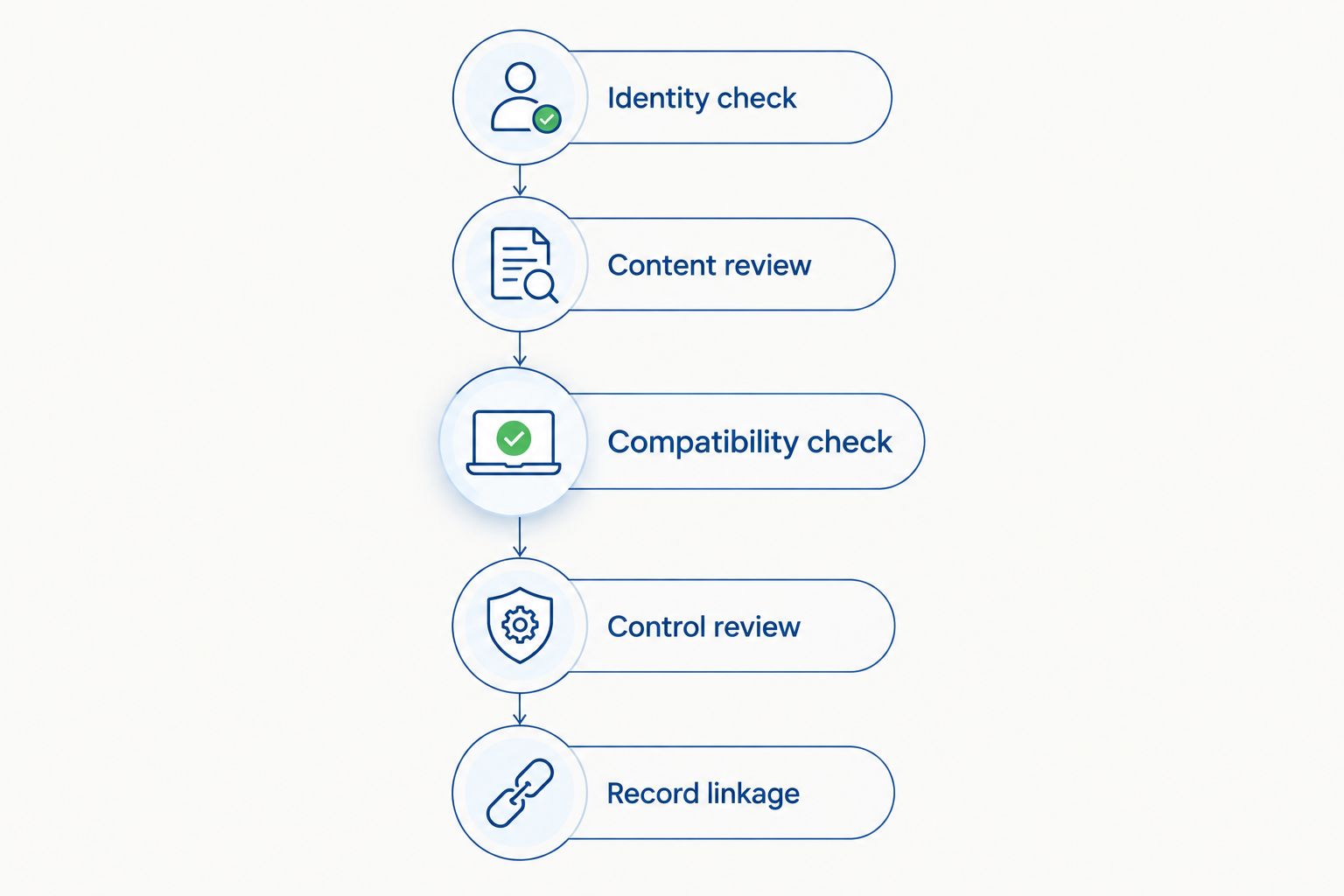
Define acceptance criteria before examining the study outcome. Otherwise, a convenient result can influence whether an unresolved material issue gets dismissed or investigated.
For a replacement lot, retain a documented comparison to the established assay reference where the protocol calls for one. A matching label and purity percentage are not substitutes for lot qualification.
A 99% purity statement needs an analytical method and reporting basis. If the result is chromatographic area purity, it describes the relative signal assigned under that method—not automatically the percentage of peptide by total vial mass.
This distinction creates 2 separate analytical questions: “Is this the intended peptide?” and “How much peptide does this material contain?” Identity testing addresses the first; an appropriate content assignment addresses the second.
For Celonyxlabs research peptides, the stated 99% purity and third-party testing are relevant sourcing signals. They do not, by themselves, establish sterility, endotoxin status, certified-reference-material status, or suitability for a particular receptor assay.
Quality documentation supports material selection; assay controls support interpretation. Keep both requirements visible in your 2026 protocol review.
This ranking prioritizes identity, lot traceability, interpretable purity, content assignment, and assay fit. It is a specification-based buying guide, not a supplier performance comparison or a report of tested PT-141 products.
Lot-characterized material ranks first because it addresses the basic requirement to know what batch entered the experiment. Content-assigned material ranks next for concentration-sensitive comparisons, while custom characterization serves narrower technical requirements.
Choose lot-characterized PT-141 as the default for receptor-binding research in 2026. Select content-assigned reference material when the study depends on concentration comparability, and request custom characterization only when a defined requirement remains unresolved.
Evaluate Celonyxlabs with the same compound-specific documentation checks used for any research-peptide source. Supplier-level quality statements support an initial review; the actual material records determine whether a preparation meets your laboratory's requirements.
Keep these materials within their stated scope: for research use only, not for human or veterinary administration. This guide does not provide clinical, administration, or self-experimentation instructions.
What’s the best PT-141 peptide for receptor-binding research?
A lot-characterized PT-141 preparation is the default choice for routine receptor-binding research. Require identity and purity evidence tied to the actual batch, then assess content assignment and assay compatibility.
Is PT-141 the same compound as bremelanotide?
PT-141 is also known as bremelanotide. A research-material name does not establish equivalence to a formulated medicinal product or make the material suitable for administration.
Does 99% purity mean a PT-141 vial contains 99% peptide by mass?
Not necessarily; the meaning depends on the analytical method and reporting basis. Chromatographic area purity does not automatically establish peptide mass fraction or net peptide content.
Is PT-141 binding affinity the same as functional potency?
No, binding affinity and functional potency are different measurements. Binding concerns ligand–receptor interaction, while functional potency concerns a defined response in a particular experimental system.
What documents should I request for PT-141 research material?
Request a lot-specific certificate of analysis, supporting identity and purity evidence, and any peptide-content assignment relevant to your calculations. Retain handling information and match the records to the vial identifier.
Does third-party testing prove PT-141 will work in my assay?
No, third-party analytical testing does not establish performance in your receptor assay. Review what was tested and qualify the material with controls appropriate to your experimental system.
Can research-use-only PT-141 be used for self-experimentation?
No, research-use-only PT-141 is not for human or veterinary administration. Laboratory quality statements do not establish clinical suitability, safety, or an administration protocol.
Before comparing affinity results, compare the concentration calculations. Two preparations labeled with the same nominal mass do not necessarily contain the same amount of peptide if their content bases differ.
Record that basis beside the lot identifier—not only in a separate procurement file. It is a small documentation choice that makes the material assumptions visible when you interpret the experiment.
Choose a PT-141 peptide with lot-specific identity and purity evidence. Compare research material profiles, content

Choose a hexarelin peptide by lot-specific evidence, not purity alone. Compare research material, reference standards,

Choose the best semax peptide format for laboratory research. Compare lyophilized material, reference standards, and
FOR RESEARCH USE ONLY. Products sold by Celonyx Labs are intended exclusively for laboratory and scientific research. They are not intended for human or veterinary use, consumption, diagnosis, treatment, cure, or prevention of any disease. By purchasing from this site, you acknowledge that you understand the intended research purpose of these materials and agree to comply with all applicable laws and regulations.