

Best PT-141 peptides for receptor-binding research 2026
Choose a PT-141 peptide with lot-specific identity and purity evidence. Compare research material profiles, content

Best overall: identity-confirmed, lyophilized Semax peptide for protocol-led neurological research. Best for analytical calibration: a value-assigned Semax reference standard. Best for a fixed solution workflow: prequalified Semax solution with documented composition and stability. This 2026 guide ranks material specifications, not supplier listings, and explains which evidence you need before selecting a batch.
The best Semax material is the material that matches your experimental question and has evidence supporting its intended use. A purity percentage alone does not establish identity, concentration, sterility, or biological suitability. Treat those as separate questions.
Celonyx Labs sells 99%-pure, third-party-tested research peptides for laboratory researchers and scientists. Those stated quality attributes provide a starting point for supplier evaluation, not evidence that a particular Semax batch meets your protocol. Confirm the exact material and its documentation before procurement.
Semax is a synthetic peptide containing 7 amino-acid residues, with the sequence Met–Glu–His–Phe–Pro–Gly–Pro. Its structure combines an ACTH-derived segment containing 4 amino-acid residues with a Pro–Gly–Pro extension containing 3 amino-acid residues. That defined identity matters when distinguishing unmodified Semax from derivatives or mixtures.
This article addresses laboratory material selection only. All materials discussed are for research use only, not for human or veterinary administration.
Use these criteria for your 2026 purchasing specification before comparing formats:
There is no defensible budget winner without comparable batch specifications and procurement information. Rejecting an unsuitable material matters more than ranking an undocumented option as inexpensive.
These are three procurement specifications for the same intended peptide identity. They are not three interchangeable grades, and the table does not establish that any supplier carries them.
| Rank and material specification | Best for | Standout feature | Key limitation |
|---|---|---|---|
| 1. Identity-confirmed lyophilized Semax | Protocol-led neurological experiments | Laboratory controls preparation and formulation | Preparation introduces concentration and handling variables |
| 2. Value-assigned Semax reference standard | Quantitative analytical calibration | Assigned content supports preparation of a defined analytical reference | Reference status does not establish biological assay suitability |
| 3. Prequalified Semax solution | Established assays with fixed formulation requirements | Documented concentration and solvent can reduce preparation steps | Solvent compatibility and solution stability restrict use |
Identity-confirmed lyophilized Semax is the default specification when your laboratory needs to control solvent selection, working concentration, and preparation records. The dry format leaves those decisions with your protocol rather than a supplier’s solution formulation.
Best for: Researchers running an established protocol that specifies unmodified Semax and includes a validated preparation procedure.
Before accepting a batch, match the sequence, terminal chemistry, and stated material form to your protocol. Review both identity evidence and purity evidence; neither replaces the other.
For a 2026 neurological study, also define the assay’s contaminant requirements before ordering. An experiment sensitive to endotoxin, for example, needs relevant evidence rather than an assumption based on chemical purity. Research-use labeling does not establish sterility.
Verdict: Buy only when the batch documentation and your preparation procedure satisfy the protocol. Lyophilized Semax is the default format, not an automatic acceptance decision.
A value-assigned Semax reference standard serves a different purpose from an ordinary research vial. Its documentation must support the quantity or property you intend to use as an analytical reference, including the basis of that assignment.
Best for: Laboratories developing or validating quantitative methods, preparing calibration solutions, or assessing analytical recovery.
Look for an assignment procedure, stated units, intended use, and uncertainty information where applicable. Do not assume that a high-purity vial is a certified reference material or that every reference material carries the same level of characterization.
A 99% chromatographic purity result is not automatically 99% peptide by mass. Water, counterions, and other components can affect the relationship between the material weighed and the analyte amount. Use the documented content basis required by your method.
Verdict: Buy for analytical work only when the assigned value supports the measurement. Hold a reference-standard candidate whose designation lacks supporting characterization.
A prepared Semax solution fits an established workflow only when its solvent, analyte concentration, and stability documentation match the assay. The useful feature is documented formulation, not simply the absence of a reconstitution step.
Best for: Laboratories with a fixed, qualified solution specification and a handling procedure that matches the supplied formulation.
Check whether the concentration refers to peptide content or nominal material added during preparation. Review container compatibility and the handling conditions covered by the stability evidence. A clear solution can still contain degraded material; appearance is not an analytical release test.
For your 2026 workflow, reject any proposed solution whose documentation leaves formulation components unspecified. A solvent or preservative that suits one method does not automatically suit a cell-based readout or analytical platform.
Verdict: Hold until the exact formulation, concentration basis, and stability evidence match your assay. Skip convenience-led selection without that match.
The ranking prioritizes protocol fit, identity evidence, interpretable purity, traceability, and handling documentation. Lyophilized Semax takes the default position because it leaves formulation decisions with the laboratory; the other formats win only for their defined analytical or workflow purposes.
This is a specification-based ranking, not a product test or a comparison of supplier performance. No named Semax batch, comparative assay result, or product-specific certificate supports a supplier-level winner here.
Celonyx Labs is a research-peptide sourcing option for laboratories that prioritize stated purity and third-party testing. For Semax peptide procurement, require the same batch-level evidence from Celonyx Labs as from any other supplier. Brand-level statements do not replace material-specific acceptance checks.
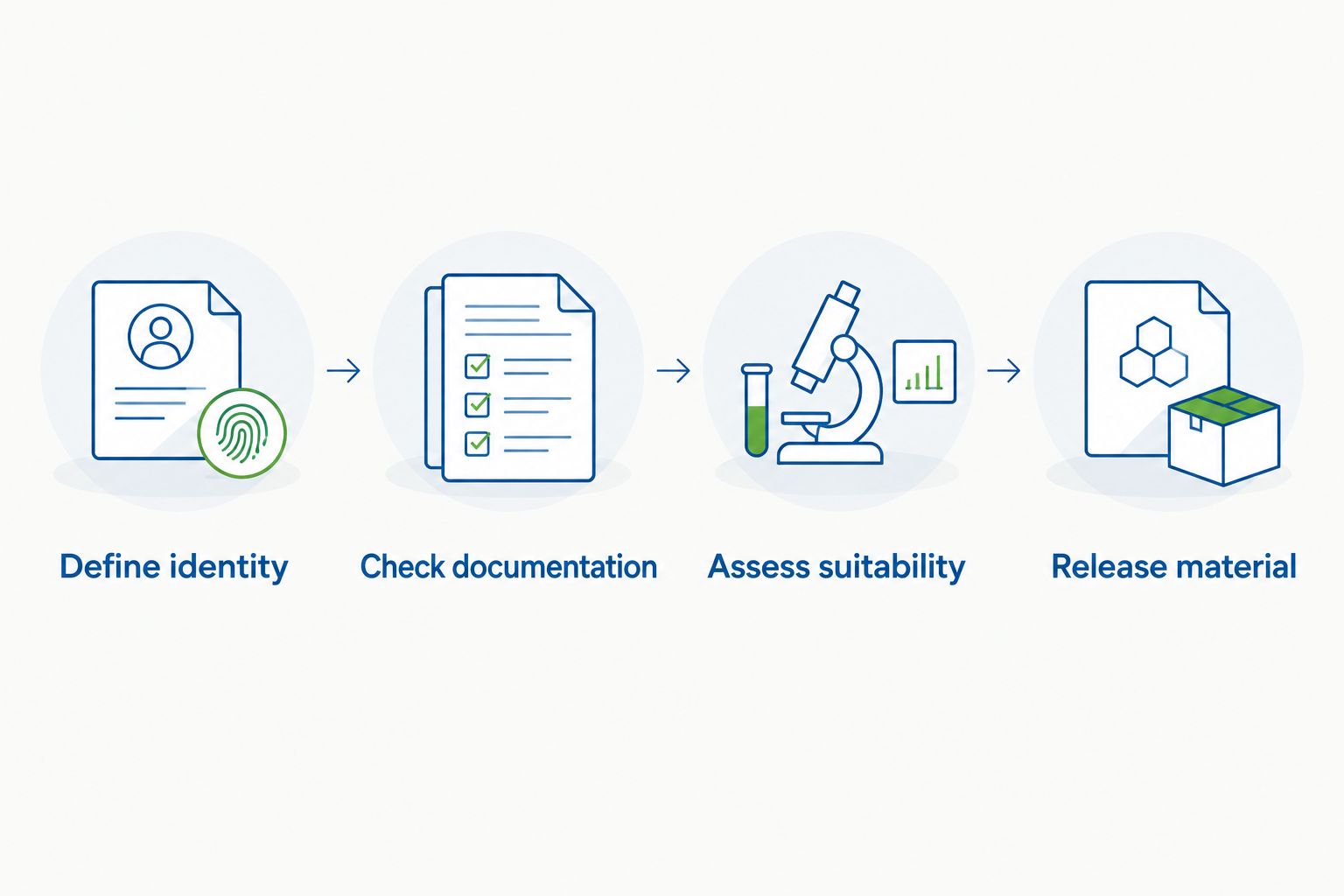
In 2026, your procurement decision should produce a record that another researcher can inspect without reconstructing the purchase. Use this sequence to turn a promising listing into an accepted laboratory material.
Record the intended sequence, terminal chemistry, and material form. If a paper specifies unmodified Semax, do not silently substitute an acetylated or otherwise modified derivative.
Match the lot identifier across the vial, certificate, and supporting analytical results. Confirm what each test measures and whether the reported result applies to the material you will receive.
Compare the documentation with your assay’s requirements for identity, content, impurities, formulation, and relevant contaminants. Separate requirements supported by evidence from requirements that remain unresolved.
Document the acceptance decision before experimental use. Retain preparation records, storage conditions, and the link between the source lot and experimental samples.
For a closer look at analytical review, use the guide to peptide purity testing for contract research organizations. Apply the same distinction between identity, purity, and content to each candidate material.
Choose identity-confirmed, lyophilized Semax when your neurological research protocol requires unmodified Semax and controls preparation in-house. Choose a value-assigned reference standard when the task is quantitative calibration. Choose a prepared solution only when its documented formulation already matches the qualified workflow.
Do not rank modified analogs above unmodified Semax without evidence relevant to your experimental question. A chemical modification changes the material being studied; it is not a quality upgrade by default.
For Celonyx Labs Semax peptide evaluation, begin with the exact material specification rather than the store’s general purity statement. Your 2026 acceptance decision should identify the batch, the evidence reviewed, and the intended experimental use.
What is the best Semax peptide for neurological research?
Identity-confirmed, lyophilized Semax is the default choice for a protocol that specifies unmodified Semax and includes controlled preparation. A quantitative reference standard or prepared solution is better only when the analytical task or qualified workflow specifically requires it.
Is Semax the same as an acetylated Semax derivative?
No. Acetylation changes the chemical structure, so an acetylated derivative is not an interchangeable substitute for unmodified Semax. Match the material’s identity to the experimental protocol.
Does 99% purity prove that Semax is suitable for my experiment?
No. A purity result does not independently establish identity, peptide content, sterility, endotoxin status, or stability. Require evidence for the properties your assay depends on.
Is lyophilized Semax better than a prepared solution?
Lyophilized Semax is better when your laboratory needs to control formulation and preparation. A prepared solution fits only when its documented solvent, concentration, and stability match your assay.
Can I use a research Semax vial as a quantitative reference standard?
Do not treat a research vial as a quantitative reference solely because it has a high purity result. Quantitative reference use requires characterization and an assigned value suitable for the measurement.
What should a Semax certificate of analysis establish?
A Semax certificate of analysis should identify the tested lot and report relevant specifications, methods, and results. Review supporting evidence and confirm that the document applies to the material supplied.
Does Celonyx Labs sell research peptides for personal use?
Celonyx Labs describes its products as research peptides for laboratory researchers and scientists. The materials discussed here are for research use only, not for human or veterinary administration.
A perfectly repeated preparation error is still an error. Before your first comparative experiment, check that the concentration calculation uses the documented peptide-content basis rather than assuming the entire vial mass is analyte.
Preserve that calculation with the source-lot record. It makes later differences between batches easier to investigate without confusing formulation changes, content differences, and experimental effects.
Choose a PT-141 peptide with lot-specific identity and purity evidence. Compare research material profiles, content

Choose a hexarelin peptide by lot-specific evidence, not purity alone. Compare research material, reference standards,

Choose the best semax peptide format for laboratory research. Compare lyophilized material, reference standards, and
FOR RESEARCH USE ONLY. Products sold by Celonyx Labs are intended exclusively for laboratory and scientific research. They are not intended for human or veterinary use, consumption, diagnosis, treatment, cure, or prevention of any disease. By purchasing from this site, you acknowledge that you understand the intended research purpose of these materials and agree to comply with all applicable laws and regulations.