

Integrity Research BPC 157: How to Judge Vendor Claims
The advice you'll hear most often about buying BPC-157 for the bench is short: demand
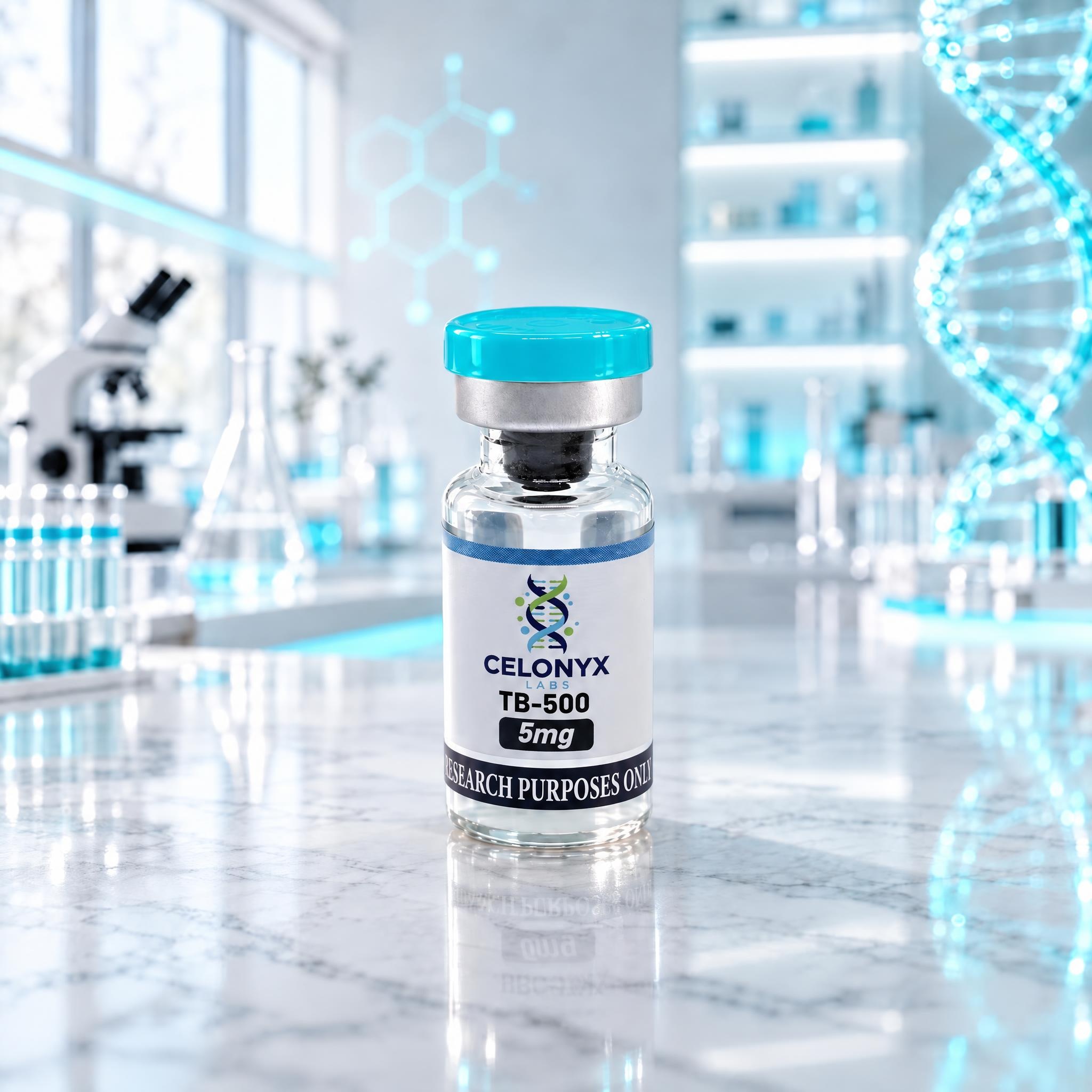
A research-grade TB-500 vial has a supplier-specific price, not a single standard laboratory price; check the supplied TB-500 5mg product card below for the listed amount. Your total procurement cost also depends on any applicable checkout charges, preparation materials, and analytical verification required by your protocol. For a 2026 purchasing decision, compare the same compound identity, labeled mass, and documentation before comparing vial totals.
Use the listed price for the exact vial you intend to purchase, then separate that purchase from the cost of making the material experiment-ready. The supplied catalog identifies TB-500 5mg as a synthetic peptide studied in laboratory research involving cellular migration, tissue repair mechanisms, and actin regulation. That description establishes its stated research context, not a clinical indication or a guarantee of experimental performance.
A useful procurement breakdown distinguishes the reagent from the work surrounding it:
| Procurement component | What to verify | Why it belongs in your budget |
|---|---|---|
| TB-500 vial | Exact compound specification and 5 mg labeled mass | Establishes what material the purchase covers |
| Preparation materials | Protocol-compatible solvent and laboratory consumables | A vial purchase does not define the complete preparation workflow |
| Analytical review | Lot-linked identity and purity documentation | Determines whether the evidence meets your acceptance criteria |
| Additional testing | Assays required by your laboratory | Supplier testing and project-specific qualification are different scopes |
| Order-level charges | Final checkout and purchasing documentation | The product listing is not necessarily the final invoice total |
For broader purchasing criteria, use the 2026 research peptide buyer’s guide. Keep the comparison tied to your experiment rather than treating every product carrying the TB-500 name as interchangeable.
A vial total answers a purchasing question. It does not answer whether the material meets your experimental specification, whether the documentation matches the shipment, or whether the preparation method fits your assay. Those decisions need separate evidence.
In a 2026 procurement record, save the product description, labeled mass, supplier details, and relevant analytical documents alongside the final invoice. This gives your laboratory a traceable explanation for the purchase instead of an isolated transaction record.
Approve the material against a written specification before approving the expenditure. A purchasing decision becomes easier to defend when another researcher can reconstruct what you ordered and why it was acceptable.
The supplied listing names a 5 mg presentation. Treat that value as the labeled quantity of material, not as a prepared concentration, an experimental dose, or a statement about how many assays the vial will support.
The advantage of a clearly identified presentation is straightforward comparison: your purchasing record can specify both the compound and the mass. Its limitation is equally important. The label alone does not establish peptide identity, net peptide content, sterility, or compatibility with a particular model.
Best for: laboratory procurement where a 5 mg presentation matches the approved material requirement and supporting documentation passes review. The decision should come from the protocol and acceptance criteria, not from the vial name alone.
Before ordering, check whether the supplier’s chemical description matches the sequence or molecular specification in your study. Do not substitute a related peptide merely because its name or research application sounds similar.
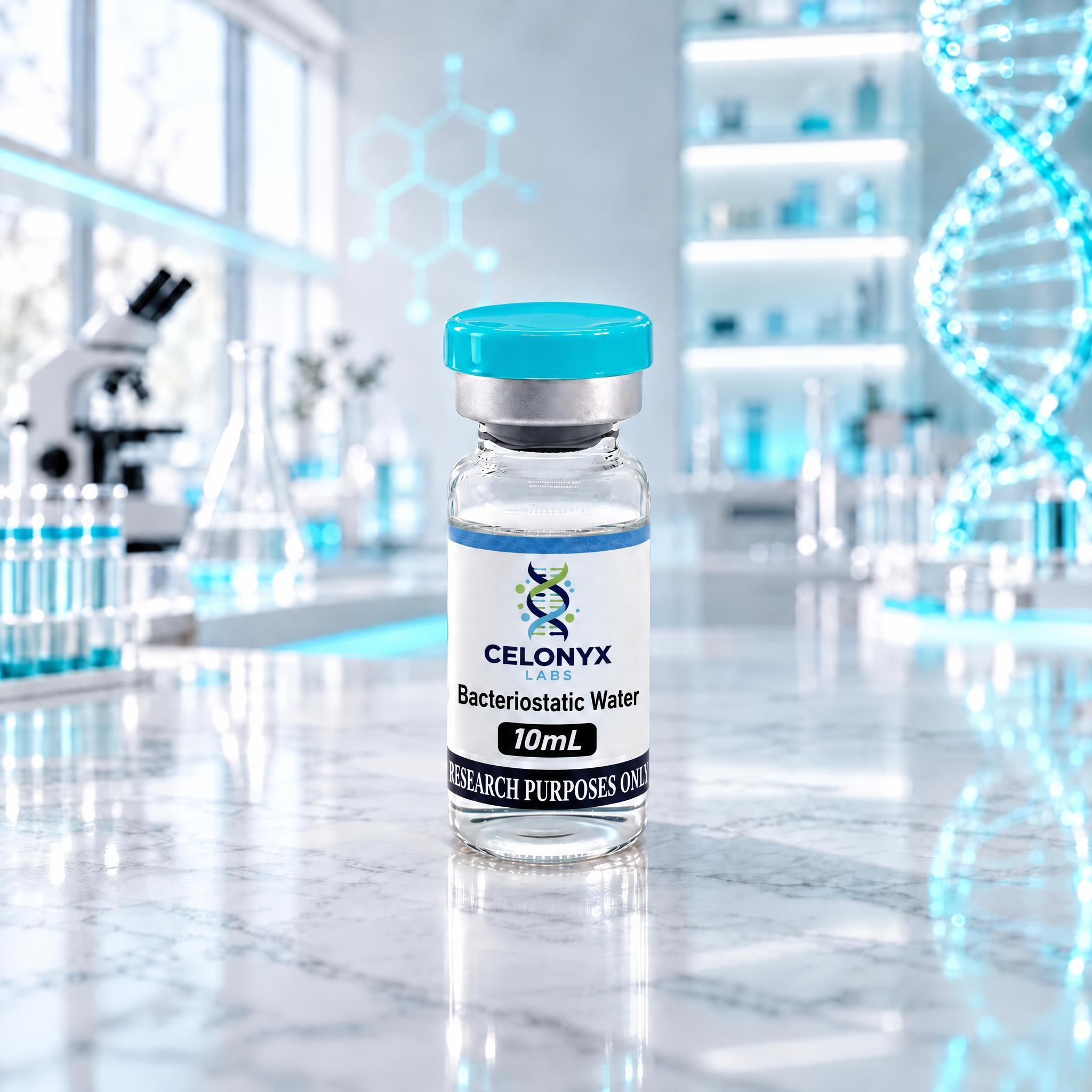
The supplied catalog also lists a 10 mL laboratory solution described for reconstitution and dilution of lyophilized materials. Its role is different from the research peptide’s role. A preparation solution is not a substitute for the analyte, and its suitability must come from the experimental method.
A 10 mL container describes the supplied solution volume; it does not prescribe how much liquid to add to a TB-500 vial. Adding liquid changes concentration, while the amount of peptide initially present remains a separate quantity.
Best for: laboratory preparation methods that explicitly permit this solution. Its practical benefit is relevance to an approved reconstitution workflow; its limitation is that preservatives or other solution characteristics can conflict with an assay’s requirements.
| Item | Stated role | Best for | Main limitation |
|---|---|---|---|
| TB-500 5mg | Synthetic peptide for laboratory investigation | Protocols specifying this material and labeled mass | Requires identity, documentation, and application review |
| Bacteriostatic Water 10mL | Laboratory solution for reconstitution and dilution | Methods that explicitly accept this preparation solution | Not a universal solvent recommendation |
These are complementary procurement categories, not competing research compounds. Include the preparation solution only when your method requires it; do not add it automatically because it appears beside the peptide.
The reagent is only part of a laboratory purchasing decision. Keep these factors separate so you can identify whether a difference comes from the material, the order, or your laboratory’s qualification requirements.
These factors explain why a product listing and an experiment-ready budget are different records. They do not establish that any particular supplier includes additional testing, preparation materials, or delivery services.
For your 2026 comparison, request equivalent information from each supplier. Otherwise, the apparent difference between offers can reflect different quantities or different evidence rather than a meaningful difference in value.
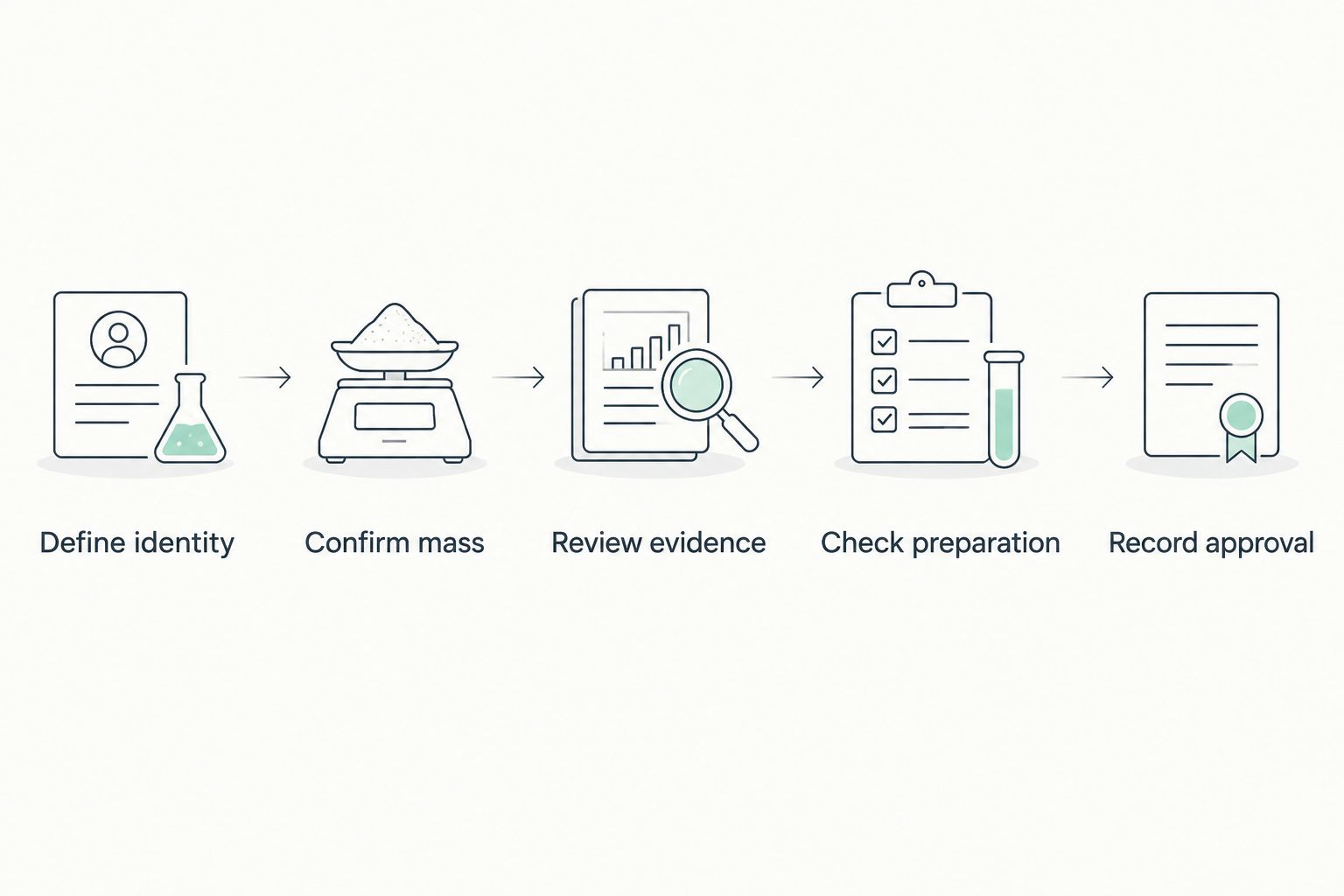
Use a repeatable review sequence. Begin with the material specification and finish with the purchasing record, rather than trying to justify a selection after the order is placed.
This sequence places scientific suitability ahead of the purchasing decision. It also gives receiving staff a clear basis for checking that the delivered material matches the approved order.
Keep the review proportional to the experiment. A screening study and a method-validation project can have different acceptance requirements, but each still needs a documented reason for accepting the material.
A 99% purity claim is a quality signal, not a complete material specification. Ask what method produced the result and what the reported percentage represents. Chromatographic purity, for example, is not automatically the same measurement as peptide content by mass.
A purity result also does not independently establish identity. Review identity evidence separately, then determine whether additional characteristics matter to your assay. Do not treat an analytical percentage as proof of sterility, biological activity, or suitability for human use.
Celonyx Labs describes its research peptides as 99%-pure and third-party-tested. Those stated attributes belong in a supplier review, but your laboratory still needs to determine whether the documentation supports the specific material and intended experiment.
The limitation matters as much as the claim. A store-wide description cannot replace checking the report associated with the received lot, and an independent laboratory result should be interpreted within its stated analytical scope.
Third-party testing provides external analytical evidence, but approval depends on whether that evidence answers your laboratory’s questions. Start with the report itself. Check the sample identification, test method, reported result, and connection to the material being purchased.
If a report only addresses purity, do not record it as evidence for every other attribute. Similarly, a document labeled as a certificate of analysis needs substantive results and sufficient traceability to be useful in a quality record.
For a 2026 purchase, distinguish the report’s issue date from the material’s lot identification and any applicable expiry or retest information. These fields serve different purposes; a recent document date does not by itself establish material stability.
Retain the evidence you actually used to make the decision. A saved supplier page and a saved analytical report answer different questions, so neither should silently stand in for the other.
Match the received container to the approved purchasing record before releasing it for use. Check the compound name, labeled mass, lot information, and accompanying documentation. Follow your institution’s procedure for discrepancies, damaged packaging, or unresolved identification.
Record receipt and subsequent handling in the same traceable workflow. Storage and preparation instructions should come from the relevant material documentation and your validated laboratory procedure, not from a generic peptide-handling rule.
If the material is reconstituted, record the solvent identity, actual volume added, preparation date, and resulting calculated concentration. Keep those records distinct from the original vial specification so another researcher can follow the preparation without guessing.
This is also the point to preserve purchasing context. The invoice explains the transaction; the receiving and preparation records explain what entered the experiment.
How much does a vial of TB-500 cost in 2026?
Check the TB-500 5mg product card for the supplied listing price, then verify the current amount before purchasing. Compare the exact material specification and labeled mass, and review any applicable order-level charges separately.
Does a 5 mg TB-500 vial contain 5 mL of solution?
A 5 mg label describes mass, not solution volume. The prepared volume depends on the laboratory procedure and the actual volume of compatible solvent added.
Does 99% purity mean TB-500 is sterile?
A 99% purity result does not establish sterility. Purity and sterility address different material attributes and require appropriate evidence for each claim.
Is bacteriostatic water required for every TB-500 experiment?
Bacteriostatic water is not a universal requirement for every TB-500 experiment. Use the solvent specified by the validated method and confirm compatibility with the assay.
What should I compare besides the vial total?
Compare chemical identity, labeled mass, lot-linked analytical evidence, and preparation requirements. Evaluate the final purchasing record separately from whether the material meets your experimental specification.
Who are Celonyx Labs research peptides intended for?
Celonyx Labs research peptides are intended for laboratory researchers and scientists. They are for research use only, not for human administration or self-experimentation.
The most useful comparison is between documented materials that meet the same specification—not between containers with similar names. Before authorizing a purchase, ask whether another researcher could identify the material, interpret its analytical evidence, and reconstruct its preparation from your records.
Celonyx Labs research peptides are best suited to laboratory researchers sourcing materials for research use only. Match every purchase to an approved protocol; a purchasing page does not establish clinical safety or replace institutional review.
For your 2026 budget, keep the reagent purchase, preparation requirements, and qualification work visible as separate decisions. That separation makes both the scientific review and the purchasing approval clearer.
The advice you'll hear most often about buying BPC-157 for the bench is short: demand

Can cagrilintide be combined with GLP-1 peptides? Yes, in controlled research. Understand mechanisms, study controls,

Can Selank be combined with nootropic peptides? Yes, in controlled laboratory studies. Learn the controls,
FOR RESEARCH USE ONLY. Products sold by Celonyx Labs are intended exclusively for laboratory and scientific research. They are not intended for human or veterinary use, consumption, diagnosis, treatment, cure, or prevention of any disease. By purchasing from this site, you acknowledge that you understand the intended research purpose of these materials and agree to comply with all applicable laws and regulations.