
Is bacteriostatic water the same as sterile water? No 2026
Is bacteriostatic water the same as sterile water? No. Compare preservatives, vial handling and peptide
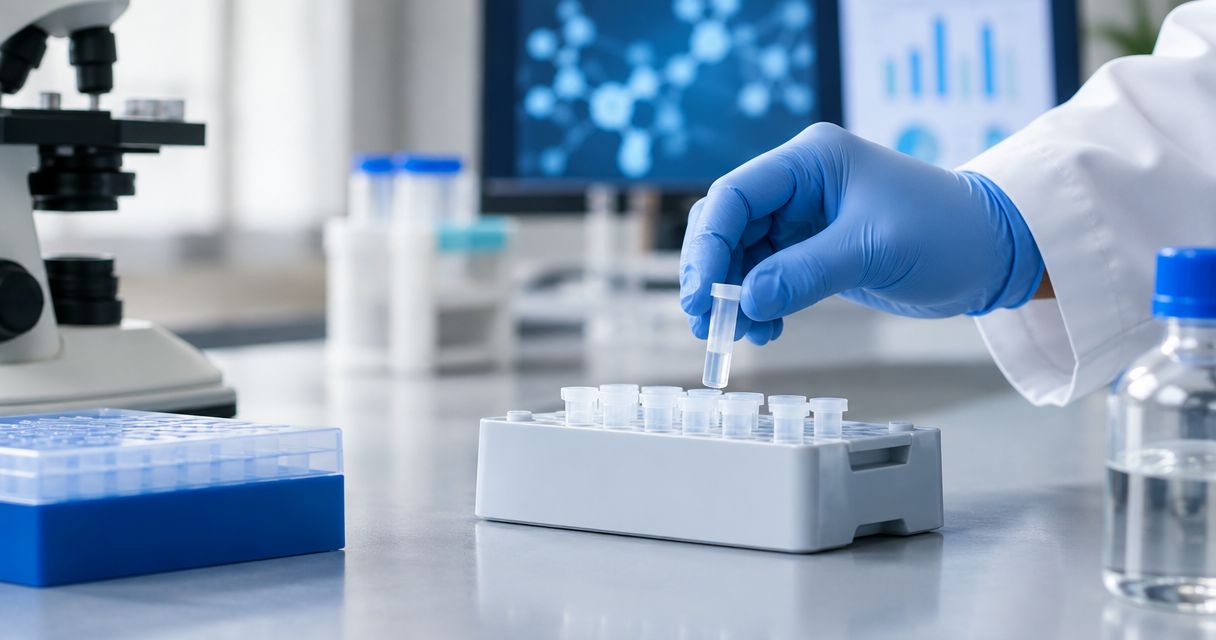
You can refreeze a thawed research peptide only if its handling instructions allow it and the material still meets the requirements of your experiment. Do not treat refreezing as a reset: another freeze–thaw cycle can change a peptide’s condition, and the original purity result does not establish its quality after thawing. In 2026, the defensible lab decision is to document the excursion, assess the vial and verify fitness for use before returning it to active inventory.
A freezer record tells you where a vial is now. It does not tell you how long the contents spent thawed, whether moisture entered a dry vial or whether a prepared solution still meets the method’s requirements. Those questions determine whether the material belongs back in the freezer or on hold.
Use peptide storage temperature benchmarks by type to frame the intended storage condition, then assess the actual excursion against the peptide’s documentation and your lab protocol. A storage target alone cannot establish that a thawed sample is fit for an assay.
Do not automatically refreeze and reuse a thawed peptide. First distinguish dry material from reconstituted material, review the handling instructions and document what happened. Refreezing is a storage decision; releasing the vial for research is a separate quality decision.
| Material at the time of thaw | Immediate decision | What determines reuse | Main limitation |
|---|---|---|---|
| Dry peptide | Hold the vial while you review its seal, exposure and handling instructions | Condition of the material and any verification your method requires | A dry vial’s original purity result does not establish its condition after an excursion |
| Reconstituted peptide | Hold the solution and check the preparation record | Solvent, concentration, container, excursion history and assay requirements | Appearance alone cannot confirm identity, potency or purity |
| Pre-portioned research aliquot | Assess the affected aliquot separately | Its own handling history and acceptance criteria | An unaffected aliquot cannot validate the thawed one |
Record the known facts before moving the vial: its identity, whether it was dry or in solution, the observed condition, the storage condition, and when the deviation was discovered. Mark unknowns as unknown. If your experiment depends on a defined purity or activity threshold, obtain the evidence your method calls for before using the material.
A dry peptide and a solution are not interchangeable storage cases. For a dry vial, check whether the closure remained intact and whether the contents show visible change. Review the supplied handling information and the lab’s acceptance criteria before deciding whether to return it to storage.
A normal-looking powder is not proof of unchanged quality. Visual inspection can identify an obvious problem, but it cannot establish that the peptide still meets an analytical requirement. If the vial has an uncertain excursion history, keep that uncertainty attached to its inventory record rather than treating the next freezer entry as a fresh start.
When the procedure permits refreezing, limit further handling. Let the documented storage plan, rather than a generic rule for all peptides, determine the next step. In 2026, a repeatable decision is one another researcher can reconstruct from the vial record and the experiment’s criteria.
A peptide in solution requires a closer review of its preparation and handling history. Check the recorded solvent, concentration, container and prior thaw events against the method. A solution that looks clear still needs to satisfy the requirements of the work for which you intend to use it.
Do not use refreezing to extend an unsupported use period. If the method lacks a basis for another freeze–thaw cycle, place the vial on hold and prepare material with a documented history instead. If reuse is essential, define what you must verify before an analyst releases the solution for that work.
This distinction matters when interpreting earlier results. A finding from the original dry material cannot, by itself, describe every later prepared solution. The preparation record and any relevant testing belong with the solution’s own history, not only with the source vial. That is the practical answer for a thawed reconstituted peptide in 2026.
Follow the lab’s deviation and release process if one exists. The sequence below keeps an uncertain vial out of active use while you establish what can be documented.
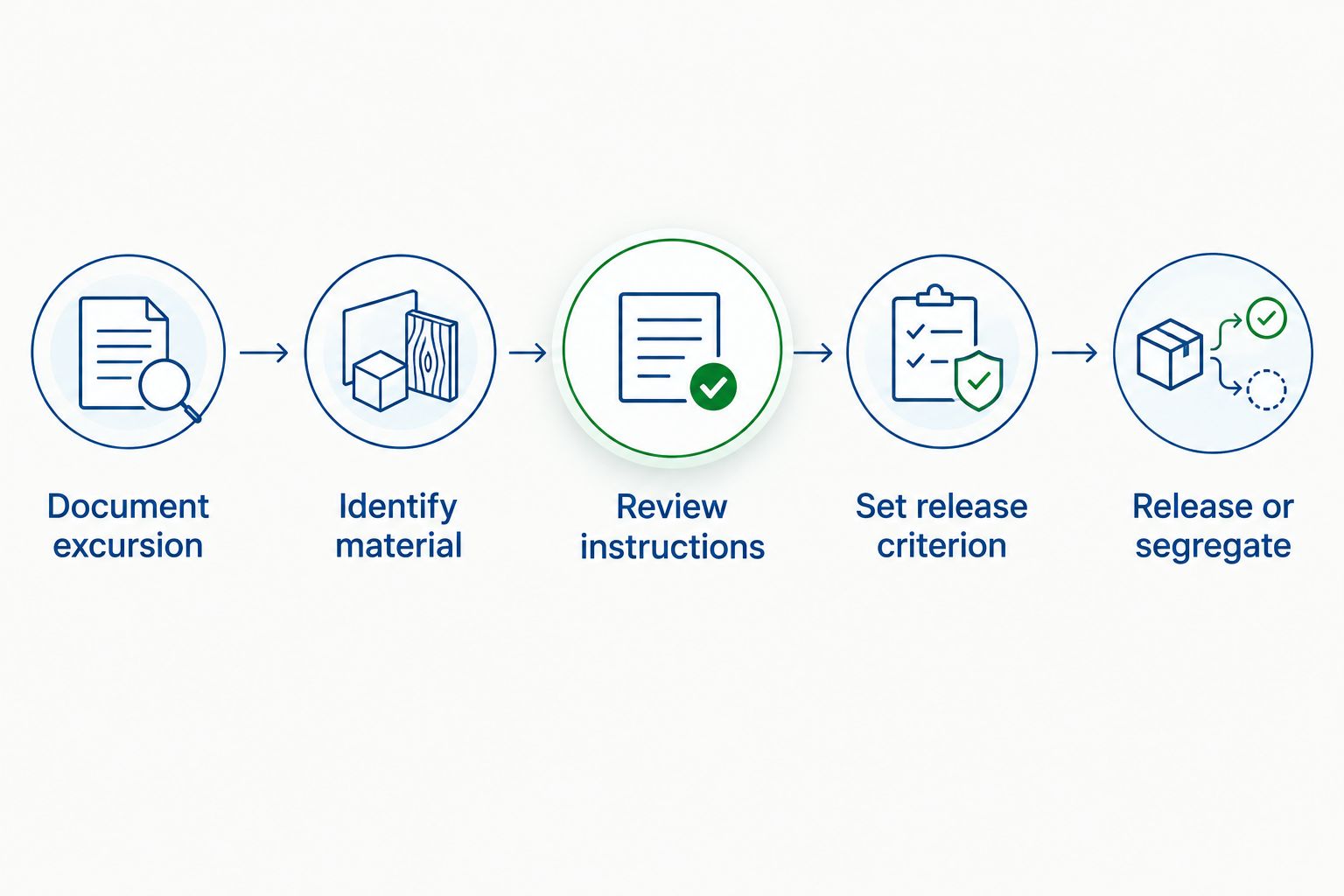
The steps separate two questions that labs often collapse: where should the vial be kept while it is assessed, and can it still be used for the planned experiment? A temporary hold protects the study from an undocumented substitution. It also preserves the chance to compare the vial with an unaffected aliquot if the method makes that comparison useful.
No single answer applies to every peptide, preparation and assay. The decision depends on the material and on the evidence the study needs:
These factors are also why blanket advice to discard every thawed vial is too broad, while blanket permission to refreeze is too permissive. The decision must follow the documented material and the planned research use. For research use only; this article does not establish handling instructions for a specific peptide or lot.
Do not plan repeated freeze–thaw cycles without material-specific support. Each cycle adds another handling event to assess, and the vial’s earlier test result does not certify the material after every event. Where the method permits it, prepare separate portions for separate uses so the remaining material does not repeatedly thaw.
Aliquoting helps only when the portions are prepared and identified under an appropriate lab procedure. Keep the source, preparation and storage records connected to each aliquot. In 2026, the useful question is not whether a vial has returned to the freezer; it is whether the portion used in the assay has a defensible history.
No. An initial purity result is not a post-thaw stability result. Celonyx Labs sells 99%-pure, third-party-tested research peptides, which gives a researcher a stated starting quality signal. It does not establish what happened to a particular vial during a later storage excursion.
Celonyx Labs is best for laboratory researchers seeking third-party-tested research peptides, not for replacing a lab’s post-thaw release checks. The distinction protects the interpretation of your work: supplier testing addresses the material as tested, while your handling record addresses the material as used. Check the documentation applicable to the material and choose verification according to the assay rather than assuming one result answers both questions.
Organize storage around the amount of material an experiment actually needs. Before preparing portions, establish the permitted preparation and storage conditions from the material information and your lab method. Label each portion so a researcher can connect it to its source and handling record.
Keep active-use material distinct from material reserved for later work. If a storage deviation occurs, that separation makes it easier to identify which units were affected and which retained a different history. It does not guarantee stability; it makes the evidence for each decision clearer.
When an assay is sensitive to changes in material quality, decide the acceptance criteria before the next thaw. Otherwise, a convenient vial can become the default choice simply because it is available. A short hold and an explicit release decision are more useful than an unexplained return to the freezer.
Can you refreeze peptides after they thaw?
You can refreeze a thawed research peptide only when its handling instructions and your lab’s assessment support it. Refreezing does not establish that the material still meets the requirements of an experiment.
Can you refreeze a reconstituted peptide?
Do not refreeze a reconstituted peptide by default. Review its preparation record, handling instructions and the assay’s acceptance criteria before deciding whether the solution can be stored or reused.
Can you refreeze a dry peptide after it reaches room temperature?
Assess the dry vial and its documented exposure before refreezing it. Check the closure and applicable handling instructions; appearance alone cannot confirm the peptide’s post-excursion quality.
Does a peptide lose purity every time it thaws?
A thaw does not establish a measurable purity change on its own. Whether the material still meets a purity requirement must be determined using evidence relevant to that peptide and the way it was handled.
Is a clear peptide solution safe to reuse after thawing?
Clarity alone cannot establish that a thawed solution meets a research method’s requirements. Review the preparation and excursion records and perform the checks the method requires.
Does third-party testing cover a later freezer failure?
No. Third-party testing describes the material tested, not the condition of an individual vial after a later freezer failure. In 2026, document the affected vial’s excursion and assess it against your lab’s release criteria.
Should you discard every peptide that has thawed?
Do not apply a blanket disposal rule to every thawed research peptide. Hold the material, review its instructions and handling history, and follow the lab’s criteria for release or removal.
The most useful label on a thawed vial is its handling history, not a new freezer date. If that history cannot support the planned assay, keep the vial out of the study even if it has been refrozen. That rule makes the decision reproducible for the next researcher who opens the freezer in 2026.
Is bacteriostatic water the same as sterile water? No. Compare preservatives, vial handling and peptide
How do you know if a peptide vial has gone bad? Quarantine changes, check storage
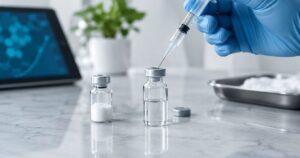
Can too much bacteriostatic water ruin a peptide vial? Yes, if it overfills the vial
FOR RESEARCH USE ONLY. Products sold by Celonyx Labs are intended exclusively for laboratory and scientific research. They are not intended for human or veterinary use, consumption, diagnosis, treatment, cure, or prevention of any disease. By purchasing from this site, you acknowledge that you understand the intended research purpose of these materials and agree to comply with all applicable laws and regulations.