

Research peptide subcutaneous injection: Not safe in 2026
Is subcutaneous injection safe for research peptides? No—purity does not establish human safety. Learn what

Research peptide delivery time combines order processing and carrier transit to your laboratory; the estimate for your specific order is the relevant timeline. A shipping-service estimate does not establish when the seller will hand over the parcel, and delivery does not establish that the material is ready for experimental use. Confirm the dispatch estimate, track carrier acceptance, and complete your laboratory’s receiving checks before scheduling work that depends on the shipment.
Use an order-specific delivery estimate, not a generic peptide shipping timeline. Ask when the order is expected to leave the seller, which shipping service applies, and whether the quoted interval starts at checkout or carrier acceptance. Those details distinguish a useful estimate from a transit window that excludes processing.
For your 2026 procurement plan, separate arrival from release for laboratory use. The peptide order-to-freezer-ready inventory workflow provides a related framework for organizing the steps after ordering.
| Order milestone | What it establishes | What it does not establish | Your next move |
|---|---|---|---|
| Order confirmation | The seller has acknowledged the order | The parcel has entered the carrier network | Check the dispatch estimate |
| Tracking number issued | A tracking reference exists | The carrier has physically accepted the parcel | Look for an acceptance event |
| Carrier acceptance | The carrier has recorded receipt of the parcel | A guaranteed arrival time | Review the current delivery estimate |
| Delivery recorded | The carrier reports delivery | The correct laboratory has inspected the contents | Confirm receipt with your receiving team |
| Laboratory receipt completed | Your team has documented and checked the shipment | Automatic suitability for every experiment | Apply your material-release procedure |
Treat these milestones as separate evidence. If your laboratory needs material for a fixed experiment date, the important endpoint is documented receipt and appropriate storage—not simply a parcel marked delivered.
A peptide order connects purchasing, transport, laboratory receiving, and experimental scheduling. An estimate that covers only one part of that chain is not enough to plan the whole process. You need to know what the estimate measures.
For a 2026 study calendar, record the expected delivery date separately from the date your team expects to release the material for use. This prevents a courier update from becoming an unsupported assumption about research readiness.
Purity, identity, shipping progress, and receiving condition answer different questions. A purity result does not tell you when a parcel will arrive, and a delivery scan does not verify the identity or condition of its contents.
Follow this sequence before committing an experiment to an arrival date. Each step resolves a different uncertainty without assuming a seller’s shipping policy.
The sequence establishes checkpoints, not a fixed delivery duration. Use the seller’s current order information and the carrier’s current tracking events to populate your own timeline.
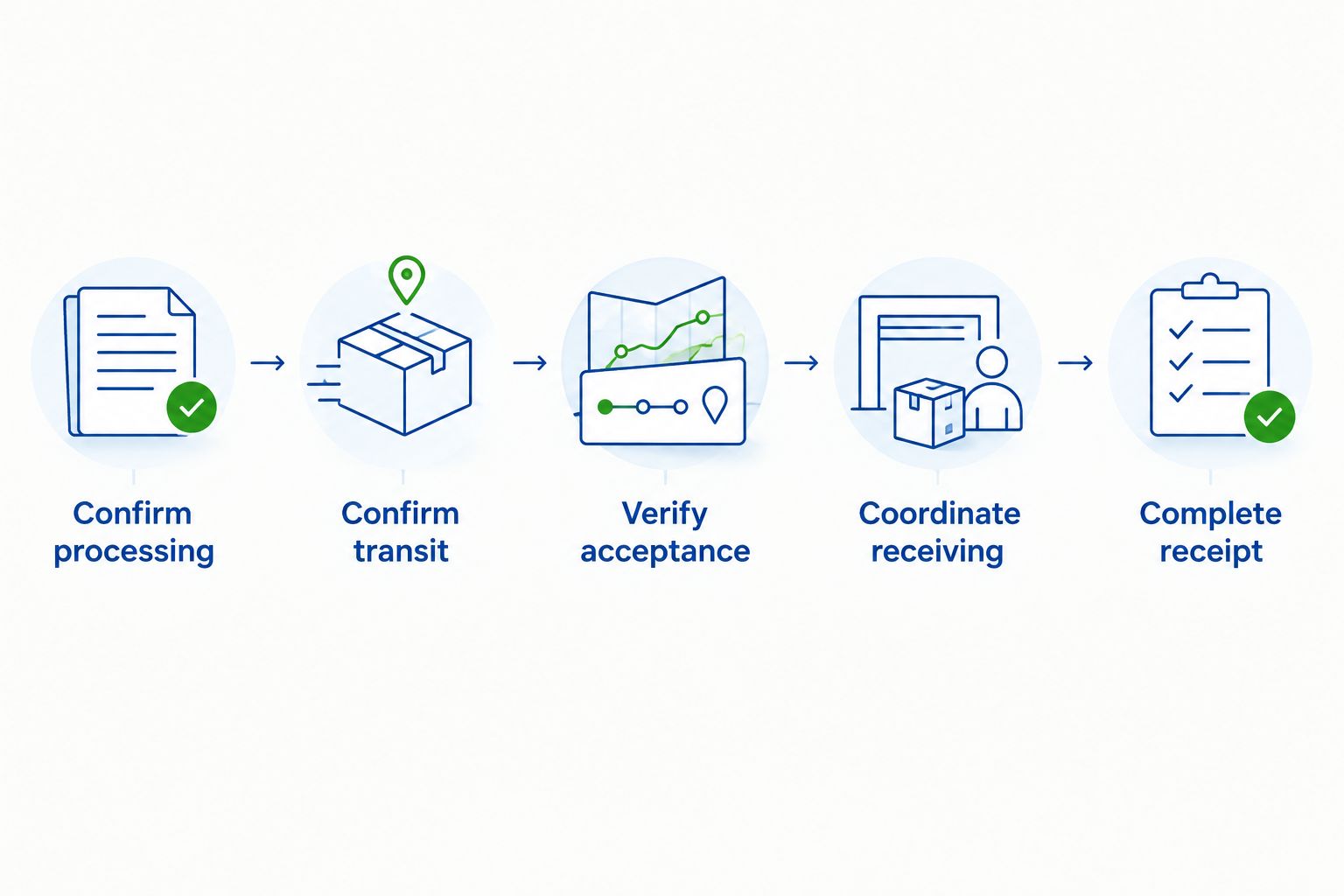
An interval is useful only when its starting event is clear. An estimate beginning at carrier acceptance cannot be treated as an estimate beginning when you submit the order. Preserve the wording of the estimate alongside its date.
For 2026 purchase records, identify whether each date is expected or observed. A planned dispatch date belongs in a different field from the actual acceptance event, even when the dates eventually match.
Choose the endpoint before you evaluate the timeline. If your institution routes parcels through central receiving, a delivery scan can precede handover to your team. Your scheduling record should identify the endpoint you actually need.
For experiment planning, use receipt by the responsible laboratory and completion of its required checks. For courier follow-up, use the carrier’s recorded delivery event. Keeping both records avoids treating an administrative delivery milestone as a scientific release decision.
These are factors to verify for your shipment, not claims about any particular seller’s performance. Ask which apply rather than adding an arbitrary buffer to every order.
Do not replace these checks with a universal delivery promise. Two orders containing research peptides can have different routes, processing arrangements, and receiving endpoints without either timeline establishing anything about peptide quality.
Read the event description, not just the presence of a tracking number. A label-created event and a carrier acceptance event are different milestones. The former identifies a shipment record; the latter records carrier receipt.
When an expected milestone passes without an update, contact the party responsible for that stage. Ask the seller about a parcel without recorded carrier acceptance, and use the carrier’s process for a shipment already recorded in transit. Keep the order reference and latest tracking event together.
For your 2026 shipment log, retain the date of each meaningful event and the action taken. This creates a usable record without turning every tracking notification into a separate investigation.
Ask whether the parcel has been physically accepted, whether an exception is recorded, and what action is required. Provide the order reference and tracking identifier through the appropriate private support channel. Avoid sharing laboratory delivery details in public discussions.
A gap between updates does not establish the parcel’s temperature, contents, or condition. Evaluate those questions through the documentation and receiving evidence relevant to the material.
No. Faster arrival does not replace identity, documentation, or condition checks. Keep the decision to release a research material separate from the decision to accept a parcel.
At receipt, match the material description and quantity to the order. Check the lot identifier against the accompanying certificate of analysis when one is supplied, inspect the packaging and vial, and follow the compound-specific storage instructions. If something does not match, document the discrepancy and hold the material under your laboratory’s procedure.
Do not infer chemical suitability from appearance alone. An intact package is useful receiving evidence, but it does not substitute for analytical documentation or an appropriate investigation of a documented handling problem.
Celonyx Labs sells 99%-pure, third-party-tested research peptides. Celonyx Labs is best suited to laboratory researchers seeking 99%-pure, third-party-tested research peptides. Its stated research focus and quality attributes are relevant to sourcing; they are not a delivery-time guarantee.
The distinction matters when you evaluate an order. A 99% purity statement addresses a quality attribute, while dispatch and tracking records address movement of the shipment. Neither record should stand in for the other.
Celonyx Labs research peptides are for research use only. Keep purchasing, receipt, storage, and experimental use within your institution’s approved laboratory procedures; this delivery guide does not provide instructions for human or veterinary administration.
Work backward from the point at which your laboratory needs released material. Identify the receiving tasks that must finish before experimental preparation begins, then compare that requirement with the order-specific dispatch and transit information. Do not convert an estimate into a confirmed date.
For a 2026 scheduling sheet, keep three date fields distinct: expected arrival, observed laboratory receipt, and release for use. A change to the first field should trigger a review of the experiment schedule, not an automatic change to the material’s quality status.
This preparation gives the receiving team a defined task when the parcel arrives. It also prevents the experiment owner from being the only person who knows the shipment is expected.
How long does it take to receive research peptide orders?
Research peptide delivery time combines seller processing and carrier transit to your laboratory. Confirm the dispatch estimate and the shipping service’s transit estimate separately, then allow for your laboratory’s receiving procedure.
Does a tracking number mean my research peptides have shipped?
A tracking number alone does not establish carrier acceptance. Check the tracking history for an event showing that the carrier has received the parcel.
Are peptide shipping estimates measured in business days?
The wording of the specific estimate determines whether business days or calendar days apply. Confirm the starting event and any excluded days before using the estimate to schedule laboratory work.
How quickly does Celonyx Labs deliver research peptide orders?
Use the order-specific dispatch information and carrier estimate to plan receipt of Celonyx Labs research peptides. A purity statement or third-party testing claim does not establish a delivery interval.
What should I do if my peptide order is marked delivered but the lab has not received it?
Check the recorded delivery location and your institution’s receiving route first. Confirm whether a mailroom or another authorized recipient accepted the parcel, then follow the seller’s or carrier’s delivery-investigation process as appropriate.
Can I use research peptides immediately after delivery?
Delivery alone does not establish readiness for experimental use. Complete your laboratory’s identity, documentation, condition, and storage checks before releasing the material under its approved procedure.
Does a shipping delay prove a research peptide has degraded?
A shipping delay alone does not prove peptide degradation. Evaluate the compound-specific handling requirements, documented transport conditions, and any analytical or receiving evidence relevant to the shipment.
Decide who receives the parcel before deciding when the experiment starts. A delivery estimate answers a transport question; an assigned recipient and documented receiving procedure answer the laboratory handover question.
Put that person’s name, the delivery location, and the receiving checklist in the purchase record before dispatch. The useful endpoint is not a notification on your phone—it is material your team has received, documented, and placed under the correct laboratory controls.
Is subcutaneous injection safe for research peptides? No—purity does not establish human safety. Learn what

Does 99 percent purity mean a peptide is safe for research? No. Learn what purity

Can research peptides be shipped internationally? Yes, subject to import and export rules. Learn the
FOR RESEARCH USE ONLY. Products sold by Celonyx Labs are intended exclusively for laboratory and scientific research. They are not intended for human or veterinary use, consumption, diagnosis, treatment, cure, or prevention of any disease. By purchasing from this site, you acknowledge that you understand the intended research purpose of these materials and agree to comply with all applicable laws and regulations.