

Kisspeptin 10 for Sale Research Guide for Labs
A researcher searching “kisspeptin 10 for sale” may expect a straightforward catalog result. Instead, the
The most counterintuitive fact about the Ipamorelin Tesamorelin blend is that its strongest signal isn't its promise. It's the gap between striking mechanistic data and thin safety validation outside a very specific patient group. In experimental pituitary models, simultaneous exposure to both compounds produced a 54-fold increase in pulsatile growth hormone secretion according to pituitary-cell blend data on Tesamorelin and Ipamorelin. That kind of response gets attention fast. It should.
What deserves equal attention is that Tesamorelin's approved clinical use is narrow, while blend use in otherwise healthy subjects remains unvalidated. Researchers who ignore that distinction often design the wrong studies, ask the wrong translational questions, and overread results that don't travel cleanly from one population to another.
The Ipamorelin Tesamorelin blend is best understood as a research tool that sits at the intersection of endocrine signaling, formulation discipline, and regulatory caution. Anyone working with it should start with mechanism, but they shouldn't stop there. A useful grounding point is the broader category of research peptides and how laboratories use them.
Synergy in peptide research isn't a marketing phrase. It has a specific meaning. Two compounds act through distinct but compatible pathways and produce a response that can't be explained by adding their independent effects alone.
That is the central reason the Ipamorelin Tesamorelin blend continues to attract scientific interest. One compound engages the GHRH axis, the other engages the ghrelin receptor pathway. When the pituitary receives both signals in the right experimental context, the endocrine output can look very different from what either peptide produces on its own.
Tesamorelin is a growth hormone-releasing hormone analogue. It acts upstream by signaling somatotrophs through a receptor system that resembles endogenous GHRH activity. Ipamorelin is a selective growth hormone secretagogue. Its appeal is not just GH stimulation, but selectivity. It has been characterized as avoiding the broader hormonal spillover that complicates interpretation with less selective secretagogues.
That distinction matters in protocol design. If one agent increases the drive to synthesize and prime GH release, while the second helps trigger pulsatile discharge through a different receptor route, the resulting pattern may be more physiologically informative than a single-pathway intervention.
Working principle: The blend is interesting because it may shape how GH is released, not only how much is released.
The enthusiasm around this blend usually centers on body composition, IGF-1 signaling, and recovery-related biology. Those are reasonable interests. But good endocrine research starts with narrower questions:
Scientists who approach the Ipamorelin Tesamorelin blend carefully tend to get more useful data. They treat it as a dual-pathway endocrine probe, not as a shortcut to broad anti-aging claims.
Before evaluating the blend, it helps to separate the two inputs. Researchers often talk about the combination as though it were a single pharmacologic idea. It isn't. The pair works because each peptide does something different.
Tesamorelin is best understood as a GHRH-mimetic. In practical terms, it behaves like an amplifier of the pituitary's GH-stimulating signal. If you think of the endogenous GHRH pathway as a control circuit, Tesamorelin raises the command signal presented to somatotrophs.
That doesn't make it a blunt instrument. In peptide work, upstream signaling matters because it changes the context in which downstream release happens. A stronger GHRH-like input can increase the available secretory readiness of the pituitary. For researchers, that's useful when the goal is to examine endocrine reserve, GH responsiveness, or downstream IGF-1 biology under controlled stimulation.
Many incorrectly characterize Tesamorelin's function as "burning fat." That framing is too shallow for laboratory work. Its better characterization is neuroendocrine. Changes in adiposity or lean tissue are downstream observations, not the primary mechanism.
Ipamorelin plays a different role. It acts as a selective ghrelin-receptor agonist and is typically valued for producing GH pulses without the broader hormonal interference often associated with less selective secretagogues. In the verified formulation data, Ipamorelin is described as selectively elevating GH pulses without affecting cortisol, prolactin, or ACTH in experimental models through standardized blend characterization for Tesamorelin and Ipamorelin.
If Tesamorelin is the amplifier, Ipamorelin is the switch. It helps trigger release events cleanly enough that the investigator can study GH-pattern effects with fewer endocrine confounders.
Researchers often underestimate how important selectivity is. A noisier secretagogue can make a dataset look active while making the mechanism harder to interpret.
The blend only makes sense if the components remain conceptually distinct. Tesamorelin influences the readiness and signaling environment of GH release. Ipamorelin influences pulse initiation through another receptor axis.
That separation gives researchers a more disciplined framework for study design:
| Component | Primary role in research logic | Main value |
|---|---|---|
| Tesamorelin | GHRH-pathway stimulation | Upstream endocrine signaling |
| Ipamorelin | Selective secretagogue action | Pulsatile GH triggering |
| Combined blend | Dual-pathway modulation | More naturalistic release pattern hypotheses |
When teams skip this mechanistic separation, they usually end up with vague endpoint selection and weak translational claims.
Combining Ipamorelin with Tesamorelin matters only if the pair changes secretory behavior in a way a single agent cannot. That is the scientific question. For researchers, the more defensible hypothesis is coordinated control of growth hormone pulse architecture through two receptor systems, not a vague claim of "more GH."
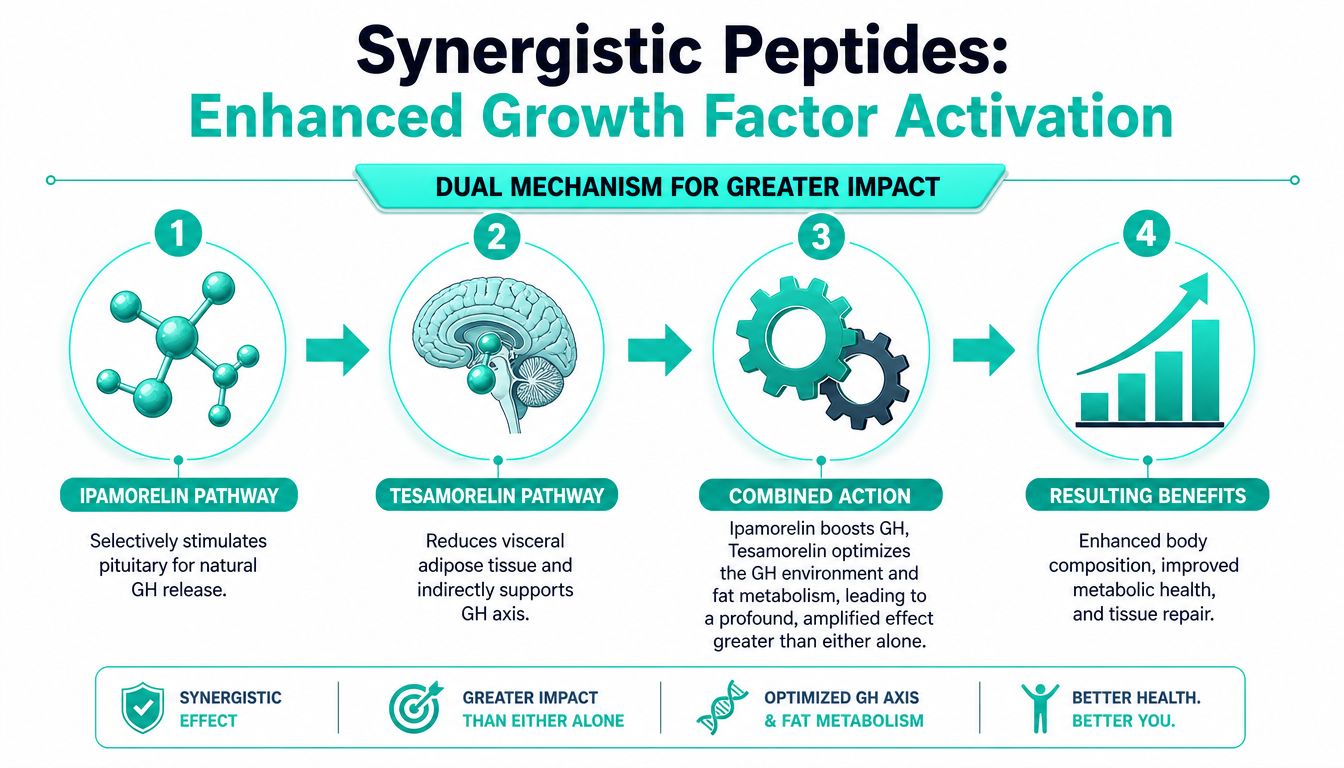
Tesamorelin acts through the GHRH receptor pathway. Ipamorelin acts through the ghrelin receptor, GHSR-1a. In pituitary physiology, those inputs are related but not redundant. One biases somatotrophs toward responsiveness. The other helps trigger release. In combination, investigators are testing whether receptor crosstalk can produce sharper or more physiologic GH pulses than either stimulus alone.
That distinction has real experimental value. Average GH exposure and pulse pattern are not interchangeable readouts. A preparation that increases area under the curve may still produce a flattened signal, and flattened GH signaling can have different downstream effects on IGF-1 kinetics, receptor exposure, and metabolic endpoints than a pulsatile pattern. Work on GHRH and ghrelin pathway interaction supports this cooperative framework in somatotroph regulation, as discussed in mechanistic endocrine literature on GHRH and ghrelin receptor signaling in growth hormone secretion.
Pulsatility deserves more attention than total output because endocrine tissues respond to timing as well as concentration. In my view, this aspect governs whether blend studies become interpretable or collapse into noise. If sampling frequency is poor, or if investigators rely only on a single post-dose GH value, they can miss the very feature the combination is supposed to test.
The practical model is straightforward:
That does not make the blend validated for broad use. Tesamorelin has an FDA-approved indication in a specific patient population, and that approval does not extend to mixed formulations or to use in healthy subjects. Ipamorelin does not carry an FDA-approved therapeutic indication. So the blend sits in a data gap. Researchers can justify it as a mechanistic tool, but not as an evidence-backed intervention for healthy individuals seeking body composition or performance effects.
That gap should shape protocol design. If the goal is credible translational work, endpoints should include pulse-frequency sampling plans, IGF-1 follow-up, glucose handling, and clear exclusion criteria for subjects at higher endocrine risk.
A blend becomes scientifically interesting when it changes signal architecture in a measurable way and when the study design can distinguish that effect from simple overstimulation.
The central research problem is simple. Tesamorelin has human outcome data in a defined patient population. The ipamorelin tesamorelin blend does not. Any preclinical program that treats those two evidence levels as interchangeable will overstate what the blend can support.
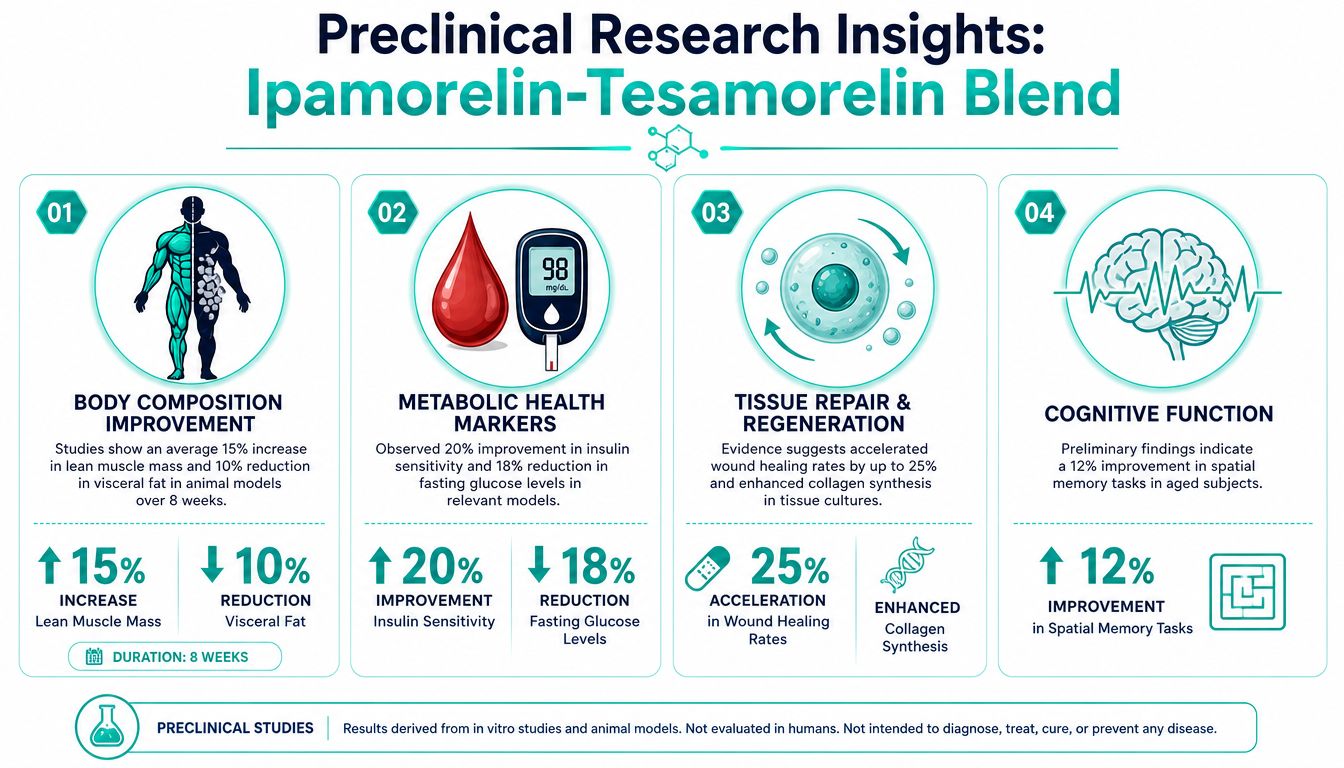
For adiposity-focused work, the strongest translational signal still comes from tesamorelin studies in HIV-associated lipodystrophy, not from mixed-peptide trials in healthy subjects. In a 26-week randomized trial, investigators reported significant reductions in visceral adipose tissue and favorable changes in triglycerides with tesamorelin versus placebo, as detailed in the New England Journal of Medicine report on tesamorelin in HIV-associated abdominal fat accumulation.
That matters for study design. It supports using the blend as a hypothesis-generating tool in models of visceral fat biology, GH-axis signaling, and lipid handling. It does not justify assuming the same magnitude, direction, or risk profile in healthy volunteers.
Researchers who want cleaner inference should pair imaging with endocrine sampling and standardized preparation practices. Poor reconstitution can erase small signal differences before the assay phase even starts, which is why labs should use a documented peptide reconstitution protocol for research handling.
A second line of interest is tissue quality rather than gross weight change. In a placebo-controlled study of tesamorelin in adults with excess visceral adiposity related to HIV, treatment was associated with improved skeletal muscle density, a finding consistent with reduced lipid infiltration rather than simple fluid shift, as reported in PubMed-indexed research on tesamorelin and muscle density outcomes.
This is a more defensible endpoint than generic claims about performance or recovery. Muscle density, regional cross-sectional area, and intramuscular fat provide interpretable readouts for investigators testing whether dual secretagogue signaling changes tissue composition in a measurable way.
I would treat IGF-1 as a support marker, not the headline result. A rise in IGF-1 can confirm pathway engagement, but it does not by itself establish improved tissue architecture, metabolic benefit, or acceptable risk.
In healthy subjects, the data gap is the finding. Researchers are testing a mechanistic idea, not reproducing an approved clinical use.
The strongest preclinical use cases are narrow and endpoint-driven:
Visceral adiposity models
Use the blend to test whether dual GH-axis stimulation changes abdominal fat depots, hepatic lipid handling, or related biomarker panels under controlled conditions.
Imaging-based tissue composition studies
Prioritize CT, MRI, or validated densitometry methods over body weight or anecdotal functional outcomes.
Mechanistic endocrine studies
Combine serial GH and IGF-1 measurements with glucose, insulin, and lipid endpoints so that anabolic signaling is interpreted alongside metabolic cost.
Weak protocols usually fail in the same way. They import tesamorelin findings from a disease-specific population, add ipamorelin, and then imply benefit in healthy subjects without direct evidence. For scientists working carefully, that is the boundary to keep in view.
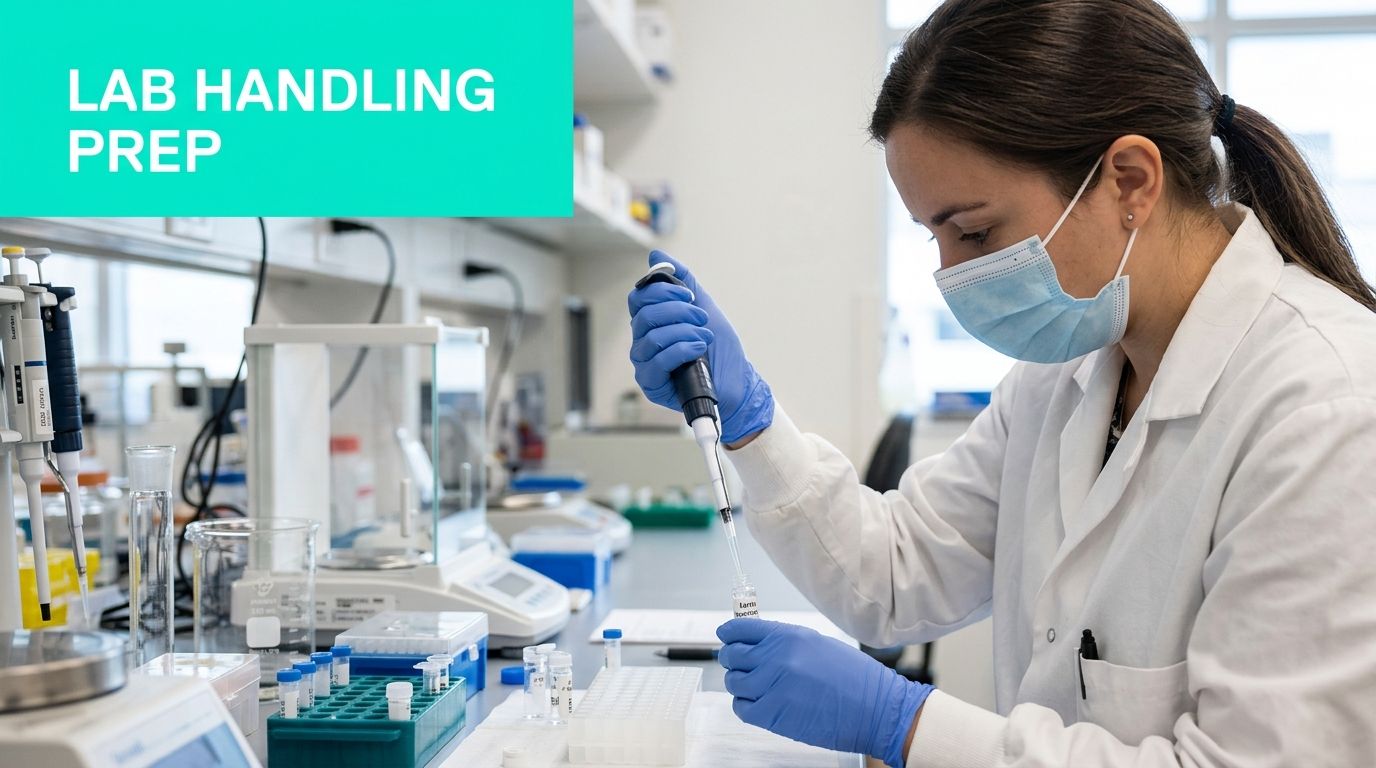
Poor handling can erase any mechanistic value in an ipamorelin tesamorelin blend study. I have seen more studies weakened by inconsistent reconstitution, storage drift, and weak batch records than by any limitation in the peptide concept itself.
A fixed blend ratio is not a labeling detail. It defines the exposure model. For this blend, laboratories often work from a 3:1 mass ratio such as 6 mg tesamorelin with 2 mg ipamorelin. That ratio matters because the two peptides differ sharply in molecular size, receptor behavior, and expected downstream kinetics. Tesamorelin is a growth hormone releasing hormone analog with a much larger molecular mass than ipamorelin, a pentapeptide ghrelin receptor agonist. Sequence and molecular characterization data for ipamorelin are available through public compound records such as the PubChem entry for ipamorelin.
For protocol design, this means simple milligram comparisons are not enough. Researchers need clear records for total mass added, final diluent volume, concentration per unit volume, aliquot plan, and the intended exposure window after reconstitution. Without that documentation, cross-batch comparisons become weak and apparent biological differences may reflect preparation drift rather than peptide effect.
The translational context also matters here. Tesamorelin has an FDA-approved use in a specific patient population. A mixed formulation used in healthy subjects does not inherit that evidence base. Stability claims, handling assumptions, and exposure expectations should therefore be validated in the actual research setting rather than borrowed from approved single-agent use.
Aseptic technique is the floor, not the full standard. The broader goal is to preserve peptide integrity and make every handling step reconstructable from the records.
A useful operational reference is this guide to peptide reconstitution workflows and handling basics.
Common failure points are predictable:
Good laboratories predefine acceptable hold times, storage temperatures, and discard criteria before the first vial is opened. They also separate manufacturer instructions from internally verified practice. That distinction is especially important in healthy-subject research, where there is little direct evidence to support assumptions about mixed-peptide stability over time.
Lyophilized peptide usually tolerates storage better than reconstituted material, but neither should be treated casually. Stability is a batch-specific analytical question tied to formulation, container system, diluent, temperature, and time after reconstitution.
The practical rule is simple. If the storage log cannot support the chain of handling for each vial, the resulting assay data deserve scrutiny.
Researchers should ask a narrower question than "Is this blend stable?" The better question is "Stable under which exact conditions, for how long, and verified by what analytical method?" In approved disease-specific use, some assumptions are anchored to clinical development data for a defined product. In exploratory use in healthy subjects, those anchors are missing. That data gap increases the burden on the lab to document conditions tightly and avoid overstating what the preparation can reliably support.
Most peptide sourcing mistakes begin with a shortcut. A lab sees a purity claim, assumes that's enough, and only discovers the problem after inconsistent results appear across replicates or cohorts.
A supplier's headline number is never the full story. Purity without traceability is weak evidence. Identity without batch linkage is weak evidence. And internal testing without independent verification is weaker still.
The minimum standard for a research-grade blend should include a batch-specific Certificate of Analysis tied directly to the vial lot. That COA should show, at minimum, identity confirmation and chromatographic purity data. For peptide work, the two most useful anchors are usually:
| QA document element | Why it matters |
|---|---|
| Batch-linked COA | Confirms the data belongs to the exact material in hand |
| HPLC purity profile | Reveals whether the preparation is clean enough for interpretation |
| Mass spectrometry identity check | Confirms the analyte is what the label says it is |
| Third-party verification | Reduces bias from supplier-only reporting |
This isn't paperwork theater. A contaminated or misidentified blend doesn't just weaken one run. It can invalidate an entire research cycle.
Labs should hesitate when a vendor offers:
The most practical quality mindset is conservative. Start from the assumption that procurement quality determines how much confidence you'll later have in biological variance. A good primer for investigators who need a tighter framework is this overview of peptide reference standards and verification logic in research procurement.
Good endocrine data can survive a difficult hypothesis. It usually can't survive bad starting material.
That principle matters even more for blends than for single-analyte vials because two compounds create twice the opportunity for identity, ratio, and degradation problems.
Regulatory status sets the boundary conditions for credible peptide research. With an ipamorelin tesamorelin blend, that boundary is narrower than many summaries suggest.
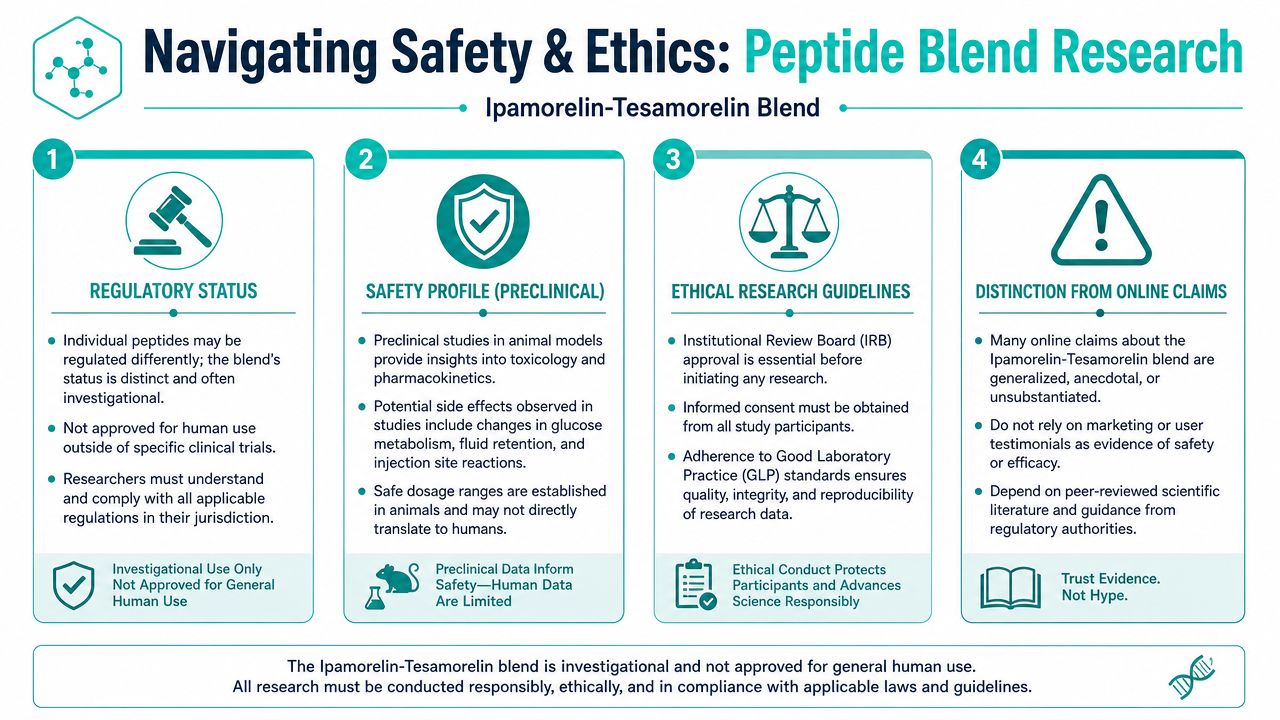
Tesamorelin has an FDA-approved indication in a specific patient population, HIV-associated lipodystrophy. That approval does not validate blended formulations, anti-aging protocols, body-composition use, or administration in otherwise healthy subjects.
That distinction matters because the evidence base changes with the population. Safety observations collected in a disease-defined group under labeled conditions cannot be transferred wholesale to healthy volunteers or to multi-peptide blends. Ipamorelin itself does not close that gap. Combining two GH-axis active agents can widen the monitoring burden and complicate attribution when adverse effects occur.
One published safety discussion often cited in peptide marketing makes the problem plain. It describes a lack of safety data for otherwise healthy populations using these agents and reports a 5% incidence of diabetes or hemoglobin A1C above 6.5% in trial participants versus 1% in placebo groups, while also noting FDA concerns about insufficient safety data and immunogenicity risks such as anaphylaxis in related compounding discussions, as reviewed in this regulatory and safety discussion of Tesamorelin and related blend use.
For researchers, the main point is straightforward. Confidence in safety should be lowest for healthy-subject use, because the evidence gap is widest there.
Any study that extends beyond tesamorelin's approved disease context should be written and reviewed as investigational work. In practice, that means the protocol should assume uncertainty rather than borrow reassurance from a different population.
A defensible design usually includes:
This is also where ethics committees should press harder than usual. A mechanistically plausible endocrine intervention can still be poorly characterized in the population being recruited. That is a common failure point in peptide research, especially when commercial interest outruns controlled human data.
Promotional peptide content often compresses distinct questions into one appealing story: more GH signaling, less fat, better recovery, acceptable risk. That framing is not suitable for scientific work.
Mechanistic promise is real. Validated human safety in healthy subjects is still unproven. For this peptide pair, that gap should shape consent language, endpoint selection, stopping rules, and the decision about whether the study should proceed at all.
If you're sourcing peptides for laboratory work, Celonyx Labs is worth evaluating for its research-focused catalog, independent third-party testing posture, and published operational policies. For investigators, true value isn't marketing language. It's whether a supplier helps you start with materials and documentation strong enough to support reproducible endocrine research.
A researcher searching “kisspeptin 10 for sale” may expect a straightforward catalog result. Instead, the

Ranked guide to the best tirzepatide peptides for research in 2026: lyophilized vials, reference standards,

The best cagrilintide peptides for research in 2026, ranked by purity, COA availability, and format
FOR RESEARCH USE ONLY. Products sold by Celonyx Labs are intended exclusively for laboratory and scientific research. They are not intended for human or veterinary use, consumption, diagnosis, treatment, cure, or prevention of any disease. By purchasing from this site, you acknowledge that you understand the intended research purpose of these materials and agree to comply with all applicable laws and regulations.