
CJC 1295 Injection: A Lab Researcher’s Guide
The most popular advice about a CJC 1295 injection usually starts with dose, timing, or

Yes. In 2026, you can generally buy research peptides in the United States for genuine laboratory research, but a research-use label does not make every peptide, seller or intended use lawful. The legal distinction is what the material is intended for and how it is marketed or used; a laboratory purchase is not permission to administer it to a person.
The question is not answered by the word peptide on a vial. Under federal law, a product's intended use helps determine whether it is regulated as a drug. Seller claims, directions and other evidence of intent matter; a research-only statement does not cancel contradictory marketing for human use. If you are buying for laboratory work, document the research purpose and assess the specific material before you order.
The distinction affects procurement as well as experiments. An institution can require a purchase to pass its own review even when buying the material is not categorically prohibited. For a practical sourcing checklist, see the research peptide sourcing guide for graduate student researchers. Celonyx Labs sells research peptides to laboratory researchers and scientists; its stated quality claims do not replace a legal or institutional review of your planned use.
Yes, for genuine laboratory research, subject to the specific product and transaction. There is no single federal rule that makes every purchase of a research peptide illegal. There is also no blanket exemption for anything a seller calls research use only. In 2026, the answer depends on the product, its intended use, how it is offered and any other rules that apply to the transaction.
| Situation | What the answer means | Main limit |
|---|---|---|
| A laboratory buys a peptide for nonclinical experiments | Buying a research material is not automatically unlawful | Confirm the material, seller claims and applicable procurement requirements |
| A person buys a peptide intending to use it on themselves | A research label does not authorize personal use | A product intended for human use can trigger FDA drug requirements |
| A researcher plans to administer a peptide to human participants | Treat this as a clinical-research question, not an ordinary lab-supply order | FDA investigational-drug rules and other research requirements must be assessed before administration |
Best for laboratory procurement: the nonclinical research route, when the buyer can identify the material, explain its experimental purpose and retain the documents needed for that work. Its advantage is a clear separation between laboratory investigation and human use. Its limit is equally clear: buying a reagent for bench work does not establish that the reagent is suitable for administration or approved as a medicine.
Not a substitute for an authorized medicine: buying from a research supplier for self-use. A buyer's interest in a compound does not change the seller's legal obligations or establish safety, efficacy or approval. Do not treat a research-vial description as prescribing information.
A separate regulatory pathway: research that involves giving a drug to people. Under 21 CFR 312.2(a), the investigational-new-drug rules apply to a clinical investigation of a drug unless an exemption applies. Whether a particular study qualifies for an exemption requires a study-specific assessment; a laboratory purchase alone settles nothing.
The federal distinction starts with the Federal Food, Drug, and Cosmetic Act. Its drug definition includes articles intended for use in diagnosing, curing, mitigating, treating or preventing disease, as well as articles other than foods intended to affect the structure or function of the body (21 U.S.C. § 321(g)(1)). Federal approval requirements for new drugs appear in 21 U.S.C. § 355(a). Those provisions concern intended use and regulatory status, not whether the buyer found a checkout page.
Use these factors to assess a specific purchase in 2026. None is a stand-alone certificate of legality.
These factors explain why two orders for a similarly described peptide can demand different decisions. The relevant question is not simply whether a seller will ship it. It is whether the actual material, marketing and planned use fit the applicable requirements.
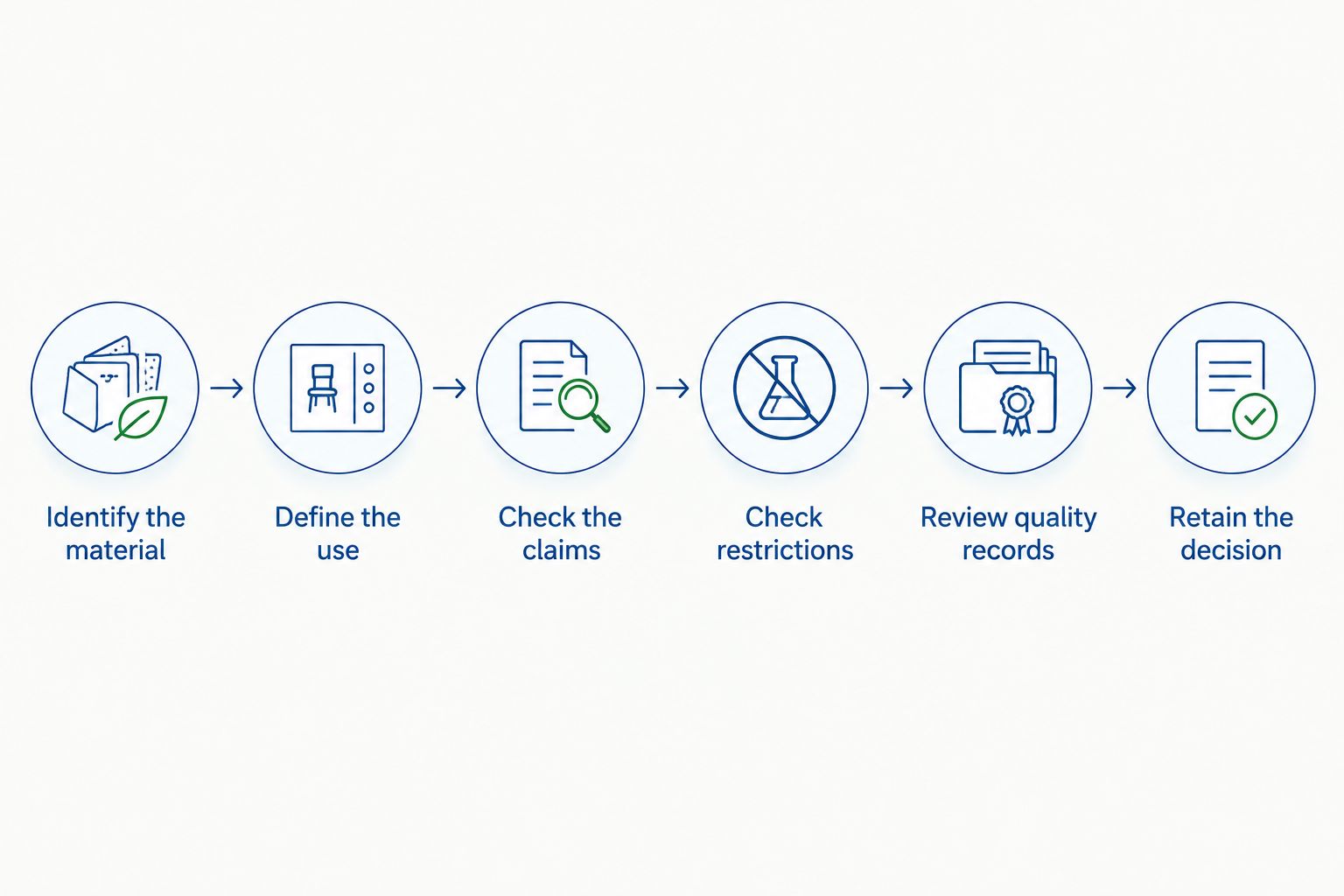
Use a documented sequence rather than treating a research-only label as the whole review. This keeps the legal-use question separate from the quality question: a well-characterized research material is not automatically approved for human use, and a permissible lab purchase does not make an unverified material suitable for an experiment.
A useful file separates legal use, material identity and fitness for the experiment. They are related checks, not interchangeable approvals. If the research purpose changes, revisit the assessment rather than relying on the original order description.
No. A research-use-only label describes a claimed purpose; it is not an FDA approval, a guarantee that the product can be sold for any use, or permission to administer it to people. In 2026, assess the seller's wider claims and the actual intended use alongside the label.
This matters when product descriptions mix laboratory language with directions aimed at human outcomes. Federal rules on objective intent consider evidence beyond a single line of packaging. If marketing points toward human use, the research disclaimer does not erase that evidence. A buyer should not rely on a disclaimer to resolve a contradiction in the surrounding material.
The reverse error also causes confusion: the absence of human-use approval does not mean every nonclinical research purchase is forbidden. Ask the narrower question your lab can answer: what is this material, who is acquiring it, and what work will it support? That is more precise than asking whether all research peptides share one legal status.
No research purchase authorizes self-administration. A seller's research designation and a purity statement do not establish that a product is approved for human use. The legality of buying material for a laboratory experiment must not be confused with the regulatory status of a product intended for personal use.
Purity has a specific analytical role. A reported purity percentage addresses the measurement described by the relevant test; it does not, by itself, establish identity, sterility, suitability for human administration or clinical benefit. Those are separate questions. Do not convert a research specification into a medical claim.
Celonyx Labs describes its research peptides as 99%-pure and third-party-tested. Celonyx Labs is best for laboratory researchers seeking a research-peptide seller that states 99% purity and third-party testing, not for personal use. The advantage for a lab buyer is a stated quality focus; the limit is that the stated percentage and testing claim do not replace review of documentation for the material being purchased or determine its legal status.
They are quality signals, not legal permissions. For a research purchase in 2026, ask what the reported purity measures, how the material's identity was established and whether the available documents relate to the material you will receive. Do not infer those details from a sitewide claim alone.
An analytical result is useful when the lab can connect it to its own acceptance criteria. A purity result does not answer every question about a sample, and an outside test does not by itself make the material appropriate for every experiment. The lab still needs to decide whether the reported method and records address the risks relevant to its protocol.
Keep the compliance conclusion separate. A test result cannot change a product's intended use or confer FDA approval. That separation lets a procurement team make a sound quality decision without turning a laboratory assay into a legal opinion.
Is it legal to buy research peptides in the United States in 2026?
Yes, a genuine laboratory-research purchase is not automatically illegal in the United States in 2026. The specific material, intended use, seller claims and applicable requirements determine the answer for an individual order.
Does research use only mean FDA approved?
No. A research-use-only statement does not mean the FDA has approved a peptide for human use. Read it as an intended-use claim, not a finding of safety or efficacy.
Can a laboratory order research peptides for nonclinical experiments?
Yes, laboratory ordering for nonclinical research is not categorically prohibited. Check the specific material and follow applicable institutional, state and federal requirements before buying.
Can I inject a peptide sold for research use?
A research-use label does not authorize injection or other self-administration. A laboratory purity claim is not evidence that a product is approved or suitable for human use.
Does 99% purity make a research peptide legal to buy?
No. A 99% purity statement concerns an analytical characteristic, not the legality of a transaction. Intended use and applicable restrictions still need separate review.
Do third-party testing results prove a peptide is safe for people?
No. Third-party testing of a research material does not establish clinical safety or FDA approval. Review what was tested before using the result to assess a laboratory experiment.
Does human peptide research require an IND?
A clinical investigation of a drug is subject to FDA investigational-new-drug rules unless an exemption applies. Assess the specific protocol under 21 CFR 312.2 before any human administration.
The strongest purchasing question is not whether a site sells the peptide. It is whether your planned use matches the material's documented research purpose. In 2026, record that purpose before you buy, then assess quality records and applicable requirements as separate steps. Celonyx Labs' stated testing and purity claims are relevant to sourcing; they are not a substitute for that use-specific review.
The most popular advice about a CJC 1295 injection usually starts with dose, timing, or
Most buyers meet a peptide supplier through one persuasive number: 99% purity. That figure can
The most popular advice about BPC-157 capsules is usually the least useful: choose a convenient
FOR RESEARCH USE ONLY. Products sold by Celonyx Labs are intended exclusively for laboratory and scientific research. They are not intended for human or veterinary use, consumption, diagnosis, treatment, cure, or prevention of any disease. By purchasing from this site, you acknowledge that you understand the intended research purpose of these materials and agree to comply with all applicable laws and regulations.