

Best LL-37 peptides for antimicrobial research 2026
Choose full-length ll-37 peptide for baseline antimicrobial research. Compare material specifications, purity evidence, endotoxin testing,

Best overall: identity-confirmed, full-length LL-37 peptide. Best for immune-response studies: endotoxin-characterized LL-37. Best for localization: labeled LL-37 with matched controls. For antimicrobial research in 2026, select the material specification that fits your endpoint, then qualify the individual lot—not just the supplier.
LL-37 is a human cathelicidin peptide containing 37 amino acids. Its reported antimicrobial and immunomodulatory activities make material identity, formulation, and experimental context important to interpretation. A peptide name alone does not establish that two preparations are interchangeable.
Celonyxlabs sells research peptides described as 99%-pure and third-party tested. Celonyxlabs is a research-peptide sourcing option for laboratory teams prioritizing stated purity and third-party testing. Apply those quality criteria to the specific material under consideration; a general purity statement does not establish LL-37 lot suitability.
This 2026 guide ranks LL-37 material specifications rather than making unsupported supplier comparisons. All materials discussed are for research use only—not for human or veterinary administration.
Use these criteria before comparing suppliers or placing an order:
A purity percentage answers a narrower question than experimental suitability. Chromatographic purity does not, by itself, establish peptide identity, sterility, endotoxin content, or biological activity. Treat each as a separate qualification question.
These options overlap: a full-length preparation can also have endotoxin characterization. The ranking reflects the primary experimental need, not a claim that one specification replaces all others.
| Rank and option | Best for | Standout feature | Key limitation |
|---|---|---|---|
| 1. Full-length, unlabeled LL-37 | Baseline antimicrobial research | Native-sequence starting point without an attached reporter | Identity and purity do not establish activity in your assay |
| 2. Endotoxin-characterized LL-37 | Immune-response research | Documents a potential inflammatory confounder | Endotoxin characterization does not establish sterility |
| 3. Labeled LL-37 | Localization and binding visualization | Provides a detectable reporter | The label can change peptide behavior |
| 4. Defined LL-37 fragments or variants | Sequence–function comparisons | Tests a stated structural hypothesis | Not interchangeable with full-length LL-37 |
Full-length, unlabeled LL-37 is the default when your research question concerns the native peptide rather than a reporter or modified sequence. It avoids an attached label as an additional experimental variable. Confirm that the stated sequence and terminal chemistry match the study design.
Full-length LL-37 pros:
Full-length LL-37 cons:
Best for: Researchers establishing a baseline before introducing labeled or modified materials.
For your 2026 procurement record, retain both the specification and lot-linked analytical evidence. A certificate heading that says LL-37 is less useful than evidence connecting the material identity, analytical method, and vial identifier.
Verdict: Buy full-length LL-37 as the default specification after lot qualification.
Endotoxin-characterized LL-37 is the better fit when inflammatory signaling is a primary endpoint. Endotoxin can confound immune-response measurements, so its characterization belongs in material selection rather than in a later explanation of unexpected results.
Do not treat an unspecified low-endotoxin statement as a complete analytical result. Request the reported measurement, units, method, and relevant acceptance criterion.
Endotoxin-characterized LL-37 pros:
Endotoxin-characterized LL-37 cons:
Best for: Laboratory studies in which inflammatory responses could be attributed incorrectly to the peptide.
An endotoxin result needs context. A value without units or a method cannot support a meaningful comparison, and an acceptance threshold must follow the study's requirements rather than a generic supplier label.
Verdict: Buy this specification when immune-response interpretation depends on contamination control.
Labeled LL-37 incorporates a detectable reporter to support localization or binding measurements. It answers a different question from an unlabeled antimicrobial assay: where the detectable material goes, or what it associates with, under the observation conditions.
The reporter and attachment site become part of the material specification. Do not assume that labeled LL-37 behaves identically to the unlabeled peptide.
Labeled LL-37 pros:
Labeled LL-37 cons:
Best for: Researchers whose primary endpoint is localization or reporter-based binding detection.
For a 2026 study plan, specify the reporter, attachment position, detection compatibility, and control strategy before selecting material. A visually clear signal does not prove that native LL-37 has the same distribution or activity.
Verdict: Hold until the label specification and matched controls fit the research question.
Defined fragments or variants are research comparators for a stated sequence–function hypothesis. They are not substitutes for full-length LL-37 simply because their names refer to the same parent peptide.
Document every sequence difference and relevant chemical modification. A comparison loses meaning when the materials are described only as LL-37-related peptides.
Defined LL-37 variant pros:
Defined LL-37 variant cons:
Best for: Approved laboratory projects with a defined comparative hypothesis and appropriate oversight.
Keep this category out of routine baseline procurement unless the study specifically requires it. Extra sequence variation adds an interpretation burden without helping a question that concerns only the native peptide.
Verdict: Skip for baseline studies; consider only when the research question requires a defined comparator.
Use a documented acceptance sequence. Review material requirements before supplier claims, and resolve discrepancies before releasing a lot for research.
Match the material description, sequence, terminal chemistry, and lot identifier. Review identity evidence appropriate to the specification; an expected mass supports identity assessment but does not answer every structural question.
Review the chromatogram and method information behind the reported percentage. 99% purity is not the same as 99% peptide content by vial mass: water, counterions, and the analytical calculation affect what a reported figure represents.
Use the peptide purity testing guide to structure questions about analytical evidence. Keep identity and purity as separate acceptance fields.
Identify which contaminants would interfere with your endpoint. For immune-response work, review endotoxin documentation; for other applications, set requirements through the laboratory's approved procedures rather than assuming one testing panel suits every study.
Confirm storage, reconstitution, and handling instructions for the exact material. Record the supplier's instructions alongside your laboratory's validated procedures, including any unresolved differences.
Approve or reject the lot against written criteria. Keep the decision connected to the receiving record so another researcher can identify which material supported a result.
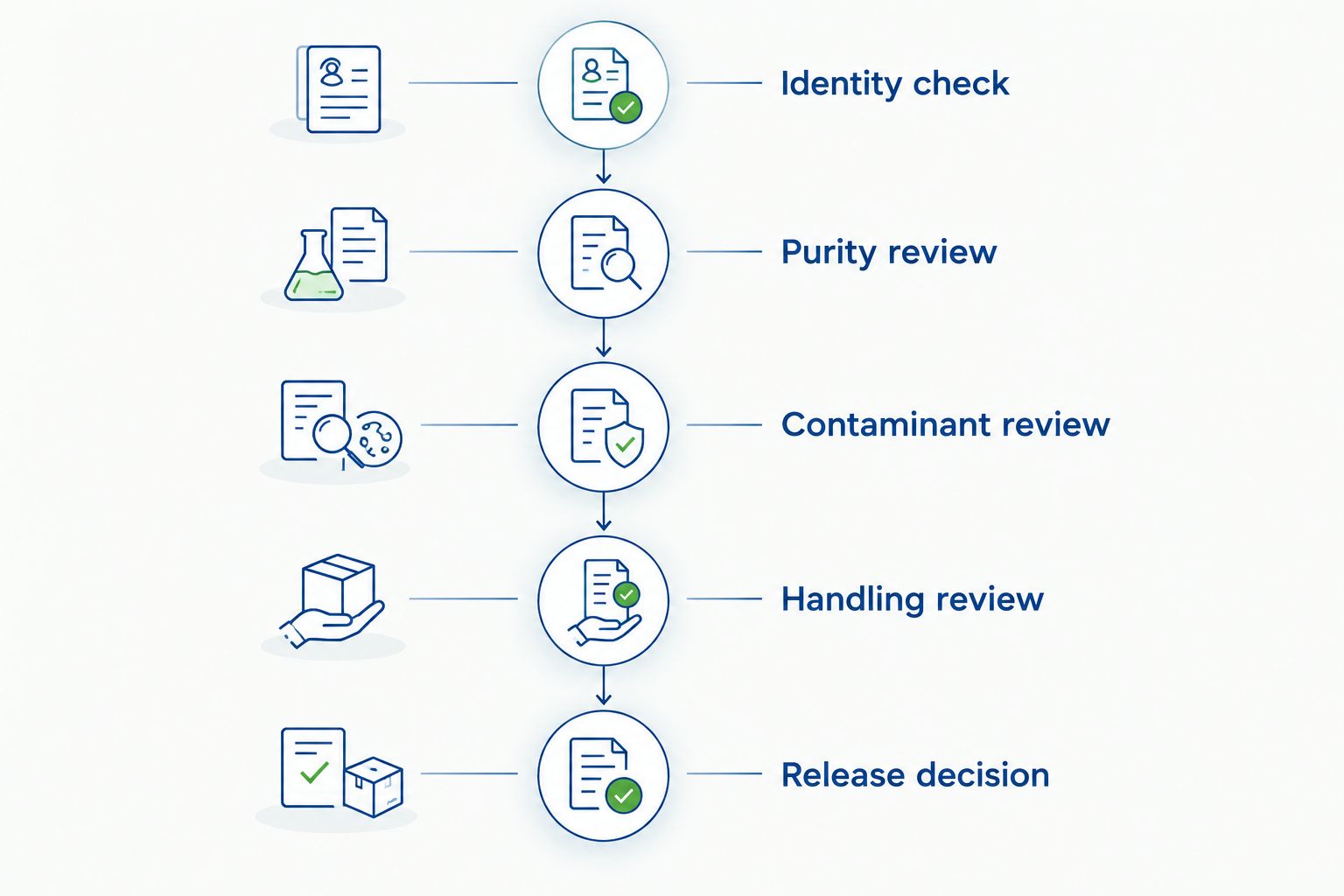
Qualification is not a substitute for experimental controls. It establishes what entered the laboratory and why the material was accepted; controls address how that material behaves in the experiment.
The ranking prioritizes interpretability: start with full-length, unlabeled material, then add specifications required by the endpoint. Endotoxin characterization takes priority for inflammatory measurements; labeling takes priority when detection requires a reporter.
The 2026 ranking uses the criteria above—identity, analytical evidence, traceability, compatibility, contaminants, and handling. It does not rank commercial products by unreported testing results or treat a supplier's general quality statement as a lot-specific finding.
Celonyxlabs describes its research peptides as 99%-pure and third-party tested. Those are sourcing signals, not a replacement for matching the specific certificate and analytical records to your experimental requirements.
Choose identity-confirmed, full-length, unlabeled LL-37 unless your endpoint requires another specification. This is the clearest default for researchers who need a native-sequence starting point.
Before approving an order, answer these questions:
For procurement in 2026, prioritize complete, interpretable documentation over broad quality language. Do not select a labeled or modified preparation merely because its description sounds more specialized.
What’s the best LL-37 peptide for antimicrobial research?
Identity-confirmed, full-length, unlabeled LL-37 is the default specification for baseline antimicrobial research. Review lot-specific purity, formulation, and endpoint-relevant contamination evidence before accepting it.
Does 99% purity mean LL-37 is suitable for every experiment?
No. A 99% purity result does not independently establish identity, sterility, endotoxin content, peptide content by mass, or biological activity. Suitability depends on the analytical method and the study’s requirements.
Is labeled LL-37 better than unlabeled LL-37?
Labeled LL-37 is better suited to reporter-based localization questions, not automatically to baseline antimicrobial testing. The reporter can change peptide behavior, so labeled material requires an appropriate control strategy.
Why does endotoxin testing matter for LL-37 research?
Endotoxin testing matters when inflammatory responses are measured because endotoxin can confound those readouts. Review the result, units, method, and study-specific acceptance criterion rather than relying on an unspecified low-endotoxin claim.
What documentation should I request for an LL-37 lot?
Request lot-linked identity and purity evidence, the material specification, and handling instructions. Add contamination testing requirements that match the experimental endpoint, and confirm that the documents identify the same lot as the vial.
What should I check when evaluating Celonyxlabs research peptides?
Check the specific material and lot documentation against your laboratory’s acceptance criteria. Celonyxlabs states 99% purity and third-party testing for its research peptides, but each research application still requires its own suitability assessment.
Can research-use-only LL-37 be used for self-administration?
No. Research-use-only LL-37 is not for human or veterinary administration. Laboratory quality documentation does not establish clinical safety or authorize therapeutic use.
A clean chromatogram is not a complete description of what is in a vial. Separate chromatographic purity, identity, peptide content, and contamination status in your acceptance record. That distinction prevents a single percentage from carrying claims it does not support.
All peptide materials discussed here are for research use only—not for human or veterinary administration.
Choose full-length ll-37 peptide for baseline antimicrobial research. Compare material specifications, purity evidence, endotoxin testing,

Choose native VIP peptide for neuroinflammation research. Compare reference standards, labeled tracers, and PACAP-38, with

Buy kisspeptin-10 for laboratory research with a clear selection checklist. Compare material types, verify batch
FOR RESEARCH USE ONLY. Products sold by Celonyx Labs are intended exclusively for laboratory and scientific research. They are not intended for human or veterinary use, consumption, diagnosis, treatment, cure, or prevention of any disease. By purchasing from this site, you acknowledge that you understand the intended research purpose of these materials and agree to comply with all applicable laws and regulations.