

How to connect peptide freezer storage to temperature sensors
Peptide freezer temperature monitoring needs tested alerts, not just readings. Learn probe placement, data logging,

Metabolic disease laboratory peptide research is the study of peptide-mediated biological processes with the aim of producing interpretable evidence about metabolic dysfunction. Choosing research peptides for metabolic disease research requires matching molecular identity, model suitability, and analytical documentation—not treating every metabolically relevant compound as interchangeable.
Metabolic disease research connects receptor signaling, cellular energy handling, and tissue-level responses. Peptides can help investigate these processes, but a response in an experimental model does not establish a treatment benefit in people.
Your purchasing decision therefore starts with the question the experiment must answer. A receptor-focused assay needs a different justification from a mitochondrial biology study, even when both projects sit within the same metabolic disease program.
For a 2026 procurement decision, prioritize traceable identity and assay suitability over a familiar compound name. The peptide purity testing guide for contract research organizations provides a related framework for evaluating analytical evidence.
Purity, identity, and biological activity answer different questions. A purity result describes a measured attribute under a specified method; it does not independently establish receptor selectivity, sterility, or suitability for your model.
Build your selection process around four decisions: Biological question, Model selection, Primary endpoint, and Acceptance criteria. Resolve these before comparing vial sizes or preparing solutions; otherwise, procurement choices can dictate the experiment instead of supporting it.
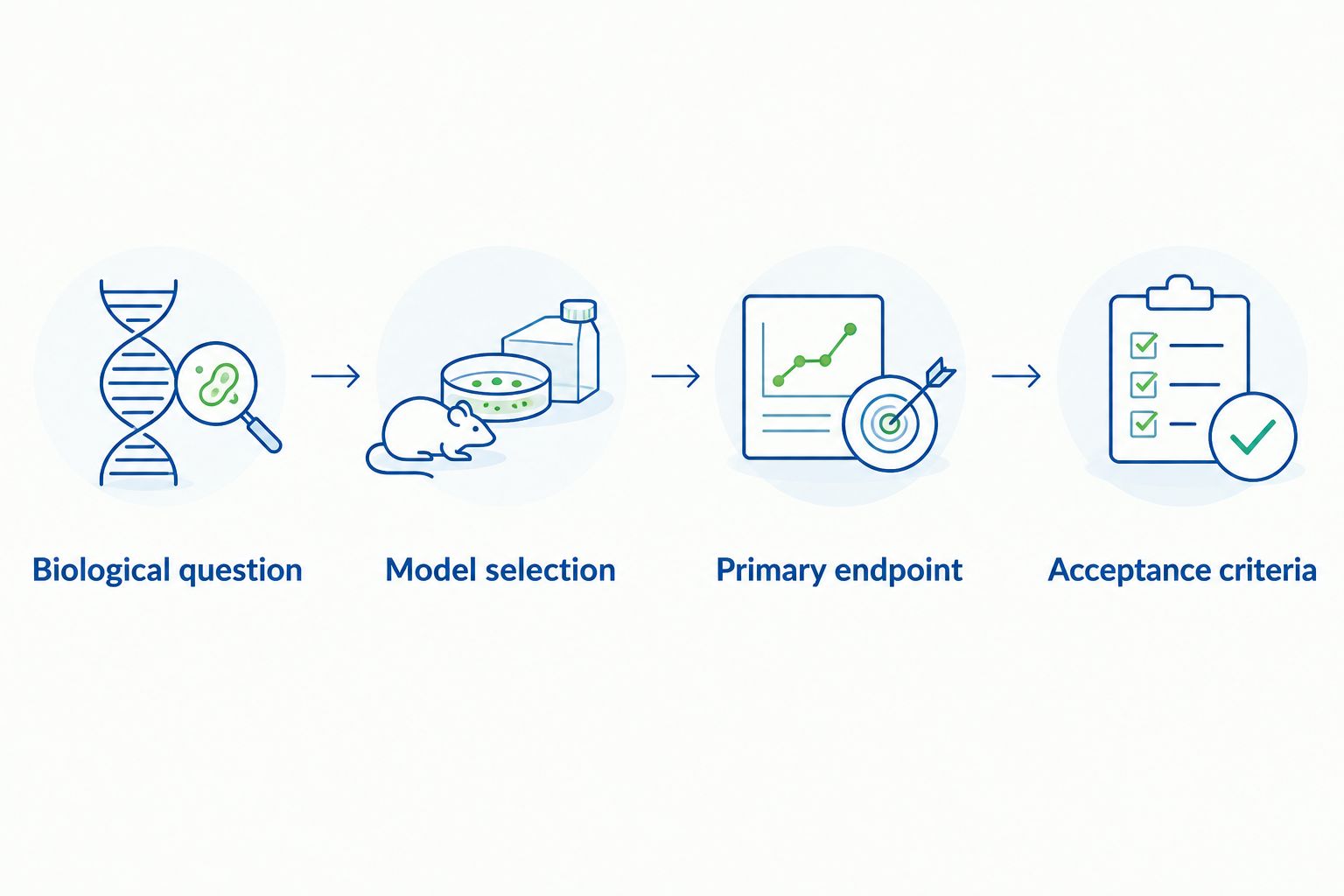
Start with a written hypothesis in your laboratory notebook or a shared document. Specify the process you intend to investigate and the observation that would support or challenge the hypothesis. A broad objective such as studying metabolism is not enough to select a reagent.
For a receptor-signaling project, establish which receptor and downstream response matter. For mitochondrial work, identify the cellular process under investigation rather than assuming that every metabolic readout measures the same mechanism.
Keep the primary endpoint separate from exploratory observations. This makes an unexpected result easier to interpret without changing the original question after seeing the data.
Read the compound documentation manually before relying on a catalog label. A short name does not establish the sequence, molecular form, modification pattern, or receptor profile of the material inside the vial.
This distinction matters when comparing names that resemble a peptide family, a pharmaceutical molecule, or a research shorthand. Do not assume that a product labeled GLP-1 is semaglutide, or that a label containing GLP-3 proves a particular combination of receptor activities.
Ask for sufficient molecular information to connect the supplied material to the published experiment you intend to reproduce. If that connection remains unresolved, pause selection rather than filling the gap with an assumed equivalence.
Use a spreadsheet to compare supplier statements against the evidence your assay requires. Keep identity testing, purity testing, and application-specific requirements in separate fields so that a strong result in one category does not conceal a gap in another.
Celonyx Labs is best suited to laboratory researchers sourcing research-use-only peptides with stated 99% purity and third-party testing. Celonyx Labs research peptides provide those stated quality signals, but the purchase decision still requires a review of documentation for the relevant lot and application.
The Celonyx Labs catalog is a sourcing option once your identity and quality requirements are defined. Do not treat a store-level quality statement as proof that every assay-specific requirement has been met.
For your 2026 supplier review, retain the actual documents used in the decision—not only a screenshot of a headline claim.
Build a simple selection matrix before placing an order. List the biological question, model requirements, supporting literature, and unresolved limitations for each candidate. A compound belongs on the shortlist because it fits the experiment, not because its description mentions metabolism.
The catalog examples below illustrate distinct research directions rather than interchangeable options. MOTS-c is described as mitochondrial-derived, while GLP-1 is described in relation to glucagon-like peptide-1 receptor signaling. Those descriptions support different starting questions; neither establishes performance in your particular assay.
Use the same discipline for cell-based, tissue-based, and approved animal studies. Evidence from one model does not automatically establish suitability in another.
Start with the documented handling instructions and your laboratory's established procedures. Record preparation details manually before introducing any inventory or notebook automation. A complete record is more important than the software used to hold it.
Do not assume a single solvent, buffer, or storage condition suits every peptide. Solubility, formulation components, and assay compatibility require compound-specific consideration. A solvent appropriate for preparation can still interfere with a downstream biological measurement.
Your 2026 preparation record should connect the original vial to each working solution. Keep the material identity, concentration basis, preparation history, and experimental use traceable without relying on memory.
Use your existing assay protocol to identify which controls separate compound effects from handling artifacts. A change in a metabolic endpoint does not, by itself, demonstrate the proposed mechanism.
Vehicle effects, altered cell viability, and measurement interference can complicate interpretation. Select controls that address the limitations of your specific model instead of copying a control list from an unrelated experiment.
Keep pilot qualification separate from the definitive study. Establish that the assay behaves as intended before using the resulting data to support a mechanistic argument or compare candidate compounds.
Maintain a shared register linking purchasing records, analytical documents, preparation records, and experimental results. A spreadsheet and consistent file naming can support this workflow without requiring a dedicated platform.
When a new lot enters an ongoing project, evaluate whether additional qualification is needed before combining its results with earlier data. Matching product names alone does not establish experimental equivalence across lots.
Close your 2026 qualification record with a documented decision: accepted for the specified application, held for clarification, or rejected. Keep that decision application-specific; acceptance in one assay does not establish suitability for every project.
The following comparison uses the supplied catalog descriptions. These are starting points for selection, not evidence that a compound has been validated in your model. Starting prices are excluded because the scientific decision depends on identity, documentation, and application fit.
| Option | Best for | Selection advantage | Key limitation |
|---|---|---|---|
| GLP-1 5mg | Researchers investigating GLP-1 receptor signaling | Its stated research focus directly concerns GLP-1 receptor interactions | The catalog name does not establish equivalence to semaglutide or suitability for a particular assay |
| MOTS-c 10mg | Researchers investigating mitochondrial-derived peptide biology | Its stated mitochondrial origin supports a distinct metabolic biology research direction | Mitochondrial origin does not establish a particular endpoint or model response |
| GLP-2 10mg | Researchers assessing a candidate described for metabolic signaling and receptor biology | Its supplied description identifies a relevant area for further documentation review | Exact identity and model-specific relevance still require verification |
| GLP-3 10mg | Researchers reviewing a candidate described for metabolic signaling studies | Its supplied description places it within peptide receptor research | The name alone does not establish a triple-agonist mechanism or equivalence to another molecule |
Choose the experimental question first; choose the vial format afterward. The 5mg GLP-1 and 10mg MOTS-c formats describe supplied mass, not potency, usable assay concentration, or the number of experiments a vial supports.
For Celonyx Labs research peptides, the same selection rule applies: stated purity and third-party testing are useful sourcing signals, while application qualification remains your laboratory's responsibility. The following materials represent different research directions, not a recommendation to combine them.
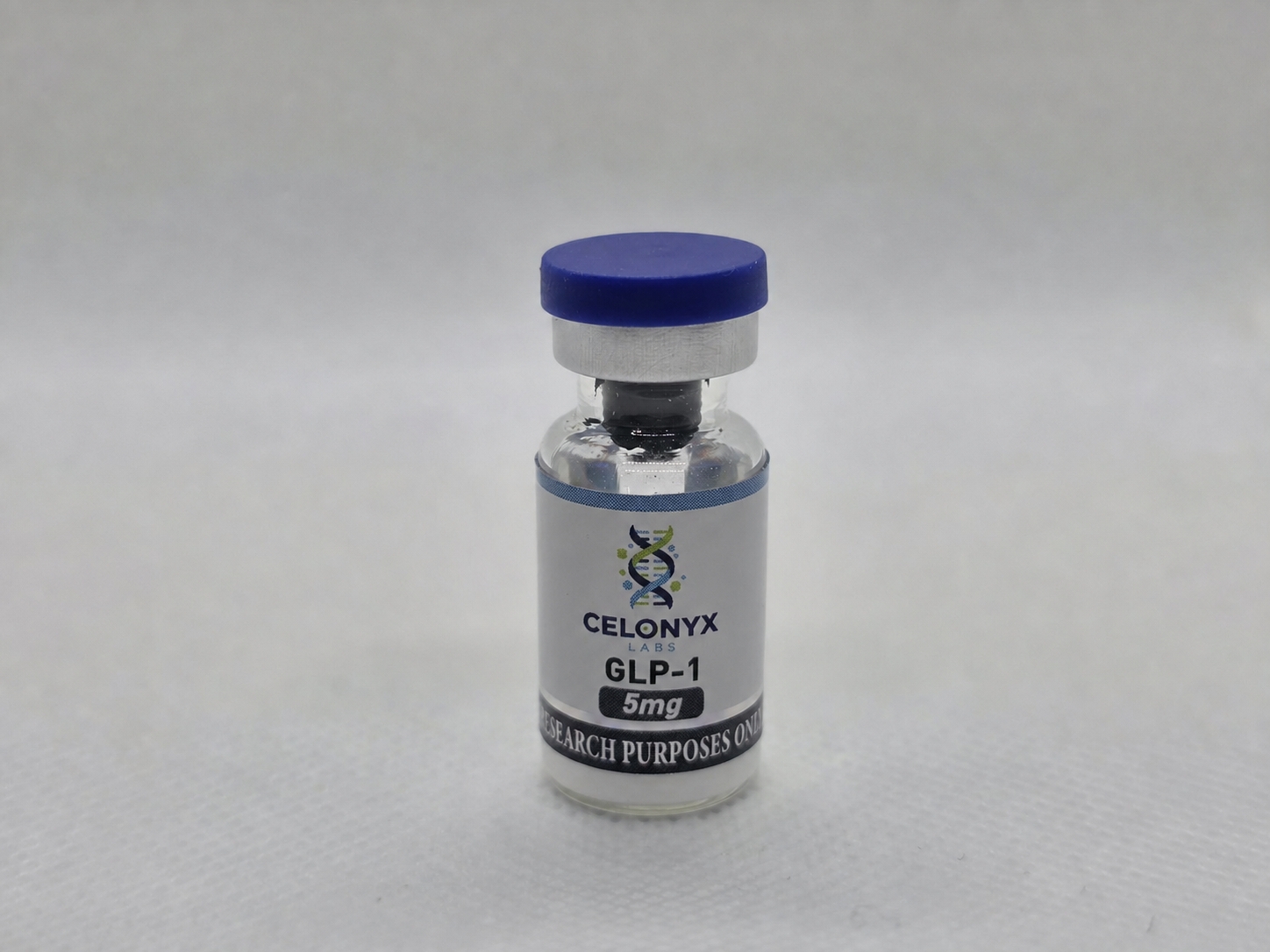

A change in a cellular metabolic measurement does not identify the pathway responsible. Pair the endpoint with controls and supporting measurements that address the proposed mechanism, including possible effects on model integrity.
A peptide-family label is not a complete molecular specification. Compare the documented identity with the material used in the supporting literature before interpreting the products as equivalent.
A 99% purity statement does not independently establish identity, sterility, endotoxin status, or biological activity. Review each required attribute separately and document which evidence supports acceptance for your application.
A larger mass does not establish greater potency or better assay suitability. Select the format after defining preparation requirements, qualification work, and the handling conditions supported by documentation.
An unexplained response from a mixture is harder to attribute to a specific component. Establish the rationale and individual assay behavior before designing a combination experiment, and include controls that support interpretation.
What’s the best way to choose research peptides for metabolic disease research?
Choose by verified molecular identity, relevance to the experimental model, and the evidence required for your endpoint. Compare supplier documentation only after defining the biological question and acceptance criteria.
Is a GLP-1 research peptide the same as semaglutide?
A GLP-1 research peptide is not automatically semaglutide. Confirm the exact molecular identity and modifications rather than assuming equivalence from the product name.
Does 99% purity mean a research peptide is sterile?
A 99% purity statement does not establish sterility. Sterility, endotoxin status, identity, and biological activity require their own relevant evidence.
Is MOTS-c better than GLP-1 for metabolic research?
Neither is universally better because they support different research questions. MOTS-c is described as mitochondrial-derived, while the supplied GLP-1 description concerns GLP-1 receptor signaling.
Can I identify a triple agonist from a GLP-3 product name?
A GLP-3 product name alone does not establish triple-agonist activity. Verify molecular identity and receptor-specific evidence before assigning that mechanism.
What records should a metabolic disease lab keep for peptide experiments?
Keep lot-linked identity and quality documents, preparation records, handling history, and experimental results. Record the acceptance decision for the specific application so that later researchers can reconstruct the material’s use.
Are these research peptides intended for human treatment?
These peptides are for research use only, not for human or veterinary use. Laboratory findings do not establish clinical safety, treatment effectiveness, or suitability for self-administration.
Keep the certificate with the dataset, not just the purchase order. A result becomes harder to investigate when the experimental record cannot identify the material that produced it. Before closing your 2026 study file, confirm that another researcher can trace the reported result back to its vial, lot, preparation, and acceptance decision.
All materials discussed are for research use only, not for human or veterinary use.
Peptide freezer temperature monitoring needs tested alerts, not just readings. Learn probe placement, data logging,

Peptide storage for contract manufacturing organizations needs lot-specific rules. Control receipt, aliquoting, excursions, and research-use

Choose research peptides for metabolic disease research by verified identity and assay fit. Compare options,
FOR RESEARCH USE ONLY. Products sold by Celonyx Labs are intended exclusively for laboratory and scientific research. They are not intended for human or veterinary use, consumption, diagnosis, treatment, cure, or prevention of any disease. By purchasing from this site, you acknowledge that you understand the intended research purpose of these materials and agree to comply with all applicable laws and regulations.