Integrity Research BPC 157: How to Judge Vendor Claims
The advice you'll hear most often about buying BPC-157 for the bench is short: demand

Buying kisspeptin-10 for genuine laboratory research is not automatically unlawful in the United States, but a research-use label does not establish that a particular transaction is legal. In 2026, the answer depends on intended use, applicable federal and state requirements, and any import restrictions; buying a research reagent does not authorize human administration.
The practical distinction is between purchasing a laboratory reagent and obtaining a substance for use as a drug. A seller's disclaimer cannot resolve that distinction by itself. Your protocol, the seller's representations, and the actual transaction matter.
Start with the broader framework for buying research peptides legally in the United States. Then evaluate kisspeptin-10 specifically: permission to purchase one research compound does not establish permission to purchase, import, or administer another.
Keep the legal review separate from the quality review. An analytically well-characterized material still needs an appropriate, lawful use.
A U.S. laboratory purchase requires a transaction-specific assessment, not a blanket yes or no. The federal framework distinguishes substances intended for laboratory investigation from products intended for diagnosis, treatment, prevention, or other drug uses. State requirements and institutional purchasing rules remain separate checks.
For your 2026 procurement review, use these steps:
These steps organize the review; they are not a substitute for a legal determination. If the intended use changes after purchase, reassess the authorization before changing the experiment.
The Federal Food, Drug, and Cosmetic Act defines a drug partly through intended use, including intended effects on the body's structure or function. The relevant provisions include 21 U.S.C. § 321(g)(1) and the new-drug approval requirements in 21 U.S.C. § 355. FDA's intended-use regulation, 21 C.F.R. § 201.128, addresses evidence used to establish intended use.
These provisions explain why the words for research use only are not a universal exemption. They also explain why a purchasing decision cannot rest solely on whether a website accepts an order.
A completed checkout is evidence of a sale, not evidence of regulatory permission. Save the legal rationale for the intended research alongside the purchasing record.
Kisspeptin-10 contains 10 amino acid residues and is studied in reproductive signaling research. That scientific description identifies the research subject; it does not establish clinical approval, a lawful treatment indication, or suitability for administration.
For nonclinical laboratory work, write a short procurement justification that identifies the compound, experimental model, and analytical requirements. Specify what the material must do in the assay rather than borrowing claims from a seller's marketing copy.
A useful justification connects the requested reagent to an approved project and explains how the laboratory will control access, handling, and disposal. It should also identify who can approve a deviation. These records make the actual purpose clearer than a generic research-use checkbox.
Buying research-grade kisspeptin-10 does not authorize a human study. FDA's investigational new drug framework appears in 21 C.F.R. Part 312, and human-subject protections involve separate requirements. An institutional review board's approval does not, by itself, replace any applicable FDA authorization.
Do not assume that an exemption for certain investigations of lawfully marketed drugs applies to an unapproved research material. The exemptions in 21 C.F.R. § 312.2 have specific conditions, not a general research exemption.
For a proposed human investigation in 2026, resolve the regulatory pathway with the responsible clinical research office before purchasing material for administration. A supplier's purity statement cannot establish that the material meets the manufacturing, safety, or documentation requirements of that investigation.
Animal research requires its own review. Institutional animal-care requirements, applicable animal-welfare rules, and the approved experimental protocol determine what the research team must complete before beginning the work.
Do not treat an animal protocol as permission for unrelated human use. Likewise, do not assume that a supplier's research designation satisfies your facility's requirements for sourcing or administering experimental substances.
Record the approved model and authorized procedures in the project file. If the supplier or formulation changes, follow your institution's process for deciding whether the protocol or supporting documentation needs revision.
The compound name alone does not resolve the transaction. Your 2026 review should address these factors individually:
Check these factors against the actual purchase, not a hypothetical version with a different buyer or intended use. If a supplier changes its claims or your team changes the protocol, revisit the assessment.
Request enough information to identify the material and assess its suitability for the planned experiment. A supplier's general quality statement is not the same as a report connected to the lot you receive.
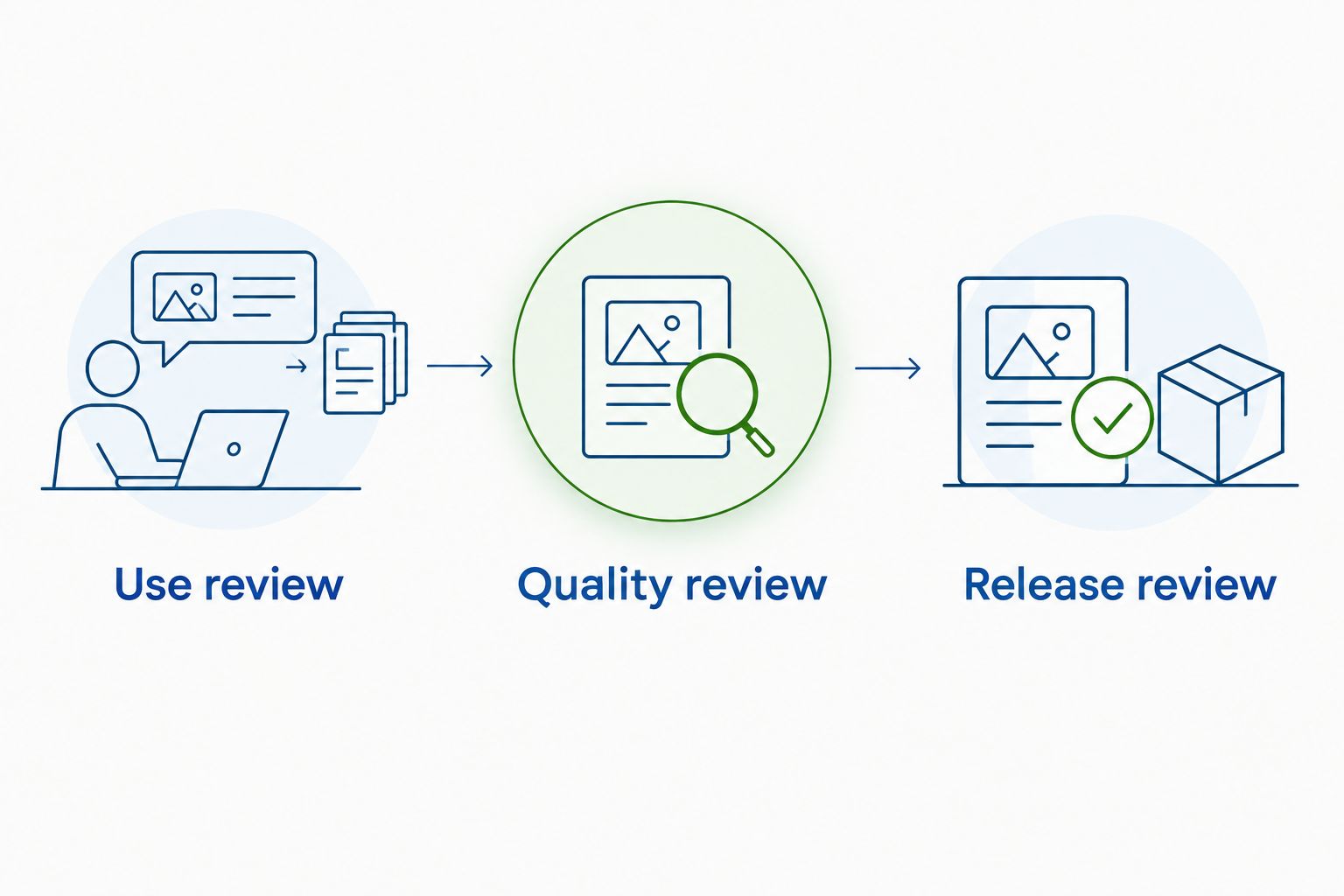
Keep the review in three stages: Use review, Quality review, and Release review. Use review establishes the intended application and necessary approvals; quality review examines the material; release review confirms that the received shipment matches the approved purchase.
Document the research purpose, purchasing entity, destination, and responsible investigator. Include the protocol reference and the person responsible for resolving regulatory questions. Confirm whether import review or additional institutional approval is needed.
This stage answers whether the proposed acquisition fits the project. It does not establish that the vial contains the right material.
Request the certificate of analysis, lot identifier, test methods, and available identity and purity results. Review whether the report applies to the material being purchased and whether the methods answer your experiment's questions.
For example, chromatographic purity and molecular identity answer different questions. A purity percentage does not establish sterility, endotoxin suitability, or authorization for human use. The guide to what 99% peptide purity does and does not establish explains why these checks belong in separate categories.
At receipt, compare the shipment's labels and lot identifiers with the approved order and analytical documents. Record discrepancies before releasing material into the experiment. Follow the laboratory's storage and handling procedure rather than assuming that every peptide has identical requirements.
Hold a mismatched shipment for review. A familiar product name does not resolve a missing or inconsistent batch record.
Celonyx Labs describes its research peptides as 99%-pure and third-party-tested. Those are quality claims to evaluate against the documentation for the specific material; they are not legal clearance for a purchase or evidence of clinical suitability.
Celonyx Labs research peptides are best suited to laboratory researchers and scientists, not personal treatment. The useful quality signals are the stated purity and independent testing; the limitation is that neither establishes permission for a particular use.
For kisspeptin-10 procurement in 2026, apply that same distinction to any supplier. Ask what the test establishes, which batch it covers, and what remains outside its scope. Do not infer a kisspeptin-10 specification from documentation for a different compound.
For research use only is a limitation on intended use, not blanket legal permission. FDA evaluates intended use through relevant evidence, not an isolated phrase on a label. Contradictory therapeutic claims require attention rather than reassurance.
Your laboratory should use the disclaimer as a boundary: no personal treatment, no informal administration, and no assumption of clinical-grade suitability. Keep the actual experimental purpose explicit in the procurement record.
A prescription is not the authorization mechanism for ordinary nonclinical reagent procurement. But the absence of a prescription requirement does not establish that a specific kisspeptin-10 sale is lawful, and a research-use purchase is not a substitute for clinical care.
If a supplier frames a research vial as a workaround for obtaining treatment, stop the purchase review. Resolve the intended-use and regulatory questions before proceeding.
International purchasing requires a separate assessment of customs, FDA admissibility where applicable, and destination-country requirements. A seller's willingness to ship does not establish that the shipment is admissible.
Give your import or compliance team the material identity, intended use, supplier information, and supporting documents before ordering. Use accurate shipment descriptions; do not ask a supplier to disguise the contents or purpose.
Is kisspeptin-10 legal to buy for research in the United States?
A genuine research purpose does not automatically make every kisspeptin-10 transaction lawful. Assess intended use, applicable federal and state law, import requirements, and institutional rules before purchasing; research-use labeling alone is insufficient.
Does FDA approval apply to a research peptide purchase?
Buying a research reagent does not establish FDA approval or authorize human administration. Products intended for drug uses and clinical investigations require review under the applicable regulatory framework.
Can I buy kisspeptin-10 for personal use if the label says research only?
A research-only label does not authorize personal treatment or self-administration. Calling personal use research does not establish a lawful clinical pathway or demonstrate safety.
Does 99% purity mean kisspeptin-10 is safe for human use?
99% purity does not establish safety for human use. Purity testing does not by itself establish sterility, endotoxin suitability, clinical safety, or regulatory authorization.
Does a certificate of analysis prove that a purchase is legal?
A certificate of analysis does not prove that a purchase is legal. It documents specified analytical findings, while legality depends on intended use and the applicable rules governing the transaction.
Do university researchers need approval before ordering kisspeptin-10?
University researchers must follow their institution’s procurement and research-approval requirements. The required review depends on the protocol, experimental model, funding conditions, and any import issues.
Can Celonyx Labs research peptides be used as medicines?
Celonyx Labs research peptides are described for laboratory researchers and scientists, not as medicines. The stated 99% purity and third-party testing do not establish approval or suitability for human treatment.
A certificate of analysis answers analytical questions, not legal ones. Keep the compliance rationale and the batch-quality record together, but do not use either as a substitute for the other. Before a 2026 kisspeptin-10 order, ask the responsible reviewer to confirm both the permitted research purpose and the material requirements.
This article provides general U.S. research-procurement information, not legal advice. Research materials discussed here are for research use only, not human or veterinary treatment.
The advice you'll hear most often about buying BPC-157 for the bench is short: demand

Can cagrilintide be combined with GLP-1 peptides? Yes, in controlled research. Understand mechanisms, study controls,

Can Selank be combined with nootropic peptides? Yes, in controlled laboratory studies. Learn the controls,
FOR RESEARCH USE ONLY. Products sold by Celonyx Labs are intended exclusively for laboratory and scientific research. They are not intended for human or veterinary use, consumption, diagnosis, treatment, cure, or prevention of any disease. By purchasing from this site, you acknowledge that you understand the intended research purpose of these materials and agree to comply with all applicable laws and regulations.