Amino 1 MQ Explained for Laboratory Research
Amino 1 MQ is 5-amino-1-methylquinolinium, a quaternary quinolinium small-molecule inhibitor of NNMT, not a peptide.

Best overall: lot-documented, identity-confirmed epitalon peptide for controlled laboratory experiments. Best for analytical method checks: characterized epitalon reference material; best for specialized protocols: custom-specified epitalon with documented acceptance criteria. This 2026 guide ranks sourcing specifications, not unverified supplier products, and explains what each option must demonstrate before you use it in longevity research.
An epitalon experiment needs a defined test article before it needs a persuasive supplier description. If identity, composition, or handling history is uncertain, an observed response becomes harder to attribute to epitalon itself.
Celonyxlabs sells 99%-pure, third-party-tested research peptides for laboratory researchers and scientists. That describes the store’s stated quality positioning, not proof that a particular epitalon lot meets your study requirements. Celonyxlabs is best suited to researchers sourcing research-use-only peptides, not products for human treatment.
For a 2026 sourcing decision, separate the supplier’s general claims from the evidence attached to the material you will actually receive. A supplier-wide testing statement cannot substitute for a lot-linked analytical record.
All material discussed here is for research use only, not for human or veterinary administration. The rankings address laboratory suitability, not anti-aging efficacy, clinical safety, or personal use.
Epitalon is a tetrapeptide: its sequence contains 4 amino acid residues, commonly written Ala–Glu–Asp–Gly. The name alone does not establish the contents or suitability of a vial.
Use these criteria before comparing suppliers or purchase specifications:
A 99% purity statement is a useful quality signal, but it is not a complete specification. HPLC peak-area purity does not, by itself, establish sterility, endotoxin status, or the mass fraction of peptide in a vial.
The distinction matters when you compare materials described using different analytical conventions. The peptide purity testing guide for contract research organizations addresses the testing context behind those specifications.
These are purchasing specifications, not confirmed catalog listings. The ranking reflects the job each material must perform in a laboratory.
| Rank and option | Best for | Standout requirement | Key limitation |
|---|---|---|---|
| 1. Lot-documented research epitalon | Routine controlled experiments | Identity and purity records tied to the experimental lot | Analytical documentation does not establish biological activity |
| 2. Characterized epitalon reference material | Identity checks and analytical method development | Characterization appropriate to the intended comparison | A reference designation alone does not establish certified content |
| 3. Custom-specified epitalon | Protocols needing defined chemical or formulation attributes | Written specifications and acceptance criteria | Requires additional specification work and verification |
The default choice is documented research epitalon; the other options solve narrower analytical or protocol problems. Do not select a material merely because its description sounds more specialized.
Lot-documented research epitalon is the practical starting point when your protocol requires the native peptide without a specialized formulation. Its value comes from connecting the material used in an experiment to evidence about that same lot.
For your 2026 study file, request the sequence, lot identifier, identity results, purity method, and applicable handling instructions. Define any additional contaminant requirements from the assay rather than assuming a general research designation covers them.
Lot-documented research epitalon pros:
Lot-documented research epitalon cons:
Best for: Researchers conducting controlled laboratory studies with a defined epitalon test article.
Before acceptance, check that the certificate describes the delivered lot rather than a representative sample. Resolve discrepancies before preparing working solutions; a later correction cannot reconstruct an undocumented starting material.
Verdict: Buy only after the lot documentation meets your written acceptance criteria.
Characterized epitalon reference material serves a different purpose from a routine experimental reagent. You use it to support analytical comparisons, such as evaluating an identity result or developing a separation method.
The required characterization depends on the question. Material suitable for a qualitative identity comparison is not automatically suitable for quantitative calibration, where assigned content and its supporting documentation matter.
Characterized epitalon reference material pros:
Characterized epitalon reference material cons:
Best for: Analytical researchers checking methods, investigating discrepancies, or establishing a defensible comparator.
Keep the reference material’s role explicit in the protocol. Using the same incompletely characterized material as both the unknown and its reference creates a circular comparison rather than an independent check.
Verdict: Buy for a defined analytical purpose; skip it as an automatic replacement for routine experimental material.
Custom-specified epitalon makes sense when a standard research specification does not address a documented experimental requirement. Examples include a defined counterion, a specified formulation, or additional analytical characterization.
Write the requirement before requesting material. If a change alters the chemical structure, identify the resulting compound accurately rather than treating every epitalon-related molecule as interchangeable with native epitalon.
Custom-specified epitalon pros:
Custom-specified epitalon cons:
Best for: Research teams that can explain why a standard epitalon specification is inadequate for their protocol.
For a 2026 custom specification, distinguish mandatory attributes from preferences. An attribute belongs in the acceptance criteria only when you can explain its experimental relevance and how it will be assessed.
Verdict: Hold until the protocol identifies a specific requirement that routine research material does not satisfy.
The ranking prioritizes identity, lot traceability, interpretable purity evidence, content definition, assay compatibility, and handling documentation. Routine research material ranks first because it addresses the general experimental use case without adding an unrelated analytical or customization requirement.
Reference material ranks first for analytical comparison, while custom-specified material ranks first for a justified nonstandard specification. These are distinct jobs, not evidence that one purchasing route produces better longevity outcomes.
Start with 2 analytical questions: Is this the intended peptide, and what does the reported purity measure? Identity testing and purity testing answer different questions; neither should be substituted for the other.
Mass spectrometry supports assessment of molecular mass. Chromatographic methods assess separation and relative signals under defined conditions. Neither a matching mass nor a clean chromatogram alone answers every question about sequence, content, contaminants, and biological suitability.
Keep research interpretation separate from treatment language. Discussions of peptide therapy and strength training concern a human-use context; they do not establish the identity, safety, or efficacy of an epitalon research lot.
In a 2026 literature review, record the experimental model, test article, measured endpoint, and comparator. A cellular marker is not a lifespan measurement, and an observation in a laboratory model is not a demonstrated human longevity benefit.
Evaluate each claim at the level of the endpoint actually measured. Reject supplier language that turns a mechanistic finding into a treatment promise without the corresponding evidence.
A purchasing decision becomes defensible when the laboratory can explain why the delivered material was accepted. Use the same workflow for a first order and a replacement lot.
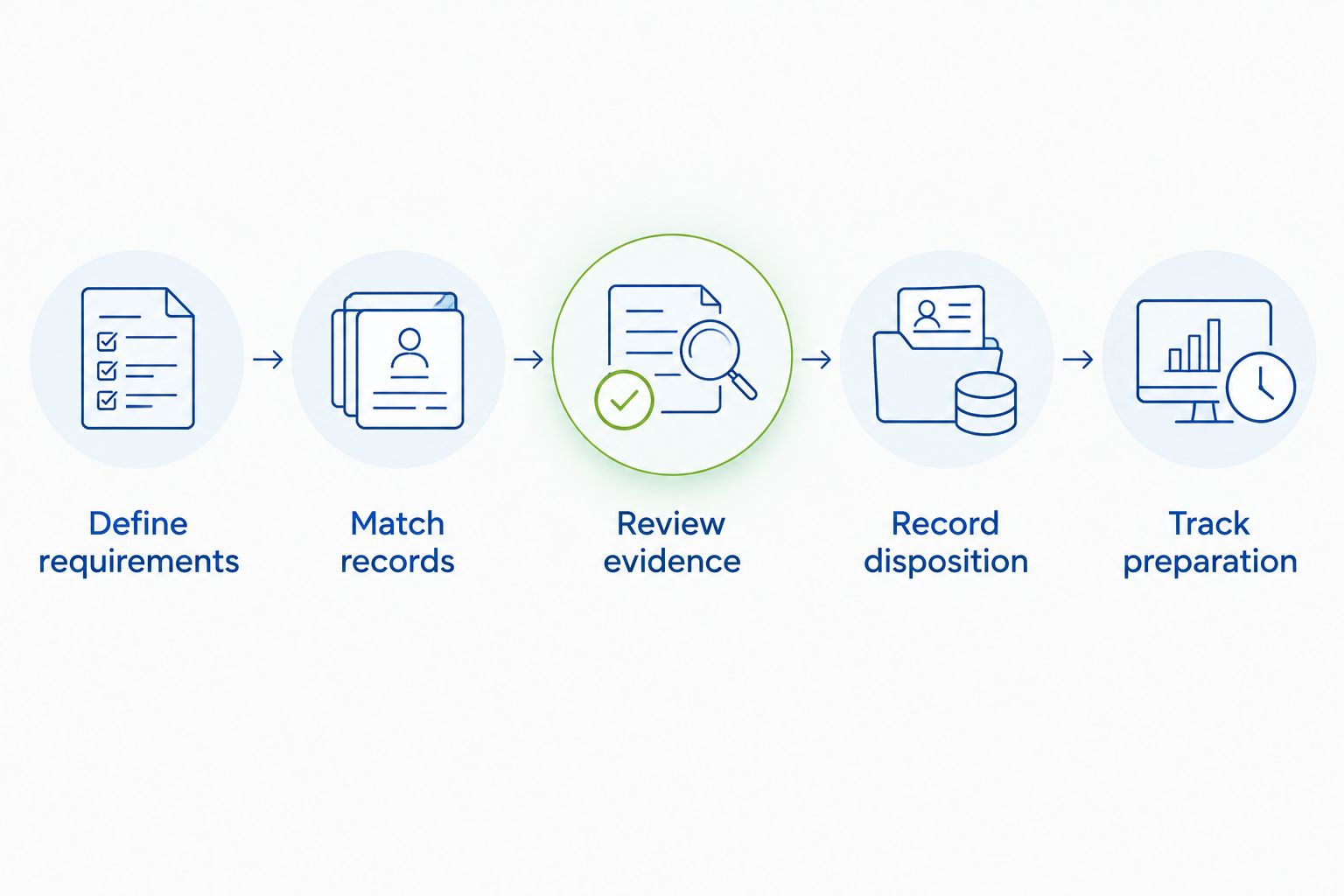
Your laboratory protocol should determine preparation conditions. Do not infer a universal solvent, storage temperature, or usable lifetime from the peptide name alone; formulation and intended application matter.
For experimental planning, consider 3 control conditions where appropriate: an untreated condition, a vehicle-only condition, and a suitable assay reference condition. These address different sources of interpretation error; their exact design belongs in the approved protocol.
Keep purchasing records and experimental records connected. If a result changes after a new lot arrives, traceability gives you a defined starting point for investigating the difference rather than relying on memory.
Choose lot-documented, identity-confirmed epitalon for a routine controlled research protocol. Choose characterized reference material when the task is analytical comparison, and custom-specified material only when your protocol requires a defined departure from the routine specification.
Celonyxlabs states that its research peptides are 99%-pure and third-party tested. For an epitalon sourcing decision, assess the candidate material’s own records against your protocol rather than extending that general statement into unverified product-specific claims.
The strongest 2026 purchasing decision is the one your laboratory can defend from receipt through interpretation. A documented material specification supports that decision; a longevity headline does not.
What is the best epitalon peptide for longevity research?
Lot-documented, identity-confirmed epitalon is the default choice for controlled laboratory research. Choose material whose analytical records and handling requirements match your protocol; this is not a recommendation for human use.
What is the difference between epitalon and Epithalon?
Epitalon and Epithalon are commonly used spelling variants for the same tetrapeptide. Confirm the stated sequence and chemical specification rather than relying on the spelling alone.
Does 99% purity mean epitalon is safe?
No. A 99% purity result describes a measurement under a particular analytical method; it does not establish clinical safety, sterility, or suitability for administration.
Does a certificate of analysis prove epitalon identity?
A certificate supports identity only to the extent that its reported methods and results support that conclusion. Check the lot match, analytical method, and underlying evidence rather than accepting the document title alone.
Is epitalon reference material better than research-grade epitalon?
Epitalon reference material is better suited to a defined analytical comparison, not automatically to every experiment. Routine experimental material and reference material serve different purposes and require different acceptance criteria.
Has epitalon been proven to extend human lifespan?
Epitalon is not established as a proven treatment for extending human lifespan. Laboratory findings and mechanistic hypotheses do not establish a human longevity benefit.
Can I use research epitalon for personal anti-aging treatment?
No. Research-use-only epitalon is laboratory material, not a product for personal treatment or self-administration. Keep procurement and handling within an appropriate research setting.
A matching peptide name is not a matching experimental input. Before switching lots, compare the analytical specification and preparation records—not just the label—so a procurement change does not become an undocumented change to your experiment.
Amino 1 MQ is 5-amino-1-methylquinolinium, a quaternary quinolinium small-molecule inhibitor of NNMT, not a peptide.

Choose full-length ll-37 peptide for baseline antimicrobial research. Compare material specifications, purity evidence, endotoxin testing,

Choose native VIP peptide for neuroinflammation research. Compare reference standards, labeled tracers, and PACAP-38, with
FOR RESEARCH USE ONLY. Products sold by Celonyx Labs are intended exclusively for laboratory and scientific research. They are not intended for human or veterinary use, consumption, diagnosis, treatment, cure, or prevention of any disease. By purchasing from this site, you acknowledge that you understand the intended research purpose of these materials and agree to comply with all applicable laws and regulations.