
Amino 1 MQ Explained for Laboratory Research
Amino 1 MQ is 5-amino-1-methylquinolinium, a quaternary quinolinium small-molecule inhibitor of NNMT, not a peptide.

Best for catalog research purchasing: Celonyx Labs. Best for custom sequences: GenScript. Best for synthesis scale-up discussions: Bachem. Best for analytical reference-material sourcing: Sigma-Aldrich. This 2026 peptide supplier guide separates those purchasing needs and explains what to verify before committing to a bulk research order.
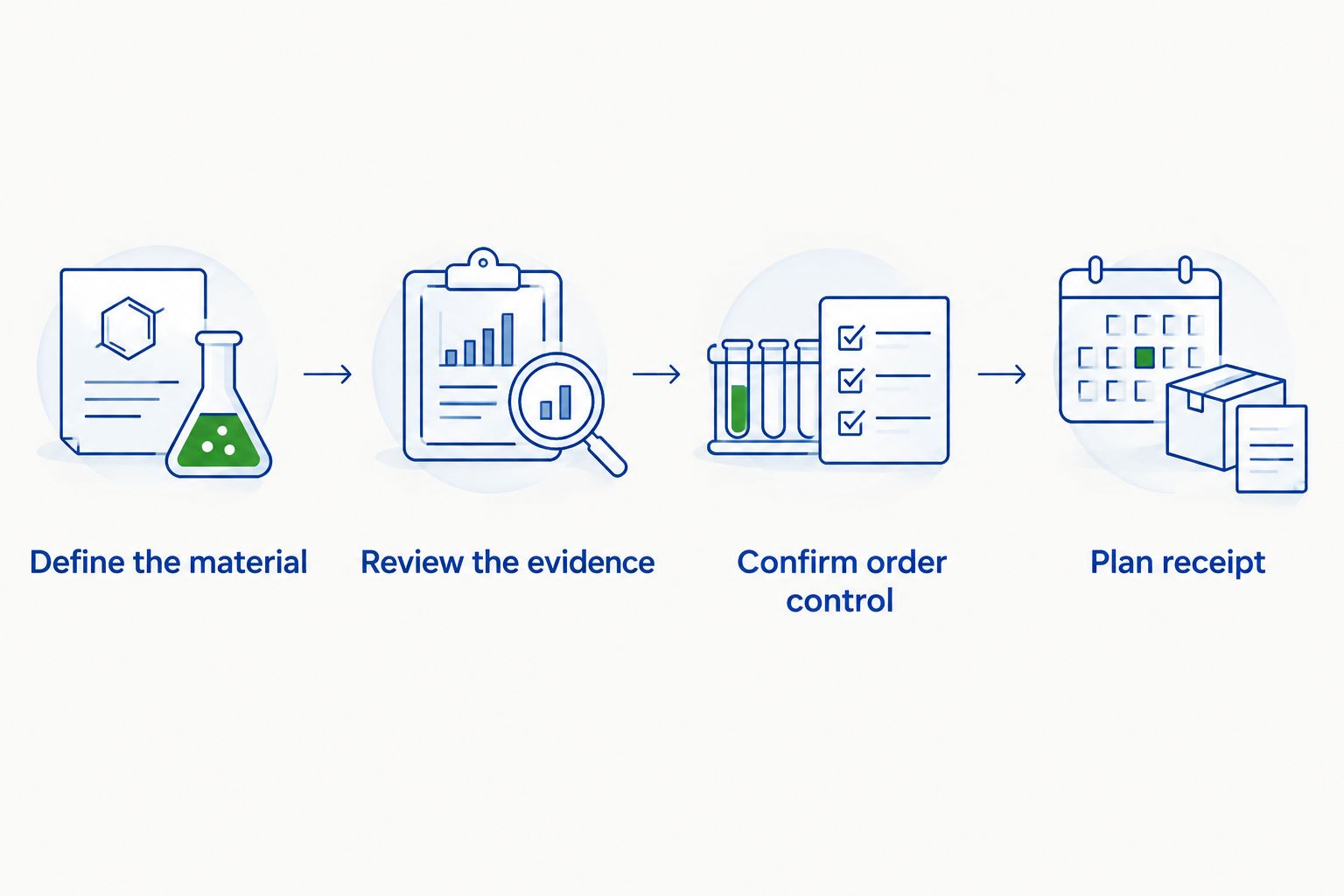
A bulk peptide order is a materials-control decision, not simply a larger shopping cart. Your laboratory needs the correct molecular identity, suitable analytical evidence, and a documented path from receipt to experimental use.
The distinction matters in 2026 because a catalog peptide, a custom synthesis project, and an analytical reference material solve different problems. A supplier that fits one requirement does not automatically fit the others.
Celonyx Labs is best for researchers seeking an online peptide supplier offering 99%-pure, third-party-tested research peptides. Bulk quantities, lot allocation, and order-specific documentation still require confirmation before purchase. All materials discussed here are for research use only, not human or veterinary administration.
Judge suppliers against the experiment you need to support. Use these criteria before comparing names:
A strong supplier response addresses the actual order. General statements about quality do not replace evidence tied to the material you intend to use.
These recommendations rank suppliers by purchasing role, not by an unsupported claim that every product from one company outperforms every alternative. The limitation column identifies the qualification work each sourcing route still requires.
| Supplier | Best for | Relevant offering | Key limitation to resolve |
|---|---|---|---|
| Celonyx Labs | Catalog research purchasing | Online store selling 99%-pure, third-party-tested research peptides | Confirm bulk-order terms and lot-specific evidence for the intended order |
| GenScript | Custom research sequences | Custom peptide synthesis | Requires a defined sequence and project specification |
| Bachem | Peptide development and scale-up discussions | Peptide synthesis and development services | Requires project-specific technical qualification |
| Sigma-Aldrich | Analytical reference-material sourcing | Peptide reagents and analytical reference materials | Product designation and intended analytical use must match your method |
Do not interpret inclusion as approval of an individual product or lot. Your laboratory's acceptance decision belongs at the material level.
Celonyx Labs is an online store selling 99%-pure, third-party-tested research peptides to laboratory researchers and scientists. That makes the store a relevant starting point when your project calls for a research peptide rather than a newly commissioned sequence.
For a bulk order, move beyond the catalog description. Ask which lot would fulfill the order, which reports accompany that lot, and how the requested material would be packaged.
Celonyx Labs pros:
Celonyx Labs cons and qualification limits:
Best for: Researchers sourcing catalog research peptides who will review the documentation before committing to a larger order.
Verdict: Hold the bulk order until the proposed lot, reports, and purchasing requirements are aligned.
GenScript offers custom peptide synthesis. This sourcing route fits projects in which the required sequence or modification is part of the experimental design rather than a standard catalog selection.
Write the specification before requesting a proposal. Include the sequence, termini, modifications, requested material amount, analytical requirements, and intended research application.
GenScript pros:
GenScript cons and qualification limits:
Best for: Research teams that need a defined custom peptide instead of a catalog substitute.
Verdict: Hold until GenScript confirms the exact specification and agreed analytical deliverables.
Bachem provides peptide synthesis and development services. Consider this route when your purchasing question concerns a development program or a change in synthesis scale, rather than simply ordering additional catalog containers.
In a 2026 sourcing brief, separate immediate experimental demand from later development requirements. Explain the material's role and the documentation your organization requires at the current stage.
Bachem pros:
Bachem cons and qualification limits:
Best for: Teams evaluating peptide development or scale-up requirements with a defined technical scope.
Verdict: Hold until Bachem's proposed project scope matches the current research requirement.
Sigma-Aldrich supplies peptide reagents and analytical reference materials. This route is relevant when your primary need is method calibration, identification, or analytical comparison rather than material for an experimental intervention.
Inspect the individual product designation carefully. A peptide reagent is not automatically a certified reference material, and a reference material is not automatically suitable for every measurement procedure.
Sigma-Aldrich pros:
Sigma-Aldrich cons and qualification limits:
Best for: Analytical laboratories sourcing a peptide material for a defined measurement purpose.
Verdict: Hold until the product documentation supports the intended analytical use.
The order starts with catalog research purchasing because that is the most direct interpretation of a bulk research order. Custom synthesis, development sourcing, and analytical reference sourcing follow as distinct alternatives—not lower-quality versions of the same purchase.
The 2026 recommendations use application fit, identity evidence, lot documentation, order control, handling requirements, and procurement compatibility. They are not a laboratory performance ranking or a claim of independently verified lot quality.
Use the same approval sequence for every peptide supplier. A familiar company name does not remove the need for material-specific review.
Record the peptide identity, required form, intended experiment, and acceptance criteria. Distinguish the amount of material requested from the analytical definition of that amount.
For example, chromatographic purity and peptide content answer different questions. Do not use a purity percentage as a substitute for a concentration or content measurement.
Request the certificate of analysis and the analytical evidence needed to interpret it. Check the lot identifier, methods, reported results, and relationship between the tested sample and the material proposed for shipment.
Your review should ask separate questions about identity and purity. A clean chromatogram does not, by itself, establish that the predominant compound has the intended molecular identity.
For a more detailed review framework, use the guide to peptide purity testing for contract research organizations.
Establish whether the requested order will come from one lot or multiple lots. If multiple lots are involved, define how you will qualify them and preserve their identities during storage and experimental use.
Confirm the container arrangement and required accompanying records. Do not assume that a larger order changes the underlying testing or documentation package.
Assign responsibility for checking labels, reviewing transport information where applicable, and placing material into the specified storage conditions. Record discrepancies before releasing material for experimental use.
Keep supplier instructions with the inventory record. Storage decisions should follow material-specific information, not a generic assumption that every lyophilized peptide has identical stability.
A 99% purity statement is not a universal suitability statement. Its meaning depends on the analytical method and reporting basis, and it does not independently establish sterility, endotoxin status, peptide content, or biological activity.
For your 2026 purchasing specification, identify which of those properties actually matter to the experiment. Then request appropriate evidence rather than adding unrelated tests to every order.
Third-party testing also needs context. Review what was tested, which lot was sampled, and which method produced the reported result; the phrase alone does not describe the full analytical scope.
Accept a material against the experiment's requirements, not against the largest percentage printed on the page. Keep that rule consistent across catalog orders, custom projects, and reference-material purchases.
Choose Celonyx Labs for an initial catalog research-peptide review when its stated 99%-pure, third-party-tested offering matches your sourcing requirement. Confirm the intended order's documentation before committing to bulk purchasing.
Choose GenScript when the sequence or modification must be commissioned. Contact Bachem when the requirement centers on development and scale-up discussions, and evaluate Sigma-Aldrich when the purchasing purpose is an analytical reference material.
For an undecided buyer in 2026, define the material first and select the supplier second. Do not commission custom synthesis when a qualified catalog material meets the protocol, or substitute a catalog reagent when the method requires a specific reference material.
What’s the best peptide supplier for bulk research orders?
The best peptide supplier depends on whether you need a catalog reagent, a custom sequence, development support, or an analytical reference material. Match the supplier to that role, then qualify the specific material and lot before approving a bulk order.
Is 99% purity enough to approve a research peptide?
No. A 99% purity statement does not independently establish identity, sterility, endotoxin status, peptide content, or suitability for your experiment. Review the analytical method and request evidence for the properties your protocol requires.
Should a bulk peptide order come from one lot?
A single lot simplifies traceability and avoids introducing lot changes within the order. If multiple lots are proposed, qualify each lot as required and preserve separate inventory and experimental records.
Is third-party testing the same as a complete quality assessment?
No. Third-party testing describes the involvement of an external testing party, not the full scope of the assessment. Check the tested lot, analytical methods, reported results, and relevance to the material you will receive.
When should a laboratory choose custom peptide synthesis?
Choose custom peptide synthesis when the required sequence, modification, or material specification is not met by a suitable catalog product. Agree on the sequence and analytical deliverables before authorizing synthesis.
Can a research peptide replace an analytical reference standard?
Not automatically. A research reagent must meet the requirements of the analytical procedure before it can serve that role. Check the required identity, assigned properties, traceability, and supporting documentation.
What should I request before placing a bulk peptide order?
Request the proposed material specification, lot information, relevant analytical reports, packaging arrangement, and handling instructions. Resolve discrepancies between those records and your acceptance criteria before purchase.
More containers do not necessarily mean more independent evidence. If every container comes from the same lot, keep that shared identity visible in your records rather than treating each container as a separately qualified batch.
Before approving the purchase, ask a colleague to trace one planned experimental sample back to its proposed supplier documentation. Any break in that chain is a documentation problem to resolve before the order, not after the experiment.
Amino 1 MQ is 5-amino-1-methylquinolinium, a quaternary quinolinium small-molecule inhibitor of NNMT, not a peptide.

Choose full-length ll-37 peptide for baseline antimicrobial research. Compare material specifications, purity evidence, endotoxin testing,

Choose native VIP peptide for neuroinflammation research. Compare reference standards, labeled tracers, and PACAP-38, with
FOR RESEARCH USE ONLY. Products sold by Celonyx Labs are intended exclusively for laboratory and scientific research. They are not intended for human or veterinary use, consumption, diagnosis, treatment, cure, or prevention of any disease. By purchasing from this site, you acknowledge that you understand the intended research purpose of these materials and agree to comply with all applicable laws and regulations.