

Is bacteriostatic water the same as sterile water? No 2026
Is bacteriostatic water the same as sterile water? No. Compare preservatives, vial handling and peptide
The most common bad advice about a GLP-1 peptide is simple: if the label says “research grade,” it's probably fine. It isn't. In this area, the biology is complex, the market is noisy, and poor sourcing can ruin an otherwise careful study before the first plate read or animal dose.
That mismatch is the central paradox. GLP-1 biology is among the most clinically validated peptide pathways in modern metabolic medicine, yet the surrounding grey market still rewards vague documentation, recycled certificates, and materials that shouldn't get past procurement. If you're training a new team member, this is the point to make early: experimental rigor starts at purchasing, not at assay setup.
Interest in GLP-1 compounds didn't grow gradually. It accelerated hard enough to change how researchers, CROs, and purchasing teams think about peptide procurement. In the United States, initiation of GLP-1 receptor agonist treatment among patients without diabetes but with overweight or obesity rose from about 21,000 in 2019 to more than 174,000 in 2023, which is more than a 700% increase over four years according to BMJ reporting on GLP-1 adoption trends.
That growth matters in the lab because market demand changes supply behavior. When attention spikes, legitimate manufacturers get busier, but opportunistic sellers also appear. They use familiar product names, generic chromatograms, and broad “for research use only” language to imply standards they haven't actually met.
A GLP-1 peptide sits at the intersection of metabolic signaling, receptor pharmacology, and translational medicine. That makes it attractive for in vitro receptor work, beta-cell functional assays, appetite and feeding studies, and obesity models. It also makes it easy for labs to assume that because the pathway is well established, the input material is less of a concern.
That assumption is expensive. If identity is wrong, your receptor occupancy work is compromised. If purity is mediocre, low-level contaminants can distort signaling. If storage or shipping conditions are undocumented, you may be testing degraded material and calling the noise a biological effect.
Practical rule: Treat peptide sourcing as part of study design, not as an administrative task.
The dangerous part isn't only fraud in the obvious sense. The harder problem is partial legitimacy. A vendor may provide a peptide that looks plausible on paper, dissolves cleanly, and produces some biological activity, yet still fails basic standards for reproducible science. That's enough to generate misleading pilot data, wasted animal work, and false confidence during assay optimization.
Researchers new to this field often focus on mechanism first. They should, but only after they've learned a stricter lesson: with GLP-1 work, the supply chain is part of the experiment.
At the cellular level, a GLP-1 peptide acts less like an always-on trigger and more like a smart dimmer switch. It amplifies insulin secretion when glucose is present at the right level. That glucose dependence is a major reason the pathway became so important in metabolic research.
A clear visual helps before going deeper:
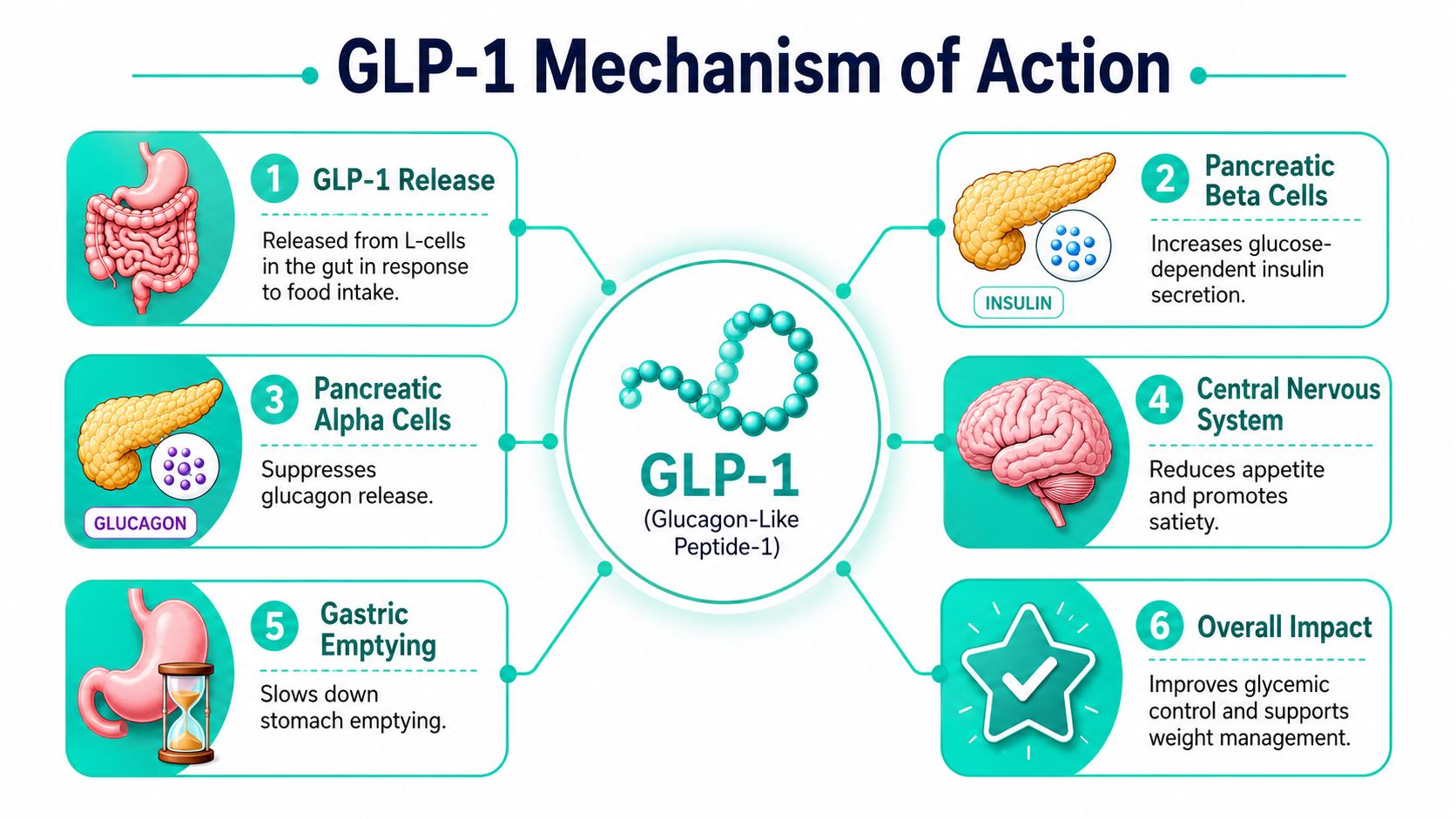
GLP-1 signaling starts with receptor engagement. In pancreatic beta-cell models, receptor activation increases intracellular cAMP and engages downstream signaling machinery, including the PKA branch that supports glucose-dependent insulin secretion. For a graduate student, the key point is practical: if your assay is intended to characterize canonical GLP-1 receptor activity, you need the right ligand and a readout that reflects that pathway.
The primary bioactive form is GLP-1(7–36)amide. According to the PubChem summary for Glucagon-Like Peptide-1, this truncated form is 1,000-fold more potent than its precursor in activating the cAMP/PKA signaling cascade that drives glucose-dependent insulin secretion. That's why it remains the benchmark ligand for in vitro incretin characterization.
This point gets missed when labs buy “GLP-1” without checking sequence details. A naming shortcut can hide a biologically important difference. If the peptide sequence or terminal chemistry isn't what the assay expects, you may still see signal, but you won't be measuring the same pharmacology.
For a quick overview of the broader physiology, this short explainer is useful:
At the bench, mechanism should drive assay selection.
If your assay can't distinguish receptor biology from peptide quality effects, it isn't ready for interpretation.
The broader physiological effects matter too. GLP-1 signaling is associated with insulin secretion, glucagon suppression, delayed gastric emptying, and central satiety effects. In translational studies, those systems-level outputs often tempt teams to overinterpret a single in vitro result. Don't. A cAMP signal in a cell line is not the same thing as an integrated metabolic response in vivo.
Keep the hierarchy straight. Sequence and identity determine whether you have the correct ligand. Receptor engagement determines whether the pathway is activated. Experimental context determines whether the result means anything useful.
Not every GLP-1 peptide in research is trying to answer the same question. Some are used to define core receptor biology. Others are engineered to alter duration, exposure profile, or receptor selectivity. If you compare them loosely, you end up comparing formulation strategy instead of pharmacology.
The cleanest way to categorize these compounds is by target receptor profile and structural modification strategy.
One group stays close to the canonical GLP-1 receptor agonist model. These compounds are useful when the goal is receptor-specific signaling, beta-cell response, or benchmarking against established incretin pharmacology. Another group adds modifications that extend apparent persistence in biological systems. Those are often better suited for translational or sustained-exposure models. A third group broadens receptor targeting, which changes the biological question entirely.
That's where many new researchers get tripped up. A dual agonist is more than a stronger GLP-1 peptide. It's a different pharmacologic tool.
For a broader overview of how these designs have evolved, this background piece on single-, dual-, and triple-agonist development is worth reviewing.
| Peptide | Target Receptor(s) | Key Structural Modification | Primary Research Application |
|---|---|---|---|
| GLP-1(7–36)amide | GLP-1R | Native bioactive truncated form | Benchmark ligand for receptor and incretin signaling assays |
| Liraglutide | GLP-1R | Modification used to extend functional persistence | Studies of prolonged GLP-1R agonism in metabolic systems |
| Semaglutide | GLP-1R | Structural changes designed for extended activity and practical dosing | Long-exposure studies, translational metabolic models |
| Tirzepatide | GLP-1R and GIP receptor | Dual-agonist design | Comparative studies of single- versus multi-incretin signaling |
A few practical distinctions matter more than brand familiarity.
Don't select a variant because it's the most discussed compound in the literature or in clinical news. Select it because its receptor behavior matches your endpoint.
If the readout is receptor activation, use the most interpretable ligand. If the readout is longer-horizon metabolic effect, a modified analog may fit better. If the study asks whether combined incretin pathways change response patterns, a dual agonist belongs in the design from the start, not as an afterthought control.
A well-chosen peptide simplifies interpretation. The wrong one creates elegant-looking ambiguity.
For reproducible GLP-1 work, purity is not a premium feature. It's a minimum requirement. If your peptide lot contains enough impurity to alter receptor binding kinetics or downstream signaling, every later effort to standardize media, timing, and controls becomes less useful.
This is the point where many labs still cut corners. They accept a Certificate of Analysis because one exists, not because it proves what needs proving.
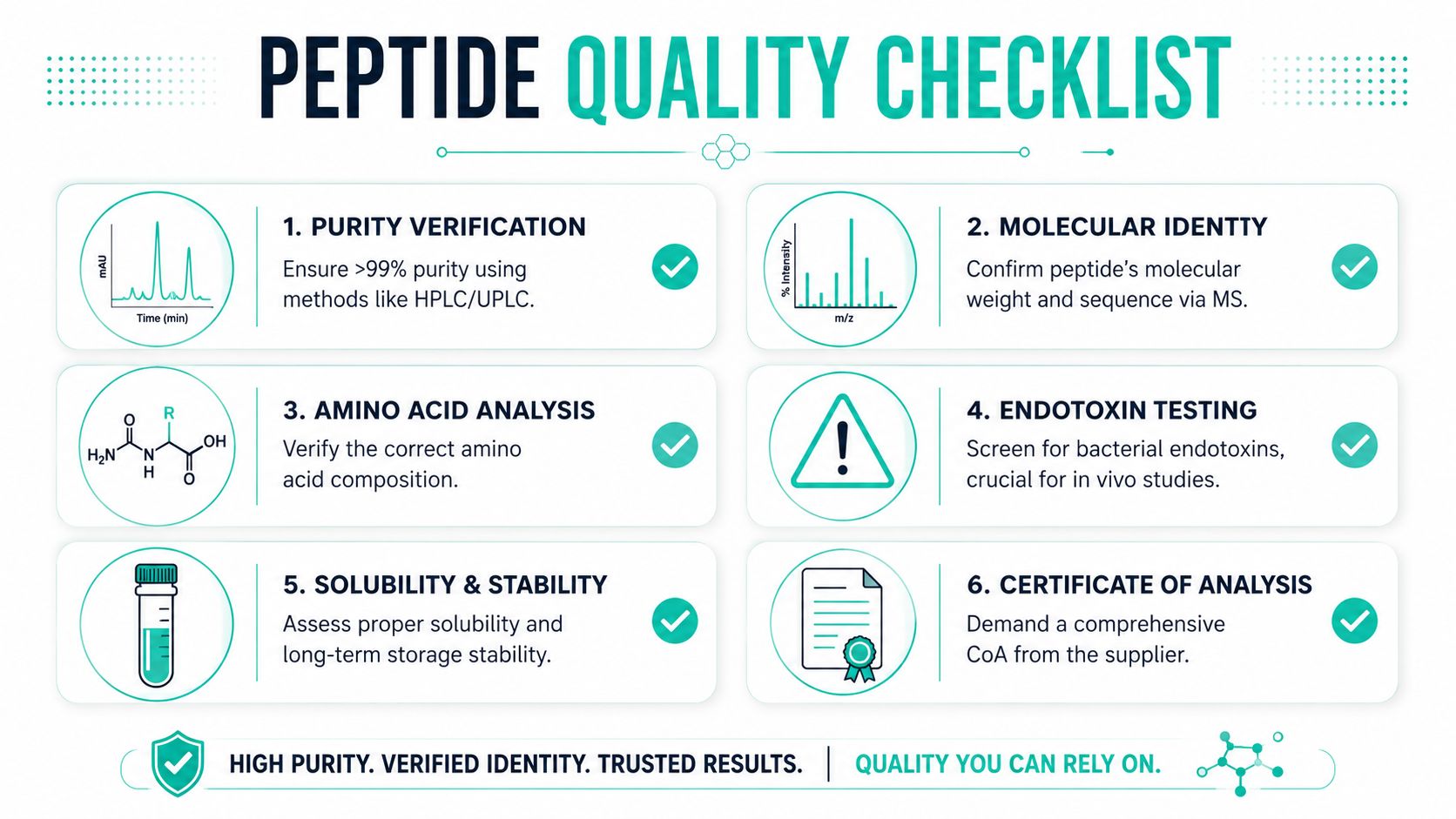
The benchmark to remember is straightforward. For research-grade GLP-1 peptides, greater than 99% purity verified by HPLC is the industry standard, and storage at –20°C in lyophilized form is required to limit degradation, as described in the technical product reference for GLP-1 peptide handling and purity. That same reference notes that impurities below 1% can alter receptor binding kinetics and signaling outcomes.
A useful CoA needs to answer two separate questions: How pure is this lot? and Is it the peptide claimed?
For purity, start with chromatography.
For identity, chromatography is not enough. You also need mass confirmation.
If you want a strong technical primer on how impurities are profiled in practice, this guide to peptide impurity profiling methods covers the analytical logic well.
Some warning signs are obvious. Others are subtle enough that inexperienced teams miss them.
Bench advice: If a supplier can't provide lot-specific analytical data before purchase approval, stop there.
Watch for these issues:
The core mistake is assuming a high-purity claim equals high-purity material. It doesn't. Documentation has to support the claim, and the methods used have to fit peptide analysis, not just look scientific at a glance.
A clean purchasing workflow is usually simple. Procurement asks for lot-specific HPLC and MS data. The receiving scientist checks identity, purity, and storage requirements before accessioning the material. Anything weaker than that invites avoidable noise into the study.
A good peptide can become a bad reagent through ordinary bench habits. Most handling failures are not dramatic. They're cumulative. Repeated warming, careless solvent choice, and unnecessary freeze-thaw cycles subtly shift the material away from what the CoA described.
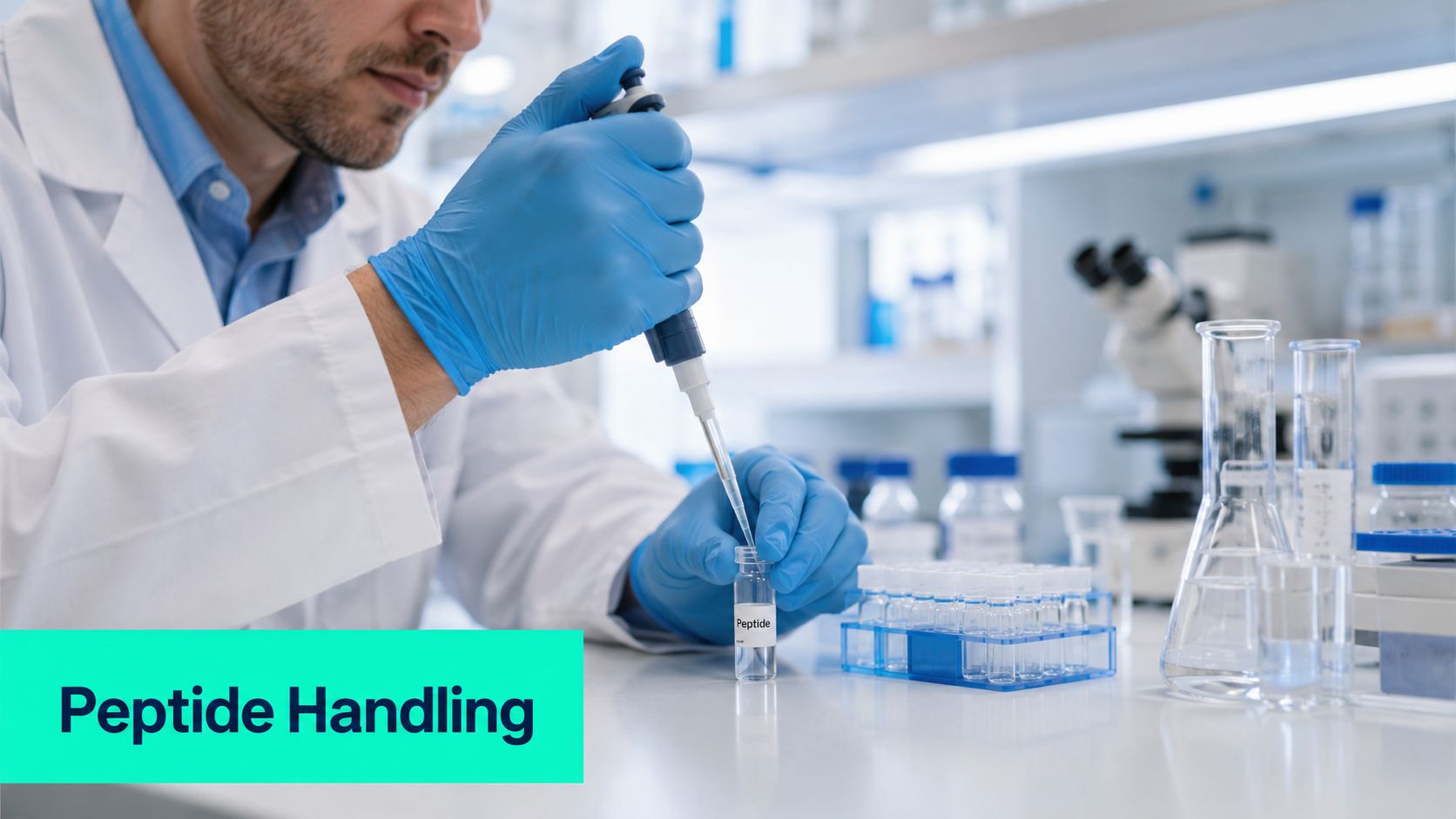
Start with the lyophilized vial and its paperwork. Confirm the lot number, sequence designation, and storage recommendation before opening anything. Then decide the final use concentration first. That lets you reconstitute once, correctly, instead of adjusting the stock repeatedly.
A reliable workflow looks like this:
Equilibrate briefly and carefully
Let the vial come to a workable handling condition while still protected from unnecessary light and ambient exposure.
Choose the solvent based on assay compatibility
Use a sterile solvent appropriate for the peptide and downstream system. Don't pick a solvent because it worked for a different peptide class.
Reconstitute gently
Add solvent down the vial wall. Swirl or invert gently if needed. Avoid aggressive vortexing unless you know the peptide tolerates it well in that formulation.
Prepare single-use or low-use aliquots
Small aliquots prevent repeated freeze-thaw stress and reduce contamination risk from frequent reopening.
Store the master material correctly
Keep unused lyophilized material and appropriate aliquots under validated storage conditions consistent with the supplier's technical guidance.
Most preventable problems fall into a few categories.
The peptide you test should be the peptide documented on receipt, not a bench-aged approximation of it.
In shared labs, I recommend one person own the master stock record. Not because others can't handle the reagent, but because consistency collapses fast when everyone assumes someone else documented the details.
Strong GLP-1 studies don't start with “What dose should we try?” They start with “What biological question can this model answer?” That sounds basic, but it prevents a lot of waste.
For in vitro work, align the model with the pathway. If the endpoint is receptor signaling, use a system that can resolve receptor-driven cAMP activity cleanly. If the endpoint is glucose-dependent insulin secretion, build glucose conditions into the assay instead of treating them as background. For analog comparison, hold peptide preparation and exposure timing constant or your comparison won't mean much.
For in vivo work, the common error is over-attributing broad metabolic changes to the peptide alone. GLP-1 biology affects feeding behavior, gastric emptying, and appetite. Those shifts can alter body composition, circulating nutrients, and downstream readouts that people mistakenly treat as direct pharmacology.
A useful design checklist includes:
One of the most underappreciated problems in GLP-1 research is the nutrition gap. A review cited in PubMed on nutritional considerations during GLP-1 receptor agonist use found that only about 5% of 41 studies assessed dietary changes. The same source notes that early satiety can reduce intake of essential nutrients such as iron and vitamin B12, yet no formal nutritional screening protocols exist.
That matters directly for experimental interpretation.
If an animal or human subject eats less, changes meal structure, or shifts micronutrient intake, then outcomes like body composition, energy balance, behavior, or even some biochemical markers may partly reflect altered nutrition rather than a clean receptor-mediated effect. In other words, what looks like drug efficacy can contain an unmeasured diet signal.
A feeding effect is still a biological effect, but it isn't the same thing as a direct cellular mechanism.
Practical responses are straightforward even when the field hasn't standardized them.
The best GLP-1 experiments acknowledge that appetite modulation is not experimental noise. It's part of the biology, and if you fail to measure it, it becomes a confounder.
By the time a lab reaches purchasing, most of the scientific questions are already settled. The remaining question is whether procurement will protect or undermine the work. In the current environment, that's not a minor administrative detail.
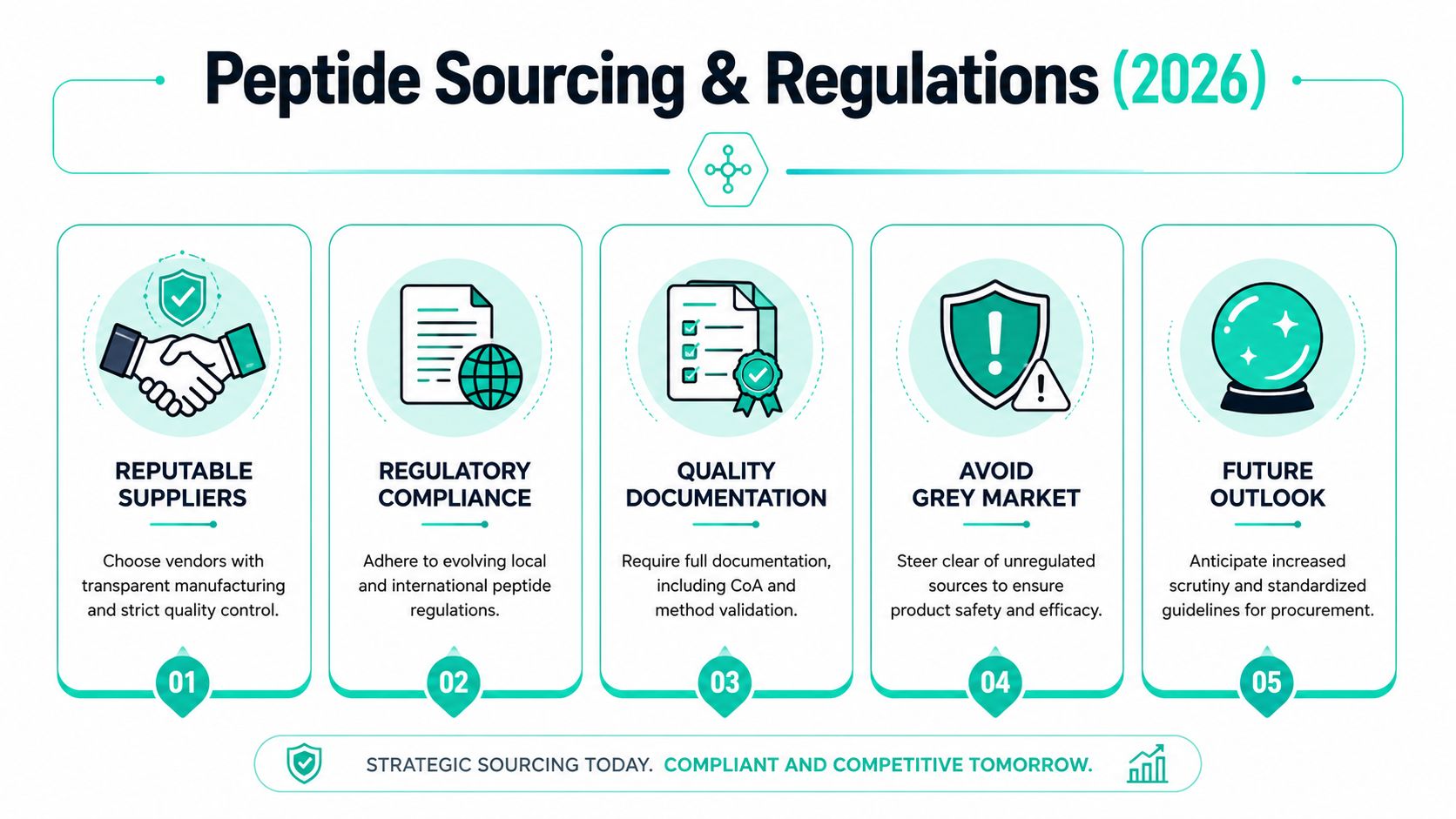
Independent testing of unverified research peptides has found purity as low as 5% to 75%, along with contamination by heavy metals. The same analysis also describes increased regulatory pressure tied to recent FDA action against compounding activity and related enforcement risk for non-compliant sourcing, as discussed in this report on how GLP-1s disrupted healthcare distribution.
Good supplier review is not complicated, but it has to be disciplined.
Ask for batch-specific analytical data
HPLC or UHPLC for purity, mass spectrometry for identity, and documentation that matches the exact lot being purchased.
Check operational transparency
A serious supplier publishes policies, contact details, and a clear purchasing workflow. Hidden operations usually mean hidden quality gaps.
Review storage and shipping standards
The vendor should state how the peptide is packaged, stored, and protected in transit.
Look for consistency, not just claims
A polished product page means nothing if the technical documents are generic or incomplete.
A practical procurement reference for this process is this guide to sourcing GMP-adjacent research peptides.
A strong lab doesn't buy from the cheapest listing that uses the right peptide name. It buys from suppliers that make verification easy. Purchasing, QA review, receiving, and bench handling should form one chain of custody.
That is the fundamental answer to the quality and regulatory paradox. The science around GLP-1 peptides is mature enough to support serious work. The market around them still contains enough low-quality material to punish labs that trust labels more than documentation. The fix isn't complicated. Verify identity. Verify purity. Verify handling requirements. Then treat every lot like a distinct experimental input.
If your team needs research peptides backed by published operational policies, stated 99% purity, and independent third-party testing, Celonyx Labs is worth evaluating as a procurement option. For labs that care about lot documentation, responsive support, and a cleaner path from ordering to bench work, that kind of transparency can reduce avoidable risk before the study even starts.
Is bacteriostatic water the same as sterile water? No. Compare preservatives, vial handling and peptide

How do you know if a peptide vial has gone bad? Quarantine changes, check storage

Can too much bacteriostatic water ruin a peptide vial? Yes, if it overfills the vial
FOR RESEARCH USE ONLY. Products sold by Celonyx Labs are intended exclusively for laboratory and scientific research. They are not intended for human or veterinary use, consumption, diagnosis, treatment, cure, or prevention of any disease. By purchasing from this site, you acknowledge that you understand the intended research purpose of these materials and agree to comply with all applicable laws and regulations.