Is bacteriostatic water the same as sterile water? No 2026
Is bacteriostatic water the same as sterile water? No. Compare preservatives, vial handling and peptide
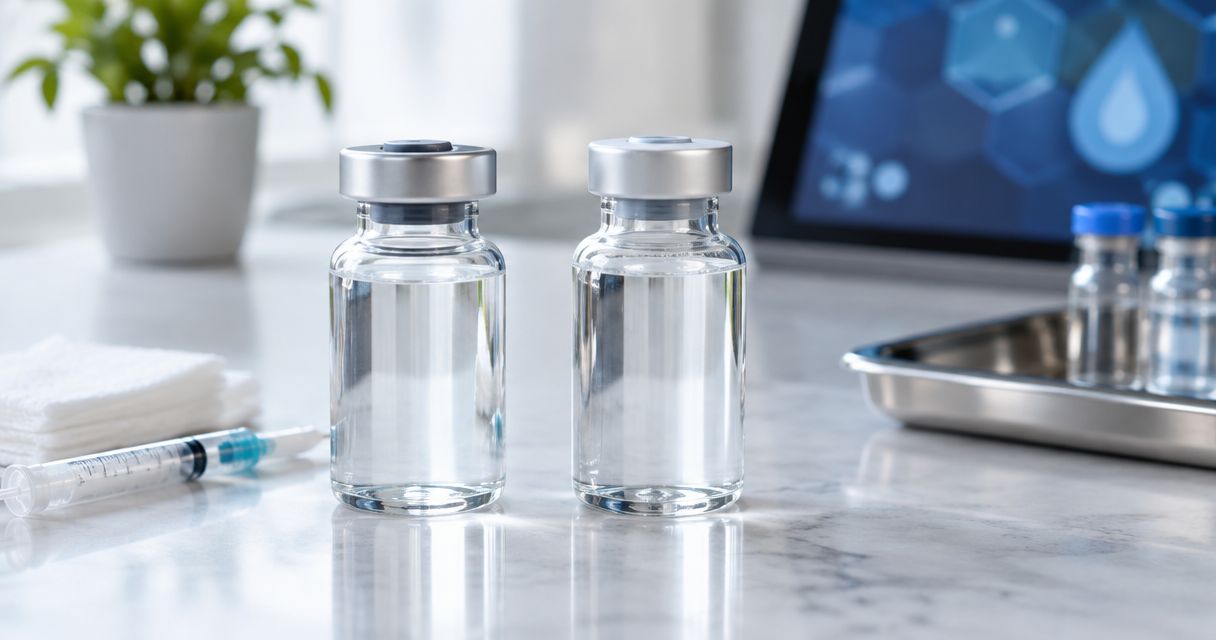
No. In 2026, bacteriostatic water and sterile water are not interchangeable: bacteriostatic water for injection commonly contains 0.9% benzyl alcohol as a preservative, while sterile water for injection contains no added preservative. Both are supplied sterile, but the preservative difference affects vial handling and whether the diluent fits a research protocol. Check the exact container label and assay requirements before reconstituting a research peptide.
A sterile label describes the contents as supplied; it does not make every subsequent handling step sterile. A bacteriostatic preservative inhibits the growth of certain bacteria after entry into a vial, but it cannot reverse contamination or replace aseptic technique. If you are deciding whether a peptide protocol permits a substitution, start with the specified diluent, not the shared word water. The guide to reconstituting peptides without bacteriostatic water addresses that decision in more detail.
The distinction matters in 2026 because a preservative can become an experimental variable. A cell-based assay, analytical method or stability study needs the diluent recorded alongside the peptide concentration and handling conditions. Celonyx Labs sells 99%-pure, third-party-tested research peptides for laboratory researchers; those quality signals do not establish that either water type suits a particular experiment.
No. Both can be sterile when supplied, but only bacteriostatic water for injection contains an antimicrobial preservative. The comparison below refers specifically to products labeled Bacteriostatic Water for Injection and Sterile Water for Injection, not to every liquid a supplier describes as sterile.
| Question | Bacteriostatic water for injection | Sterile water for injection |
|---|---|---|
| What is added? | Commonly 0.9% benzyl alcohol as a preservative; confirm the label. | No added antimicrobial preservative. |
| What does the label support? | Repeat vial entry only when the specific container is labeled and handled for that purpose. | Single-use handling; without a preservative, do not treat an opened container as multidose. |
| What is the main assay concern? | Benzyl alcohol can affect methods sensitive to preservatives. | Lack of preservative changes the handling plan after opening. |
| Are they automatically interchangeable? | No. Follow the protocol and verify peptide and assay compatibility. | No. A preservative-free protocol does not authorize a preserved substitute. |
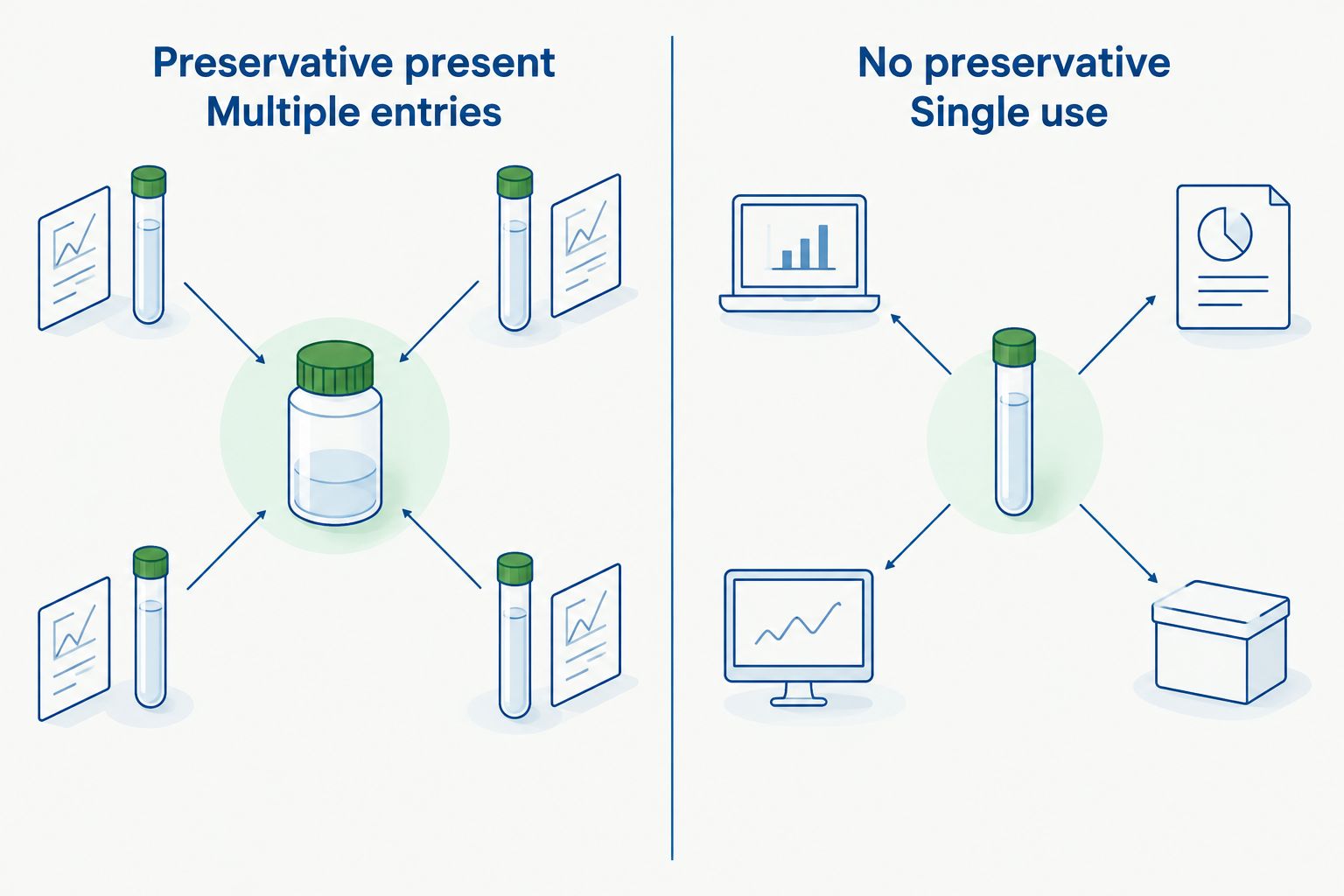
The name bacteriostatic describes the preservative's purpose; it does not mean that an opened vial remains sterile regardless of how it is handled. Likewise, sterile describes a supplied condition, not permission to reuse a preservative-free container. In 2026, the practical question is not which term sounds safer. It is which labeled formulation matches your method and handling plan.
Bacteriostatic water for injection commonly contains 0.9% benzyl alcohol. That ingredient distinguishes it from preservative-free sterile water for injection and is the first thing to check when comparing the two. Read the actual label: the word bacteriostatic alone is not a substitute for the listed formulation, container instructions and expiry information.
Best for: A laboratory protocol that explicitly calls for a preserved diluent and permits the specific labeled container's intended handling. The advantage is preservative-containing formulation when repeat access is part of the approved workflow. The limitation is just as important: benzyl alcohol is another reagent in the experiment. If it can interfere with an assay, the fact that the water was supplied sterile does not solve the compatibility problem.
Do not interpret repeat access as unlimited access. Use aseptic handling, follow the container's directions and record when it was opened. Published sterile-compounding guidance often uses a 28-day default for multidose containers unless the manufacturer specifies otherwise; that default does not replace a product label, a research protocol or an institution's procedures. The answer to how long bacteriostatic water lasts once opened begins with those specific instructions, not with a universal calendar rule.
Sterile water for injection is supplied without an added antimicrobial preservative. That makes it a distinct choice when a protocol requires a preservative-free diluent. It does not mean the container can be entered repeatedly or that the water remains suitable after storage in an opened vial.
Best for: A research method that specifies preservative-free sterile water and has a handling plan consistent with the container label. Its advantage is the absence of an added preservative as an assay variable. Its limitation is that the liquid has no antimicrobial preservative to inhibit bacterial growth after contamination. Treat an opened single-use container according to its label and laboratory procedures rather than saving it for later work.
The word sterile also needs precision in procurement. Sterile water for injection is a labeled formulation. Filtered water, deionized water and water described informally as laboratory-grade do not become equivalent because they look clear or are used in a clean workspace. Match the exact specification in the method; do not substitute on appearance or a broad product category.
A lab can have both water types on hand and still need to specify one for each experiment. In 2026, make that decision from the written method and product labels, then document the choice. These factors change the answer:
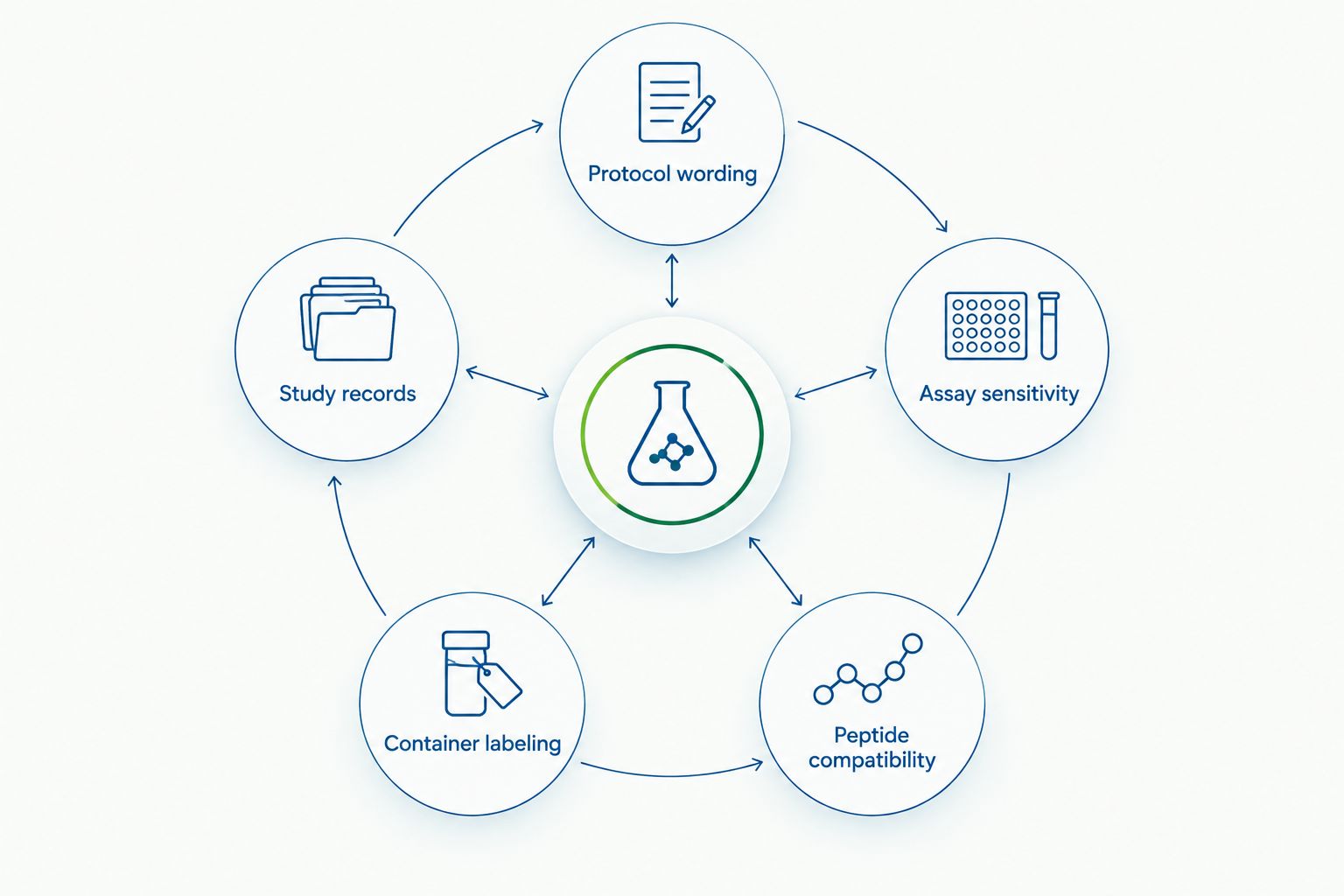
Celonyx Labs is best suited to researchers sourcing 99%-pure, third-party-tested peptides; those attributes do not replace diluent compatibility checks. Treat peptide purity documentation and reconstitution instructions as separate parts of the research record. Neither supplies missing evidence that a preservative is acceptable in your assay.
Use the diluent named in the peptide documentation and research protocol. If either source leaves the choice open, resolve the preservative and container questions before preparing the sample. This is a protocol decision, not a preference for one label over another.
For Celonyx Labs research peptides, the store's stated 99% purity and third-party testing address peptide quality, not which water a laboratory should select. A quality-assured peptide can still be prepared with a diluent that conflicts with an assay. In 2026, the next move is to confirm the method before opening either vial. These materials are for research use only, not human use.
No, not without checking and, where necessary, revising the protocol. Preservative-free sterile water changes the formulation and the handling assumptions behind a method that specifies bacteriostatic water. Confirm both points before making the substitution; do not use an opened single-use container as though it were a multidose vial.
No preservative guarantees sterility after opening. Benzyl alcohol inhibits the growth of certain bacteria, but aseptic technique and the container's labeled directions still govern handling. A puncture or handling error can compromise the preparation; the name bacteriostatic does not cancel that risk.
Yes, when the validated method requires a preservative-free diluent. Sterile water for injection removes added benzyl alcohol as a variable, but it does not answer every compatibility question. Check the required solvent and preparation conditions before treating it as the right choice for a specific peptide.
Is bacteriostatic water the same as sterile water?
No. Bacteriostatic water for injection commonly contains 0.9% benzyl alcohol, while sterile water for injection has no added antimicrobial preservative. Both are supplied sterile, but their formulations and handling instructions differ.
What preservative is in bacteriostatic water?
Bacteriostatic water for injection commonly contains 0.9% benzyl alcohol. Check the specific container label before using it in a research protocol.
Can I substitute sterile water for bacteriostatic water when reconstituting a peptide?
Not automatically. Confirm that the peptide instructions and research method permit a preservative-free diluent, then follow the sterile water container’s handling directions.
Can I substitute bacteriostatic water for sterile water?
Not when the method requires a preservative-free diluent without a validated change. Benzyl alcohol can become an experimental variable, so confirm assay compatibility first.
Does bacteriostatic water prevent contamination after opening?
No. Its preservative inhibits the growth of certain bacteria but does not guarantee sterility after contamination. Aseptic handling and the container label still apply.
Is sterile water for injection the same as deionized water?
No. Sterile water for injection is a labeled sterile formulation; deionized water describes water treated to remove ions. Do not substitute one for the other unless the method permits it.
Which water should a peptide research lab choose in 2026?
Choose the diluent specified by the peptide documentation and validated research method. Check preservative content, assay compatibility and container instructions before preparation.
The distinction is easy to miss in a research record: writing sterile water does not tell a later reviewer whether benzyl alcohol was present. Record the full labeled formulation. For Celonyx Labs peptide research in 2026, that small detail keeps a diluent choice from becoming an unexplained difference between experiments.
Is bacteriostatic water the same as sterile water? No. Compare preservatives, vial handling and peptide
How do you know if a peptide vial has gone bad? Quarantine changes, check storage
Can too much bacteriostatic water ruin a peptide vial? Yes, if it overfills the vial
FOR RESEARCH USE ONLY. Products sold by Celonyx Labs are intended exclusively for laboratory and scientific research. They are not intended for human or veterinary use, consumption, diagnosis, treatment, cure, or prevention of any disease. By purchasing from this site, you acknowledge that you understand the intended research purpose of these materials and agree to comply with all applicable laws and regulations.