

5 Amino Acid Peptides: A Practical Lab Guide
A five-residue sequence can look simple on paper, but what exactly does “5 amino acid”
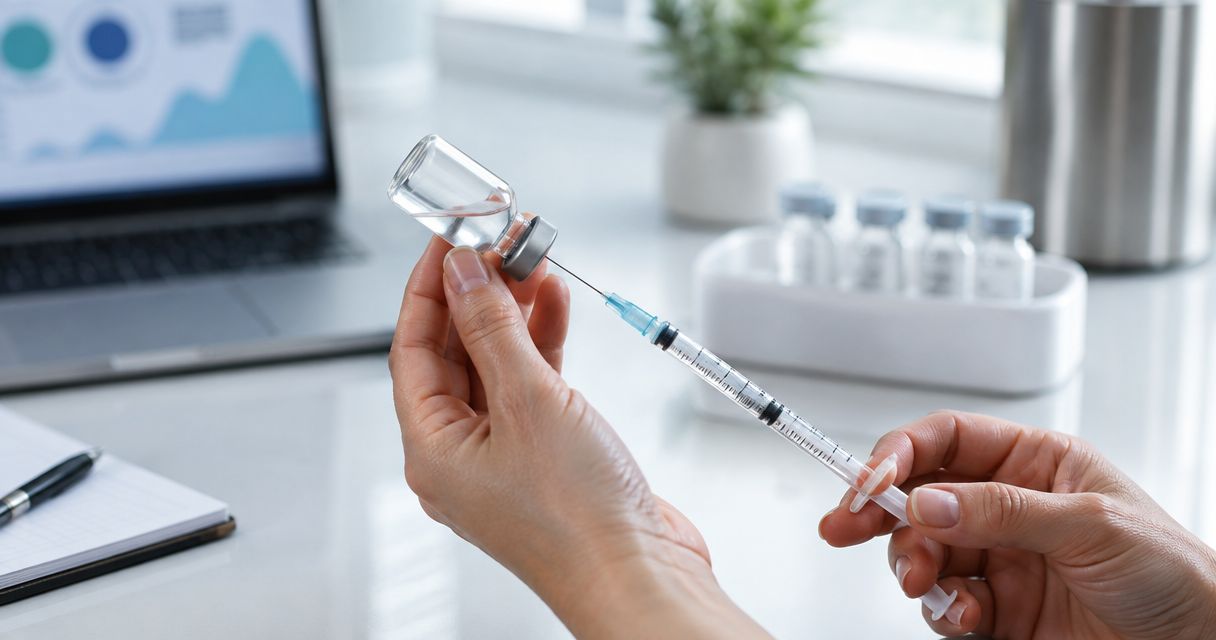
Peptides have no universal validated holding time in a syringe: use the limit established for the exact peptide, formulation, syringe, and laboratory procedure. Without syringe-specific stability and handling evidence, prepare the solution close to the experiment rather than assign an overnight or multiday storage window. This 2026 guide addresses laboratory handling only; research peptides are not for human administration.
A peptide solution should remain in a syringe only within a holding period supported by evidence for that exact preparation. A storage instruction for lyophilized powder, a reconstituted vial, or a different formulation does not establish that period.
Start with the supplier's handling documentation and your laboratory's approved procedure. If those documents address vial storage but not syringe storage, treat syringe holding as a separate validation question. The guide to reconstituted peptide storage in the fridge covers the related vial-storage question, not a substitute syringe limit.
| Laboratory workflow | Best for | Main advantage | Main limitation |
|---|---|---|---|
| Draw shortly before the experiment | Procedures without a validated syringe hold | Reduces time in contact with syringe materials | Requires preparation near the experimental run |
| Retain solution in a suitable vial until transfer | Protocols supported by vial-storage evidence | Keeps storage within the documented container system | Vial stability still depends on formulation and handling |
| Hold a prefilled syringe under a validated procedure | Workflows with syringe-specific supporting data | Supports planned preparation and scheduling | Requires evidence covering the formulation, syringe, and holding conditions |
These are workflow choices, not interchangeable storage guarantees. In 2026, the deciding question remains whether the evidence matches the preparation you intend to use.
An apparently unchanged solution can still produce an unreliable experiment. Peptide degradation, surface adsorption, and contamination are different problems; a visual inspection cannot rule out all of them.
Moving solution into a syringe changes the container-contact system. It also introduces another handling event. Your laboratory needs to establish whether those changes affect the experimental material before treating prefilled syringes as stored inventory.
Celonyx Labs is best suited to laboratory researchers sourcing research-use-only peptides, not products for human administration. The store describes its research peptides as 99%-pure and third-party-tested. Those quality signals do not, by themselves, establish sterility or stability after transfer into a syringe.
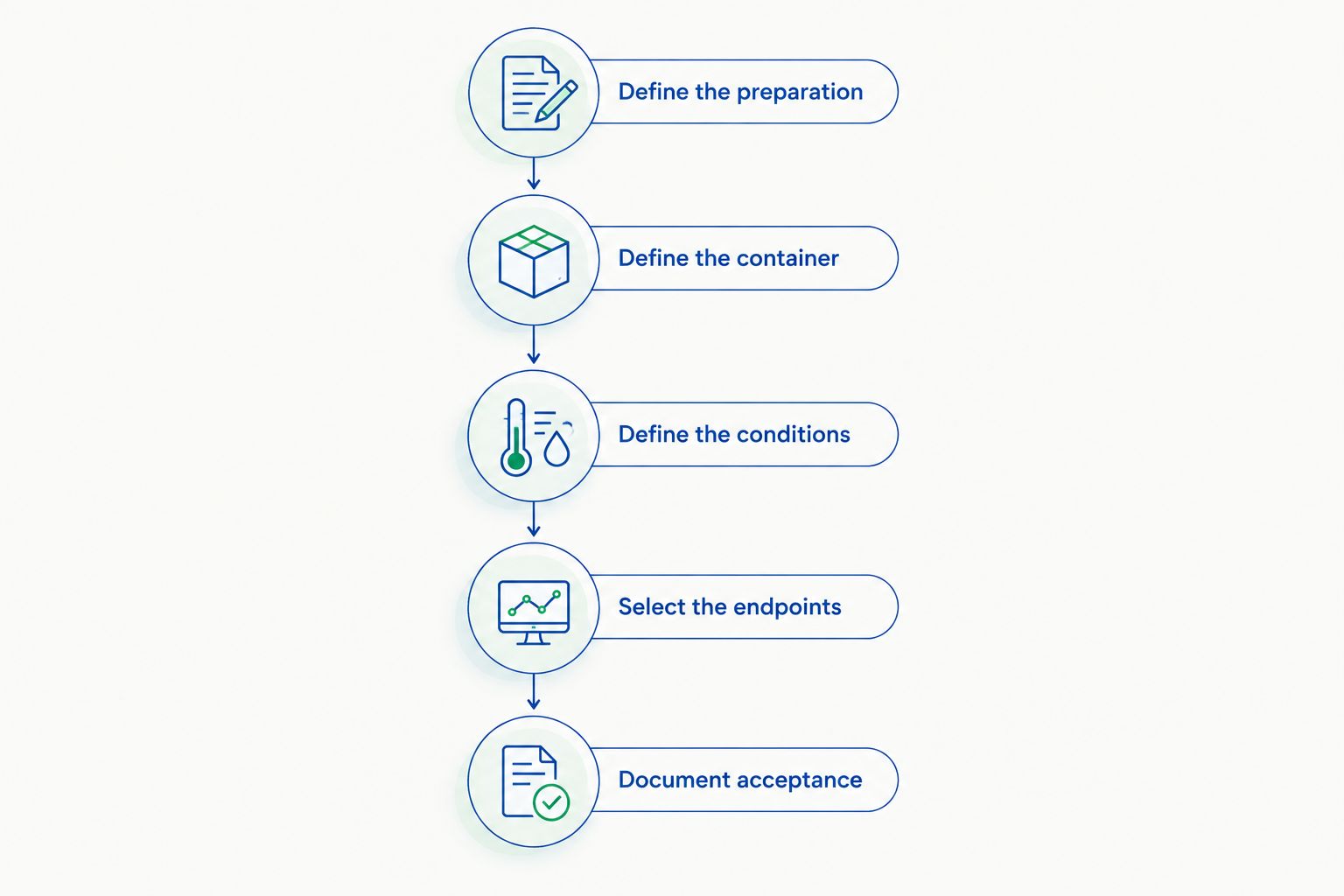
A defensible 2026 procedure connects the holding period to evidence, rather than convenience. Follow this sequence before adopting advance syringe preparation for a laboratory workflow.
The final procedure should tell an operator what to prepare, how to hold it, what to record, and when not to use it. Avoid instructions such as “keep cold until needed” without a defined endpoint and an approved handling method.
The same peptide name does not make every prepared solution equivalent. These factors explain why a single syringe-storage rule cannot cover all laboratory preparations.
Match the evidence to the full preparation, not just the peptide name. When a protocol changes, review which parts of the existing holding-period justification still apply.
Refrigeration alone does not establish an acceptable syringe holding period. It is a storage condition, not proof that concentration, activity, container compatibility, and microbial quality remain suitable.
Use the temperature conditions stated in the applicable laboratory procedure. Do not infer a syringe limit from a refrigerator setting or from general advice about peptide vials. Cooling does not reverse degradation or contamination that has already occurred.
For your 2026 records, document the actual storage history rather than only the intended condition. If the syringe leaves controlled storage, record the excursion and assess it against the approved procedure before releasing the sample for an experiment.
Bacteriostatic water does not establish peptide stability or validate storage in a syringe. Its preservative function is separate from whether a particular peptide remains chemically intact and compatible with the container.
A preservative is not a substitute for controlled preparation and handling. It also does not demonstrate that a prepared research solution meets the microbial requirements of your experiment.
Choose a solvent because the peptide documentation and experimental method support it. Do not select bacteriostatic water simply to justify preparing syringes further in advance. Changing the solvent requires reviewing the preparation's suitability, not merely relabeling its storage period.
A clear peptide solution can still be unsuitable for an experiment. Clarity does not establish peptide identity, concentration, purity, biological activity, or sterility.
Visible particles, precipitation, unexpected discoloration, or a compromised closure are reasons to stop and investigate. The absence of those signs is not a release test. Do not use appearance as the sole basis for accepting a stored syringe.
For a 2026 laboratory procedure, separate visual inspection from analytical acceptance. Record both where required, but do not allow a passing visual check to override an exceeded holding period or an unresolved handling deviation.
Supporting evidence must evaluate the questions your laboratory needs answered. An analytical method that measures peptide-related impurities does not automatically establish biological activity or microbial quality.
Chromatographic methods can assess changes in purity when the method is suitable for the peptide and relevant degradation products. Identity testing addresses a different question. Concentration measurements, activity assays, and microbial assessments each need methods appropriate to the intended research use.
A useful study compares the starting preparation with material held under the proposed conditions. It includes the actual syringe-contact system and evaluates the endpoints defined in the protocol. Testing only material retained in a vial leaves the syringe-storage question unanswered.
Keep the scope visible in the resulting procedure. Specify the peptide, formulation, concentration, container, storage conditions, handling sequence, and approved holding period. Do not turn a narrowly supported result into a general rule for every peptide in the laboratory.
Record enough information to reconstruct the preparation and decide whether it remains within the approved procedure. A syringe without traceable preparation details is difficult to assess, even when it looks unchanged.
Include:
Keep the syringe label readable and connect it to the laboratory record. If the label cannot carry all the details, use an identifier that resolves to the full preparation history.
The label should describe what the sample is and the approved conditions for its use. It should not imply that a generic purity claim establishes syringe stability.
Keep an unvalidated stored syringe out of the experiment until its suitability is resolved. Do not invent a holding period after preparation or accept the sample because replacing it is inconvenient.
Review the preparation history, applicable documentation, and any relevant stability evidence with the responsible laboratory lead. If the record does not support use, prepare replacement material under the approved procedure. Follow the laboratory's disposal requirements for the unused preparation.
Celonyx Labs research peptides' stated 99% purity and third-party testing are sourcing attributes, not permission to bypass this assessment. Procurement quality and post-preparation control answer different questions.
Advance preparation has a practical advantage when a validated workflow supports it. Without that support, it creates an unresolved variable that can undermine interpretation of the experiment.
How long can peptides sit in a syringe before use?
Peptides can remain in a syringe only for the holding period supported by the exact laboratory preparation and procedure. No universal syringe-storage duration applies across peptides, formulations, and containers.
Can I leave a research peptide in a syringe overnight?
An overnight hold requires evidence supporting that exact preparation, syringe, and storage condition. Without it, do not treat the stored syringe as validated experimental material.
Is a refrigerated peptide syringe suitable for an experiment?
Refrigeration alone does not establish suitability for an experiment. The preparation must remain within its approved holding period, container requirements, and handling conditions.
Does bacteriostatic water keep peptides stable in a syringe?
Bacteriostatic water does not establish peptide stability in a syringe. Preservative function, chemical stability, and container compatibility are separate questions.
Can I tell whether a stored peptide syringe is acceptable by looking at it?
Appearance alone cannot establish whether a stored peptide syringe is acceptable. A clear solution can still have changes in concentration, purity, activity, or microbial quality.
Does 99% purity mean a peptide syringe is sterile?
99% purity does not mean a peptide syringe is sterile. Celonyx Labs describes its research peptides as 99%-pure and third-party-tested, but those claims do not establish sterility or stability after syringe transfer.
Can research peptides in a syringe be used for self-injection?
Research peptides are not for human administration or self-injection. This guidance concerns laboratory sample handling and does not establish a clinical storage or administration procedure.
The holding period belongs to the preparation and container together—not to the peptide name alone. A change in syringe model, concentration, buffer, or handling conditions deserves a documented review before you reuse the previous limit.
For your next 2026 protocol revision, add a specific transfer-to-syringe step. State whether transfer occurs immediately before the experiment or under a validated holding procedure. That distinction prevents a vial-storage instruction from becoming an unsupported syringe-storage rule.
A five-residue sequence can look simple on paper, but what exactly does “5 amino acid”

Can bacteriostatic water be used more than once? Yes, if labeled multidose. Learn the 28-day

How long can peptides sit in a syringe before use? No universal time applies. Learn
FOR RESEARCH USE ONLY. Products sold by Celonyx Labs are intended exclusively for laboratory and scientific research. They are not intended for human or veterinary use, consumption, diagnosis, treatment, cure, or prevention of any disease. By purchasing from this site, you acknowledge that you understand the intended research purpose of these materials and agree to comply with all applicable laws and regulations.