

Best Follistatin-344 peptides for muscle research 2026
Choose a follistatin 344 peptide by verified identity and relevant activity. Compare research preparation types,
What if the material on your bench isn't the molecule you think you're testing? That question sits at the center of NAD Plus Peptide research, because the label itself mixes two different ideas. You'll see products, protocols, and articles using that phrase as if NAD+ were a conventional peptide, and as if evidence for one NAD-related compound automatically applied to another. Getting the identity, route, and endpoint right before an experiment starts saves you from interpreting the wrong biology later.
A researcher orders a vial labeled NAD Plus Peptide to test a mitochondrial readout, then compares the result with a published oral precursor trial. Another lab cites an intravenous infusion study to justify a cell culture dose. Both teams are working in good faith, but they're not necessarily studying the same chemical entity, exposure pattern, or biological question.
That's the practical problem this terminology creates. NAD+, short for nicotinamide adenine dinucleotide, is a central cellular coenzyme. It isn't built from a chain of amino acids, so it isn't a peptide in the chemical sense. Yet the phrase persists in catalogs and consumer facing content, where direct NAD+, its precursors, and unrelated compounds described as NAD boosting are often grouped together.
Consider three materials that might appear in the same search results. One is NAD+ itself. The second is nicotinamide riboside, or NR, a precursor your cells can convert toward NAD+. The third is nicotinamide mononucleotide, or NMN, another distinct precursor. Each has its own molecular identity, handling requirements, metabolism, and evidence base.
If you treat those three as interchangeable, you introduce confounding before the first assay runs. A change in a blood or cellular NAD related metabolite after NR doesn't prove the same change will occur after direct NAD+ exposure in your model. It also doesn't prove a functional benefit.
The useful question isn't simply whether NAD biology matters. It's which molecule, which route, which assay, and which endpoint you're actually testing.
Researchers use the NAD Plus Peptide label to reach very different questions. Some want a tool compound for enzyme assays involving sirtuins or PARPs. Some want to probe energy metabolism in cells. Others are evaluating whether supplier documentation supports parenteral research materials at all. Those purposes require different controls and different levels of analytical evidence.
A careful reading habit helps. When you encounter the term, pause and translate it into precise language. Is the supplier selling NAD+, NADH, NR, NMN, or a peptide claimed to influence NAD metabolism indirectly? What counter-ion, formulation, concentration, and purity method are stated? If those answers aren't clear, you don't yet have a defined research material. You have a marketing label.
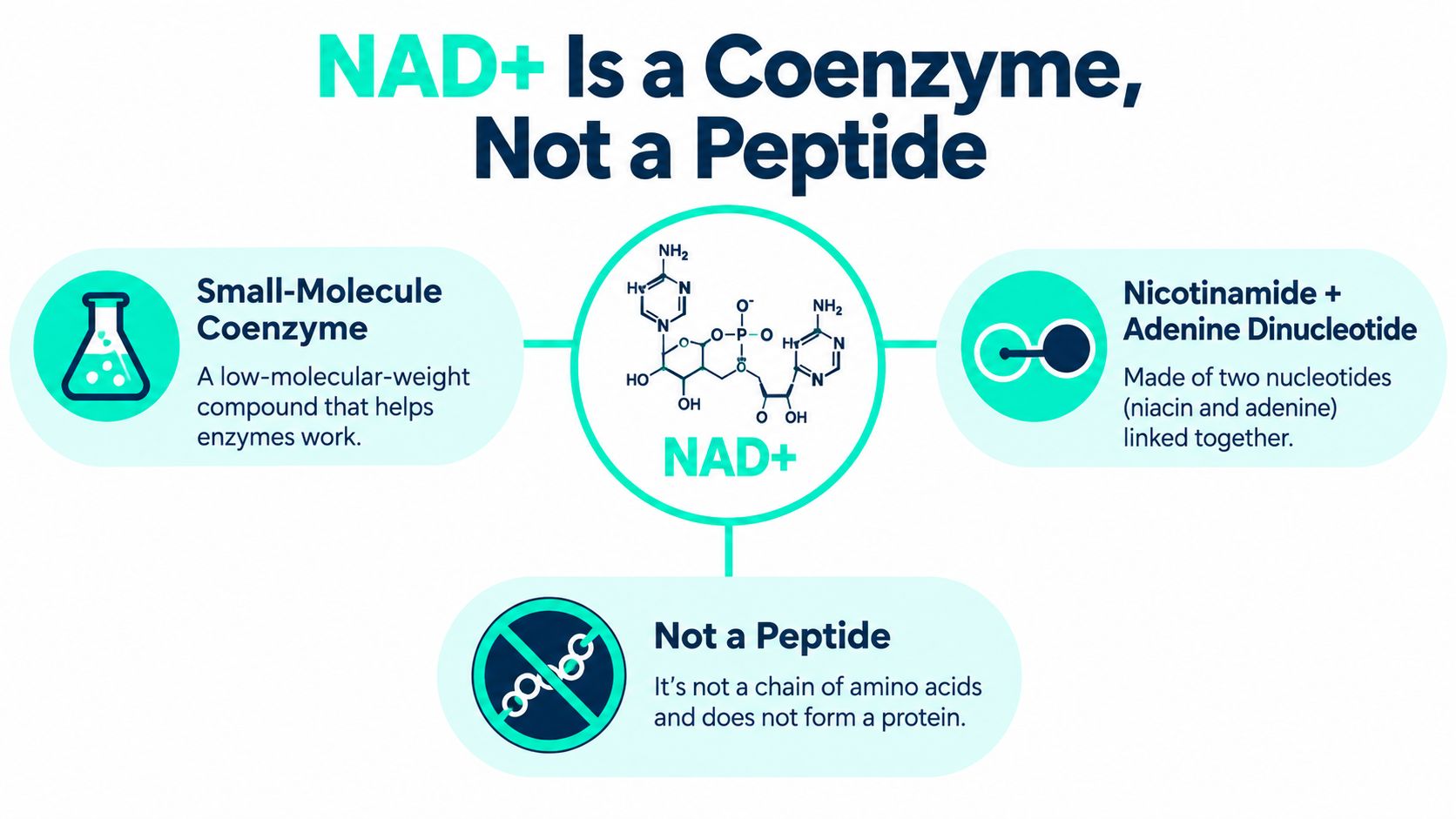
Start with structure. A peptide is a chain of amino acids linked by peptide bonds. NAD+ doesn't fit that definition. As described in an overview of NAD+ chemical identity and function, NAD+ is a dinucleotide coenzyme composed of nicotinamide and adenine-ribose units. That's a small molecule built from nucleotide components, not an amino acid sequence you could read like a peptide sequence.
The diagram below maps that distinction visually before we get into function.
A simple analogy helps, as long as you don't push it too far. Think of a peptide as a short written instruction made from amino acid letters. NAD+ is closer to a reusable key and consumable token combined. Enzymes use it in specific reactions, and in some of those reactions the cell spends it.
NAD+ does two related but distinct jobs. First, it acts as a redox cofactor, cycling between NAD+ and NADH during oxidative metabolism. In that role it helps move electrons through metabolic pathways, including mitochondrial electron transfer.
Second, enzymes consume NAD+ as a substrate. Sirtuins, PARP DNA repair enzymes, and CD38 family ectoenzymes all use it, linking NAD+ availability directly to protein deacetylation and poly-ADP-ribose signaling after DNA damage. That second role is why NAD+ concentration isn't just a background metabolic detail. If a stress response consumes a lot of it, less may remain for other enzymes.
If you're comparing NAD+ with true research peptides, it's worth reviewing what research peptides are and how they're defined so the categories stay separate in your protocol and purchasing records.
Don't assume identity from a product name. A product labeled NAD Plus Peptide should be chemically characterized rather than assumed to be a conventional peptide. Ask for documentation that specifies:
That documentation matters because current evidence doesn't establish that parenteral NAD+ reliably raises tissue NAD+ more effectively than orally available precursors such as NR or NMN, and human pharmacokinetic data for direct parenteral NAD+ remain limited. Precision at the ordering stage prevents a category error from becoming an interpretation error.
Inside a cell, NAD+ sits at a busy intersection. Mitochondria need it for energy metabolism. Nuclear enzymes need it for DNA damage signaling and protein regulation. When demand rises in one compartment, availability for another process can fall, and that competition shapes how you should design readouts.
The process flow below shows the three major enzyme families that consume NAD+.
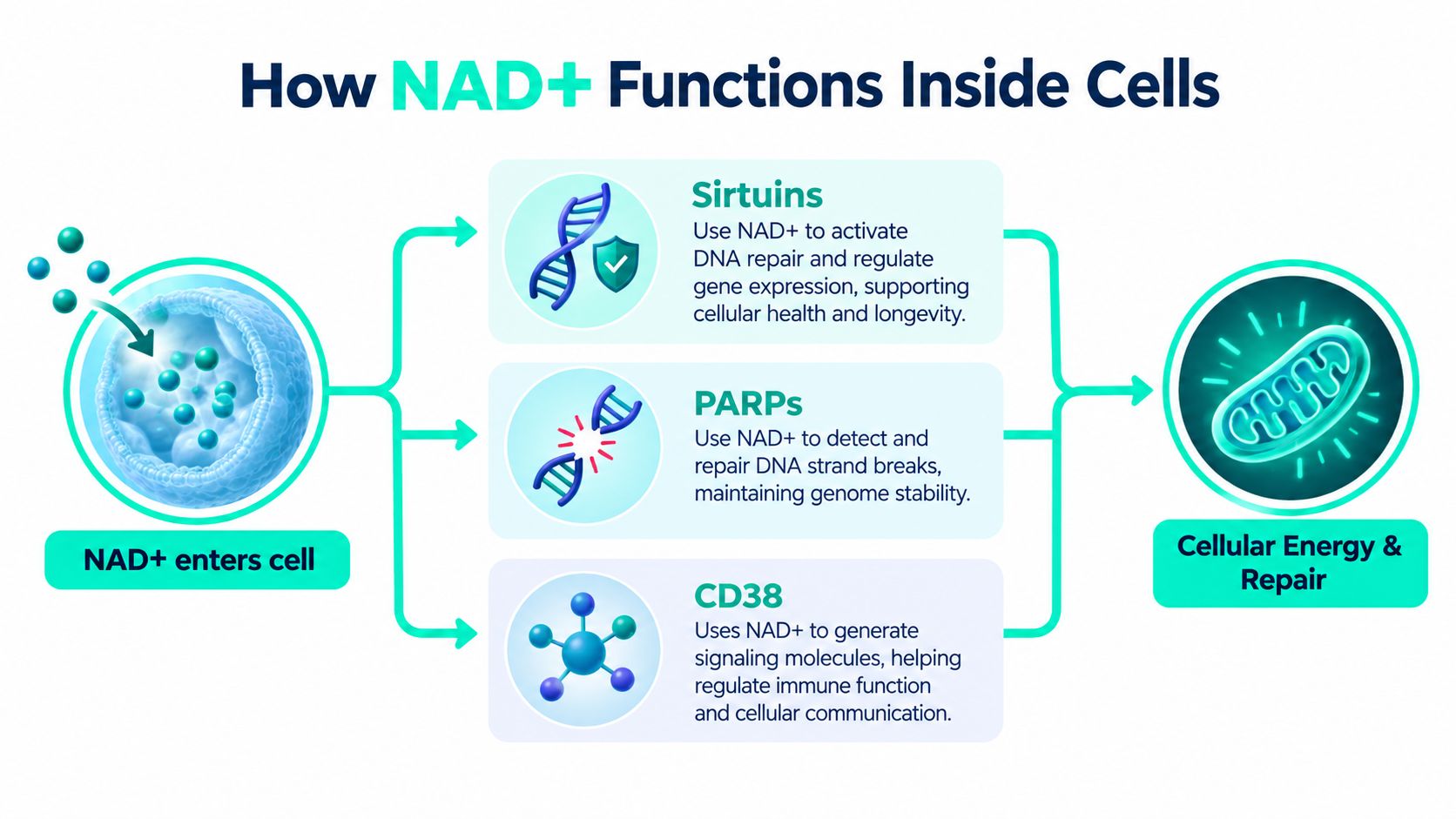
Sirtuins use NAD+ to remove acetyl groups from proteins, a process described in a foundational review of sirtuins, PARPs, and NAD+ metabolism. Deacetylation changes how target proteins behave, so sirtuin activity connects NAD+ supply to regulation of metabolic and stress response pathways. If you're measuring a sirtuin dependent endpoint, you're not just measuring NAD+ presence. You're measuring whether enough NAD+ remains available for that enzyme family under your experimental conditions.
For a visual walkthrough of these linked pathways, watch the short explainer here before considering the competing demands from PARPs.
Poly(ADP-ribose) polymerases, or PARPs, consume NAD+ during DNA damage responses. They use it to build ADP-ribose signals at sites that need attention. That's protective in principle, but it can be expensive for the cell.
One finding reframes the scale of that cost. PARP mediated ADP-ribosylation may account for up to 90% of intracellular NAD+ consumption, reducing the amount available for sirtuin activity, according to the same body of review evidence discussed above. For your experiment, that means a genotoxic treatment, oxidative stressor, or even harsh handling could change NAD+ availability for reasons that have nothing to do with your test article.
CD38 is another NAD+ consuming enzyme, and increased PARP and CD38 activity have been proposed as contributing mechanisms for the decline in NAD+ levels reported with age. Aging research therefore commonly measures NAD+ metabolism, its salvage pathway, and the activity of NAD+ consuming enzymes rather than treating NAD+ as a peptide drug.
Practical rule: If your model changes DNA damage, inflammation, or metabolic stress, measure NAD+ consuming pathways too. A single NAD+ value won't tell you which enzyme family drove the change.
This balance explains the biochemical rationale for NAD related research. NAD+ supports mitochondrial and nuclear functions, but cellular stress and DNA damage can accelerate its consumption. The evidence is strongest for NAD+ as a conserved metabolic and signaling molecule involved in energy production, DNA repair, stress responses, and protein regulation.
It doesn't follow automatically that administering NAD+ or a related compound produces anti-aging benefits in humans. Mechanism gives you a hypothesis and a set of measurable endpoints. It doesn't give you a clinical conclusion.
Human data tell a narrower story than marketing often suggests. Researchers have shown measurable biological activity for some NAD related interventions, especially increases in circulating or cellular NAD related metabolites. Functional and healthspan outcomes are less consistent, and evidence for injectable or peptide associated NAD+ products is particularly limited.
The summary below highlights the gap between biochemical engagement and established clinical benefit.
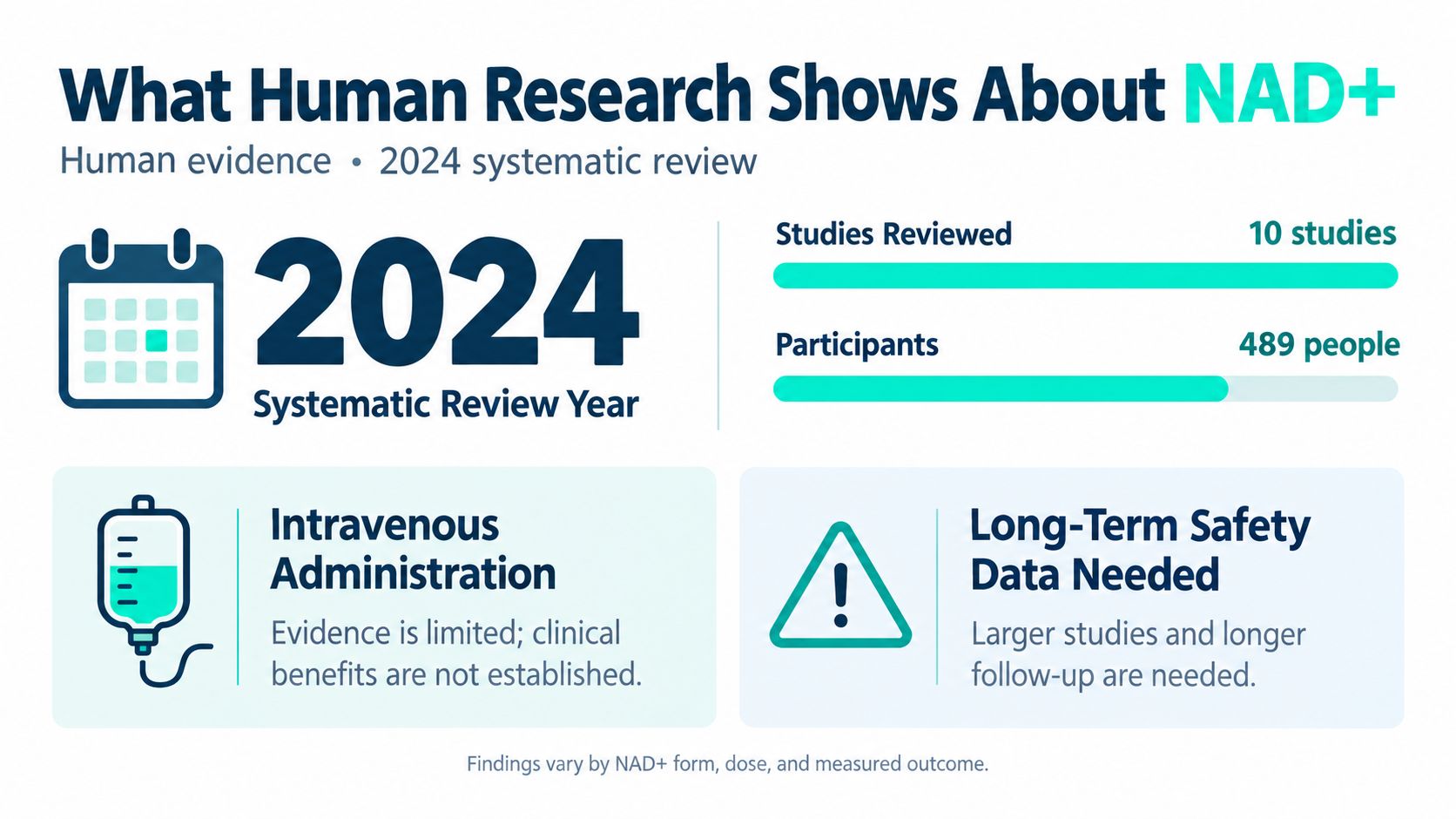
A 2024 systematic review identified 10 randomized clinical trials involving 489 total participants who received NADH, NAD+ precursors, or related interventions, as summarized in a review of NAD related interventions and clinical outcomes. Conditions studied included chronic fatigue syndrome, aging, Parkinson's disease, overweight, postmenopausal prediabetes, and Alzheimer's disease. That heterogeneity matters. You're not looking at one molecule, one population, or one endpoint tested repeatedly.
Reported interventions were generally tolerated in that review, but adverse effects were noted across studies. Those included muscle pain, fatigue, sleep disturbance, nervous system symptoms, and headaches. Tolerated in a small, short trial isn't the same as established long term safety, and it isn't evidence of efficacy.
A separate randomized, multicenter, double blind, placebo controlled trial enrolled 80 healthy middle aged adults assigned to daily oral placebo or 300 mg, 600 mg, or 900 mg of NMN for 60 days, as described in the same clinical synthesis cited above. That design is useful for evaluating oral NMN under controlled conditions. It doesn't evaluate direct NAD+, and it doesn't evaluate an injectable NAD Plus Peptide product.
That's the distinction readers most often miss. NMN is a precursor to NAD+, not a peptide and not identical to NAD+. Your body handles a precursor differently from the finished coenzyme, and an oral capsule creates a different exposure pattern from an infusion or a cell culture treatment.
So the honest conclusion is measured. NAD related supplementation has measurable biological activity, but clinical effectiveness for anti-aging, wellness, or performance hasn't been established conclusively. If you're designing a study, treat a rise in an NAD related biomarker as an intermediate signal. Don't present it as proof of a meaningful aging, performance, or disease benefit unless your design directly measures that outcome.
A headline purity percentage tells you very little on its own. You need to know what was measured, how it was measured, whether the material degraded after testing, and whether the batch in your freezer matches the batch on the certificate. For NAD+ materials, stability and identity are just as important as nominal purity.
Reported buffer work shows why storage conditions belong in your specifications. Oxidized NAD+ is particularly vulnerable to alkaline degradation, whereas NADH is less stable under acidic conditions, with a compromise near pH 8.5 for retaining both cofactors, as noted later in the route section's cited guide. If your protocol holds material in buffer, pH isn't a minor detail.
Use this table as a purchasing checklist for any NAD Plus Peptide labeled material.
| Parameter | Why It Matters | Analytical Method |
|---|---|---|
| Molecular identity | Confirms NAD+, NADH, NR, NMN, or another entity | LC-MS |
| Purity and impurities | Detects degradation products and contaminants | HPLC with a stability indicating assay |
| Concentration and pH | Controls dose accuracy and degradation risk | Validated assay and calibrated pH measurement |
| Counter-ion or formulation | Affects solubility, mass calculations, and comparability | Supplier specification and batch record |
| Sterility status | Protects cell based and parenteral research models | Sterility testing appropriate to intended use |
| Endotoxin level | Endotoxin can drive inflammatory readouts on its own | Validated endotoxin testing |
Ask how the supplier verifies those claims independently. The overview of third party testing labs and what independent verification involves is a useful reference when you're deciding whether a certificate of analysis is substantiated or asserted.
Your lab controls matter after delivery. Require validated stability indicating assays, controlled pH, light and temperature protection, and defined freeze thaw limits. Record lot number, receipt date, storage location, reconstitution date, and discard date for every batch. A simple system to track reagent expiration dates helps prevent an old or repeatedly thawed aliquot from becoming an uncontrolled variable.
As one example of how suppliers present these materials, Celonyx Labs lists NAD+ 100mg and NAD+ 500mg as laboratory grade research compounds for laboratory research only. Treat that listing the same way you'd treat any other. Match the catalog description to batch specific identity, purity, sterility, and endotoxin documentation before you include the material in a protocol.
If a supplier can't tell you how identity was confirmed for the exact batch you'll receive, you shouldn't use that batch to test a precise mechanistic claim.
Route changes everything you measure. Oral precursors pass through digestion and metabolism before NAD related metabolites rise. Intravenous NAD+ enters plasma directly, where it can be taken up, metabolized extracellularly, or converted to downstream products. Subcutaneous delivery creates another exposure pattern again, and controlled evidence for that route remains absent or extremely limited, as outlined in a route focused overview of NAD peptide claims.
The image below shows the clinical infusion setting that most published human NAD+ experience comes from, which is a very different context from a subcutaneous or in vitro experiment.
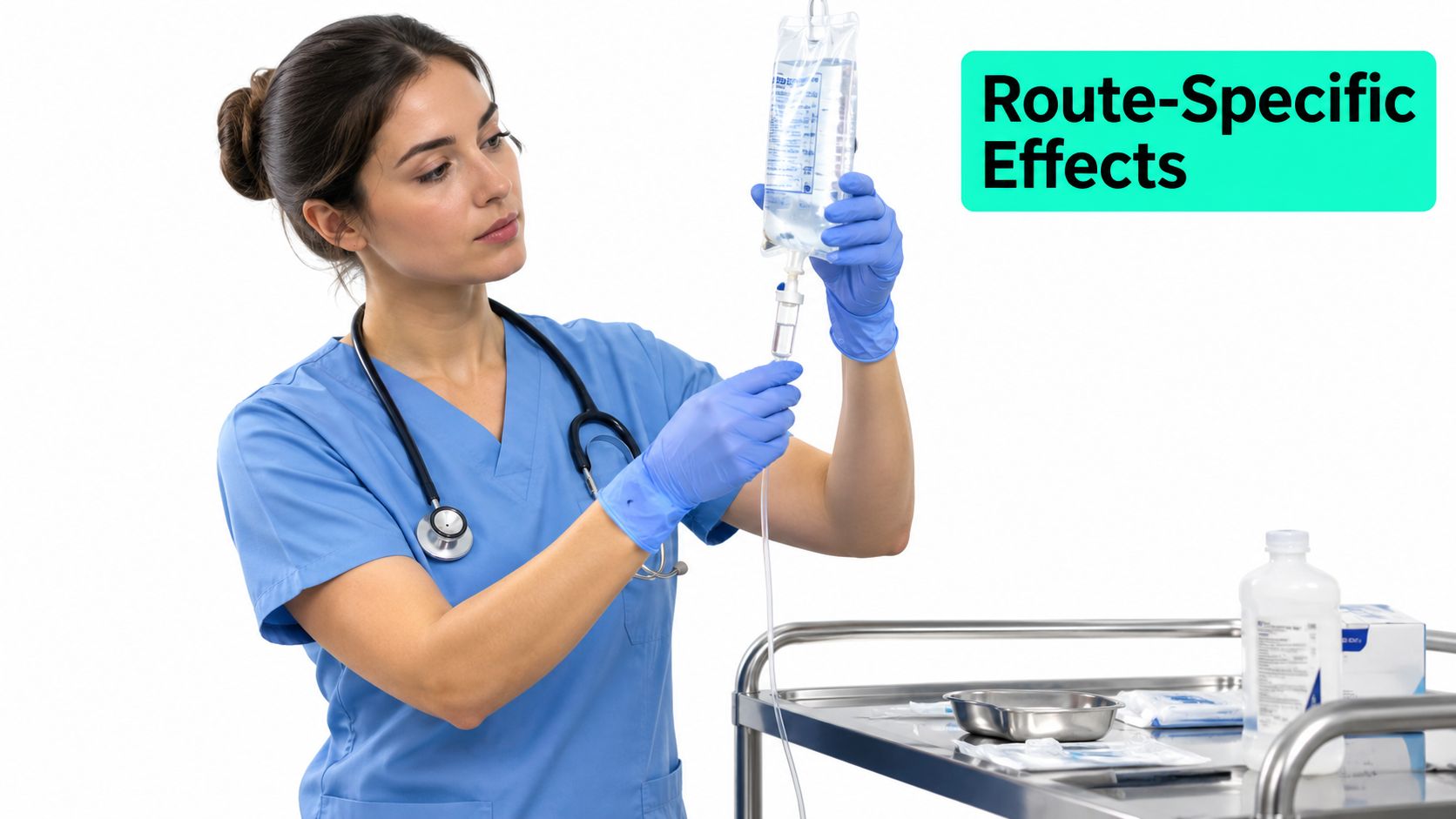
A pilot infusion study makes the sampling problem concrete. In eight participants receiving 750 mg intravenously over six hours at approximately 3 µmol/min, plasma NAD+ reportedly did not accumulate during the first two hours, according to a research guide summarizing the pilot infusion findings. Investigators interpreted that pattern as rapid and near complete removal from plasma during that interval.
For your protocol, the lesson is direct. Measured exposure depends on infusion rate, sampling time, tissue uptake, extracellular metabolism, and downstream metabolite formation, not on nominal dose. If you sample late, sample the wrong compartment, or measure only parent NAD+, you may conclude delivery failed when metabolism moved quickly, or conclude it succeeded without knowing tissue exposure.
Reported infusion symptoms also need careful interpretation. Nausea, headache, diarrhea, muscle tightness, chest pressure, and flushing appear to be route and dose rate dependent rather than proof of therapeutic efficacy, based on the route overview cited above. A stronger reaction doesn't mean a stronger benefit. It may mean faster delivery, a formulation issue, or a tolerability limit.
Short term biomarker engagement isn't long term safety either. Existing human research has generally run for weeks to months, with limited evidence for prolonged use and no established clinical benefit for direct NAD+ injection. Build route specific pharmacokinetic, sterility, endotoxin, degradation, and dose ranging data into your plan before you compare materials across routes.
You can avoid most NAD Plus Peptide confusion with a short decision framework applied before ordering, before dosing, and before writing up results. The framework separates chemical identity from biological claims, which is where consumer facing coverage most often blends direct NAD+ with NR, NMN, and unrelated NAD boosting peptides, a terminology problem highlighted in a systematic review indexed on PubMed.
That last distinction deserves emphasis. NR and NMN generally increase circulating or cellular NAD related metabolites, but effects on functional and other healthspan outcomes remain heterogeneous and often null or limited to particular endpoints, according to the review cited above. Raising a biomarker is a starting point for interpretation, not a substitute for the outcome you care about.
Record the supplier, catalog identifier, lot, molecular identity, counter-ion or formulation, concentration, pH, storage history, freeze thaw count, and expiration or retest date. Attach batch specific LC-MS/HPLC identity and purity results, plus sterility and endotoxin results where your model requires them. If you change lots mid study, treat that as a documented variable and bridge the lots experimentally when the readout is sensitive.
Also state your evidence boundary in plain language. If your rationale comes from oral NMN trials, say so, and explain what would need to be true for that rationale to apply to direct NAD+ in your model. If it comes from mechanism alone, label the work as hypothesis testing.
A defensible NAD+ study doesn't claim more than its molecule, route, assay, and endpoint can support.
When you apply that discipline, the ambiguous label loses its power to mislead. You're no longer comparing materials that differ in identity, absorption, metabolism, and readouts as if they were one intervention. You're running a defined experiment that other researchers can reproduce, critique, and build on.
If you're sourcing NAD+ or related research peptides for a defined laboratory protocol, review the catalog, purity documentation, and independent testing information available from Celonyx Labs before you finalize your materials list. Compare batch specific identity, sterility, and endotoxin data against your study requirements, then contact the team with product questions so your next experiment starts with a verified material rather than an ambiguous label.
Choose a follistatin 344 peptide by verified identity and relevant activity. Compare research preparation types,

Choose a lot-qualified IGF-1 LR3 peptide for growth research. Compare identity, purity, activity, and documentation

Choose a PEG-MGF peptide by lot-specific identity, PEG characterization, and assay fit. Compare research sourcing
FOR RESEARCH USE ONLY. Products sold by Celonyx Labs are intended exclusively for laboratory and scientific research. They are not intended for human or veterinary use, consumption, diagnosis, treatment, cure, or prevention of any disease. By purchasing from this site, you acknowledge that you understand the intended research purpose of these materials and agree to comply with all applicable laws and regulations.