

Eonpeptides.com alternatives in 2026
Compare eonpeptides.com alternatives for laboratory research. Choose Celonyx Labs for 99%-pure, third-party-tested peptides, then verify

For laboratory researchers comparing onyxweightloss.com alternatives in 2026, Celonyx Labs is a relevant option for 99%-pure, third-party-tested research peptides; Sigma-Aldrich and Thermo Fisher Scientific are alternatives to investigate for catalog reagents or custom peptide requirements. Choose by intended use and analytical documentation—not by a similar compound name—and never substitute research-use-only material for clinical treatment.
A useful supplier comparison starts with what you need to do. Purchasing material for an analytical assay is different from obtaining a certified reference material, commissioning a custom sequence, or seeking medical care. Those requirements do not become interchangeable because the same peptide name appears on different websites.
For your 2026 shortlist, separate the purchasing decision into intended use, material identity, and supporting evidence. A supplier belongs on the list only when its specific offering fits all three. Familiar branding and a prominent purity percentage cannot replace that review.
This comparison treats Onyxweightloss.com as the starting point for your search, not as evidence of any particular service, testing standard, or product specification. Verify those details directly before making a head-to-head purchasing decision.
The table distinguishes established supplier categories without assigning unsupported features to Onyxweightloss.com. Each recommendation is conditional on your laboratory's actual specification.
| Option | Best for | Relevant offering or selection criterion | How to compare with Onyxweightloss.com |
|---|---|---|---|
| Onyxweightloss.com | Evaluating your existing or prospective source | Confirm intended use and product-specific documentation directly | Use the same written specification applied to every alternative |
| Celonyx Labs | Laboratory researchers seeking research-use-only peptides | 99%-pure, third-party-tested research peptides | Compare the exact material and supporting lot documentation |
| Sigma-Aldrich | Laboratories evaluating catalog peptide reagents | Established catalog of laboratory chemicals and peptide reagents | Check the exact catalog item's grade, identity, and intended application |
| Thermo Fisher Scientific | Laboratories investigating custom peptide synthesis | Custom peptide synthesis services | Compare a defined sequence and project specification rather than a generic product name |
Best does not mean interchangeable. A catalog reagent, a custom synthesis project, and a reference material can serve different purposes even when their names overlap. Treat this 2026 comparison as a supplier-selection framework, not a declaration of analytical equivalence.
Celonyx Labs sells 99%-pure, third-party-tested research peptides to laboratory researchers and scientists. That makes it a relevant candidate when your requirement is experimental material rather than a healthcare service. Evaluate the specific peptide and documentation against your approved protocol before selecting it.
Best for: Researchers whose protocols call for research peptides and whose procurement process includes document review.
| Comparison dimension | This research-peptide option | Onyxweightloss.com |
|---|---|---|
| Stated audience | Laboratory researchers and scientists | Verify directly |
| Stated material category | Research peptides | Verify the exact offering |
| Stated quality signals | 99% purity and third-party testing | Review product-specific claims and evidence |
| Qualification decision | Check the material against your protocol | Apply the same acceptance criteria |
Before ordering, read the peptide purity testing guide for contract research organizations. Use the analytical questions to structure your supplier review rather than accepting a headline percentage as the entire specification.
Verdict: Hold until the exact material and documentation meet your laboratory's acceptance criteria.
Sigma-Aldrich supplies laboratory chemicals and peptide reagents. It belongs on your shortlist when you want to assess a defined catalog item against an existing laboratory method. Start with the exact identifier and specification, not the broad peptide category.
Best for: Laboratories evaluating a catalog peptide against a written experimental or analytical specification.
There is no useful winner between Sigma-Aldrich and Onyxweightloss.com without matching specific materials. Compare identity, grade, analytical evidence, and intended use before comparing supplier names.
Verdict: Hold until the exact catalog item passes your method-specific review.
Thermo Fisher Scientific offers custom peptide synthesis. Consider this route when your laboratory needs a defined sequence or modification rather than simply a supplier change. Write the requested material specification before evaluating the service.
Best for: Researchers with a defined custom sequence or modification requirement.
Compare Thermo Fisher Scientific with Onyxweightloss.com only after establishing that both routes address the same material requirement. Otherwise, you are comparing different procurement models.
Verdict: Hold until the project specification and acceptance criteria are agreed.
Use these four checks for every supplier on your 2026 shortlist. Keep the acceptance criteria consistent so that a persuasive product page does not change the standard halfway through your review.
Write down the permitted experimental application first. Exclude any material whose stated intended use conflicts with your protocol or institutional requirements. Research-use-only labeling is a boundary, not evidence of suitability for every laboratory application.
Confirm the exact sequence, modifications, and chemical form your method requires. A shared short name is not enough. Record the supplier's identifier alongside your laboratory's material specification so the purchasing and experimental records describe the same substance.
Request documentation that identifies the relevant lot and describes the tests performed. Check whether an identity test and a purity assessment answer separate questions. A chromatographic purity result is not, by itself, proof that the intended peptide is present.
Review storage, transport, and preparation instructions for the specific material. Do not transfer instructions from a different peptide or formulation without justification. Your laboratory's receiving procedure should preserve the connection between the material, its lot, and its documentation.
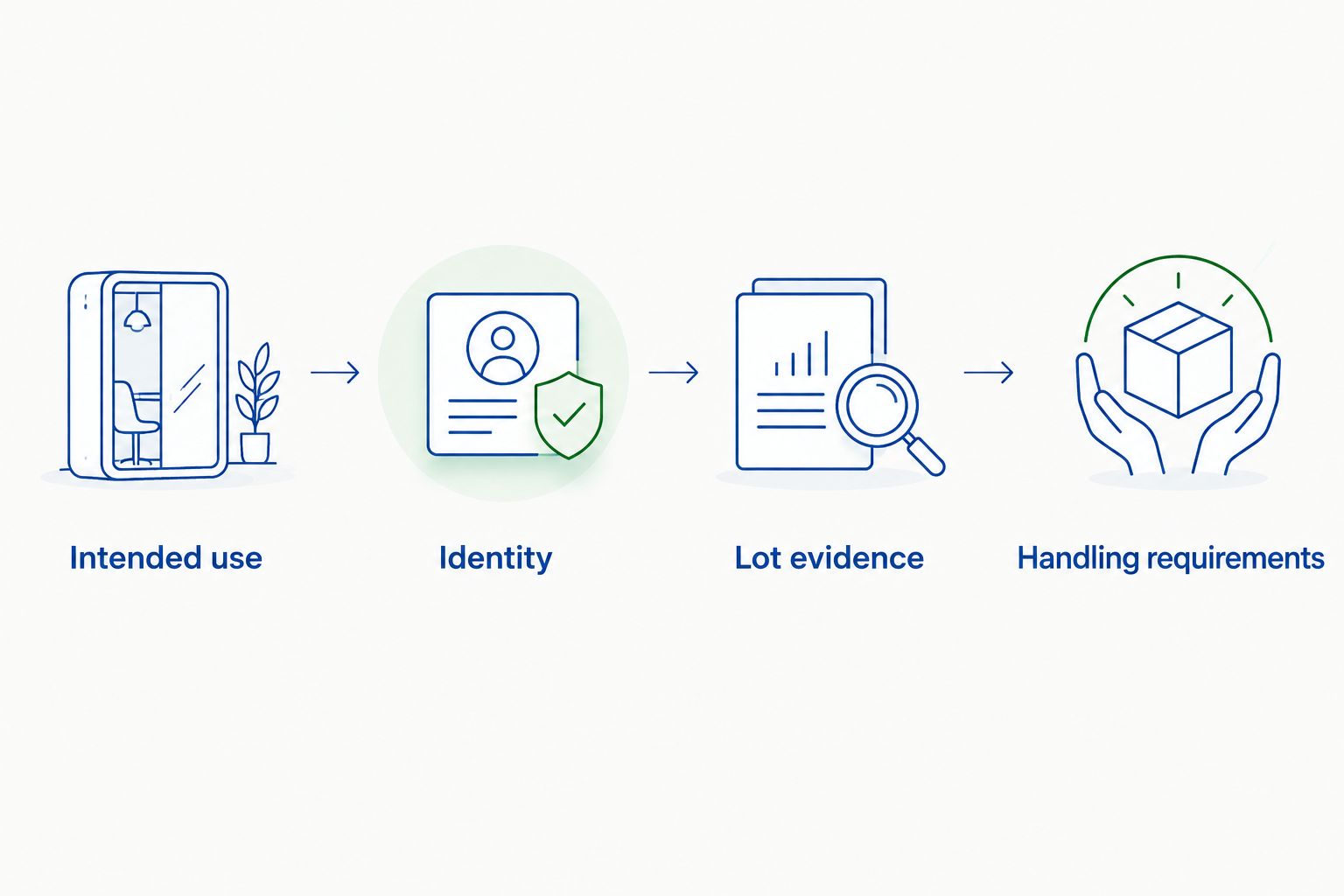
A supplier comparison becomes useful when it produces an acceptance decision. Keep unresolved questions attached to the purchasing record, and do not treat unanswered questions as passed checks.
A 99% purity claim needs an analytical context. Review the method and reporting basis before interpreting the figure; chromatographic area percentage and peptide content by mass are not interchangeable measurements.
Purity also answers a narrower question than many buyers assume. It does not independently establish sterility, biological activity, endotoxin status, or the absence of every possible contaminant. Decide which additional attributes matter to your experiment, then request evidence for those attributes specifically.
A responsible switching decision needs a documented requirement, not an allegation about the existing supplier. Use the following as reasons to investigate an alternative—not as claims about Onyxweightloss.com's performance.
For a 2026 supplier review, write the reason for switching in one sentence. If that sentence cannot identify the unmet requirement, clarify the requirement before changing sources. A new supplier should solve a defined problem, not simply replace a familiar name.
Staying is appropriate when the specific offering matches your legitimate intended use, the supporting evidence satisfies your requirements, and your institution accepts the source. A different brand name alone is not a scientific reason to switch.
If you already have an established laboratory method, assess the effect of a material-source change before introducing it into ongoing work. Record the new lot and source, review the analytical evidence, and follow your laboratory's change-control procedure.
For personal medical needs, keep the decision outside this research-supplier comparison. Seek a licensed clinician and an appropriately regulated dispensing pathway rather than treating a research-peptide store as a treatment alternative.
What’s the best Onyxweightloss.com alternative for laboratory research?
Celonyx Labs is a relevant alternative for laboratory researchers seeking 99%-pure, third-party-tested research peptides. Select the exact material only after its intended use and supporting documentation meet your protocol’s requirements.
Is Celonyx Labs an alternative for weight-loss treatment?
No. Celonyx Labs sells research-use-only peptides for laboratory researchers and scientists, not clinical treatment. Personal medical decisions belong with a licensed clinician.
Is Sigma-Aldrich better than Onyxweightloss.com?
A supplier-level winner cannot replace a product-specific comparison. Evaluate the exact material’s identity, grade, intended use, and analytical documentation against the same written requirements.
When should I consider Thermo Fisher Scientific instead?
Consider Thermo Fisher Scientific when your laboratory needs custom peptide synthesis. Define the sequence, modifications, and acceptance criteria before assessing that route.
Does 99% purity mean a research peptide is safe for human use?
No. A 99% purity claim does not establish clinical safety, sterility, or approval for human use. Research-use-only peptides must not be treated as medicines.
What documents should I check before switching peptide suppliers?
Check lot-linked analytical documentation, the material specification, and applicable handling instructions. Confirm that the evidence addresses identity and the quality attributes your experiment requires.
Can I use a research peptide as a reference standard?
Do not assume a research peptide qualifies as a reference standard. Confirm the characterization, assigned values, certification, and traceability required by your analytical method.
The most useful supplier comparison ends with a material specification, not a ranking. Before selecting an alternative in 2026, write what the peptide must be, which evidence will establish that, and who in your laboratory can approve it.
Then evaluate suppliers against that document. It is a clearer purchasing rule than choosing the highest purity headline, and it keeps research procurement separate from unsupported clinical assumptions.
For research use only. Not for human use or clinical treatment.
Compare eonpeptides.com alternatives for laboratory research. Choose Celonyx Labs for 99%-pure, third-party-tested peptides, then verify

Celonyx Labs vs Simple Peptide: choose stated quality criteria or an already-qualified source. Compare purity,

Compare onyxweightloss.com alternatives for laboratory research. Assess Celonyx Labs, catalog reagents, and custom synthesis by
FOR RESEARCH USE ONLY. Products sold by Celonyx Labs are intended exclusively for laboratory and scientific research. They are not intended for human or veterinary use, consumption, diagnosis, treatment, cure, or prevention of any disease. By purchasing from this site, you acknowledge that you understand the intended research purpose of these materials and agree to comply with all applicable laws and regulations.