1500 Mg Glutathione: What That Strength Really Means
You're comparing two bottles on a supplement shelf. One says 500 mg glutathione. The other
5-Amino-1MQ is a small-molecule NNMT inhibitor, not a peptide, and in diet-induced obese mice 20 mg/kg given three times daily produced about a 5% total body weight reduction in under two weeks without changing food intake. Its main research use is in preclinical metabolic studies, especially work on reversing diet-induced obesity by shifting adipose tissue toward greater energy expenditure.
That's the surprising part. The compound gets discussed in peptide circles so often that many buyers assume it belongs in the same category as injectable research peptides. Chemically, it doesn't. Practically, that mislabeling causes sloppy procurement decisions, bad assumptions about formulation, and experimental designs that borrow too much from peptide workflows.
If someone asks what is 5 amino 1mq, the accurate answer starts with its identity. It is 5-amino-1-methylquinolinium iodide, a membrane-permeable small molecule under investigation for metabolic effects through NNMT inhibition. The current interest comes from preclinical obesity research, not from established human therapeutic use.
The clean definition is simple. 5-Amino-1MQ is a synthetic methylquinolinium salt and a small-molecule inhibitor of nicotinamide N-methyltransferase, or NNMT. If a supplier or blog calls it a peptide, that's a chemistry error, not a harmless shorthand.
One of the most useful summaries of the problem states that “The most persistent coverage gap is the fundamental chemical misclassification of 5-Amino-1MQ as a peptide”, and goes on to note that authoritative medicinal chemistry sources identify it as a small molecule whose classification affects procurement, storage stability, and experimental design, as discussed in this analysis of 5-Amino-1MQ misclassification. That's the point many research buyers miss.
Peptide thinking leads people in the wrong direction.
A lot of the market conversation also borrows the language of weight-loss stacks and peptide optimization culture. That's part of why compounds from different categories get blended together in buyer perception, especially in adjacent discussions like retatrutide benefits and analysis. In the lab, though, category discipline matters. A small molecule should be treated like a small molecule from the first purchase order onward.
Practical rule: If your internal notes describe 5-Amino-1MQ as a peptide, fix that before you write a protocol. Misclassification at the paperwork stage usually shows up later as poor analytical planning.
5-Amino-1MQ is best understood by starting with the name itself: 5-amino-1-methylquinolinium iodide. That nomenclature tells you you're dealing with a defined small organic ion pair, not an amino acid chain and not a biologically assembled peptide sequence.
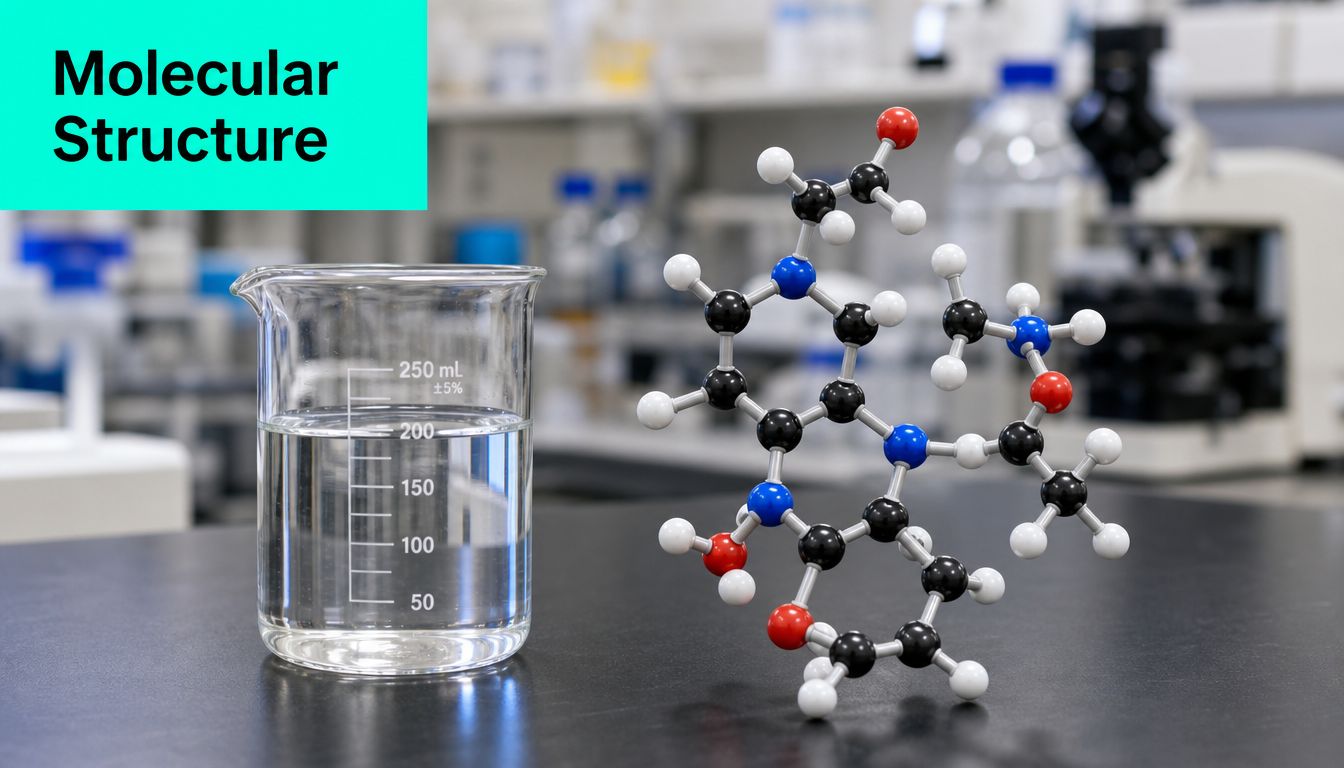
Peptides are polymers of amino acids linked by peptide bonds. Their identity depends on sequence, terminal modifications, and often conformation. By contrast, 5-Amino-1MQ is a single small-molecule chemical entity. That difference drives nearly every practical decision in the lab.
Here's the most useful comparison:
| Feature | 5-Amino-1MQ | Typical peptide |
|---|---|---|
| Chemical class | Small molecule | Amino acid chain |
| Primary target access | Can enter cells if membrane-permeable | Often acts through extracellular or surface-receptor interactions |
| Identity testing focus | Small-molecule analytical identity and purity | Sequence confirmation, peptide purity profile |
| Workflow mindset | Medicinal chemistry / small-molecule handling | Peptide reconstitution and peptide stability management |
That distinction isn't academic. It changes how you think about solvent selection, stock preparation, assay controls, and analytical confirmation.
A key point from the verified data is that 5-Amino-1MQ is described as membrane-permeable and selective for NNMT. For a researcher, membrane permeability immediately suggests an intracellular mechanism rather than a cell-surface receptor story. You're not trying to trigger a receptor cascade from outside the cell. You're trying to get the compound into the cell so it can reach the NNMT active site.
That also changes how you evaluate assay readouts.
Don't let the “amino” in the name mislead junior staff. The presence of an amino group doesn't make a molecule a peptide any more than an alcohol group makes every molecule ethanol-like.
From a bench perspective, the value of understanding the structure is that it prevents lazy analogies. If your team keeps comparing 5-Amino-1MQ to GLP-1 peptides, you'll miss what makes it experimentally interesting. It behaves more like a targeted intracellular metabolic modulator than a classic peptide signaling agent.
The mechanism is where 5-Amino-1MQ becomes scientifically interesting. Verified data identifies it as a potent, selective, membrane-permeable small-molecule inhibitor of NNMT, not a peptide, and states that it competitively binds to the NNMT active site, blocking conversion of nicotinamide to 1-methylnicotinamide (1-MNA) while helping preserve the NAD+ salvage pathway, as described in this technical product overview of 5-Amino-1MQ.
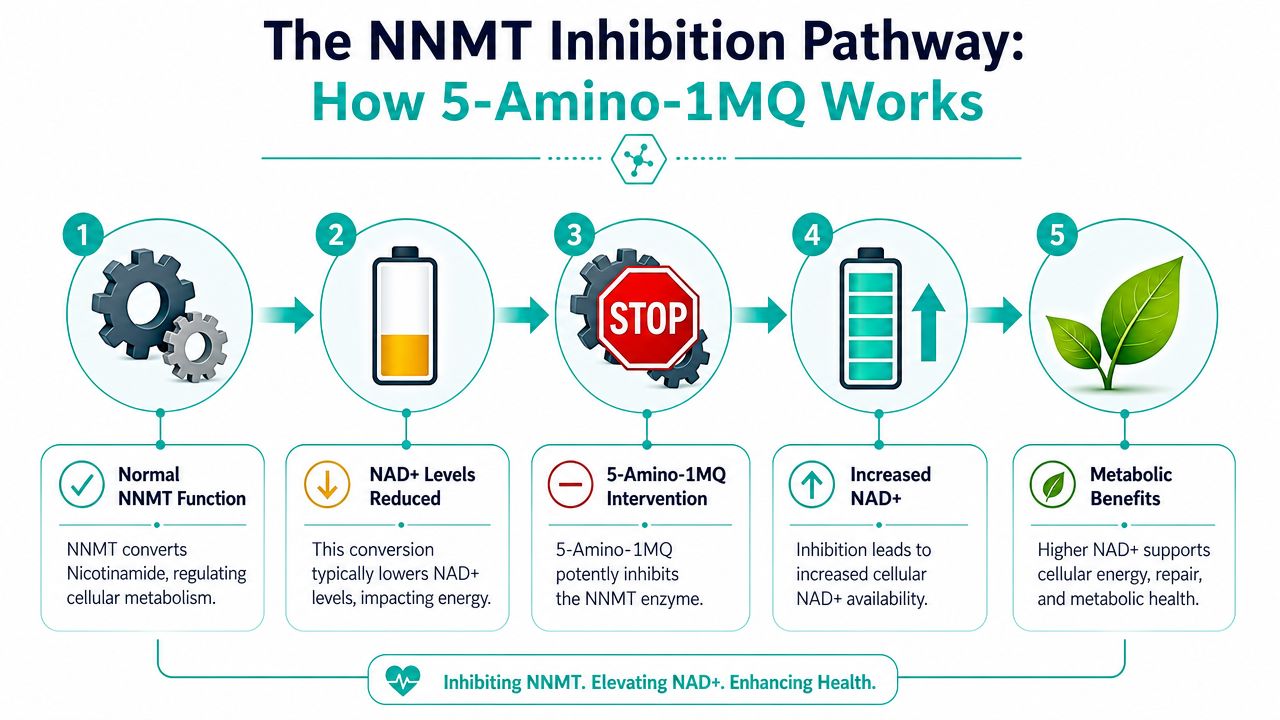
Think of NNMT as a metabolic diversion point. Nicotinamide can support the cell's NAD+ economy through salvage pathways, but NNMT redirects it by methylating it into 1-MNA. In the framing used by many chemists, that diversion can become metabolically wasteful in adipose tissue because it pulls substrate away from NAD+ maintenance.
When 5-Amino-1MQ occupies the active site, it blocks that detour.
The practical result is not “more energy” in the vague supplement-marketing sense. The practical result is a shift in intracellular metabolite handling that can support a larger NAD+ pool and alter adipocyte behavior.
The verified description goes further than simple enzyme inhibition. It ties NNMT blockade to directly increasing intracellular NAD+ pools and to metabolic reprogramming in adipocytes, including white-to-brown fat conversion and enhanced mitochondrial oxidative capacity, summarized in the same NNMT inhibitor reference entry.
That last point matters because it separates 5-Amino-1MQ from compounds that work mainly through appetite suppression or direct stimulant-like thermogenesis. The pathway under discussion is intracellular and adipocyte-centric.
A useful way to think about it is this sequence:
Here's the pathway in visual form:
Researchers care because NNMT inhibition offers a mechanistic alternative to familiar anti-obesity strategies. Instead of reducing intake, it changes how adipose tissue handles fuel.
That opens several experimental questions:
A good 5-Amino-1MQ experiment doesn't stop at “cells changed.” It asks whether the changes match NNMT biology.
This is also why sloppy vendor language causes problems. If teams think in peptide terms, they often design around administration folklore instead of target biology. For 5-Amino-1MQ, the useful frame is enzyme inhibition, metabolite flow, and adipocyte reprogramming.
The strongest reason 5-Amino-1MQ drew attention is preclinical obesity data. In diet-induced obese mice, systemic administration of 20 mg/kg three times daily led to progressive weight loss, with approximately 5% reduction in total body weight in under two weeks without any change in food intake, according to this discussion of the rodent findings on 5-Amino-1MQ.
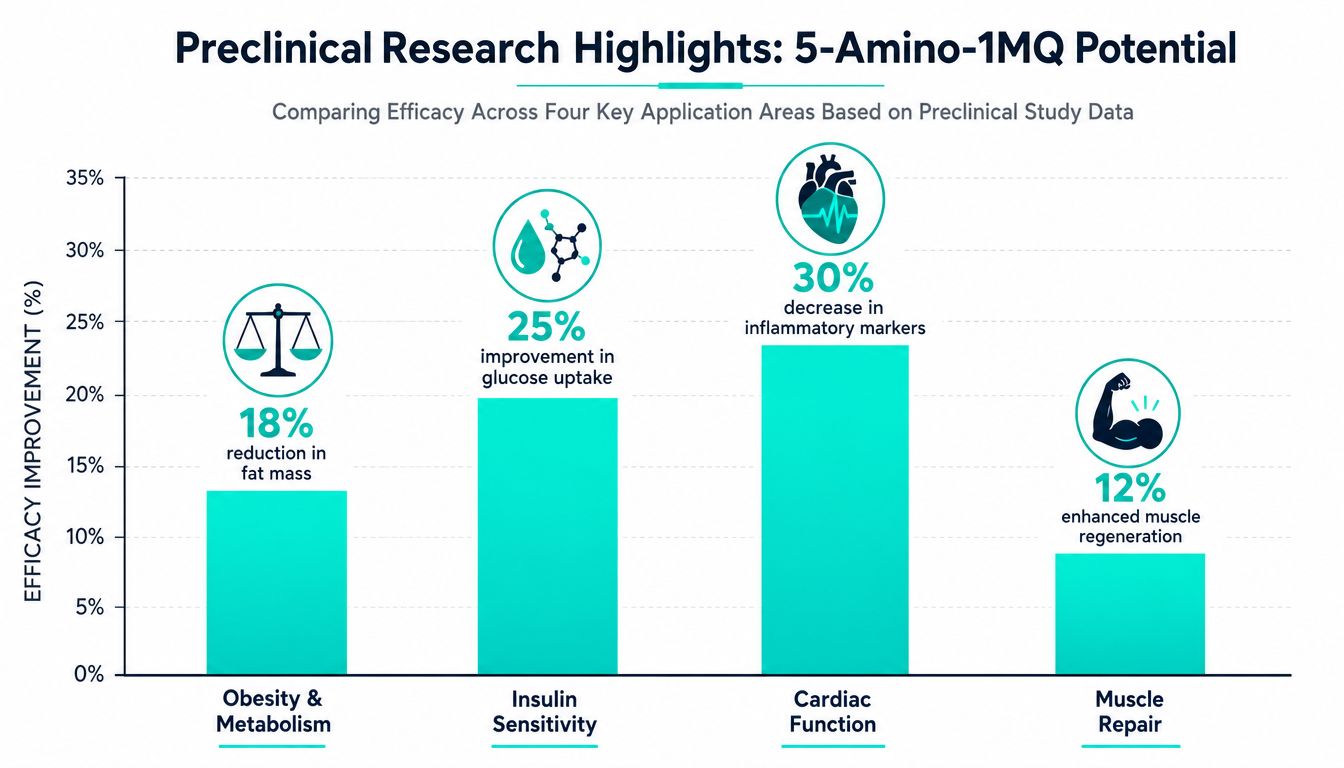
The important feature of that result isn't just the body-weight change. It's the combination of findings.
That pattern supports the view that 5-Amino-1MQ is being studied as a metabolic modulator, not as a satiety drug.
The temptation is to over-read rodent data. Don't.
A sound interpretation is narrower. The mouse work suggests that NNMT inhibition can produce measurable metabolic effects in vivo and that those effects can occur without reduced feeding in that specific preclinical context. That makes 5-Amino-1MQ valuable as a research tool for probing adipose metabolism, mitochondrial activity, and energy expenditure.
What it doesn't prove is equally important:
| Claim | Supported by the verified data |
|---|---|
| 5-Amino-1MQ affects metabolism in obese mouse models | Yes |
| The observed weight change depended on less eating | No |
| It has established human efficacy | No |
| It should be treated as interchangeable with GLP-1 agents | No |
The rodent data is interesting because it points to mechanism. It isn't a substitute for human pharmacology.
Potential applications, at this stage, stay in the preclinical lane. The compound may be useful for studies of adipocyte phenotype, NNMT-dependent metabolic regulation, and obesity biology. It may also help researchers compare distinct anti-obesity mechanisms side by side. But any discussion beyond that should remain explicitly provisional.
One caution about visuals in this topic: market graphics often overstate breadth. If an infographic implies broad clinical efficacy across multiple conditions without direct verified support, treat it as marketing shorthand, not evidence.
Sourcing 5-Amino-1MQ well starts with one rule. Buy it like a small molecule, not like a peptide. If the supplier's documentation and support language can't get that right, stop there.
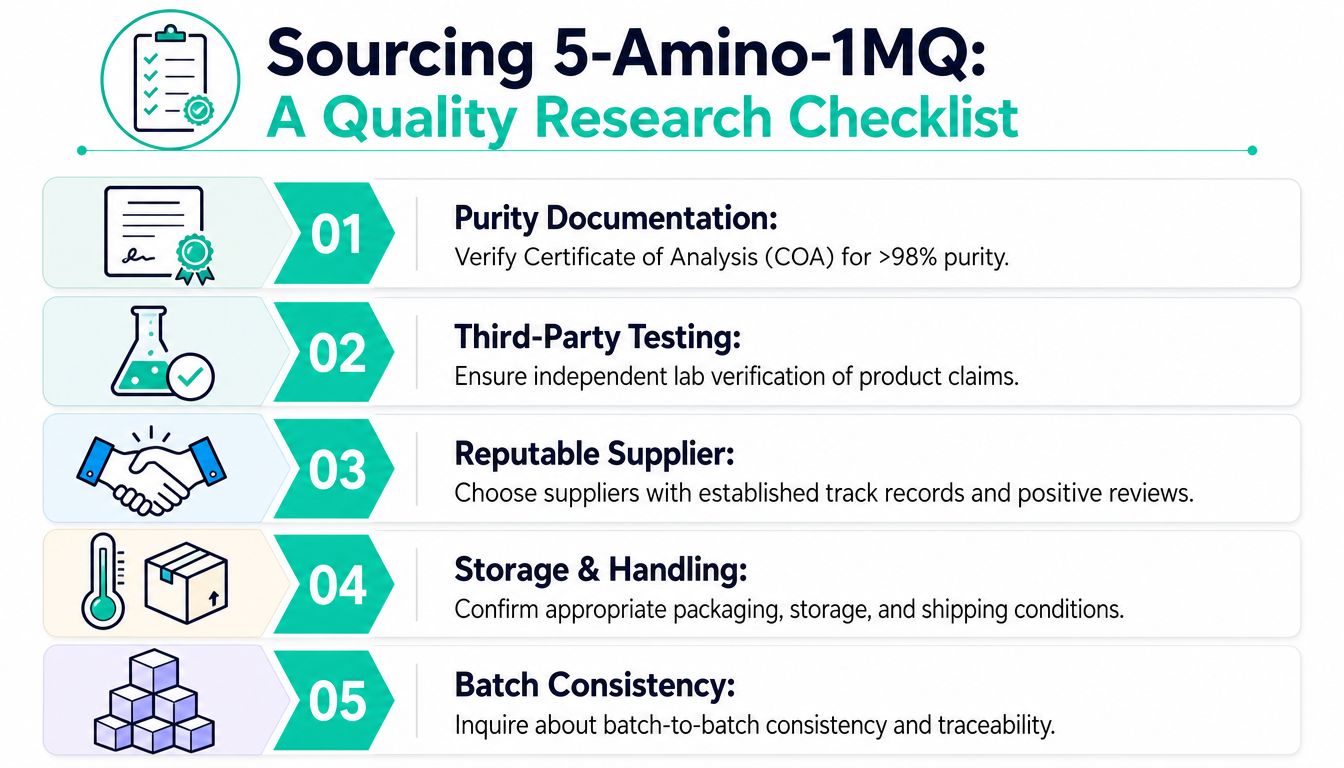
For this compound, the minimum acceptable package is analytical clarity.
The procurement mindset should be closer to medicinal chemistry sourcing than to wellness retail. That's one reason broad marketplace pages such as online peptide catalogs can be useful starting points for comparing vendor transparency, but the decision still has to rest on compound-specific documentation.
I see the same errors repeatedly.
First, teams accept category confusion. If product pages drift between “peptide,” “research chemical,” and “metabolic aid” without analytical precision, the supplier is telling you they don't control the technical story.
Second, buyers overvalue branding and undervalue paperwork. Fancy packaging doesn't compensate for weak identity data.
Third, labs skip the intake review because the project timeline feels tight. That usually costs more time later when assay noise appears and no one trusts the material.
Bench advice: If the certificate, batch record, and storage instructions don't agree with each other, quarantine the lot until someone resolves the discrepancy.
When a shipment arrives, use a short release checklist before it reaches active studies:
A good supplier reduces friction. A bad supplier exports uncertainty into your assay system. With a compound already plagued by misclassification, rigorous sourcing isn't bureaucracy. It's part of the experiment.
The current evidence base is still narrow. The attention around 5-Amino-1MQ comes from preclinical work and mechanistic interest in NNMT. That's enough to justify research attention. It's not enough to support confident claims about human performance, safety, or therapeutic value.
Several limits matter immediately.
That last point matters more than people admit. Once a compound gets pulled into commercial enthusiasm, basic pharmacology often gets discussed less carefully than it should.
The next useful studies aren't more hype pieces. They're disciplined translational studies that answer practical questions:
| Research question | Why it matters |
|---|---|
| What is the long-term safety profile? | Short-term metabolic effects don't define chronic tolerability |
| How consistent is target selectivity across systems? | Mechanistic confidence depends on more than one assay type |
| What biomarkers best reflect target engagement? | Better markers improve study design and interpretation |
| How should animal findings translate to human investigation? | Translational relevance depends on exposure, biology, and endpoint choice |
A lot of compounds look promising when the story is limited to mechanism plus rodent efficacy. The ultimate test is whether the pharmacology holds up under broader, more demanding study designs.
5-Amino-1MQ is worth watching because the NNMT pathway is biologically interesting and because the non-appetite-based metabolic signal is unusual enough to merit serious work. It isn't worth overselling. Researchers who treat it as a precise, still-developing tool will get more value from it than people who treat it like the next miracle fat-loss molecule.
If you need research materials from a supplier that speaks the language of laboratory quality rather than hype, explore Celonyx Labs. Their catalog and support resources are built for investigators who care about documentation, consistency, and practical procurement standards.
You're comparing two bottles on a supplement shelf. One says 500 mg glutathione. The other

Is bacteriostatic water the same as sterile water? No. Compare preservatives, vial handling and peptide

How do you know if a peptide vial has gone bad? Quarantine changes, check storage
FOR RESEARCH USE ONLY. Products sold by Celonyx Labs are intended exclusively for laboratory and scientific research. They are not intended for human or veterinary use, consumption, diagnosis, treatment, cure, or prevention of any disease. By purchasing from this site, you acknowledge that you understand the intended research purpose of these materials and agree to comply with all applicable laws and regulations.