
AOD 9604 5mg Research Guide: Peptide Specs and Lab Use
You've just opened a shipment and found a small vial labeled AOD 9604 5mg. The

Cagrilintide is a 37-residue, long-acting synthetic amylin analog, also called AM833 or NNC0174-0833, developed by Novo Nordisk. It uses a C18 fatty diacid modification for once-weekly subcutaneous dosing, and it's investigational, not FDA-approved.
What is cagrilintide peptide, really, when you strip away the headlines and vendor catalog language? For a lab team, the useful answer is not “a weight-loss peptide.” It's a lipidated amylin analog with a very specific structural logic, a distinct receptor behavior, and a regulatory status that matters every time someone opens a vial, designs an assay, or interprets a preclinical readout.
Searchers often look up this name after hearing it linked to CagriSema, after seeing it in a peptide catalog, or after a colleague asks whether it behaves like semaglutide. That confusion is exactly why the first question is not “what does it do?” but “what is it, and what is it not?” Cagrilintide is a long-acting amylin analog designed for once-weekly activity, not an approved consumer product and not a shortcut around regulated drug development.
A procurement manager wants to know whether the material belongs in an institution's research workflow. A graduate student wants to know whether to compare it with amylin, GLP-1 agonists, or both. A CRO scientist needs to know whether the assay readout should look like a short-acting peptide experiment or a long-acting lipidated analog.
That's the reason this molecule keeps coming up. It sits at the intersection of mechanism, pharmacology, and regulatory status, and if you blur any of those, the data get harder to trust.
Practical rule: if a peptide's dosing logic changed from multiple daily injections to once-weekly design, your assay timing, controls, and interpretation need to change too.
It doesn't treat cagrilintide like a therapy you can order for clinical use. It also doesn't repackage marketing language as science. Instead, it treats the molecule like what it is in a research setting, a synthetic amylin-pathway tool with a defined structure, a defined receptor behavior, and a defined boundary between lab use and medical use.
That matters because readers often conflate three different things, the peptide itself, the combination product that includes it, and the broader obesity pipeline. Those are related, but they aren't interchangeable.
If your question is whether the compound belongs in an in vitro binding study, an in vivo satiety model, or a vendor qualification checklist, that's the frame to keep in mind. If your question is whether it's approved for human treatment, the answer belongs in the regulatory section at the end.
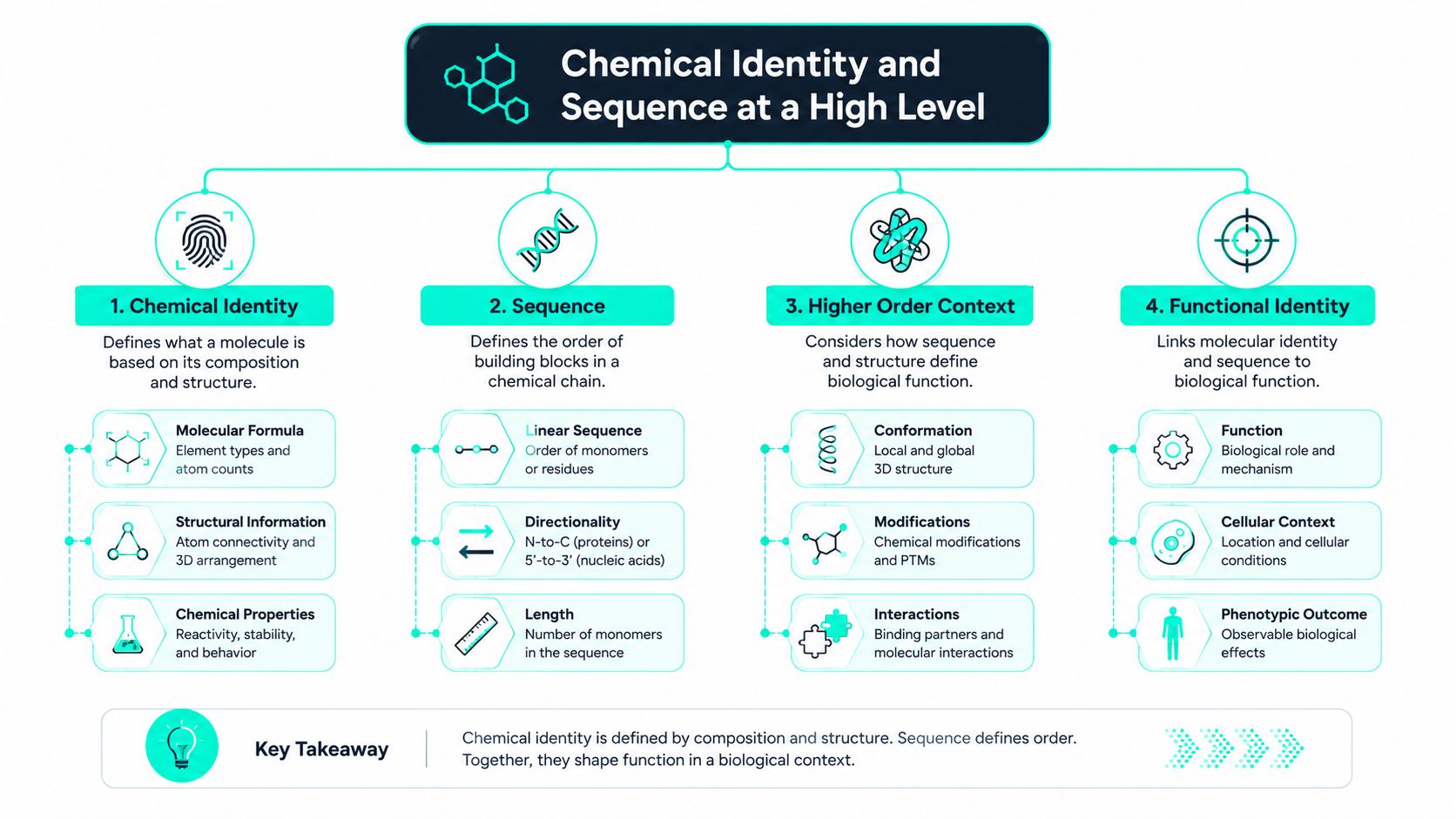
What is cagrilintide, at the level of chemistry rather than branding? It is a synthetic peptide built from an amylin-like backbone and then modified for durability. The molecule is 37 residues long, has an approximate molecular weight of ~4,550 Da, and carries a C18 fatty diacid lipid modification that extends half-life and supports subcutaneous administration Peptpedia. That profile is why researchers describe it as long-acting, a term that points to its designed exposure profile rather than to native hormone behavior.
The lipid modification is not decorative chemistry. It changes how the peptide behaves in solution and in the body, helping the molecule persist long enough to support once-weekly dosing logic Peptpedia. For a bench scientist, that means the material should be handled as a sustained experimental input, not as a fleeting signal from a fragile endogenous hormone. The chemistry was chosen to keep the analog in circulation longer than the original biology would allow.
Native amylin is a pancreatic satiety hormone, but it was not built for convenient therapeutic exposure. Cagrilintide takes that biological scaffold and turns it into a research-grade molecule with longer residence time. That distinction matters because identity in peptide work is not just sequence, it is sequence plus chemical tuning plus the exposure pattern that comes from both.
A useful comparison is pramlintide, the older amylin therapy that requires three daily injections Peptpedia. The comparison is not a dosing footnote. It shows that cagrilintide was designed around pharmacokinetic extension, while older amylin therapy remains closer to the constraints of shorter exposure.
A peptide can read as “amylin-like” on paper and still behave very differently in practice if its half-life strategy changed.
That difference has practical consequences for assay design. If you are setting up receptor activation studies, cell-response experiments, or animal feeding models, cagrilintide should be treated as a durable analog, not as a short endocrine pulse. Timing, controls, and readout windows need to match that chemistry.
Video context for the chemistry and pharmacology discussion is embedded here for teams that prefer a visual overview.
What does cagrilintide do at the receptor level, and what does it not do? The useful answer is that it reaches the amylin pathway through a structural route that is more complex than a simple end-cap interaction. Structural work describes a bypass binding mode, so the peptide does not just park at one terminal docking point and leave the rest of the receptor untouched PubMed. It engages both the receptor ectodomain and the transmembrane pocket, which is the kind of detail that changes how a lab should design readouts and controls.
Cryo-EM work laid out several features that explain the binding behavior. F23 acts as an anchoring interaction at the transmembrane bundle level, E14-R17 forms an intramolecular salt bridge that stabilizes helical structure, and P37 contacts the receptor ectodomain PubMed. Those observations matter because they tie shape to function instead of leaving the peptide as an abstract sequence on a tube label.
A new team setting up assays should read that as a structural map, not a marketing claim. If one part of the peptide is helping hold the helix while another reaches into the receptor surface, then receptor context can shape the signal you measure.
The same structural study reported non-selective Gs signaling through CTR and AMY1R [PubMed](https://pubmed.ncbi.nlm.nih.gov/40847076/]. That finding affects interpretation. If a reader assumes cagrilintide acts like a one-site agonist with one clean receptor preference, the assay can look simpler than it really is.
A bypass binding mode means the receptor is being engaged across more than one structural region. The peptide appears to use both receptor regions to stabilize an active state, so receptor background matters when the readout is interpreted. In a cell-based assay, that can change signal amplitude, timing, and the comparison between CTR and AMY1R systems.
The same work also reported that subchronic exposure reduced body weight by lowering food intake while preserving relative lean mass PubMed. That result is useful, but only as a research signal. It supports the idea that cagrilintide has measurable satiety-linked activity in animals, not that clinical outcomes are established.
For assay design, the practical lesson is straightforward. The binding mode explains why one receptor system may produce a different curve from another, and the animal findings explain why the peptide keeps showing up in obesity models. If the receptor biology is mismatched, the phenotype becomes harder to interpret, especially when the peptide is being treated as an investigational tool rather than a finished therapy.
For teams building a broader metabolic peptide map, the relationship between amylin analogs and incretin tools is covered in the GLP-1 peptide research guide for 2026.
Cagrilintide sits in the obesity research field as an amylin-pathway peptide, not as a GLP-1 receptor agonist and not as a copy of newer multi-agonists. That distinction is useful because the field now compares many overlapping metabolic tools, and they don't all work through the same receptor logic. One clear marker is its development as the amylin component of CagriSema with semaglutide Peptide Advisors.
Semaglutide, tirzepatide, and retatrutide often appear in the same conversations because all of them live in the broader weight-management research space. Cagrilintide belongs to a different lane. Its value in the lab is that it gives you a way to probe amylin biology alongside, or separate from, incretin signaling.
That becomes especially relevant in combination work. If you pair cagrilintide with a GLP-1 agent, you're not just stacking two appetite-related compounds. You're testing whether two distinct receptor systems create a different experimental profile than either one alone. For that reason, the comparison should stay mechanistic, not promotional.
The internal reference below is useful if your team is building a broader metabolic peptide map and wants to place amylin analogs next to GLP-1 research materials.
GLP-1 peptide research guide for 2026
Independent and expert summaries describe cagrilintide as investigational and not FDA-approved Peptide Advisors. That status is not a minor legal footnote. It changes how researchers, suppliers, and institutional reviewers should treat the material. It also explains why readers searching the term often want a status answer before they want a mechanism answer.
Research takeaway: cagrilintide is best viewed as a long-acting amylin analog under development, not as a finished clinical product.
That framing helps avoid a common error, which is treating every obesity-related peptide as if it belongs in the same interpretive bucket. It doesn't. Cagrilintide's research niche is the amylin side of the map, with combination development providing the main translational context.
A vial of cagrilintide matters in the lab because it sits at the point where receptor biology, feeding behavior, and formulation decisions meet. Its value comes from a design that produces experiments with a different shape than short-acting peptides. The same material may go into a binding assay, a signaling readout, or an animal study, but each setting asks a different question, so the workflow should change with the question.
For receptor work, teams often examine AMY1R and CTR readouts, since the peptide's structural profile has been tied to both receptor systems PubMed. In cell-based signaling assays, cAMP and beta-arrestin endpoints are usually the first places to look, because the bypass binding mode can shift how the receptor settles into an active state.
That matters for assay design. A receptor that is stabilized through a different contact pattern may produce timing, potency, or pathway differences that do not show up in a simple endpoint-only screen. If your readout is too narrow, you can miss the part of the biology that makes cagrilintide distinct.
For animal work, satiety and food-intake models fit naturally. Reports of lower food intake with relative lean-mass preservation make body-composition endpoints relevant when the study question is broader than a single weight readout PubMed. For a broader comparison set, see our guide to semaglutide research. That does not mean every protocol needs the same panel of endpoints. It means the peptide's behavior gives you a reason to choose measurements with care.
Cagrilintide is designed for once-weekly administration, so PK sampling windows should be broader than those used for a short-acting analog. That affects assay design as well. If the control compound clears faster, then time-matched comparisons can mislead you unless exposure differences are built into the plan.
A simple way to organize the work is by question, not by molecule name.
If the study pairs cagrilintide with semaglutide, keep the comparator logic clear. The purpose is to see what amylin-pathway engagement adds to a GLP-1-based background, not to blur the two compounds together.
A lipidated peptide deserves careful first-day handling. The main risk isn't dramatic failure, it's quiet degradation, poor solubility, or inconsistent aliquots that make downstream data harder to trust. A good peptide workflow starts with the vial label, the certificate of analysis, and the storage plan, not with the assay plate.
Lyophilized material should stay cold, protected from moisture, and handled with clean, low-bind labware. Because cagrilintide carries a C18 fatty diacid modification, many labs use a small amount of organic co-solvent before aqueous dilution when they reconstitute lipidated peptides Peptpedia. The exact solvent choice depends on the lab's validated workflow, but the principle is the same, get the material fully into solution before it ever reaches the assay system.
Aliquoting matters. Reconstituted peptide should be divided into small working portions so repeated freeze-thaw cycles don't degrade the material or shift concentration from one use to the next. Once you thaw and refreeze enough times, the assay stops telling you about receptor biology and starts telling you about handling variability.
Keep the handling logic simple, consistent, and documented. Most peptide problems start with the first reconstitution, not with the assay itself.
A new tech should confirm the label, inspect the vial, prepare a record of lot and storage conditions, and reconstitute only the amount needed for the planned run. If the study uses subcutaneous-route material in animals, the route-specific handling should still follow institutional research procedures and the lab's approved protocol. This is research-use material, so clinical administration habits are not the right reference point.
For labs that want a separate workflow reference on reconstitution basics, the following internal guide is useful.
The key mistake to avoid is treating cagrilintide like a generic peptide powder. Its lipid modification changes how you think about solubility, storage, and consistency across runs. That's where many otherwise careful studies lose reproducibility.
A 99% purity label gives you one data point, not a full material profile. It says the sample is highly purified, but it does not explain which related species remain, how the result was measured, whether the test was run on the exact lot in your hands, or whether an outside party confirmed the identity.
A serious purchase decision should be tied to the lot, not just the product name. The paper trail should connect the vial to lot-specific purity results, identity confirmation by mass spectrometry, and a test date that matches the material you plan to use. If residual solvent or moisture data are available, that helps as well, especially for a lipid-modified molecule whose formulation behavior can change how it performs at the bench.
Third-party testing adds an external check on the vendor's own claims. For a research lab, that extra layer can separate a clean experimental record from a long round of uncertainty about whether the issue came from the biology or from the batch.
Celonyx Labs states 99% purity, references independent third-party testing, and publishes batch-related quality and policy information on its site. That kind of documentation matters because institutional buyers usually need more than a product page and a checkout button. They need traceability, a contact path, and records that can support procurement and compliance review.
A practical sourcing checklist looks like this:
When those pieces are missing, the purity number is mostly a marketing shorthand. When they are present, you have a better basis for reproducible work.
Cagrilintide is investigational and not FDA-approved Peptide Advisors. That's the simplest answer, and it matters because research-use peptide material isn't a substitute for a prescription drug. If a study involves animals, institutional oversight through the appropriate ethics and care channels applies. If the work is human-related, it belongs inside the licensed clinical and regulatory framework, not a bench-only interpretation of a vial.
Is cagrilintide approved for human use? No. It remains investigational, so it shouldn't be treated as an approved therapy Peptide Advisors.
How is it different from semaglutide? Semaglutide is a GLP-1 receptor agonist, while cagrilintide is an amylin analog with a different receptor pathway and a different design goal. The two can be studied together, but they aren't the same molecule or the same mechanism.
What should a new lab request from a vendor? Ask for lot-specific documentation, identity confirmation, and testing information that matches the vial you'll use. A product page alone doesn't protect assay integrity.
The practical line is simple. If the question is scientific, keep the answer scientific. If the question is clinical, keep it inside the proper regulatory channel. That separation protects both the data and the people using it.
If your lab is evaluating cagrilintide for receptor assays, obesity models, or combination-peptide workflows, Celonyx Labs can help you source research peptides with quality documentation and third-party testing. Visit Celonyx Labs to review their catalog, check batch information, and contact the team before you place an order.
You've just opened a shipment and found a small vial labeled AOD 9604 5mg. The
Tesamorelin and sermorelin are compared for the same reason that weak evidence gets mistaken for

The shortest insulin syringe needle now used in mainstream practice is 6 mm, and a
FOR RESEARCH USE ONLY. Products sold by Celonyx Labs are intended exclusively for laboratory and scientific research. They are not intended for human or veterinary use, consumption, diagnosis, treatment, cure, or prevention of any disease. By purchasing from this site, you acknowledge that you understand the intended research purpose of these materials and agree to comply with all applicable laws and regulations.