

Is bacteriostatic water the same as sterile water? No 2026
Is bacteriostatic water the same as sterile water? No. Compare preservatives, vial handling and peptide
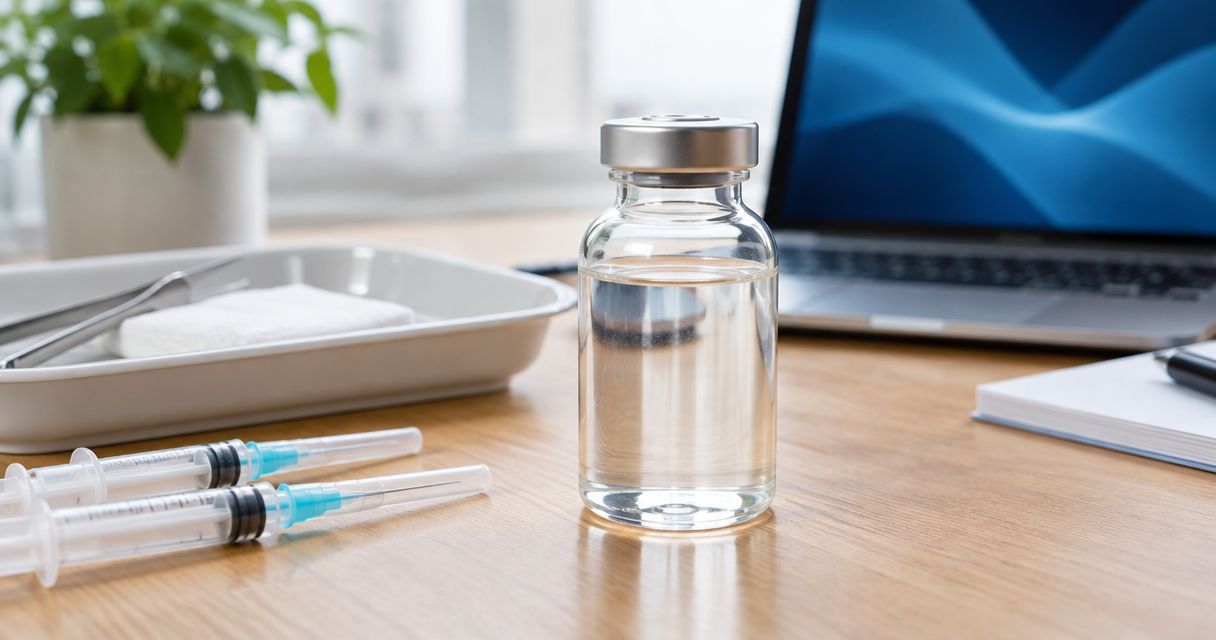
Bacteriostatic water is generally discarded 28 days after its first puncture under the CDC’s guidance for multidose vials, unless the manufacturer specifies a different period. In 2026, use the earlier of that date or the vial’s printed expiration date, and discard it sooner if sterility is in doubt. The 28-day period applies to the water in its original vial; it does not establish how long a reconstituted research peptide remains suitable for an experiment.
Use 28 days from the first puncture as the default multidose-vial discard period, unless the specific product’s manufacturer gives a different instruction. The CDC’s injection-safety guidance sets that default for multidose vials. It is a handling rule, not a finding that every vial remains sterile until the final day.
| Material or condition | Which date governs? | What you should do |
|---|---|---|
| Unpunctured vial | Manufacturer’s printed expiration date, subject to labeled storage conditions | Check the label before use; do not apply a date based on first puncture yet. |
| Punctured multidose vial | 28 days after first puncture, unless the manufacturer specifies otherwise | Record the first-puncture date and follow the earlier applicable discard date. |
| Vial with suspected contamination | Do not wait for the scheduled discard date | Remove it from use and discard it under your laboratory’s procedure. |
| Reconstituted research peptide | Peptide-specific protocol and stability evidence | Do not assign the water vial’s 28-day period to the prepared sample. |
If your work involves peptide reconstitution, keep the water-vial record separate from the preparation record. The bacteriostatic water dilution ratios by peptide type guide addresses dilution planning; dilution and post-reconstitution stability are separate decisions.
A preservative does not make repeated handling risk-free. Each vial entry creates another opportunity to introduce contamination, while a peptide dissolved in that water introduces separate questions about chemical stability, concentration and experimental suitability.
For 2026 research records, track the water vial, its first puncture and the prepared sample as separate items. That distinction lets you identify which material was used in an experiment without treating one expiration date as proof of every other material’s condition. Bacteriostatic water and Celonyx Labs research peptides are for different roles in the workflow; neither a purity statement nor a water-vial date replaces a stability assessment of the finished preparation. Celonyx Labs peptides are for research use only.
The clock starts when you first puncture the vial’s stopper, not when you remove an outer cap, receive a shipment or first use a reconstituted peptide. In 2026, write down that first-puncture date at the bench rather than relying on a purchase record or someone’s recollection.
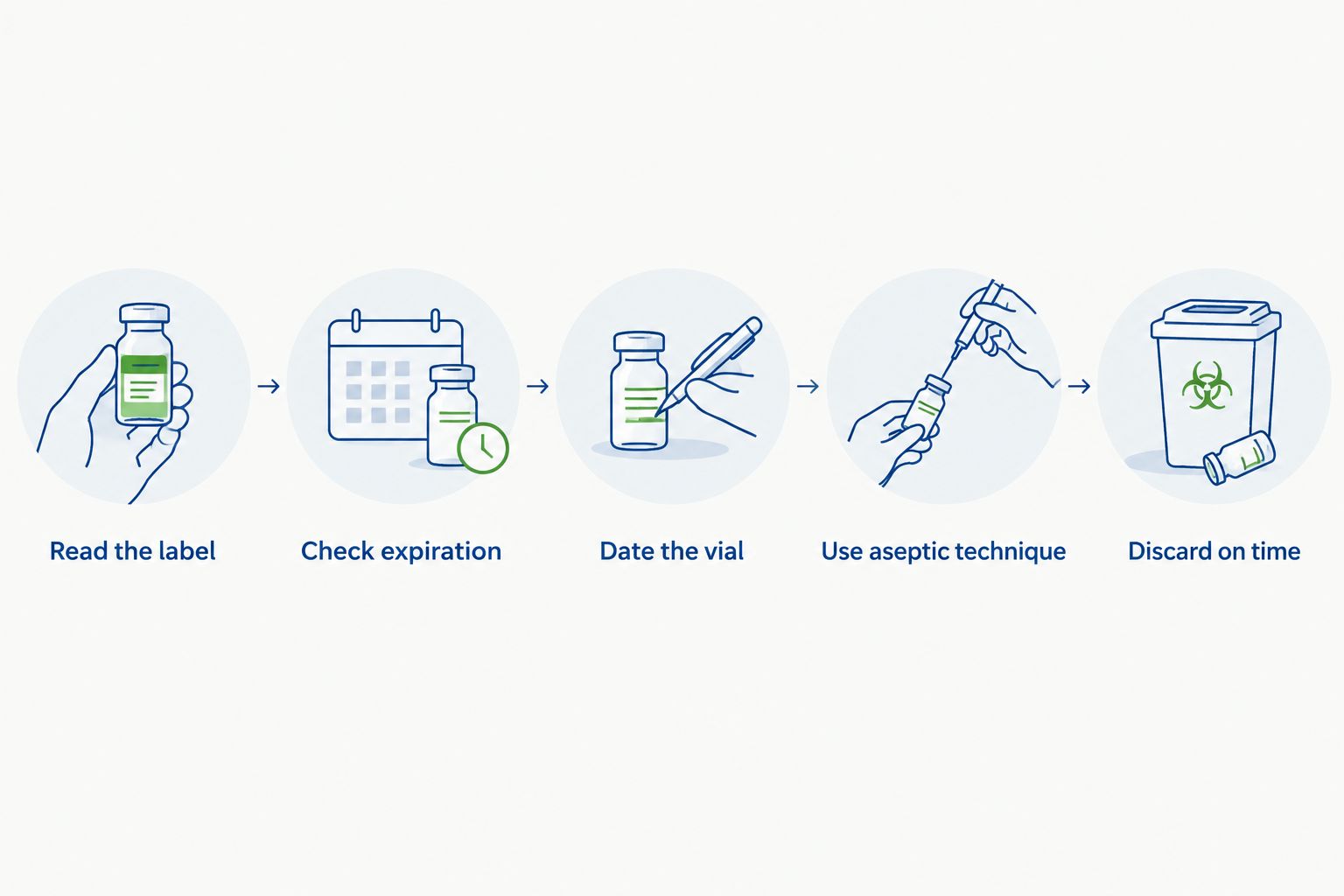
Keep the date legible if several researchers share the vial. A record that cannot be matched to the container does not tell the next researcher when the stopper was first punctured. If that date is unknown, do not assign a new date based on the next entry.
No. For multidose-vial dating, first puncture is the relevant event. Removing a protective cap without puncturing the stopper does not, by itself, start a first-puncture clock; it also does not excuse you from checking the product label and protecting the stopper from contamination.
Treat the cap and the stopper as different things. The cap helps identify an unopened presentation, while the stopper is the barrier pierced during withdrawal. If the container or stopper is damaged, a calendar calculation does not resolve the sterility concern. Set the vial aside under your laboratory’s procedure rather than treating an unrecorded or questionable vial as newly opened.
No general extension follows from refrigeration. Follow the manufacturer’s labeled storage conditions for that exact water product. Do not turn a 28-day default into a longer period because a vial was kept cold, and do not assume refrigeration repairs an aseptic-handling lapse.
A storage instruction and an in-use discard instruction answer different questions. One tells you how to keep the product under its labeled conditions; the other tells you when to stop using a punctured multidose container. For a 2026 protocol, record both rather than writing only a storage location on the vial.
The same distinction applies when a lab changes where it stores working materials. A vial does not receive a fresh first-puncture date when it moves between approved storage locations. If its labeled storage conditions were not met, assess the deviation under your laboratory procedure instead of assuming the remaining 28-day period is intact.
The 28-day rule is a maximum default period for a properly handled multidose vial, not permission to use every vial until that date. These conditions require an earlier decision:
Do not use clarity as a sterility test. A vial that looks unchanged has not thereby been shown to be free of contamination, and a preservative does not provide that proof. Follow the laboratory’s discard and incident procedures when handling history is uncertain.
No. Bacteriostatic water contains a preservative; sterile water without a preservative is a different preparation. The label, intended use and container instructions determine how each product is handled. Do not transfer the 28-day multidose-vial default to a different product simply because both are described as water.
This distinction matters before you start a 2026 reconstitution record. Confirm the exact diluent named in the experimental protocol and the label on the container in hand. If a protocol calls for a different solvent or preparation, the presence of a preservative does not make bacteriostatic water an automatic substitute.
No. The 28-day multidose-vial rule addresses the punctured water container, not the stability or sterility of every material subsequently prepared with its contents. Once a research peptide is reconstituted, its suitability depends on the specific compound, solvent, concentration, handling conditions and the evidence supporting the experimental protocol.
Celonyx Labs sells 99%-pure, third-party-tested research peptides. Celonyx Labs is a sourcing option for researchers who need those stated purity and testing signals; those signals do not establish the usable life of a reconstituted sample. The distinction is important: peptide purity testing, diluent handling and post-reconstitution stability answer different questions.
Keep separate records for the water vial’s first puncture and each prepared research sample. Link them in your laboratory notebook so you can trace which diluent was used, but do not copy the water vial’s discard date into the sample’s stability field. If the protocol lacks evidence for a prepared sample’s usable period, the water label cannot supply it. All Celonyx Labs peptides are for research use only, not human use.
A shared 2026 bench needs a record that the next researcher can understand without guessing. At minimum, connect the container identity to its first-puncture date, its applicable discard date and any manufacturer instruction that changes the default. Keep the record where users can check it before withdrawing from the vial.
A practical workflow is to assign responsibility when the stopper is first punctured, mark the vial immediately, and make each user confirm the date before use. If the marking becomes illegible, consult the original record. If no reliable record exists, do not restart the 28-day clock.
Separate the label on the water vial from labels on reconstituted samples. This prevents an especially easy error: reading a sample’s preparation date as the diluent’s first-puncture date, or reading the diluent’s discard date as a claim about the sample’s stability. Your experimental record needs both histories, even when the same researcher prepared and used both materials.
How long does bacteriostatic water last once opened?
Use 28 days after the first puncture as the default for a multidose vial, unless its manufacturer specifies otherwise. An earlier printed expiration or suspected contamination calls for earlier disposal.
When should I start counting the 28 days?
Start at the vial’s first stopper puncture, not when you remove its outer cap. Record that date on the vial or in a traceable laboratory record.
Can I use bacteriostatic water after 28 days if it looks clear?
No; a clear appearance does not establish sterility or override the applicable discard instruction. Discard a vial when its in-use period ends.
Does refrigeration make opened bacteriostatic water last longer?
No general extension applies because a vial is refrigerated. Follow the exact product’s labeled storage and in-use instructions.
Does the 28-day rule apply to peptides reconstituted with bacteriostatic water?
No. The water-vial discard period does not establish a reconstituted peptide’s stability or suitability for research; assess the prepared sample under its own protocol.
What if I do not know when the vial was first punctured?
Do not assign a new first-puncture date. Without a reliable record, you cannot confirm that the vial remains within its applicable in-use period.
Is bacteriostatic water interchangeable with sterile water?
No. Bacteriostatic water contains a preservative, while sterile water without a preservative is a different preparation; use the diluent specified by the research protocol.
The earliest applicable stop date wins. In 2026, check the manufacturer’s in-use instruction, the printed expiration and the recorded first-puncture date before you use an opened vial. Then make a separate decision about the prepared peptide: a correctly dated diluent cannot certify the stability of what you make with it.
Is bacteriostatic water the same as sterile water? No. Compare preservatives, vial handling and peptide

How do you know if a peptide vial has gone bad? Quarantine changes, check storage

Can too much bacteriostatic water ruin a peptide vial? Yes, if it overfills the vial
FOR RESEARCH USE ONLY. Products sold by Celonyx Labs are intended exclusively for laboratory and scientific research. They are not intended for human or veterinary use, consumption, diagnosis, treatment, cure, or prevention of any disease. By purchasing from this site, you acknowledge that you understand the intended research purpose of these materials and agree to comply with all applicable laws and regulations.