Track Peptide Vials From Order to Freezer: 2026 Fix
Track peptide vials from order to freezer with a 2026 intake log, lot checks, location
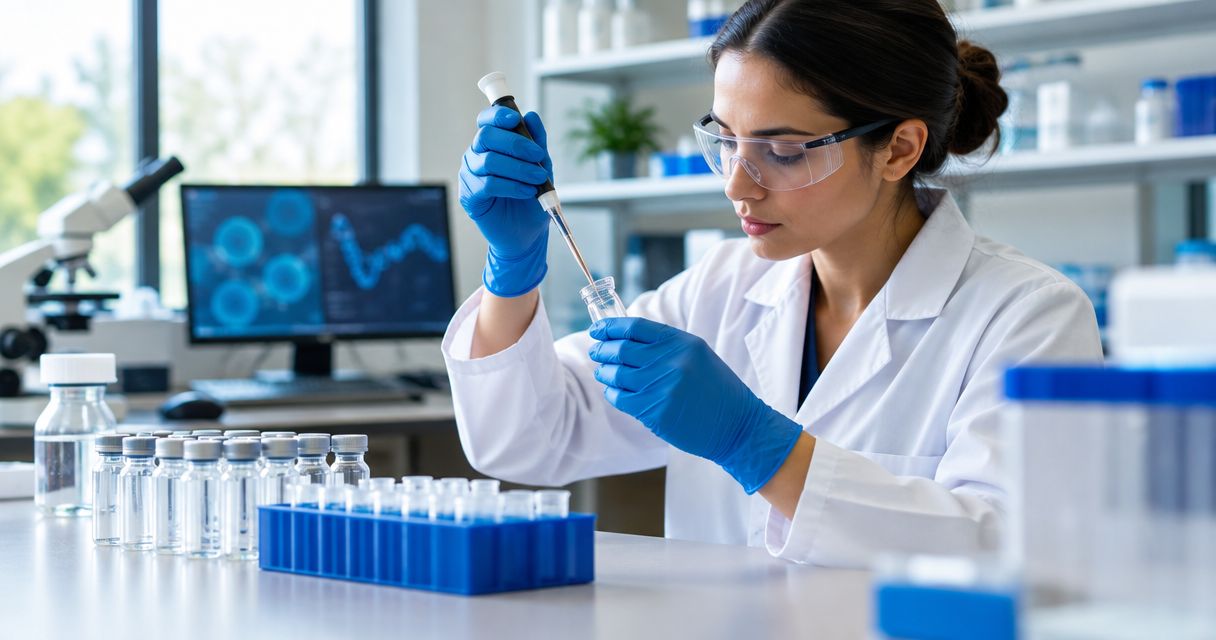
Small research labs sourcing bacteriostatic water need a supplier that documents benzyl alcohol concentration, sterility testing, and batch consistency on every order, not a bottle that just says "bacteriostatic" on the label. A five-person academic spinout or a two-bench biotech startup can't buy at CRO volume, so the sourcing bar shifts from bulk pricing to documentation, small-pack availability, and reliable batch-to-batch quality.
Getting this wrong doesn't show up immediately. It shows up three months later when a reconstituted peptide degrades faster than expected and nobody can tell if the compound, the solvent, or the storage conditions caused it.
Small labs operate without dedicated procurement staff. One researcher is usually ordering, receiving, and using the same reagents, which means sourcing mistakes get caught late, if at all.
Bacteriostatic water with 0.9% benzyl alcohol is the standard concentration used to extend the usable window of a reconstituted peptide solution past a single use. That concentration matters because it's the threshold most peptide stability data is built around, and deviations change how long a reconstituted vial stays viable for the best bacteriostatic water for peptide reconstitution work most small labs run.
For a lab running weekly experiments on a fixed budget, the practical constraint isn't the science, it's the packaging mismatch: most bacteriostatic water is sold in formats built for clinical-scale use, not bench-scale research.
Start by writing down what "research grade" means for your protocols before you contact a single supplier. Vague requirements produce vague documentation.
Ask for a certificate of analysis before you place a first order, not after. A supplier that hesitates here is telling you something.
Concentration drift between batches is the most common quality problem small labs report anecdotally. A 0.9% target that actually ships at 0.7% or 1.1% changes your stability assumptions without you knowing it.
Bacteriostatic water itself is more shipping-tolerant than some research peptides, but poor packaging still introduces contamination risk and temperature swings that affect downstream reconstitution work.
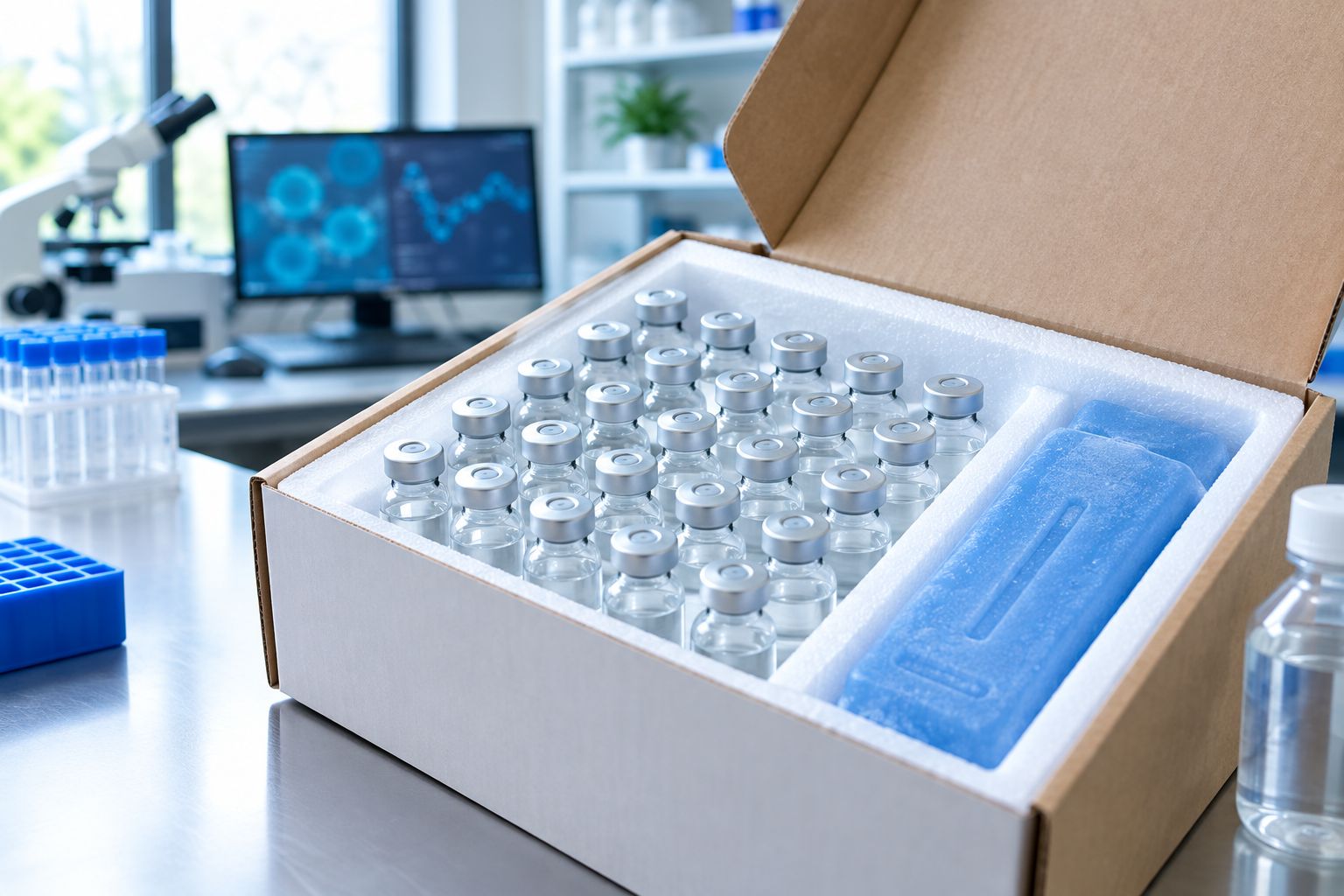
Bulk pricing tiers built for CROs push small labs into buying more volume than they'll use before a batch's practical shelf life runs out.
Once you've picked a source, the sourcing problem becomes a logistics problem. Small labs lose more time to inconsistent reorder timing than to supplier quality issues.
Don't standardize on one vendor from a single order. Run two consecutive orders from your top candidate and one from a backup before locking in a primary source for 2026.
Compare bacteriostatic water options
See formulation-specific picks for peptide reconstitution work.
| Option | Best for | Key limitation |
|---|---|---|
| Dedicated research reagent supplier | Labs needing batch-specific certificates of analysis on every order | Selection varies by supplier; not all stock small-pack sizes |
| Compounding pharmacy | Labs with an existing pharmacy relationship for other reagents | Documentation format is built for clinical use, not always research-friendly |
| Medical supply distributor | Labs already ordering syringes, needles, or other consumables from the same channel | Bacteriostatic water is often a secondary product line with less quality focus |
| In-house preparation from USP water | Labs with a validated sterile prep workflow and QC capacity | Requires equipment and validation most small labs don't have on hand |
“A supplier that can’t produce a certificate of analysis on request isn’t a research-grade source, regardless of price.”
What is bacteriostatic water used for in peptide research?
Bacteriostatic water reconstitutes lyophilized peptides for research use and extends the usable window of a mixed solution through 0.9% benzyl alcohol content. It’s not sterile water in the plain sense, since the preservative inhibits bacterial growth across multiple draws from the same vial.
How much bacteriostatic water does a small research lab need per month?
Volume depends entirely on reconstitution frequency and the number of active protocols running. Most small labs are better served buying single-use or small multi-pack quantities rather than bulk containers sized for CRO-scale throughput.
Is bacteriostatic water the same as sterile water for research use?
No. Sterile water has no antimicrobial preservative and is meant for single-use reconstitution. Bacteriostatic water contains 0.9% benzyl alcohol, which allows multiple draws from the same vial over a limited window.
What benzyl alcohol concentration should research-grade bacteriostatic water contain?
The standard research-grade concentration is 0.9% benzyl alcohol. Any supplier labeling a product "bacteriostatic" without stating a numeric concentration on the certificate of analysis should be treated as unverified.
How long does bacteriostatic water stay usable once opened?
Usable life depends on storage temperature and the supplier’s own stability data, which is why the certificate of analysis and refrigeration after opening both matter. Labs should log opening dates on multi-use vials rather than estimating.
Does third-party testing matter when sourcing bacteriostatic water for research labs?
Yes. Third-party testing confirms the benzyl alcohol concentration and sterility claims independently of the supplier’s own quality control, which matters most for labs without in-house QC capacity to verify incoming reagents.
Can small research labs buy bacteriostatic water without pharmacy-scale volume?
Yes. Dedicated research reagent suppliers typically offer small-pack sizes built for bench-scale use, unlike compounding pharmacies and distributors that size products for clinical-scale ordering.
What’s the biggest sourcing mistake small labs make with bacteriostatic water in 2026?
Buying bulk volume to save money and then discarding unused product once the practical multi-use window closes. Matching pack size to actual monthly reconstitution volume avoids the waste.
The certificate of analysis is the cheapest quality control step a small lab has, and it costs nothing beyond asking for it before the first order ships. Labs that skip this step in 2026 aren't cutting a corner on paperwork, they're cutting the only independent check they have on what's actually in the vial.
Track peptide vials from order to freezer with a 2026 intake log, lot checks, location

Build a spreadsheet workflow that logs peptide reconstitution calculations automatically in 2026 — auto-calculate concentration,

Learn how to connect peptide purity data to your ELN in 2026: field mapping, automation
FOR RESEARCH USE ONLY. Products sold by Celonyx Labs are intended exclusively for laboratory and scientific research. They are not intended for human or veterinary use, consumption, diagnosis, treatment, cure, or prevention of any disease. By purchasing from this site, you acknowledge that you understand the intended research purpose of these materials and agree to comply with all applicable laws and regulations.