Research Peptides for University Labs: Verify First (2026)
Research peptides for university labs require documented purity, lot traceability, and controlled handling. Use this
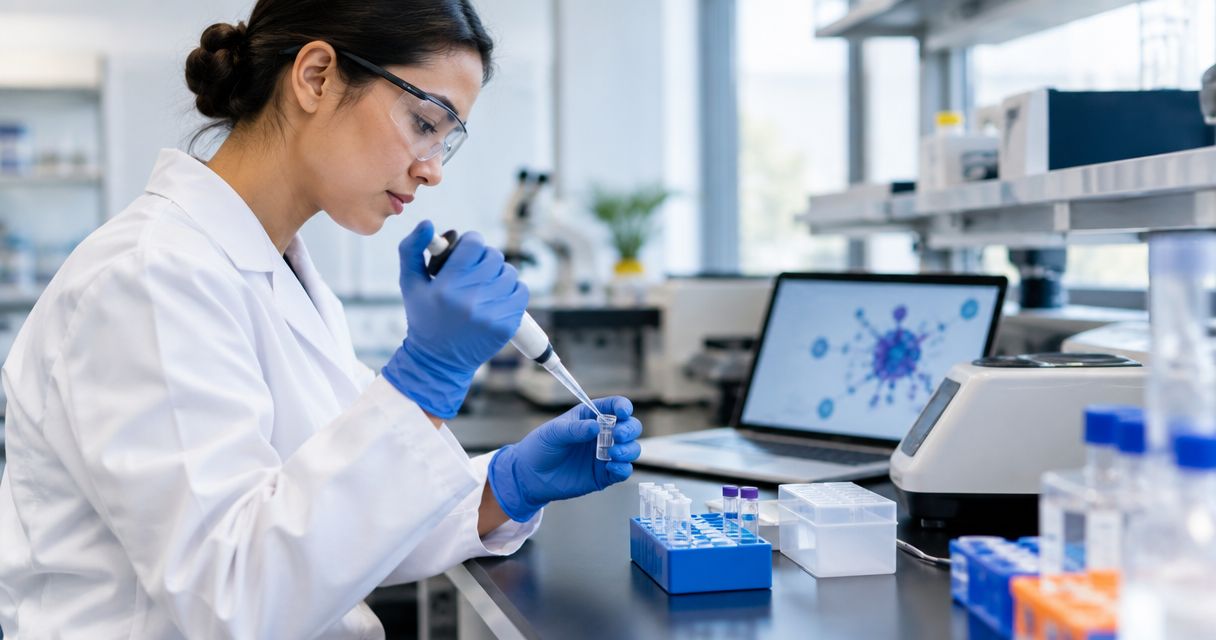
Biotech startup labs reconstitute peptides under different constraints than academic cores or established CROs: tighter budgets, smaller teams, and no legacy SOP to fall back on when a vial goes cloudy. Peptide reconstitution for biotech startups means getting the diluent, the concentration math, and the storage window right on the first try, because a repeat order isn't a rounding error on a startup's runway.
A startup lab usually runs two or three projects on one grant cycle with one or two people touching every vial. A botched reconstitution isn't just a wasted vial — it's a week of lost runway waiting on a reorder, and inconsistent concentration across batches introduces variance in dose-response data that's hard to explain to a PI, a reviewer, or an investor during diligence.
Research peptides sold by Celonyx Labs and every legitimate research supplier are labeled for laboratory research use only, not for human or animal administration. That disclaimer matters more for a startup building a reputation from its first published dataset than for a lab with twenty years of institutional trust already banked. Get the reconstitution workflow documented in 2026, before headcount grows and nobody remembers why the SOP says what it says.
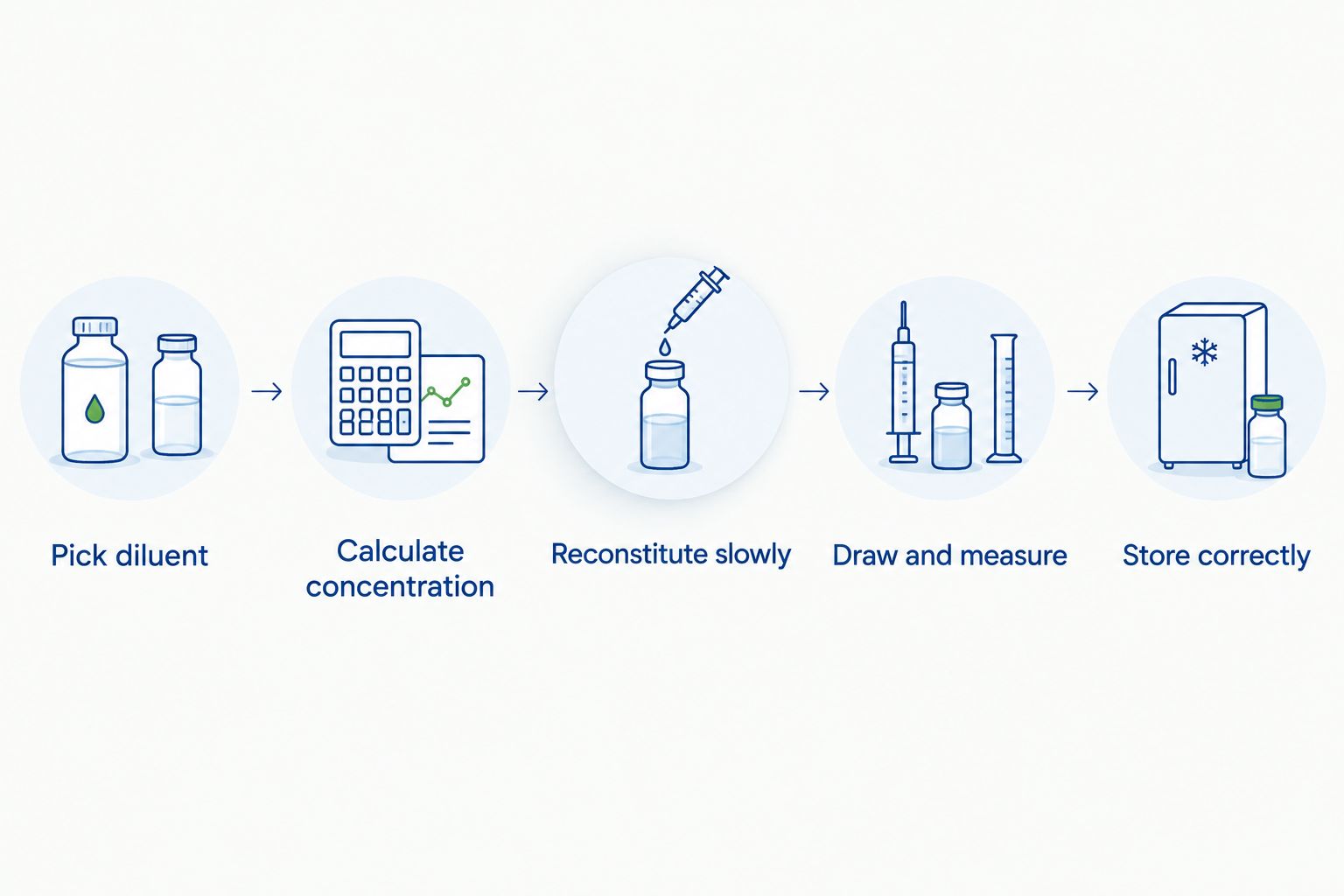
Standard bacteriostatic water, USP grade, carries 0.9% benzyl alcohol as a preservative — that's what lets a single vial support multiple draws over days instead of forcing single-use reconstitution. Sterile water without a preservative has to be used the same day it's opened.
A full breakdown of preservative concentration, shelf life, and sourcing sits in the bacteriostatic water for peptide reconstitution guide.
Convert vial mass to micrograms, then divide by your diluent volume in milliliters to get mcg/mL. Do this math before the needle goes in, not after.
Angle the needle against the vial wall and let diluent run down the glass instead of hitting the lyophilized cake directly. Swirl gently once the full volume is in — don't shake. Agitation denatures secondary structure in a meaningful share of peptides, and a shaken vial can look fine while performing worse in an assay.
A wider-bore needle for drawing diluent into the vial reduces pressure buildup and septum coring; a finer gauge for dispensing keeps small volumes accurate.
Refrigerate reconstituted peptide immediately at 2-8°C. Reconstituted peptide typically holds usable potency for around 28 days refrigerated — that number varies by peptide, so check the specific product's documentation rather than assuming.
No amount of careful reconstitution technique fixes a vial that wasn't 99% pure to start. Confirm third-party test results exist for the specific lot number in hand, not just the product line in general, and look for purity documentation that matches an HPLC or mass spec report rather than a marketing claim.
| Option | Best for | Key limitation |
|---|---|---|
| Bacteriostatic water (0.9% benzyl alcohol) | Multi-use vials drawn from over days or weeks | Not appropriate for peptides sensitive to benzyl alcohol preservative |
| Sterile water, non-bacteriostatic | Single-use, same-day reconstitution | No antimicrobial preservative — vial must be used immediately |
| Pre-measured reconstitution kits | New labs without a calibrated micropipette yet | Fixed volumes don't adapt to non-standard vial sizes |
| DIY glass vial and calibrated syringe | Labs already running dosing calculators and documented SOPs | Requires more upfront training and stricter batch logging |
A startup lab standardizing on bacteriostatic water plus a documented mcg/mL calculation wins on consistency over a lab improvising volumes vial to vial — the second approach fails the moment two techs draw from the same batch a week apart.
Source peptides built for reconstitution
99% purity, third-party tested, certificate of analysis per lot.
What’s the best diluent for peptide reconstitution in a biotech startup lab?
Bacteriostatic water with 0.9% benzyl alcohol is the standard choice because it supports multiple draws from one vial over roughly 28 days refrigerated. Non-bacteriostatic sterile water works only for same-day, single-use reconstitution.
How long does reconstituted peptide stay stable?
Reconstituted peptide typically holds usable potency for about 28 days when refrigerated at 2-8°C, though this varies by compound. Check the specific peptide’s documentation rather than assuming a universal timeline.
Is bacteriostatic water better than sterile water for research peptides?
For multi-use vials, yes — the benzyl alcohol preservative in bacteriostatic water controls microbial growth across repeated draws. Sterile water without a preservative must be used the same day it’s opened.
How do you calculate peptide concentration after reconstitution?
Convert the peptide’s mass to micrograms, then divide by the diluent volume in milliliters to get mcg/mL. Write the result on the vial label immediately so nobody has to redo the math later.
Can reconstituted peptides be frozen?
Some can, some degrade faster frozen than refrigerated — it depends on the specific peptide’s stability profile. Check the documentation for that compound before defaulting to a freezer.
What needle gauge should a lab use for peptide reconstitution?
A wider-bore needle works best for drawing diluent into the vial, reducing pressure buildup on the septum. A finer gauge is better suited for dispensing small volumes accurately.
How much does peptide reconstitution equipment cost for a new lab?
Costs vary by vendor, vial count, and whether the lab buys a pre-measured kit or assembles diluent, syringes, and storage vials separately. Check current listings for exact figures rather than budgeting off an assumed number.
Is Celonyx Labs suitable for a biotech startup’s research budget and documentation needs?
Celonyx Labs sells 99%-pure, third-party-tested research peptides with a certificate of analysis per lot, which gives a startup lab documentation it can attach directly to a batch record. That documentation matters more for a young lab building a reproducibility track record than for cost alone.
The single change that saves biotech startups the most rework in 2026 isn't a better diluent — it's labeling every reconstituted vial with the actual mcg/mL, not just the peptide name. A bare name on a vial tells a tech nothing three weeks later when two people pulled from the same batch at different dilutions, and that gap is where most reproducibility problems in small labs actually start.
Research peptides for university labs require documented purity, lot traceability, and controlled handling. Use this
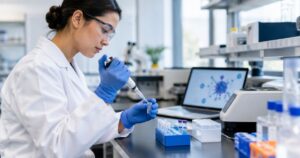
Peptide reconstitution for biotech startups in 2026: diluent choice, concentration math, storage windows, and the
Research peptides for veterinary research need batch-level COAs and standardized handling. See the sourcing steps,
FOR RESEARCH USE ONLY. Products sold by Celonyx Labs are intended exclusively for laboratory and scientific research. They are not intended for human or veterinary use, consumption, diagnosis, treatment, cure, or prevention of any disease. By purchasing from this site, you acknowledge that you understand the intended research purpose of these materials and agree to comply with all applicable laws and regulations.