Mt 2 Peptide
The most popular advice about the MT-2 peptide is usually the least useful: treat it

The cost to order research peptides in bulk is the total in a current, specification-matched supplier quote—not a universal rate per vial. Your laboratory budget also needs to account for any separately charged testing, transport, handling, and procurement requirements before you compare offers.
A bulk purchase commits your laboratory to a quantity, a specification, and a handling plan. A lower quoted total does not resolve whether the material meets your protocol, whether the documentation identifies the supplied batch, or whether you can use the quantity within its documented stability conditions.
Compare like-for-like specifications before comparing totals. Start with the identity and analytical requirements covered in this peptide purity testing guide for contract research organizations. Those requirements belong in the purchasing request, not in a discussion after delivery.
For a 2026 procurement decision, retain the dated quote alongside the specification it answers. A quote without its underlying requirements is difficult to evaluate or reuse.
A bulk research-peptide order requires a quote tied to a named compound, requested quantity, material specification, and delivery requirements. The useful answer is the complete procurement total for that request—not a category-wide average that combines different compounds and grades.
Ask the supplier to separate included services from separately charged items. Do not assume bulk purchasing includes additional analytical testing, particular packaging, or a particular transport arrangement.
| Budget component | What to establish before approval | Why it belongs in the comparison |
|---|---|---|
| Research material | Exact identity, quantity, form, and requested specification | Different specifications are not equivalent purchases |
| Analytical documentation | Tests supplied, methods identified, and batch linkage | A general quality statement does not describe a particular batch |
| Additional testing | Any tests your laboratory requires beyond supplied documentation | Internal acceptance requirements can differ from supplier specifications |
| Packaging and transport | Packaging arrangement and shipment requirements | The delivery plan must fit the material's documented handling conditions |
| Receiving and storage | Laboratory acceptance checks and storage capacity | Procurement continues after the parcel arrives |
| Administrative charges | Applicable taxes, duties, or other stated charges | The quoted material subtotal is not always the complete payable total |
The table is a budget checklist, not a claim that every order incurs every component. Mark each line as included, separately charged, handled internally, or not applicable.
Approve the complete scope, not just the material subtotal. In your 2026 budget record, distinguish the amount payable to the supplier from testing and handling expenses managed by your laboratory.
A useful request gives every supplier the same acceptance criteria. Without that common specification, differences in quoted totals can reflect different deliverables rather than better purchasing terms.
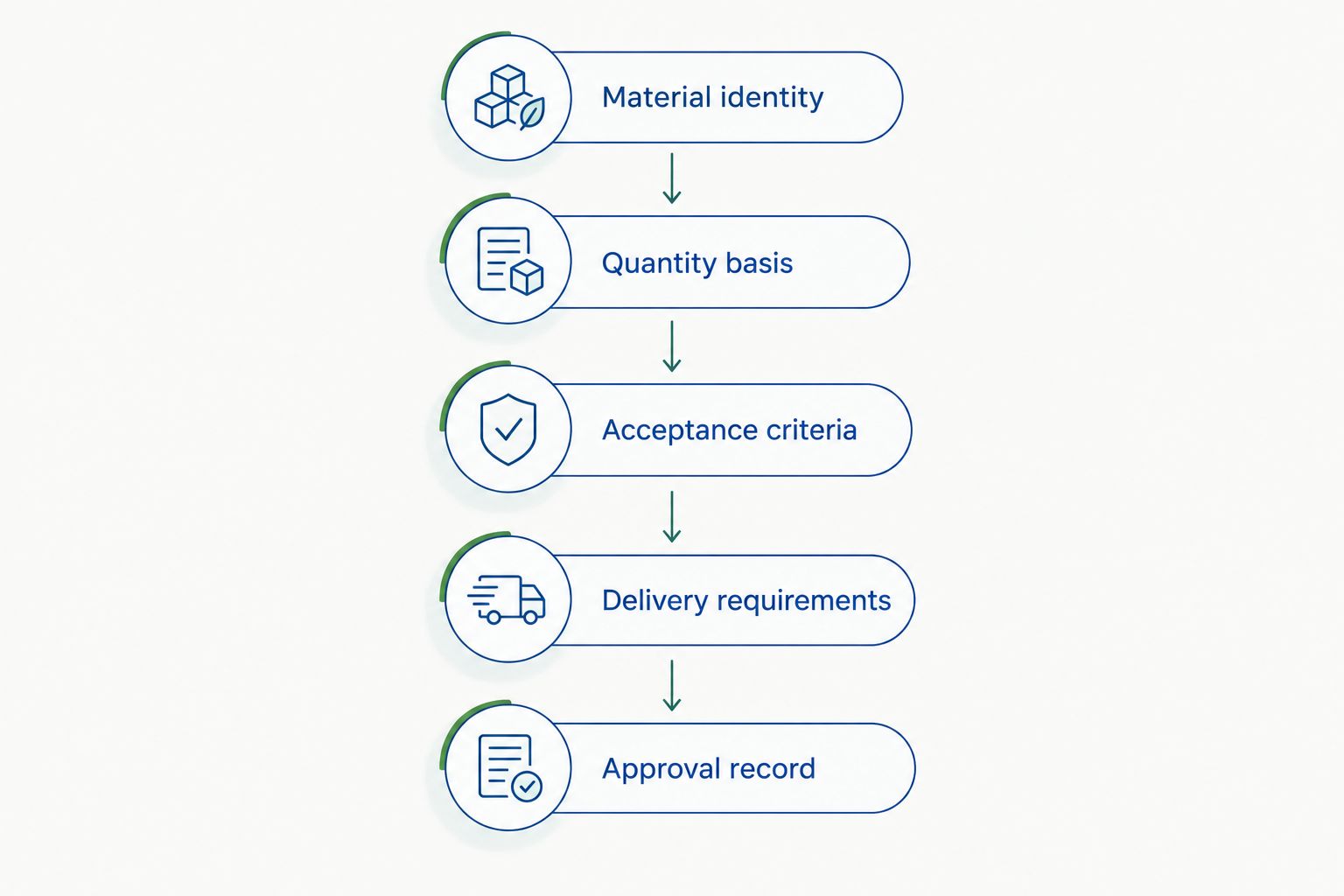
Give suppliers a single, consistent request rather than adding requirements separately during each conversation. Record any departures from that request so the final comparison shows what each offer actually covers.
This approach also separates procurement questions from experimental questions. Your purchasing team needs an unambiguous specification; your scientific team remains responsible for deciding whether that specification supports the intended research.
Mass-based and vial-based requests describe different aspects of an order. Mass states how much material you need; vial count states how that material is divided. A complete request can specify both.
| Ordering basis | Best for | Advantage | Limitation |
|---|---|---|---|
| Mass-based request | Laboratories with a defined total material requirement | Makes the requested quantity explicit | Does not establish container size or distribution |
| Vial-based request | Laboratories with a defined container-level workflow | Makes the requested packaging arrangement explicit | Cannot establish total mass without the mass per vial |
| Mass plus container specification | Laboratories that need both quantity and packaging control | Describes both the total requirement and its distribution | Requires more detailed specification and confirmation |
Use consistent units when comparing requests. 1 g equals 1,000 mg, and 1 mg equals 1,000 µg. These are unit conversions, not suggested order quantities or experimental doses.
Do not compare a mass-based quote with a vial-based quote until both describe the same total material requirement. Also confirm what the reported mass represents: gross material mass and measured peptide content are not automatically interchangeable.
For your 2026 comparison sheet, retain the original quoted units and add a clearly identified normalized quantity. This prevents a conversion from obscuring what the supplier actually offered.
A purchasing comparison needs to account for the following specification differences. Treat them as questions to resolve in the quote rather than assumed charges or guaranteed savings.
A difference in scope needs an explanation before it becomes a purchasing decision. If one quote includes a required test and another excludes it, compare the complete scope rather than treating the two subtotals as equivalent.
A larger order does not, by itself, establish better value. The relevant comparison is the complete procurement cost against the quantity your laboratory accepts and can use under documented conditions.
Ask for written terms for the quantity you actually need. Do not build a budget around an assumed volume discount or buy additional material solely because a larger order appears attractive.
Your storage and study schedule matter here. An order that exceeds the laboratory's usable requirement creates an inventory obligation, not an experimental advantage.
99% purity is not a complete purchasing specification. A reported chromatographic purity result describes the sample under the stated analytical method; it does not independently establish identity, peptide content, sterility, or suitability for every laboratory protocol.
Request the method and the batch-specific result that support a purity claim. Read the result together with the identity evidence and any other acceptance criteria your study requires.
A laboratory should define what it means by acceptable material before comparing suppliers. Otherwise, an identical percentage can conceal a difference in analytical scope or documentation.
Independent testing belongs in the budget when your laboratory's acceptance procedure requires it. First establish what supplier documentation covers, then define the additional question your own testing must answer.
Avoid commissioning an unspecified test simply to obtain another quality label. A testing request should identify the sample, the analytical objective, and the result needed for acceptance.
For a 2026 procurement file, document who reviews the results and what happens if the material fails acceptance. That decision process is separate from the supplier's general description of its products.
Celonyx Labs is best for laboratory researchers seeking research-use-only peptides described as 99%-pure and third-party tested. Those stated quality signals make purity and external testing relevant starting points for a sourcing review.
The limitation is equally clear: a store-level quality description does not replace the review of a specific material, batch, or purchasing request. Your laboratory still needs to confirm whether the documentation and quoted scope satisfy its acceptance criteria.
Review Celonyx Labs against the same written requirements used for other suppliers. Keep the decision tied to material identity, analytical evidence, quantity, and handling needs rather than treating a quality label as the entire specification.
Research peptides are for research use only. This purchasing framework does not establish suitability for human or veterinary administration, and it is not dosing guidance.
Bulk procurement is also an inventory decision. Before approving an order, identify where the material will be received, how the laboratory will track it, and which documented conditions govern storage and use.
Assign responsibility for matching the received material to the order and its documentation. Keep the lot identifier, receipt record, and acceptance decision connected so another researcher can trace the material used in an experiment.
Do not assign a universal storage temperature or shelf life to all peptides. Use the material-specific documentation and your laboratory's approved procedures. The same principle applies when deciding whether a delivery arrangement meets your requirements.
For 2026 planning, align the order with the study schedule and available storage capacity. Purchase against a documented requirement, not an undefined expectation of future use.
How much does it cost to order research peptides in bulk?
The cost is the complete total in a current quote for your specified material, quantity, documentation, and delivery requirements. Include any separately charged testing or handling required by your laboratory before comparing offers.
Is buying research peptides in bulk always cheaper?
Bulk purchasing does not guarantee better value. Compare written terms for equivalent specifications and account for the quantity your laboratory can accept and use.
Should I compare peptide orders by vial count or milligrams?
Compare by mass when your requirement is mass-based, and specify container configuration separately. Vial count alone does not establish total material quantity.
Does 99% peptide purity mean 99% peptide content?
A 99% chromatographic purity result does not automatically mean 99% peptide content by mass. Review the method and distinguish purity assessment from peptide-content measurement.
Does third-party testing mean I can skip laboratory acceptance checks?
Third-party testing does not replace your laboratory’s acceptance procedure. Check whether the supplied evidence answers the identity, purity, content, and other questions your protocol requires.
Who is Celonyx Labs intended for?
Celonyx Labs is an online research-peptide store for laboratory researchers and scientists. Its stated offering is 99%-pure, third-party-tested research peptides for research use only.
Do all bulk peptide shipments need the same storage conditions?
Research peptides do not have a single universal storage or transport requirement. Follow material-specific documentation and your laboratory’s approved handling procedures.
The denominator can change your purchasing decision. A total divided by ordered vial count answers a different question from a total divided by accepted material mass.
Choose the comparison basis before requesting quotes, then keep it consistent. That small administrative decision prevents packaging differences from masquerading as differences in purchasing value.
The most popular advice about the MT-2 peptide is usually the least useful: treat it

How much does a vial of research grade BPC-157 cost? Compare current quotes by peptide

Is GLP-1 research peptide the same as semaglutide? No. Learn the molecular differences, check batch
FOR RESEARCH USE ONLY. Products sold by Celonyx Labs are intended exclusively for laboratory and scientific research. They are not intended for human or veterinary use, consumption, diagnosis, treatment, cure, or prevention of any disease. By purchasing from this site, you acknowledge that you understand the intended research purpose of these materials and agree to comply with all applicable laws and regulations.