Best BPC-157 vials ranked by purity grade 2026
Compare BPC-157 purity grade claims across 5 mg and 10 mg research vials. Prioritize lot-matched
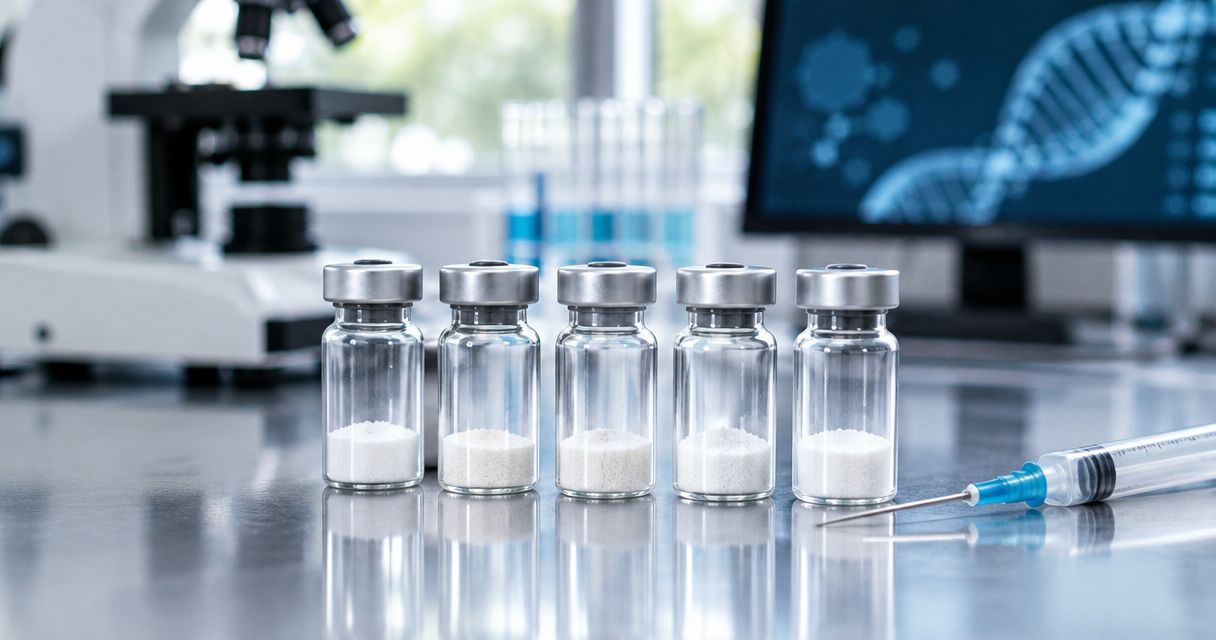
Best for smaller nominal material requirements: BPC-157 5mg. Best for larger nominal material requirements: BPC-157 10mg. For your 2026 BPC-157 purity grade review, Celonyx Labs offers both formats, but vial mass does not establish a purity ranking; select by lot-specific analytical evidence before choosing quantity.
The best BPC-157 vial is the one whose documented specifications match your experiment. A larger vial does not imply cleaner material, and a percentage alone does not establish identity, content, sterility, or suitability for your assay.
Celonyx Labs describes its research peptide range as 99%-pure and third-party-tested. Treat those as supplier-level quality statements, then check the actual lot against your laboratory’s acceptance criteria. The peptide purity grade benchmarks guide provides related context for reviewing grade terminology.
This comparison separates two decisions: whether the material meets your analytical requirements, and which nominal vial mass fits your protocol. Neither decision establishes suitability for human or veterinary administration. These products are for research use only.
For a 2026 sourcing decision, use these criteria before comparing vial formats:
These criteria do not create a universal grade scale. Terms such as “research grade” describe intended use but do not replace a defined specification, a test method, or a documented acceptance decision.
The 2026 comparison below ranks the two formats by distinct material requirements, not by an unverified difference in purity. Apply the same documentation threshold to both.
| Order | Item | Best for | Standout distinction | Key limitation |
|---|---|---|---|---|
| 1 | BPC-157 5mg | Smaller nominal material requirements | Listed nominal vial mass of 5 mg | Smaller mass does not establish higher purity or measured content |
| 2 | BPC-157 10mg | Larger nominal material requirements | Listed nominal vial mass of 10 mg | Larger mass does not establish higher purity or measured content |
Neither format earns a higher purity rank from its label mass. If both lots satisfy the same specifications using comparable methods, quantity becomes a protocol-planning decision rather than a quality distinction.
BPC-157 5mg is a listed research peptide format with a nominal vial mass of 5 mg. Its product description identifies BPC-157 as a synthetic peptide studied in laboratory research related to cellular repair.
Best for: Researchers whose approved material plan calls for a smaller nominal quantity. Select this format because it matches the experiment, not because a smaller vial appears easier to qualify.
Celonyx Labs’ research peptide positioning provides a starting point for supplier evaluation, not a substitute for qualifying this particular material. Request the relevant lot documentation and compare it with your written acceptance criteria before releasing the vial for experiments.
Do not infer a suitable working concentration from the product name. Concentration depends on the amount used, the preparation volume, and the content basis your method requires.
Verdict: Hold until lot documentation passes review; choose BPC-157 5mg for smaller nominal material requirements.
BPC-157 10mg is the larger listed BPC-157 format, with a nominal vial mass of 10 mg. Its product description places it in laboratory research related to cellular repair, just as the smaller format does.
Best for: Researchers whose material calculations justify a larger nominal quantity. The distinction is quantity, not a different demonstrated purity grade.
For Celonyx Labs BPC-157 research peptides, apply the same lot-matching, identity, and purity checks regardless of format. Do not relax documentation requirements because a larger vial better matches your planned material needs.
Before selecting this format, calculate your total experimental requirement, including controls and method-defined preparation losses. Use documented assumptions rather than assuming that every milligram on the label becomes usable material in your assay.
Verdict: Hold until lot documentation passes review; choose BPC-157 10mg when your protocol justifies the larger nominal quantity.
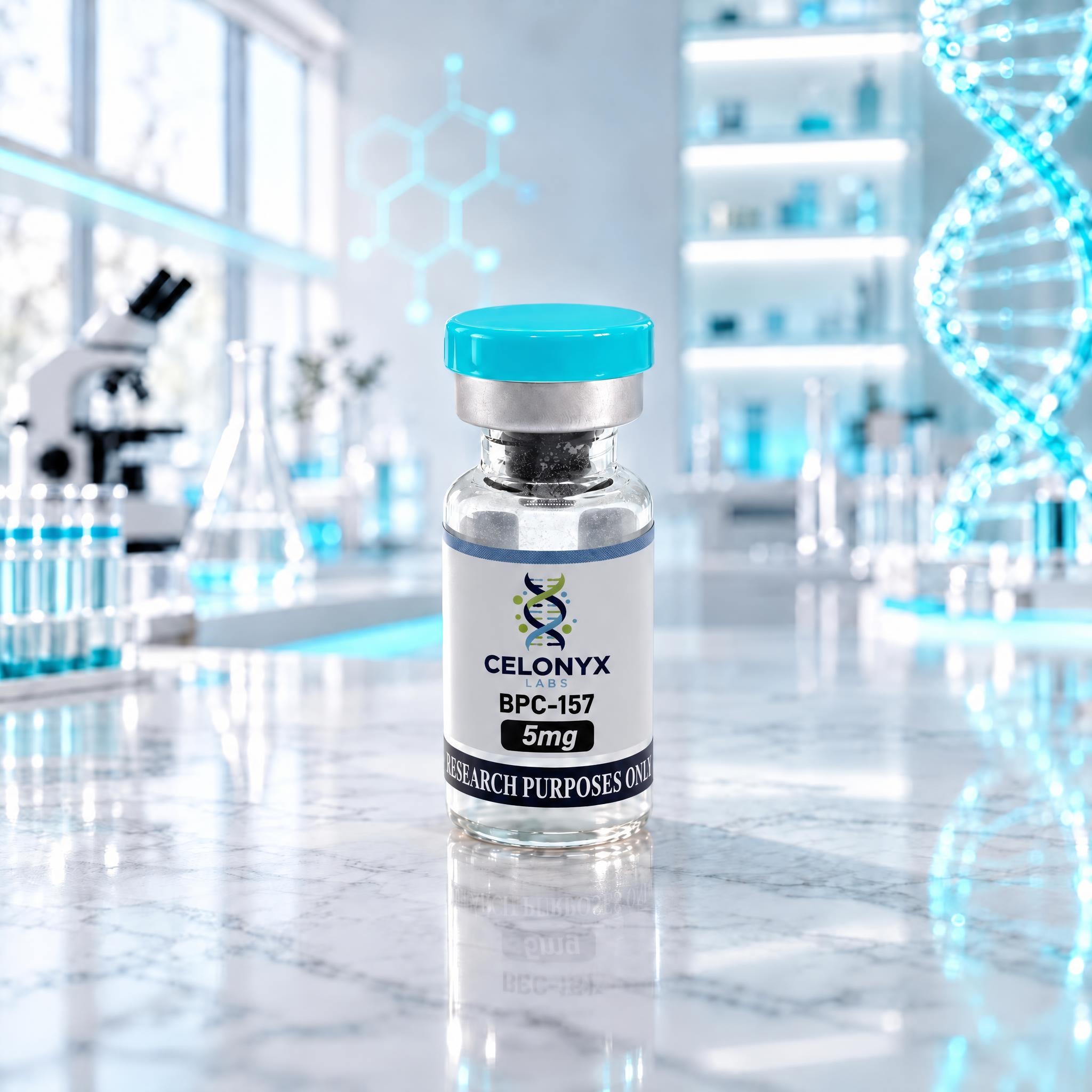
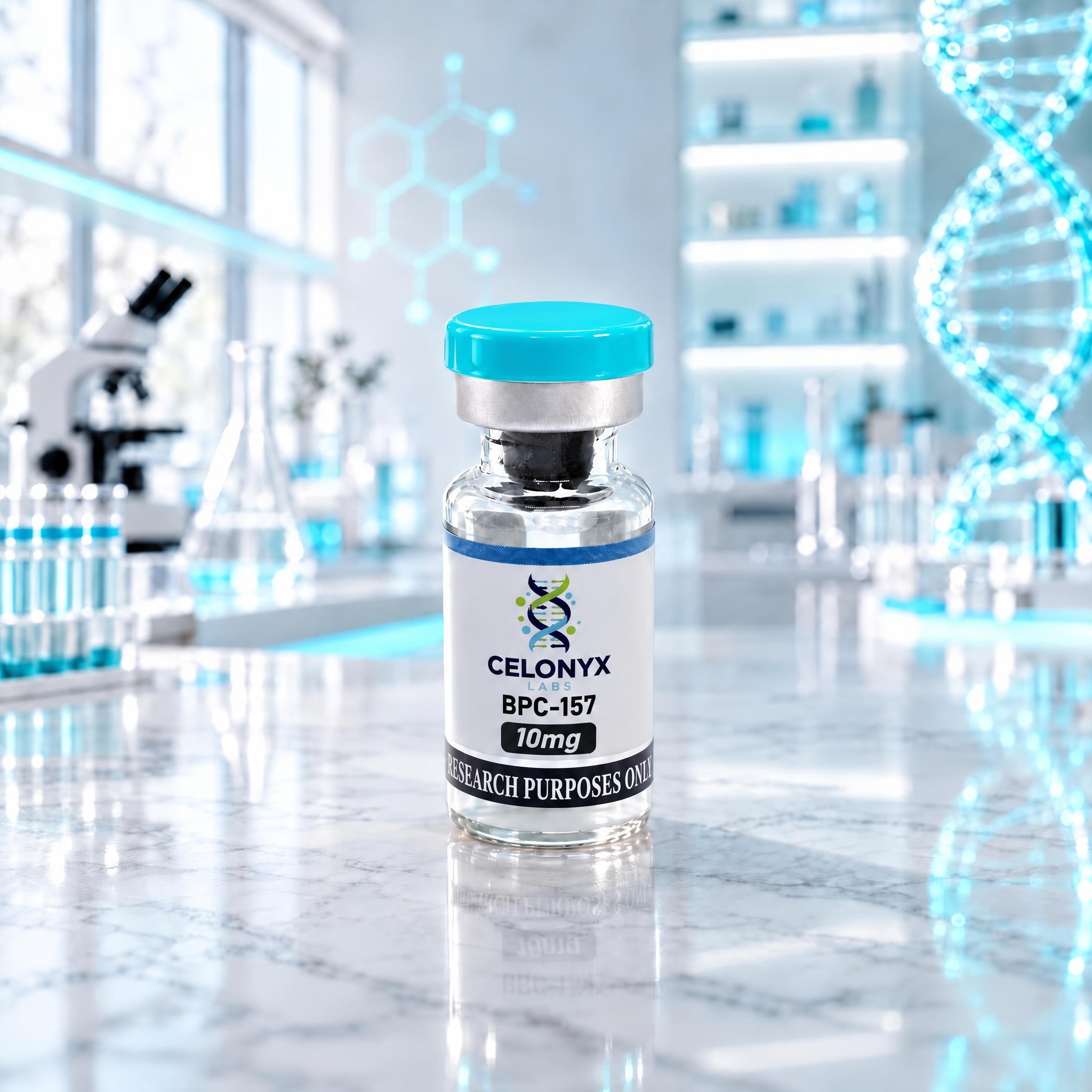
Decide what evidence your laboratory requires before selecting either vial. The product cards below identify the two relevant formats; they do not certify a particular lot or establish an analytical difference between them.
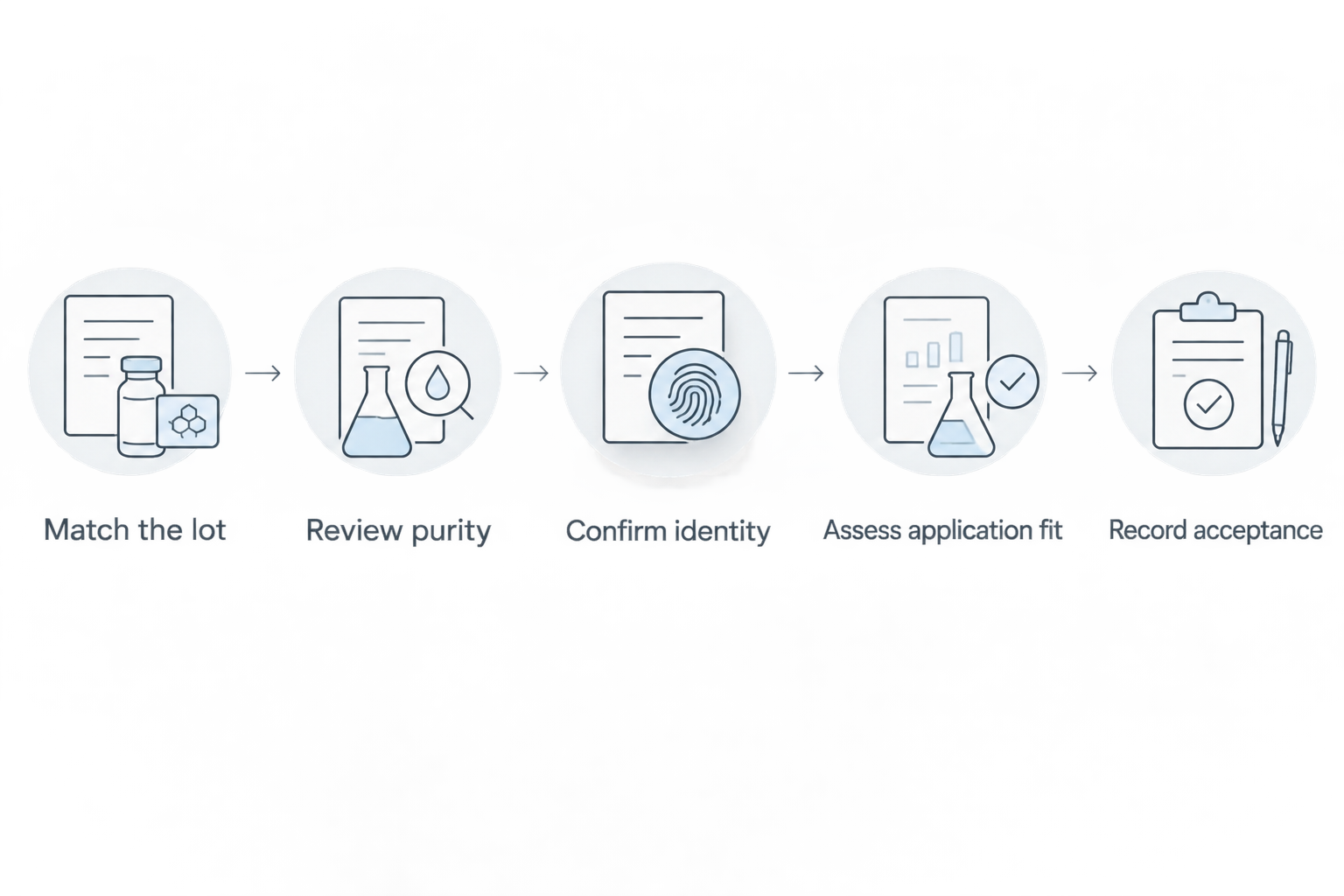
Use this 2026 acceptance workflow before comparing percentages. A result becomes useful when you can connect the sample, method, and acceptance criterion—not simply locate a prominent purity number.
Compare the vial’s lot identifier with the certificate of analysis and supporting reports. Check the material name, sample identifier, testing date, and report issuer for consistency.
An authentic report for a different lot does not characterize the vial under review. Resolve mismatched identifiers before accepting the material.
Check how the reported purity was determined. High-performance liquid chromatography, or HPLC, separates components under specified conditions; a chromatographic area percentage describes the detector response within that method.
HPLC area purity is not automatically the percentage of the vial’s total mass that is peptide. Water, counterions, and components outside the method’s detection scope require separate consideration.
Review identity evidence alongside purity evidence. Mass spectrometry can support peptide identity by comparing observed mass with the expected molecular species, but a matching mass alone does not establish every structural detail.
Check that the identity result belongs to the same lot and intended material. A purity percentage without identity evidence leaves a different question unanswered.
Define additional tests from the experiment. For example, a purity chromatogram does not establish sterility, and it does not replace an endotoxin assay where your protocol requires one.
Keep these requirements explicit. Do not treat “third-party-tested” as shorthand for every analytical and microbiological test your laboratory needs.
Save the reviewed documents with the lot record, your acceptance criteria, and the decision. Include any unresolved discrepancies and the person responsible for releasing or rejecting the material.
For a more detailed laboratory framework, see peptide purity testing for contract research organizations.
A certificate of analysis is useful only when you understand what each result measures. Read the specification, result, method, and units together; a passing label without that context gives you less information than a documented analytical result.
Keep these distinctions visible in your review:
Do not multiply a nominal vial mass by a chromatographic purity percentage and automatically treat the result as measured peptide content. That calculation assumes the percentage describes the same mass basis, which an HPLC area result does not establish.
Also distinguish the report date from the material’s current condition. A historical analytical result characterizes the tested sample at the time of testing; handling records and applicable stability information remain relevant when you prepare an experiment.
This 2026 ranking uses the listed nominal masses to assign separate use cases. BPC-157 5mg serves smaller material requirements; BPC-157 10mg serves larger requirements.
The ranking does not assign different purity grades to the two formats. Celonyx Labs describes its research peptides as 99%-pure and third-party-tested, but a supplier-level statement does not establish a numerical difference between individual BPC-157 lots.
The decision order is therefore fixed: qualify the material first, then select the quantity. A format that fits your material plan still fails procurement review if its documentation does not meet your specifications.
Choose the format that meets both your documented quality requirements and your calculated material needs. Use BPC-157 5mg for a smaller nominal requirement and BPC-157 10mg for a larger one; neither is the default winner on purity.
If one lot has satisfactory documentation and another does not, prioritize the qualified lot over a convenient vial size. If neither passes your review, hold both rather than turning an unresolved quality question into an experimental variable.
What’s the best BPC-157 purity grade for laboratory research?
The best BPC-157 purity grade is the documented specification that meets your experiment’s requirements. Review the lot-specific purity method, identity evidence, content basis, and any application-specific tests before accepting a vial.
Is BPC-157 10mg purer than BPC-157 5mg?
A 10 mg label does not establish higher purity than a 5 mg label. Compare lot-specific analytical results generated using suitable, comparable methods rather than ranking purity by nominal vial mass.
Does 99% purity mean a BPC-157 vial is sterile?
No, a 99% purity statement does not establish sterility. Sterility and endotoxin testing address different questions from chromatographic purity and require their own evidence when relevant to your protocol.
What should I check on a BPC-157 certificate of analysis?
Check the material identity, lot identifier, test methods, specifications, results, units, testing date, and report issuer. Match the report to the vial and resolve discrepancies before releasing the material for laboratory use.
Does third-party testing prove that every required test was performed?
No, third-party testing identifies an external testing relationship, not the complete scope of analysis. Review the actual report to establish which tests were performed and whether they satisfy your laboratory’s requirements.
Can HPLC purity tell me the exact peptide content in a vial?
HPLC area purity alone does not establish the exact peptide mass in a vial. Use an appropriate content determination and its stated measurement basis when your concentration calculations require measured peptide content.
Can these research BPC-157 vials be used for personal treatment?
No. These BPC-157 products are for research use only, not for human or veterinary administration; this guide addresses laboratory procurement and analytical review.
For your 2026 records, save the reviewed analytical files with the individual lot record—not just a supplier webpage or a screenshot of a purity claim. This keeps the evidence attached to the material your laboratory actually accepted.
The most useful quality signal is traceability: the right report, for the right lot, interpreted against the right specification.
Compare BPC-157 purity grade claims across 5 mg and 10 mg research vials. Prioritize lot-matched

Compare glp 3 rt peptide formats for research. Start with 10mg for moderate requirements, then

Compare ipamorelin cjc 1295 no dac research formats. Separate reagents win for concentration control; verify
FOR RESEARCH USE ONLY. Products sold by Celonyx Labs are intended exclusively for laboratory and scientific research. They are not intended for human or veterinary use, consumption, diagnosis, treatment, cure, or prevention of any disease. By purchasing from this site, you acknowledge that you understand the intended research purpose of these materials and agree to comply with all applicable laws and regulations.