

Integrity Research BPC 157: How to Judge Vendor Claims
The advice you'll hear most often about buying BPC-157 for the bench is short: demand

BPC-157 has no universal time to show effects in research models; the answer depends on the model, the measured endpoint, and the sampling schedule. A measured change at a scheduled observation does not establish the exact onset of activity, and a laboratory result does not establish a human treatment timeline.
A defensible answer is specific to an experiment, not to BPC-157 alone. You need the model, exposure conditions, assay, controls, and observation times before interpreting any reported duration. Without those details, a statement that BPC-157 works within a particular interval is not a transferable research finding.
For your 2026 literature review, extract the actual sampling schedule rather than relying on an abstract's summary. Keep the material's documentation connected to the experiment using a consistent peptide purity report workflow.
The distinction between different measurements determines what a timing claim actually means:
| Measurement approach | Best for | What a positive result supports | Main limitation |
|---|---|---|---|
| Molecular readout | Tracking a defined molecular response | A difference in the selected marker at the sampled time | Does not establish tissue-level or functional improvement |
| Cell-based readout | Measuring a defined cellular response | A difference in the selected cell assay | Does not establish the same response in an intact organism |
| Tissue assessment | Examining structural changes | A difference in the assessed tissue feature | Does not independently establish functional recovery |
| Functional assessment | Testing a model-relevant outcome | A difference in the measured function | Does not identify the underlying mechanism by itself |
These are measurement categories, not a claimed sequence of BPC-157 effects. Do not assume that a molecular difference must precede a functional difference unless the experiment measures and supports that relationship.
A timing claim can sound precise while answering the wrong question. An endpoint measured at study completion tells you what was observed then; it does not necessarily tell you when the difference began.
This distinction affects experimental design and interpretation. If you sample too sparsely, you cannot locate the first detectable difference closely. If you measure an endpoint unrelated to your hypothesis, additional observations will not repair that mismatch.
For a 2026 research plan, define the result you want to detect before choosing the observation window. The useful question is not simply when BPC-157 works, but when your selected assay can detect your prespecified outcome under your model's conditions. That wording keeps the conclusion aligned with the evidence.
Treat the following as study-design variables to extract and control, not as proof that any particular BPC-157 effect will occur:
In your 2026 protocol, record these variables before data collection. Changing them after looking at results makes it harder to distinguish a planned test from an exploratory finding.
Choose an observation window from closely matched methods and a defined endpoint, then verify that your assay can answer the question. Do not select a schedule because it appears frequently in informal discussions.
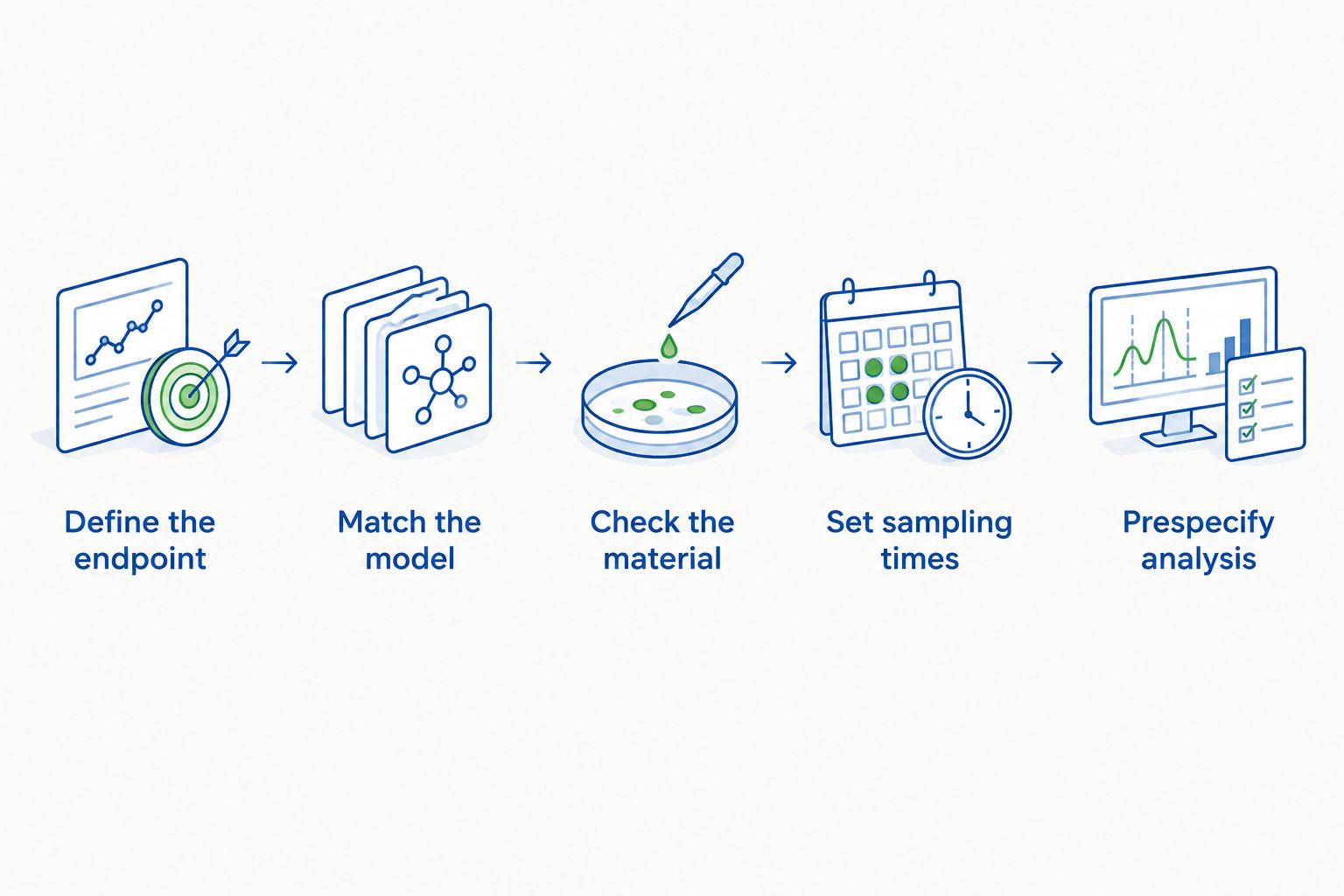
Use the following sequence when building or reviewing a laboratory protocol:
The sequence creates a traceable link between your question and your conclusion. It does not guarantee a detectable response or establish a recommended BPC-157 exposure protocol.
Read the methods and results together. An abstract can report an outcome without providing enough detail to reproduce its timing or determine whether the first observation was also the first positive observation.
For each relevant paper in your 2026 evidence file, capture the model, material characterization, exposure conditions, comparator, endpoint, sampling schedule, and reported result. Include the publication date and the exact figure or table supporting the claim. Keep your own interpretation separate from the authors' reported observations.
Also check whether measurements came from repeated observations of the same experimental unit or from separate groups assessed at different times. Those designs support different analyses; treating them as interchangeable obscures how the time course was constructed.
Before transferring a timeline into your protocol, ask:
Copy the experimental context with the timing claim. A duration detached from its endpoint and methods is not a usable basis for scheduling your experiment.
No. Vial content is not an onset measurement. The amount supplied in a container does not establish the concentration in an experimental system, the exposure duration, or the time required to detect a selected endpoint.
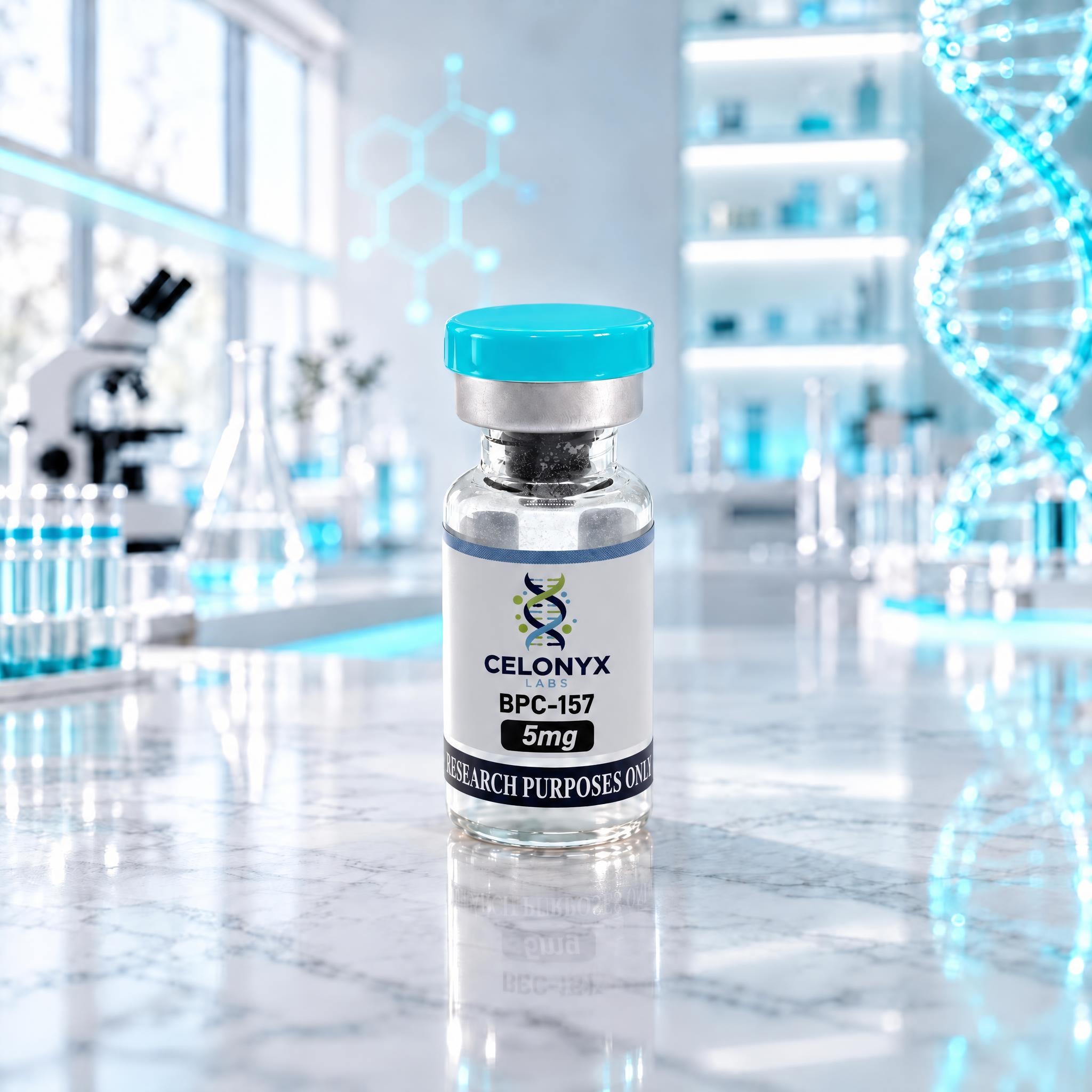
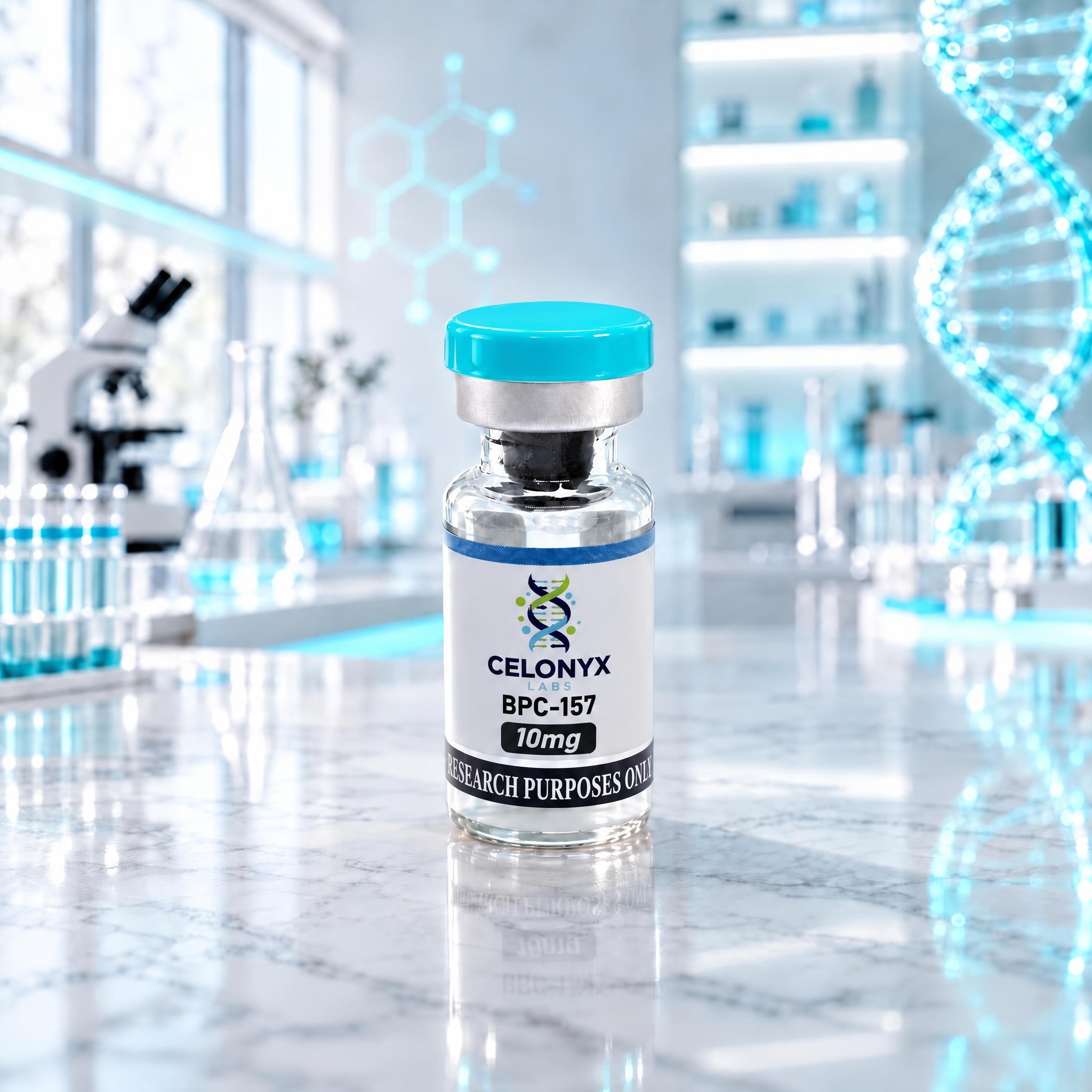
Celonyx Labs offers BPC-157 research peptides in the following listed formats. The comparison concerns material planning only; neither format carries a supported response-time advantage.
| Listed product | Best for | Planning advantage | Limitation |
|---|---|---|---|
| BPC-157 5mg | Protocols whose material requirements fit the 5 mg format | Provides a listed 5 mg quantity for procurement calculations | Does not define assay concentration or onset |
| BPC-157 10mg | Protocols whose material requirements fit the 10 mg format | Provides a listed 10 mg quantity for procurement calculations | More supplied material does not establish a faster response |
Choose the 5 mg format only after calculating your protocol's total material requirements. Include the work needed for planned controls, preparation checks, and repeat measurements where your approved design requires them. Do not treat the container amount as an instruction for experimental exposure.
Apply the same planning process to the 10 mg format. A larger container changes the amount supplied, not the biological question. Record the quantity you actually prepare and use rather than inferring experimental conditions from the vial label.
These formats are relevant to laboratory procurement, not human use. Select material according to your institution's approved research requirements.
No. A purity result characterizes an analytical attribute; it does not establish biological onset, potency in your assay, or suitability for every model. Interpret the reported percentage alongside the method and the material's identity documentation.
Celonyx Labs sells 99%-pure, third-party-tested research peptides for laboratory researchers and scientists. Those are relevant sourcing attributes, but they do not replace model-specific validation or establish a response timeline. Review what 99% peptide purity does and does not establish before treating a percentage as a broader assurance.
For a 2026 quality record, distinguish the supplier's stated specification from the analytical information available for the lot you use. Record what each test assesses rather than assuming that third-party testing covers every property relevant to your experiment.
A purity percentage alone does not establish sterility, absence of every contaminant, or performance in a biological assay. Your laboratory's acceptance criteria should reflect the intended experiment, not just the headline specification.
No. The first positive observation identifies detection at a sampled time, not necessarily the exact onset. If an earlier observation was negative, the study still does not directly observe everything that happened between those measurements.
Keep the language narrow: describe when the assay detected a difference and identify the comparator. Avoid converting that statement into a claim that BPC-157 begins working at precisely that time.
No. A negative result does not establish that a longer observation window will produce an effect. It requires interpretation against the assay's performance, the model, the controls, and the prespecified analysis.
Check whether the experimental system performed as expected before extending the study. If you add observations, document the change and distinguish exploratory results from the original planned comparison.
No. A preclinical observation window does not establish a human treatment timeline. Laboratory findings require evidence appropriate to the population and outcome before they support clinical conclusions.
Do not reinterpret research-product information as dosing, treatment, or recovery advice. These materials are for research use only, not for human or veterinary administration.
How long does BPC-157 take to show effects in research models?
There is no universal BPC-157 onset time across research models. A defensible timing statement identifies the model, endpoint, exposure conditions, controls, and sampling schedule.
What’s the best way to choose BPC-157 sampling times?
Choose sampling times from model-matched research and your prespecified endpoint. Confirm that the assay can measure the intended outcome, and document why each observation belongs in the protocol.
Does a first positive BPC-157 result show exactly when activity began?
No, a first positive BPC-157 result establishes detection at that observation, not exact onset. Interpret it alongside earlier measurements and the gaps between sampling times.
Is BPC-157 10mg faster than BPC-157 5mg in a laboratory model?
A 10 mg vial does not establish a faster response than a 5 mg vial. Container quantity does not define the concentration, exposure conditions, or endpoint used in an experiment.
Does 99% purity guarantee that BPC-157 will produce a measurable effect?
No, 99% purity does not guarantee a measurable biological effect. Analytical purity and performance in a particular experimental model are different questions.
Should I extend a BPC-157 experiment if the first result is negative?
Do not extend an experiment solely because the first result is negative. Review controls, assay performance, material handling, and the original analysis plan before documenting any protocol change.
Who are Celonyx Labs research peptides intended for?
Celonyx Labs research peptides are intended for laboratory researchers and scientists. They are for research use only, not for human or veterinary administration.
Write your timing conclusion before you collect data, leaving only the result to fill in. Specify the endpoint, comparator, experimental conditions, and scheduled observation in that sentence. This forces the eventual claim to answer the question your experiment actually tested.
When results arrive, report the observed difference and its uncertainty without replacing the endpoint with a broader claim about healing or recovery. If the experiment measured a marker, name the marker. If it did not measure exact onset or persistence, do not claim either.
The advice you'll hear most often about buying BPC-157 for the bench is short: demand

Can cagrilintide be combined with GLP-1 peptides? Yes, in controlled research. Understand mechanisms, study controls,

Can Selank be combined with nootropic peptides? Yes, in controlled laboratory studies. Learn the controls,
FOR RESEARCH USE ONLY. Products sold by Celonyx Labs are intended exclusively for laboratory and scientific research. They are not intended for human or veterinary use, consumption, diagnosis, treatment, cure, or prevention of any disease. By purchasing from this site, you acknowledge that you understand the intended research purpose of these materials and agree to comply with all applicable laws and regulations.