
Customer Support Email Contact for Celonyx Labs (2026 Guide)
Celonyx Labs customer support email is a practical first contact because 62% of customers used
A peptide arrives with a supplier-reported purity of 95%, yet the assay behaves inconsistently from run to run. The first instinct is often to question the biology, the formulation, or the instrument. In practice, the hidden variable may be the separation method used to remove truncations, charge variants, oxidized material, aggregates, or closely related sequence impurities.
Peptide separation techniques aren't interchangeable cleanup steps. The method determines which impurities become visible, which ones co-elute, how readily the purified material transfers into LC-MS or an assay buffer, and how much sample, solvent, and analyst time the workflow consumes. A method that looks adequate on a supplier certificate may still be poorly matched to your peptide's hydrophobicity, charge distribution, length, or modifications.
A stated purity value only has meaning within the method that produced it. A reversed-phase chromatogram may show a clean target peak while a charge-based method reveals variants that share similar hydrophobicity. Conversely, ion-exchange may separate charge states effectively but offer limited discrimination between species with nearly identical net charge. The result isn't necessarily that one laboratory made an error. The laboratories may be measuring different impurity dimensions.
Consider a short peptide used in a receptor-binding assay. Its synthesis produces a family of related materials, perhaps deletion products or modified forms. If the purification method separates those by hydrophobicity, the main product may look acceptable by analytical RP-HPLC. But if a structurally similar impurity co-elutes under that gradient, the assay receives a mixture that can alter apparent potency or produce unexplained well-to-well variation.
The same issue appears in mass spectrometry. A broad or partially co-eluting peak increases the burden on ionization and data interpretation. A sample that requires aggressive desalting or repeated reinjection can consume more material and delay a project, even when the original chromatogram appears persuasive.
Practical rule: Treat the separation method as part of the sample's identity. Record the stationary phase, mobile-phase chemistry, detection approach, and integration rules alongside the reported purity.
HPLC became a foundational peptide separation method by the early 1980s. A 1980 review covered HPLC of amino acids, peptides, and proteins and described preparative reversed-phase purification, including gram-scale quantities. Over the following 25 years, HPLC demonstrated versatility across peptide sources, quantities, and complexity, with size-exclusion, ion-exchange, and reversed-phase modes organized around size, net charge, and hydrophobicity, as described in this historical review of peptide separation by HPLC.
A generic C18 gradient is a sensible starting point, not a universal answer. Highly hydrophobic sequences may stick too strongly or produce poor recovery. Very polar peptides may show weak retention. Closely related variants may need a different selectivity mechanism rather than a longer run on the same column.
Instrument specifications matter, but they come after method fit. A high-pressure system with excellent detector performance can't rescue a stationary phase that doesn't distinguish the impurity you care about. Labs should define the decision first, then select the platform, column, solvent system, and verification method that support it.
Most peptide separations exploit one or more fundamental properties: size, net charge, and hydrophobicity. Think of these as three different sorting questions. Size asks whether molecules can pass through a molecular sieve at the same rate. Charge asks how strongly they interact with an oppositely charged surface. Hydrophobicity asks how much they prefer a nonpolar environment over the mobile phase.
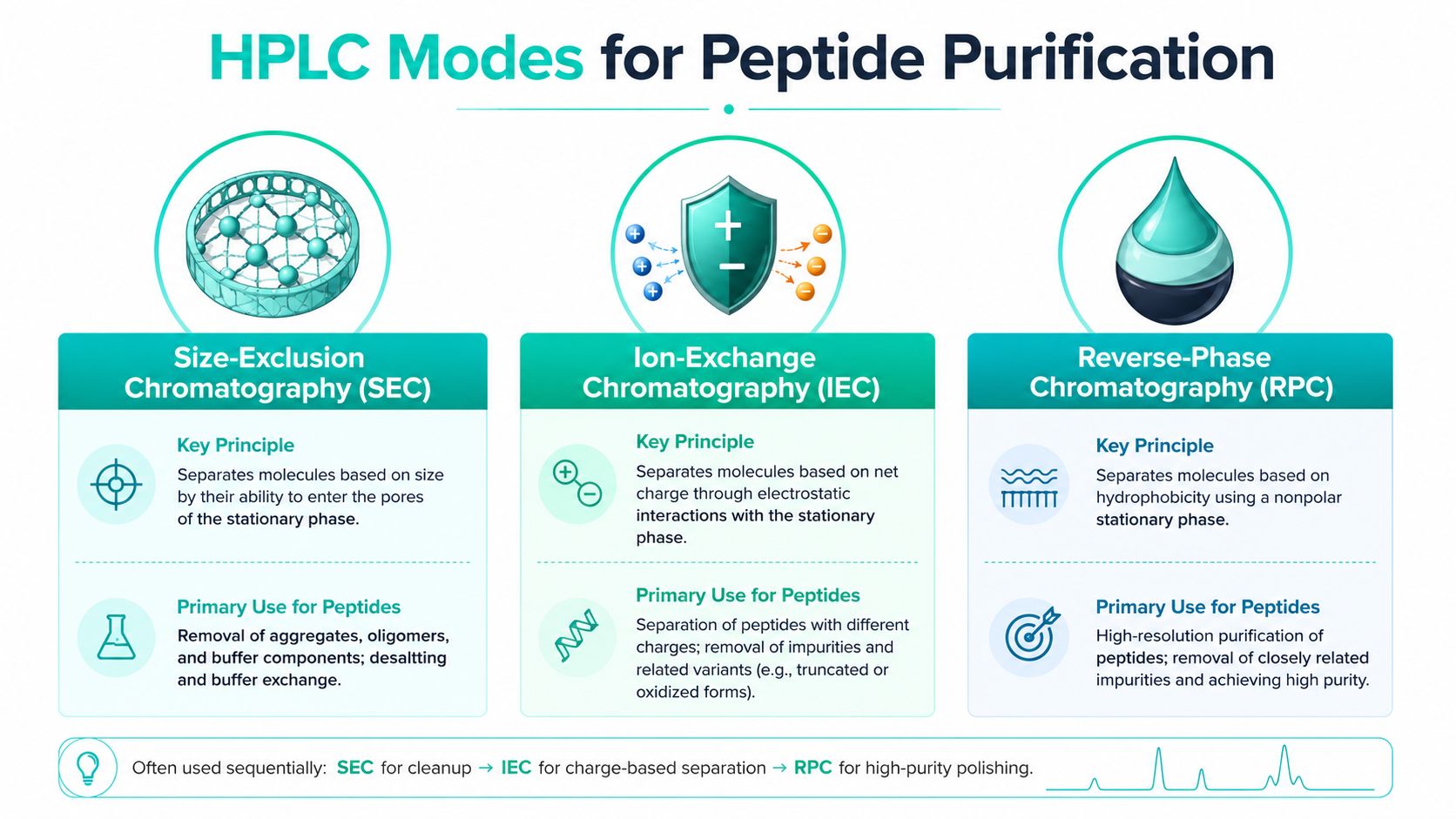
Size-exclusion chromatography works like a hallway lined with rooms of different dimensions. Smaller molecules enter more pores in the stationary phase and take a longer path. Larger molecules pass through fewer pores and elute earlier. The technique is useful when the mixture contains species with a meaningful size difference, such as monomeric material and larger assemblies.
For many synthetic peptide mixtures, however, the target and its sequence-related impurities are too similar in size for SEC to provide the required resolving power. SEC can still support aggregate or oligomer assessment, but it often isn't the first purification choice for a small, closely related peptide mixture.
Ion-exchange chromatography uses electrostatic attraction. An anion-exchange surface retains negatively charged species, while a cation-exchange surface retains positively charged species. Analysts can change pH or ionic strength to alter peptide charge and weaken the interaction.
This approach becomes valuable when a peptide carries a strong net charge or when the impurity profile contains charge variants. It can also complement reversed-phase purification because the two methods interrogate different molecular properties. A peptide that co-elutes from a hydrophobic stationary phase may separate clearly when its charge state changes.
Reversed-phase chromatography uses a nonpolar stationary phase and a more polar mobile phase. Hydrophobic regions interact with the stationary phase, while increasing organic solvent weakens those interactions and moves retained peptides through the column. Peptide conformation and surface exposure complicate the picture, which is why sequence composition alone doesn't always predict retention perfectly.
Peptides are harder than many small molecules because they occupy an intermediate size range and carry flexible, chemically diverse surfaces. A sequence modification can alter charge, hydrophobicity, conformation, or all three. For a structured method-development workflow, start by identifying the property that differs most between the target and the impurity.
HPLC remains the practical backbone of peptide purification because analysts can tune column chemistry and elution conditions to the material rather than forcing every sequence into one protocol. The three established modes divide the problem by size, charge, and hydrophobicity, but their operational value differs considerably.
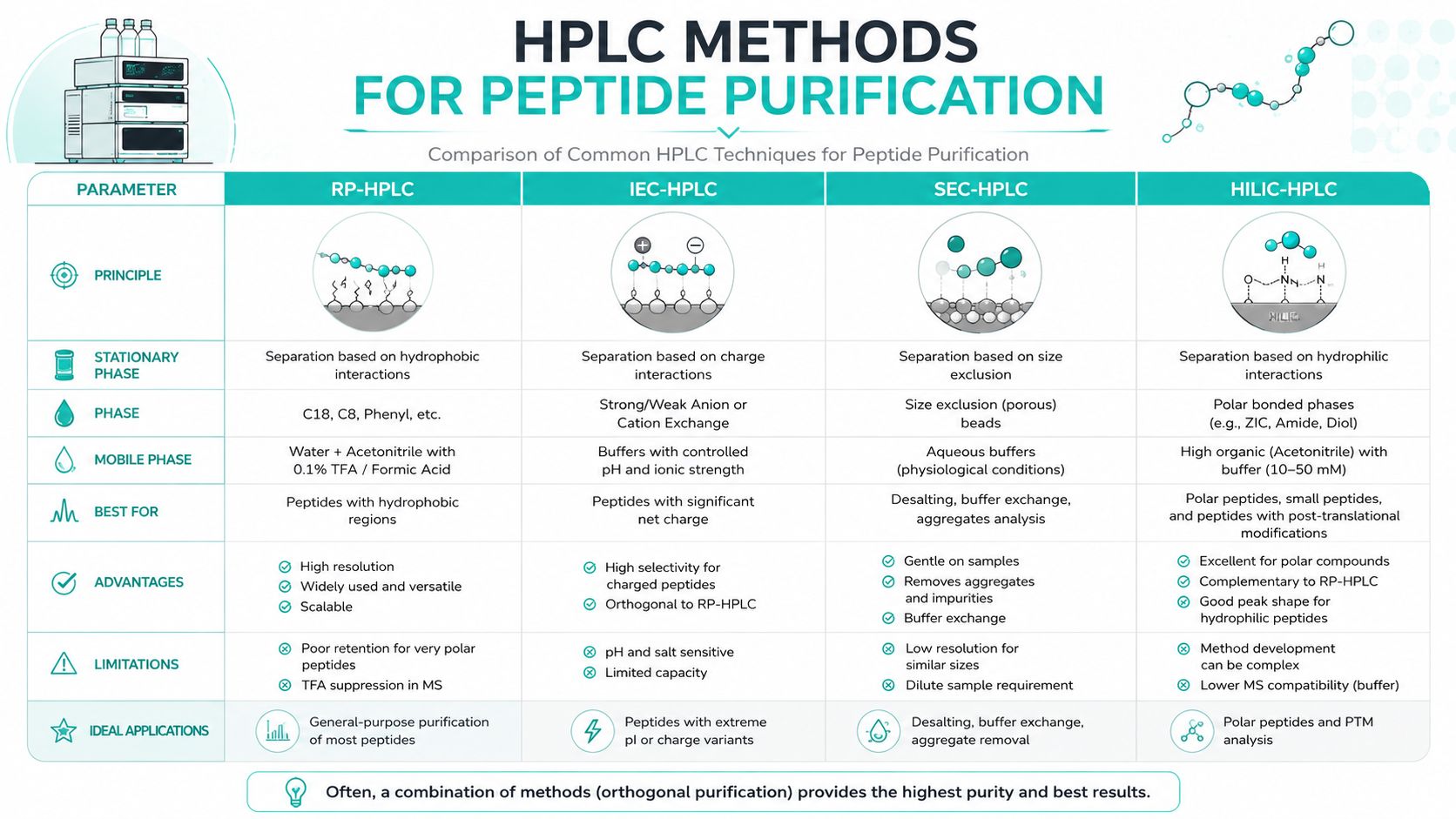
RP-HPLC is usually the first method to evaluate for synthetic peptides. It offers useful selectivity for sequence-related impurities, supports analytical and preparative formats, and transfers naturally into LC-MS workflows when the mobile phase is chosen with ionization in mind.
Peptide separations commonly use solvent gradients, not isocratic elution. As organic solvent increases, hydrophobic interactions progressively weaken, allowing peptides with different retention strengths to elute in an organized sequence. A gradient also gives the analyst room to concentrate resolution where the target and critical impurity emerge.
The trade-off is that very hydrophobic peptides may require strong elution conditions and careful recovery handling. Highly polar peptides can show limited retention, while some modified peptides change their retention enough to invalidate a familiar gradient. A longer run isn't automatically a better run. If selectivity is poor, more time may only spread the same unresolved components across a wider chromatogram.
For downstream analytical transfer, document the column chemistry, solvent additives, gradient profile, and detection mode. Those details matter when comparing supplier data with an in-house HPLC-MS analysis workflow.
Ion-exchange can outperform RP-HPLC when the key difference is charge rather than hydrophobicity. It may be particularly useful for basic, acidic, or charge-heterogeneous peptides, although pH control and salt compatibility become central method constraints.
SEC is gentler and conceptually straightforward, but its resolution depends on a meaningful size difference. It works better as a sizing or aggregate-monitoring tool than as a default method for separating near-identical synthetic products. HILIC can provide an alternative for polar peptides that retain weakly in reversed-phase conditions, but it often requires more method-development work and careful control of water content and surface interactions.
The following video provides a visual introduction to common HPLC approaches and instrument operation:
A preparative liquid chromatography process can be tuned case by case to a peptide's physicochemical profile. For industrial purification, reviews also discuss continuous multicolumn countercurrent solvent gradient purification, or MCSGP, as a process option, while guidance on therapeutic-peptide processing reinforces the role of gradient elution in weakening hydrophobic interactions, as described in this review of therapeutic-peptide downstream processing.
Chromatography is strong at recovery and scale. Electrophoresis is often strong at resolving charge differences with limited sample consumption. That distinction matters when the available material is scarce, the charge distribution is complex, or the analytical question concerns proteoforms rather than bulk purification.
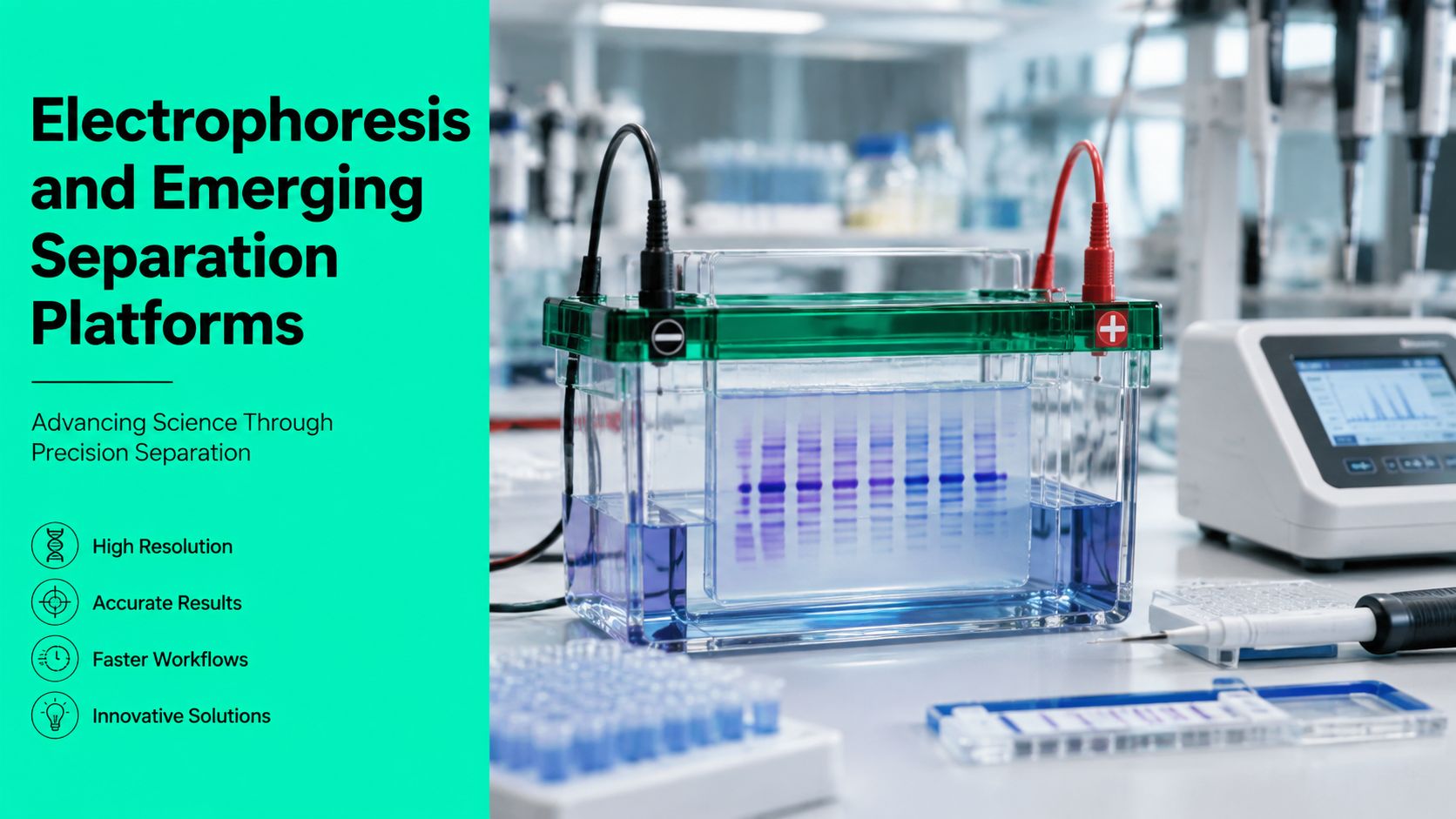
Capillary electrophoresis separates analytes according to their electrophoretic mobility, which reflects charge, size, and the surrounding medium. Capillary zone electrophoresis can be valuable for charged peptide mixtures, especially when a conventional reversed-phase method produces co-elution. Capillary isoelectric focusing instead separates species according to isoelectric behavior, making it useful for charge heterogeneity and proteoform characterization.
Gel electrophoresis remains accessible and useful for qualitative size-based assessment, but it generally isn't the preferred route for preparative recovery of small synthetic peptides. Analysts must also account for staining response, diffusion, extraction difficulty, and the possibility that visually distinct bands don't provide the chemical identity required for a release or structure claim.
A separation that consumes less sample isn't automatically more useful. The platform must also provide a recovery path, an identity check, and data that the next analytical step can interpret.
Recent 2025 to 2026 studies have examined capillary and microchip electromigration, cIEF-ESI interfaces, pillar array columns, and segmented ion-mobility strategies for difficult peptide and proteoform analyses. These platforms can improve resolution, reproducibility, or detection of closely related forms, but they remain less familiar in routine procurement and workflow planning than HPLC, as discussed in this review of emerging peptide separation platforms.
Their practical limitation is often operational rather than scientific. A lab may need specialized consumables, compatible interfaces, new data-processing expertise, or a service provider with established methods. For an academic lab investigating a hard-to-resolve sample, outsourcing a targeted capillary or microchip experiment may be more rational than purchasing a complete platform.
Use electrophoresis when the impurity difference is primarily charge-based, sample consumption must remain low, or proteoform resolution is the central objective. Keep HPLC in the workflow when you need reliable preparative recovery, scalable fraction collection, or straightforward transfer to routine QC.
The right question isn't “Which peptide separation technique is most advanced?” It's “Which molecular property separates my target from the impurity that matters?” A short hydrophobic peptide, a highly charged sequence, and a modified peptide may all require different first experiments even when they come from the same synthesis platform.
The matrix below is a practical starting point. It doesn't replace scouting runs, but it helps prevent over-engineering and makes supplier conversations more precise.
| Peptide Characteristic | Recommended Primary Method | Alternative or Complementary Method | Key Considerations |
|---|---|---|---|
| Short peptide with related truncations | RP-HPLC | Ion-exchange or orthogonal LC-MS | Evaluate retention and selectivity against deletion products, not just main-peak shape |
| Highly hydrophobic sequence | RP-HPLC with an appropriate gradient | HILIC or a different reversed-phase chemistry | Watch recovery, strong retention, precipitation, and carryover |
| Highly charged peptide | Ion-exchange HPLC | Capillary electrophoresis or cIEF | Control pH and ionic strength; confirm compatibility with downstream MS |
| Very polar peptide with weak RP retention | HILIC | Ion-exchange or mixed-mode chromatography | Method robustness can be more sensitive to solvent composition and equilibration |
| Size variants or aggregates | SEC-HPLC | RP-HPLC for chemical impurities | SEC is most useful when species differ meaningfully in hydrodynamic size |
| Modified peptide or proteoform mixture | RP-HPLC as an initial screen | IEC, cIEF, or LC-MS | A modification may change charge, hydrophobicity, mass, or conformation |
| Closely related peptide mixture | Orthogonal multidimensional workflow | Capillary or microchip separation | Use a second selectivity mechanism when one-dimensional chromatography co-elutes critical species |
Start with the impurity profile, even if it's incomplete. Ask whether the likely variants differ in hydrophobicity, charge, size, or mass, then choose the method that directly probes that difference. If the answer is uncertain, RP-HPLC is a sensible screen because it commonly supports both purification and routine analytical transfer.
A default RP method fails when the target and impurity share nearly identical hydrophobic behavior. In that case, changing gradient slope may help, but a charge-based or orthogonal separation may provide the larger gain. Recent reviews continue to identify RP-HPLC as the workhorse while discussing ion-exchange, HILIC, two-dimensional methods, SFC, and membrane workflows by use case. They also highlight the practical gap in guidance for short, hydrophobic, modified, and closely related peptides, as described in this property-focused review of peptide separation methods.
Multidimensional workflows become justified when the sample contains many components or when one separation mechanism cannot resolve the critical pair. In proteomics, enzymatic digestion followed by multidimensional liquid chromatography or electrophoresis and tandem MS/MS became a common strategy for increasing analytical depth, rather than relying on a single separation dimension.
A well-chosen column can't fix a poorly prepared sample. Peptides may adsorb to surfaces, precipitate when solvent composition changes, aggregate at unsuitable concentrations, or enter the system with particulates that damage the column and distort peak shape.
Begin by testing solubility in a small portion of the intended starting mobile phase or a compatible buffer. Avoid assuming that a clear vial means a stable injection solution. Inspect the sample after dilution, mixing, and the time it will remain in the autosampler.
Filter or centrifuge when the material and method permit it, but account for adsorption and recovery. A low-binding vial and a compatible membrane may matter more than a nominally cleaner solution if the peptide is scarce or hydrophobic. Keep injection solvent strength close enough to the initial mobile phase to avoid fronting, distortion, or early precipitation.
Use a preparation record that captures:
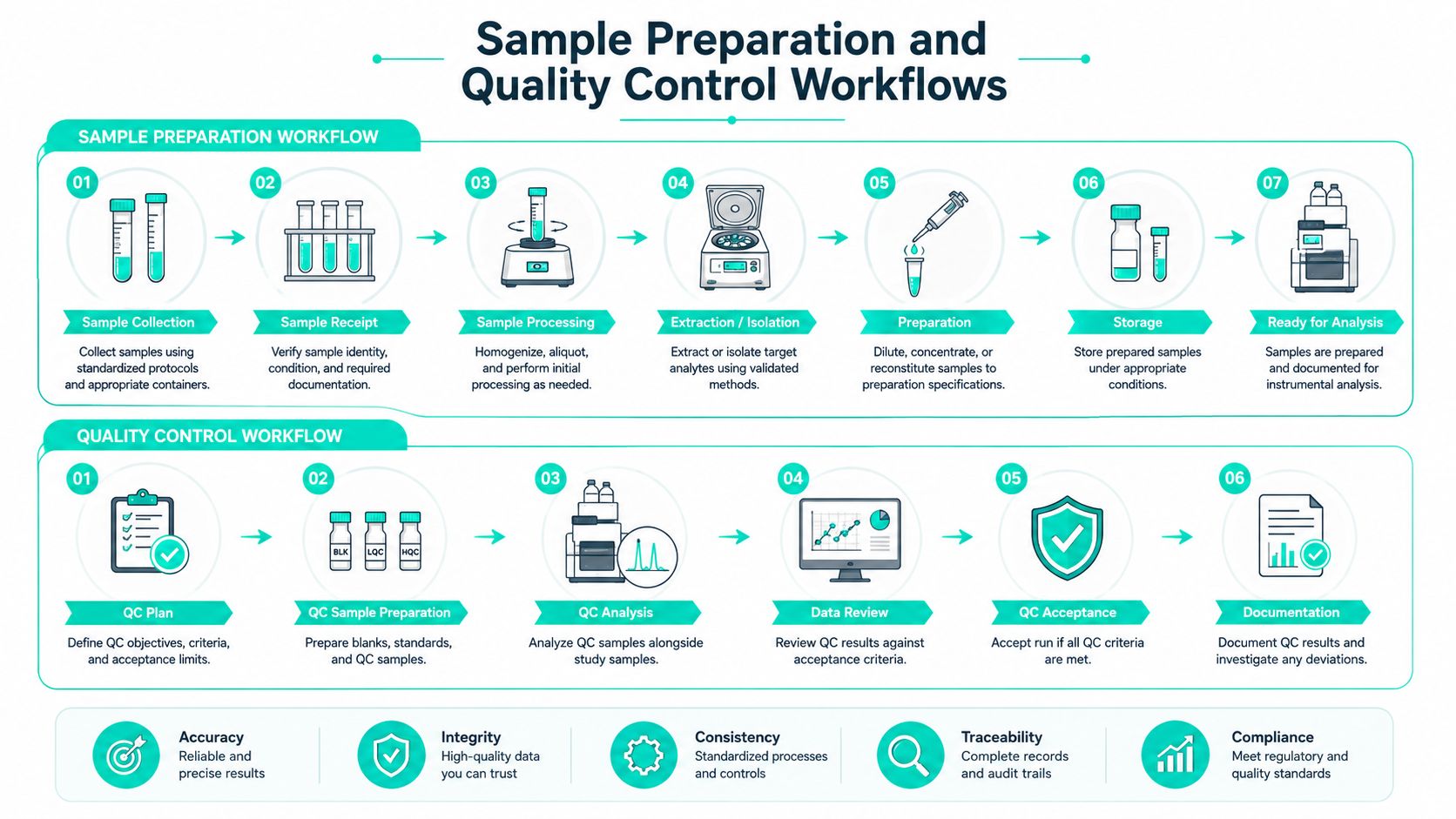
A COA should tell you how the purity value was generated. Review the chromatogram, detection method, column chemistry, gradient, retention time, and integration approach when those details are available. A single UV trace supports a purity assessment under that method, but it doesn't independently establish molecular identity or rule out co-elution.
For higher-consequence work, pair chromatographic purity with an orthogonal identity check such as LC-MS and confirm that the testing laboratory and batch documentation are traceable. The guide to interpreting HPLC chromatograms is useful when reviewing baseline behavior, shoulders, tailing, and unintegrated minor peaks.
Proteomics drove the move from single-step purification toward multidimensional workflows. Reviews describe enzymatic digestion followed by multidimensional liquid chromatography and/or electrophoresis, with tandem MS/MS commonly used for peptide identification. A 2013 study reported 952, 663, and 517 proteins across three separation workflows and 1,132 nonredundant proteins in total at less than 1.0% false discovery rate, demonstrating how additional separation dimensions can increase analytical depth, as reported in this proteomics separation study.
Procurement should begin with the impurity risk, not the supplier's headline purity. Ask which separation method produced the result, whether the method is batch-specific, how the laboratory confirms identity, and whether the chromatogram can be reviewed. A certificate that reports a number without method context makes meaningful comparison difficult.
For a peptide intended for a sensitive assay, specify the required sequence and modification, preferred counterion or formulation, documentation package, lot traceability, and any analytical constraints such as MS compatibility. If the peptide is hydrophobic or modified, tell the supplier before ordering. That information can influence purification, formulation, shipping conditions, and the verification method.
Preparative liquid chromatography remains the method of choice for therapeutic-peptide downstream processing because analysts can tune it to the target's physicochemical profile. Industrial teams may also evaluate continuous MCSGP when process efficiency and multicolumn operation justify the added complexity, as discussed in this downstream-processing review.
Celonyx Labs supplies research peptides through an online catalog and states product quality attributes including 99% purity and independent third-party testing. Those details should be evaluated alongside the specific COA, analytical method, batch information, shipping requirements, and your laboratory's acceptance criteria.
If your lab needs research peptides with documented quality information for separation-sensitive workflows, review the catalog and support options at Celonyx Labs. Contact the team before ordering when sequence properties, modifications, purity documentation, or downstream LC-MS compatibility need to be clarified.
Celonyx Labs customer support email is a practical first contact because 62% of customers used

Peptide purity testing for CROs in 2026: the HPLC, mass spec, COA, and reference standard

Research peptides for independent researchers: verify CoAs, purity, reconstitution, and storage without institutional backup. Full
FOR RESEARCH USE ONLY. Products sold by Celonyx Labs are intended exclusively for laboratory and scientific research. They are not intended for human or veterinary use, consumption, diagnosis, treatment, cure, or prevention of any disease. By purchasing from this site, you acknowledge that you understand the intended research purpose of these materials and agree to comply with all applicable laws and regulations.