
Peptide Purity Testing for CROs: 2026 Verdict
Peptide purity testing for CROs in 2026: the HPLC, mass spec, COA, and reference standard

Independent researchers buying research peptides in 2026 work without a purchasing department, a departmental CoA archive, or a lab manager who catches a bad vendor before checkout — every verification step lands on you.
That single fact changes the entire buying process compared to a university core lab or a funded biotech: you're the one confirming purity, matching lot numbers to certificates of analysis, and deciding whether a vendor's third-party testing is real or decorative.
A university lab has a departmental account, a compliance officer, and years of vendor history to fall back on. An independent researcher has none of that — you're personally vetting every research peptides supplier from scratch, and a bad batch doesn't just cost money, it costs the validity of your data.
That's why the documentation bar has to be higher, not lower, for solo work. Every claim in this guide assumes you're buying for laboratory research use only, not for human or animal consumption, and that you're capable of reading a certificate of analysis critically rather than trusting a logo on a website.
Celonyx Labs publishes batch-level purity and identity data for its research peptides rather than a single blanket claim across every product line — that's the standard an independent researcher should hold every vendor to, Celonyx included.
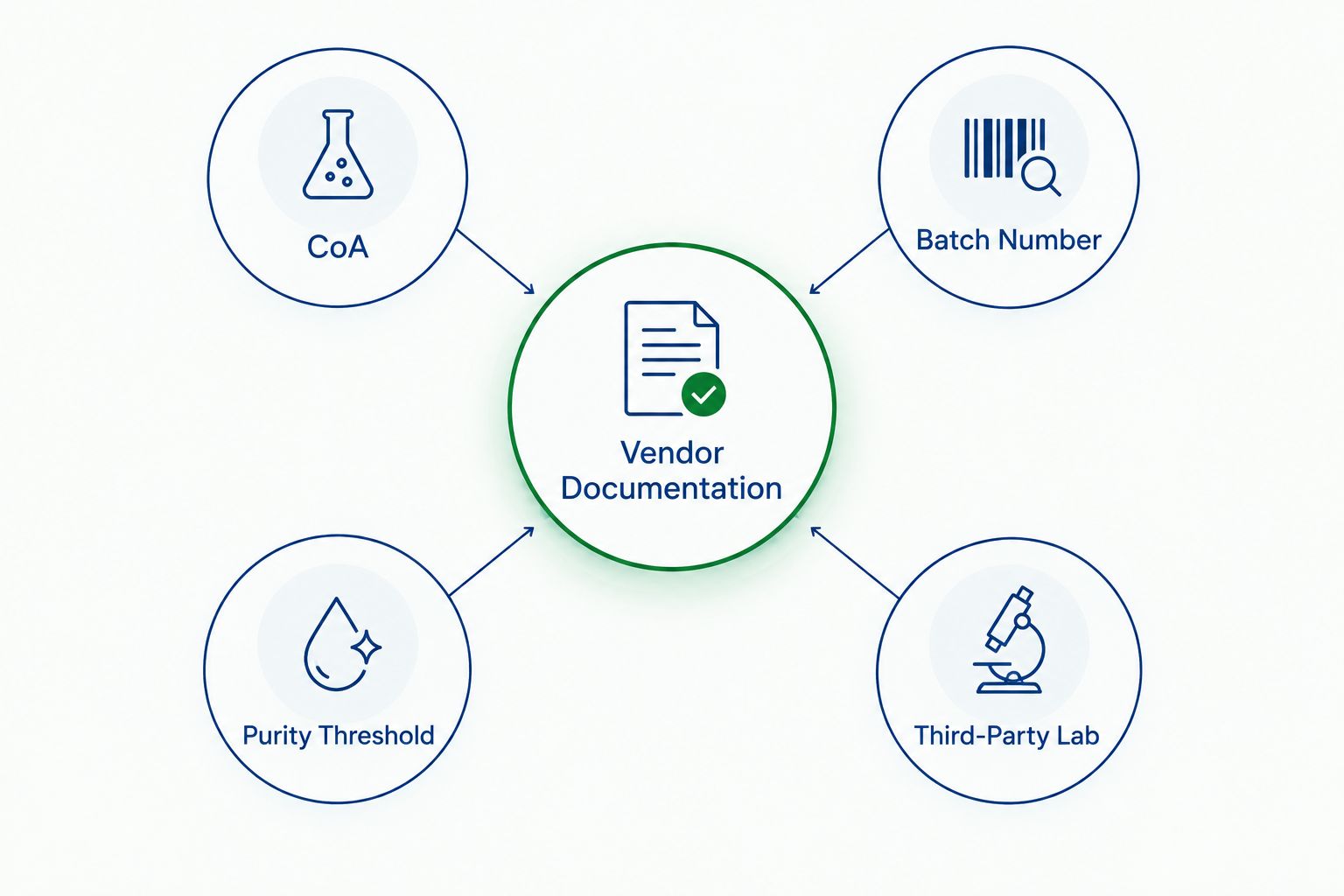
A certificate of analysis (CoA) that isn't tied to a specific lot number is marketing material, not documentation. Before ordering anything in 2026, confirm the vendor shows:
If a vendor won't produce a lot-matched CoA on request, that's disqualifying, regardless of price.
Don't stop at reading the CoA — check whether the testing lab is one that actually exists and does this kind of work. Third-party peptide testing labs vary in what methods they run and how they report results, and an independent researcher has no institutional QA team to catch a mismatch.
Independent researchers often buy based on what's popular rather than what the protocol actually calls for. That's an expensive mistake when you're paying out of pocket instead of drawing from a grant.
A university lab has a -80°C freezer down the hall. An independent researcher usually has a home freezer and a refrigerator, and that changes how you plan reconstitution timing.
Start with the manual approach: lyophilized peptide powder generally stores frozen for extended periods when kept sealed and protected from light, while reconstituted peptide solutions typically hold in the 2-8°C range for a period of days to a few weeks depending on the compound and concentration. Read the peptide reconstitution process fully before you add solvent to a single vial — reconstitution is not reversible if you get the ratio wrong.
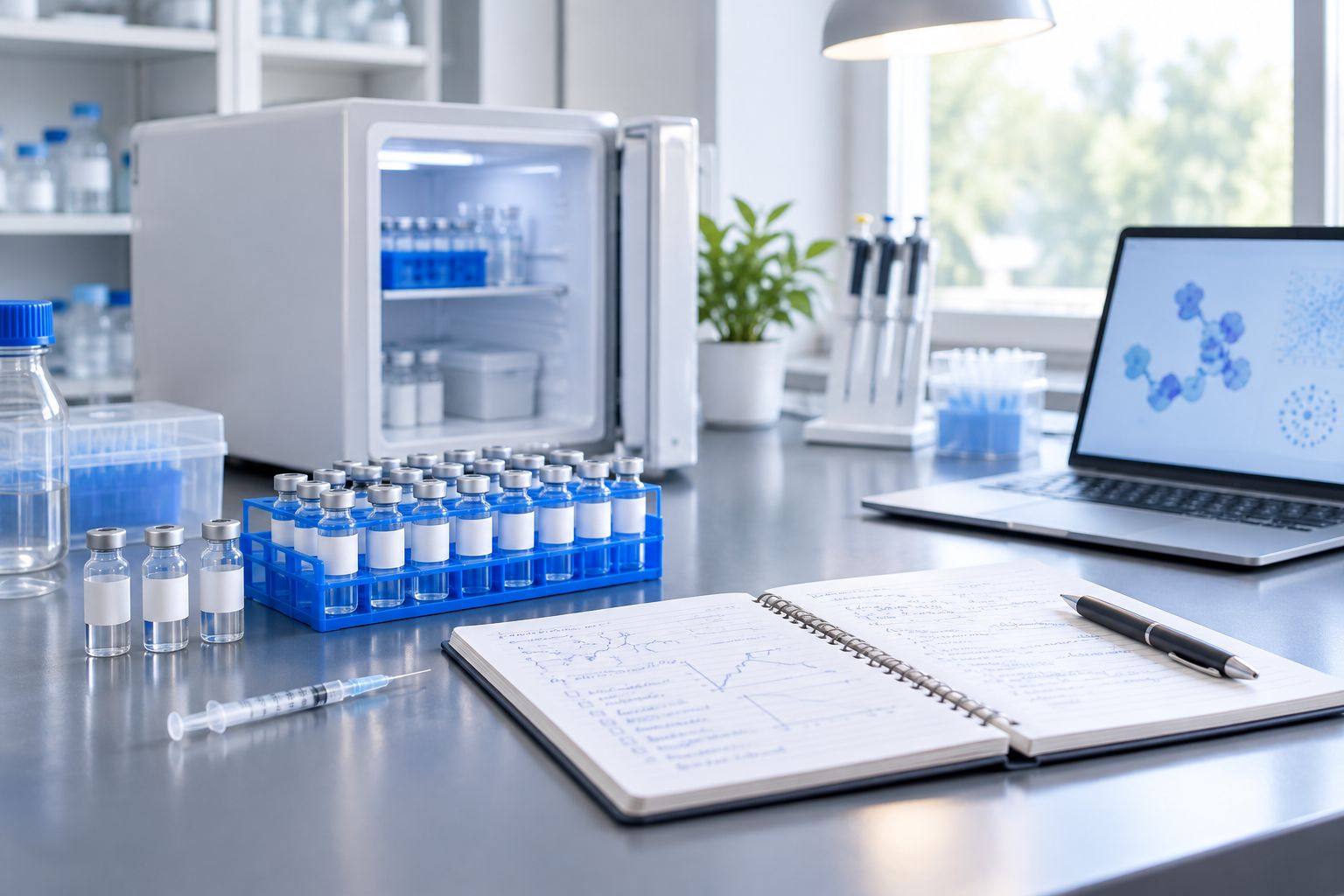
Without a lab information management system, you are the record-keeping system. That matters if you ever submit data for peer review or need to explain a result months later.
Bulk pricing looks attractive until half the lot degrades before you use it. Independent researchers do better matching order size to actual near-term protocol needs.
Check purity standards before ordering
Review how peptide reference standards are verified for research use.
If your work ever heads toward publication or a shared dataset, reviewers will ask where the compound came from. An independent researcher without an institutional affiliation should expect more scrutiny here, not less.
| Option | Best for | Key limitation |
|---|---|---|
| Dedicated research peptide vendor (e.g., Celonyx Labs) | Researchers who want batch-specific CoAs and consistent purity documentation | Selection is limited to the vendor's own catalog |
| General marketplace reseller | One-off purchases when nothing else stocks a rare compound | Testing documentation is often generic or missing entirely |
| Direct-from-manufacturer overseas | Researchers with existing relationships and import experience | Longer lead times and inconsistent batch-to-batch documentation |
| University surplus or lab-to-lab transfer | Researchers with an academic network willing to share stock | Depends entirely on personal connections, not scalable |
Celonyx Labs research peptides are built for the first row of this table — 99% purity documented per batch with third-party testing behind it, which is the baseline an independent researcher should require from any vendor.
What should independent researchers require from a research peptide vendor?
A batch-specific certificate of analysis naming the third-party testing lab, with HPLC or mass spec purity and identity data, not a generic purity claim on the product page.
Is 99% purity enough for independent research use?
99% purity is a strong baseline for 2026 research peptide sourcing, but the number only matters if it’s backed by lot-specific third-party test data you can verify.
How long do reconstituted research peptides last?
Reconstituted peptides typically hold in the 2-8°C range for a period of days to a few weeks depending on the specific compound and concentration — check the vendor’s guidance for that peptide before reconstituting a full vial.
Can independent researchers buy the same peptides as university labs?
Yes — vendors like Celonyx Labs sell research peptides to individual researchers and institutional labs under the same purity and testing standards, with no institutional affiliation required.
What’s the biggest sourcing risk for solo researchers?
Buying from a vendor with no lot-matched documentation, since there’s no institutional QA team to catch a mismatch between the CoA and the actual vial received.
Should independent researchers buy in bulk to save money?
Generally no — bulk orders often outlast the compound’s stable storage window for a solo researcher’s pace of use, making smaller, more frequent orders the better economic choice.
How do I know if a peptide vendor’s third-party testing is real?
Search the named testing lab independently of the vendor’s site, confirm it runs HPLC or mass spectrometry, and ask whether a re-test on your specific batch is possible.
Do research peptides need refrigeration before reconstitution?
Lyophilized peptide powder generally stores frozen and stays stable for extended periods when sealed and protected from light; refrigeration timing matters most after reconstitution, not before.
The single biggest gap between independent researchers and institutional labs in 2026 isn't budget — it's record-keeping discipline. A university lab has a system that forces batch logging; a solo researcher has to build that habit deliberately, and the ones who do catch vendor inconsistencies months before the ones who don't.
Peptide purity testing for CROs in 2026: the HPLC, mass spec, COA, and reference standard

Research peptides for independent researchers: verify CoAs, purity, reconstitution, and storage without institutional backup. Full

Peptide storage for core facilities in 2026: temperature zones, access control, and documentation for multi-PI
FOR RESEARCH USE ONLY. Products sold by Celonyx Labs are intended exclusively for laboratory and scientific research. They are not intended for human or veterinary use, consumption, diagnosis, treatment, cure, or prevention of any disease. By purchasing from this site, you acknowledge that you understand the intended research purpose of these materials and agree to comply with all applicable laws and regulations.