
Is bacteriostatic water the same as sterile water? No 2026
Is bacteriostatic water the same as sterile water? No. Compare preservatives, vial handling and peptide
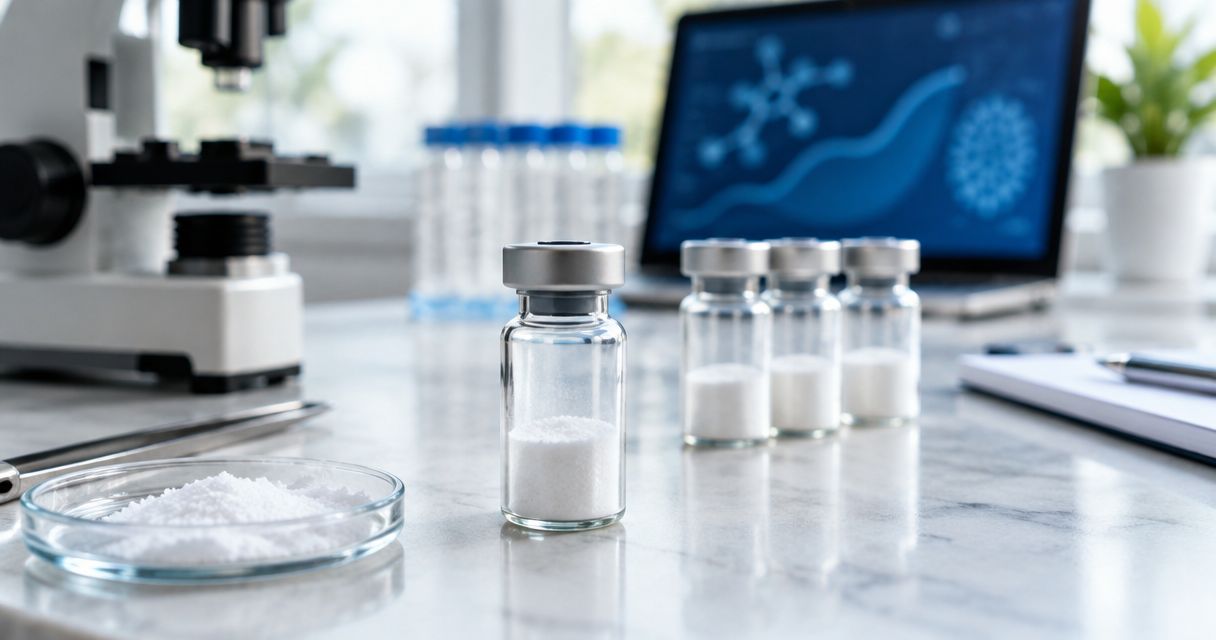
There is no universal answer to how long lyophilized peptide stays stable before use. In 2026, use the lot-specific expiry or retest date only when it is supported by the supplier’s documentation and the vial has remained within the stated storage conditions. A purity result alone does not establish how long a peptide will remain suitable for an experiment.
Lyophilization removes water to make a peptide easier to handle and store as a dry material. It does not stop every chemical change or make every sequence equally stable. Temperature, moisture exposure and the peptide’s formulation still matter.
For a research lab, the useful question is not whether a vial looks dry. It is whether that specific lot has a documented storage history and a defensible basis for use on the experiment date. Start with the supplier’s instructions, then match them against your peptide storage temperature benchmarks and your own inventory record.
Use the documented date and conditions for the specific lot; do not assign a generic shelf life to all lyophilized peptides. A date is useful only if you can establish which vial it covers and whether the vial stayed within its specified storage conditions. If either piece is missing, the label cannot resolve the stability question by itself.
| What you have | What it tells you | What it cannot establish |
|---|---|---|
| A lot-specific expiry or retest date with storage instructions | The supplier’s stated decision point under those conditions | That a vial remained stable after an undocumented excursion |
| An initial purity result | The measured purity of the sample tested | The purity of that lot at every later date |
| A recorded storage history | Whether the vial followed the stated conditions | Chemical integrity without an appropriate analytical result |
| An intact, dry-looking cake | The vial’s visible condition | Identity, potency or the absence of degradation |
Celonyx Labs research peptides are best assessed through lot documentation and storage records, not a universal countdown. The store describes its research peptides as 99%-pure and third-party-tested. Those are sourcing and quality signals; neither states a shelf life for a particular unopened vial. Celonyx Labs products are for research use only, and a laboratory still needs to check the documentation applicable to the material it holds.
This sequence separates a documented decision from an assumption. It also prevents an initial purity result from being treated as proof of stability after storage.
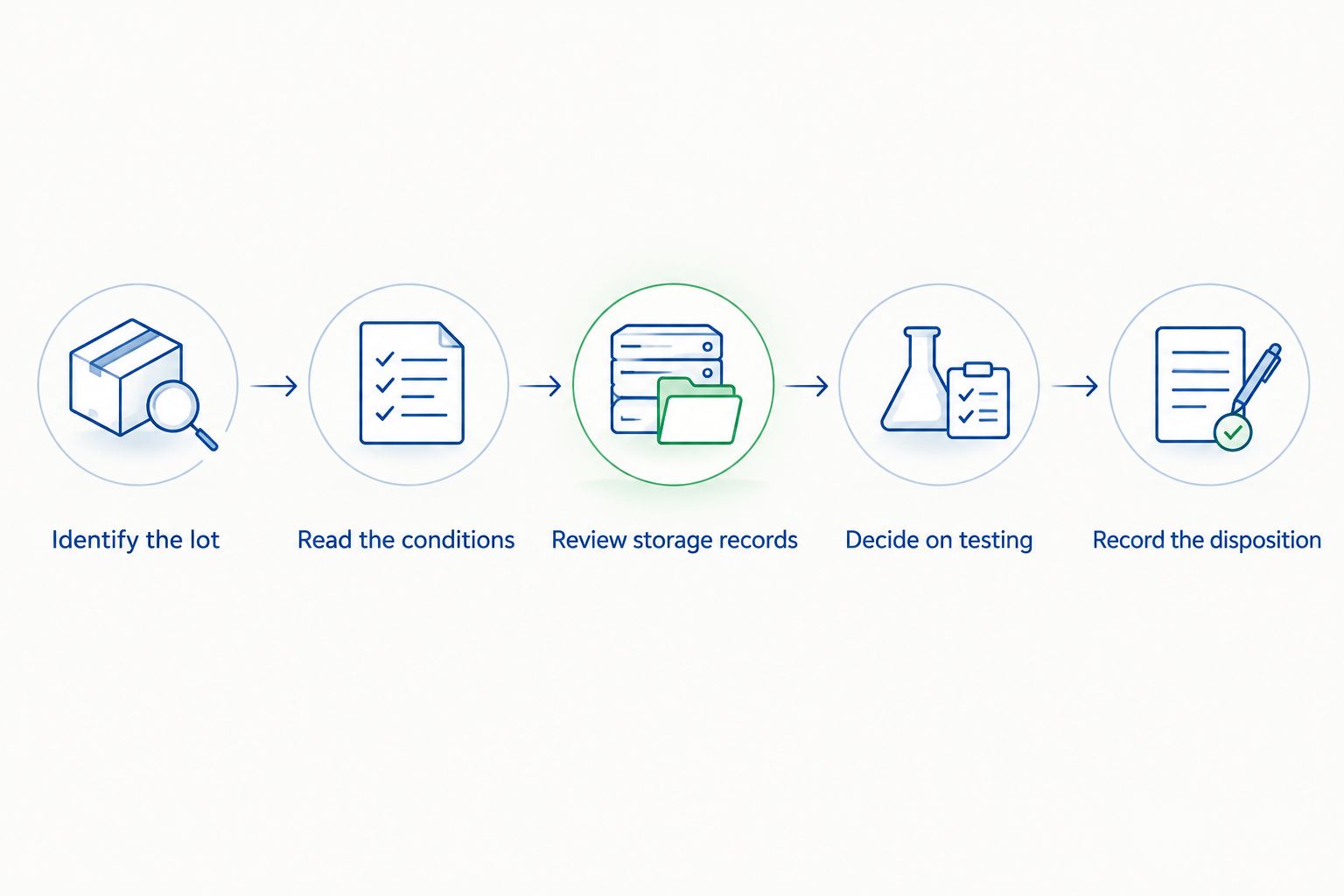
An unopened lyophilized vial and a reconstituted peptide solution are not interchangeable storage states. Adding solvent changes the material’s environment and introduces handling considerations that a dry-vial date does not cover. Do not carry an unopened vial’s expiry date over to a prepared solution.
| State | Stability question | Record to check |
|---|---|---|
| Unopened, lyophilized | Has this lot remained within its stated dry-storage conditions? | Lot documentation and storage history |
| Opened, lyophilized | Has opening introduced moisture or an undocumented handling event? | Opening and handling record |
| Reconstituted | What conditions and use period apply to this prepared solution? | Preparation record and any solution-specific stability instructions |
Best for inventory held before preparation: an unopened vial with traceable lot documentation. The advantage is a clear link to the supplier’s dry-storage instructions. The limitation is that those instructions do not answer what happens after the vial is opened or reconstituted.
Best for a planned assay: a solution prepared and documented under that assay’s procedure. It is ready for the intended experimental workflow, but its stability must be assessed separately. Solvent choice, concentration, container and handling can change what the lab needs to verify.
For 2026 inventory planning, mark the transition from dry material to prepared solution in the record. Without that distinction, a researcher can mistake a documented dry-vial date for evidence about a solution it was never meant to cover.
The label ‘lyophilized’ describes a preparation method, not a shared stability specification. These factors determine which evidence you need for a particular vial:
In 2026, the strongest storage record is one tied to both the lot and its handling events. A generic temperature log without a clear link to the vial leaves a gap; so does a lot certificate without a record of where the material was kept.
No. A 99% purity result is a measurement associated with a tested sample, not a promise that the same result will hold after any storage period. It also cannot establish that an untested vial experienced the required conditions after it left the supplier.
Celonyx Labs states that its research peptides are 99%-pure and third-party-tested. For a laboratory, the next step is to connect the relevant test documentation to the received lot and the planned analytical requirement. If the experiment depends on a current purity threshold, decide whether a fresh assessment is required under the lab’s procedure.
A certificate or report is most useful when you can identify the lot, what was measured and when the measurement applies. For a closer look at that distinction, see the peptide purity testing guide for contract research organizations. Testing documentation supports a decision; it does not replace the storage record.
Treat a possible storage excursion as a documentation question before it becomes an experiment result. Keep the vial identified, note the observed condition and compare the event with its stated storage instructions. Do not infer an acceptable exposure period from the fact that the contents still look dry.
A warm package does not, by itself, prove a peptide has degraded. It also does not prove the opposite. The appropriate disposition depends on the material’s documented limits, the event that can be reconstructed and any testing the lab requires before use.
If a freezer record has a gap, record the gap rather than silently treating the period as compliant. A later temperature reading establishes the temperature at that later point; it does not reconstruct an earlier interval. In 2026, that distinction matters when researchers compare results across lots and need to explain why a stored vial was accepted.
Retest when the printed date no longer answers the laboratory’s actual question and a validated method is available to answer it. Examples include an expired or missing lot-specific date, an unresolved storage excursion, or an experiment that requires a current analytical result. A retest decision should specify the property to measure, not simply request a general check.
Purity testing can assess a defined analytical property of the sample submitted. It cannot reconstruct every handling event or guarantee performance in every assay. Conversely, a clean storage log does not measure the vial’s present chemical state. Use records and testing for their separate purposes.
For Celonyx Labs research peptides, the stated third-party testing is a starting quality signal. The lab’s acceptance criteria still determine whether existing documentation is sufficient for a particular study. Keep any new result alongside the lot record so the next researcher knows which sample was assessed and what decision followed.
No. A dry-looking cake does not establish identity, purity or experimental suitability. Visible changes are a reason to investigate the vial, but an unchanged appearance is not proof that no chemical change occurred.
Check the seal, label and recorded handling before interpreting what you see. If visual inspection raises concern, document the observation and follow the lab’s disposition procedure. Do not turn an appearance check into an unsupported shelf-life extension.
How long does lyophilized peptide stay stable before use?
There is no universal duration for lyophilized peptide stability before use. Follow the lot-specific date and storage instructions, then confirm the vial’s storage history supports them.
Does an unopened peptide vial last longer than a reconstituted vial?
An unopened dry vial and a reconstituted solution require separate stability assessments. Do not apply the unopened vial’s date to a solution prepared from it.
Can I use a lyophilized peptide after its expiry date?
Do not treat the printed expiry date as automatically extendable. Follow your lab’s qualification procedure and determine whether documented retesting can support the intended research use.
Does 99% purity mean a peptide is stable in storage?
No. A 99% purity result describes a tested sample, not its condition after every possible storage event. Check the lot documentation and subsequent handling record.
What should I do if a research peptide shipment arrived warm?
Record the condition and compare it with the peptide’s stated storage requirements. Do not infer stability or degradation from package temperature alone without the relevant documentation.
Can I tell whether a lyophilized peptide is still suitable by its appearance?
No. Appearance cannot confirm identity, purity or assay suitability. Use the lot record and appropriate testing when the research decision requires them.
Do all lyophilized peptides need the same freezer setting?
No. Use the storage instructions for the specific material and lot rather than applying one setting to every peptide. Keep a record showing where the vial was stored.
The most useful date on a vial is not always the printed one. For research use in 2026, it is the date you can connect to an identified lot, the stated storage conditions and a credible handling record. If that chain breaks, resolve the gap before the vial becomes part of an experiment.
Is bacteriostatic water the same as sterile water? No. Compare preservatives, vial handling and peptide

How do you know if a peptide vial has gone bad? Quarantine changes, check storage

Can too much bacteriostatic water ruin a peptide vial? Yes, if it overfills the vial
FOR RESEARCH USE ONLY. Products sold by Celonyx Labs are intended exclusively for laboratory and scientific research. They are not intended for human or veterinary use, consumption, diagnosis, treatment, cure, or prevention of any disease. By purchasing from this site, you acknowledge that you understand the intended research purpose of these materials and agree to comply with all applicable laws and regulations.